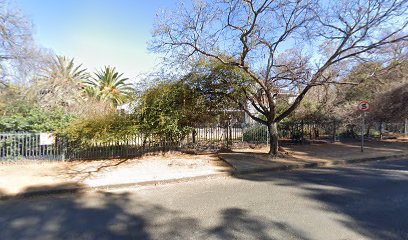
The Tuition Centre Bloemfontein is a Education centers establishment in Bloemfontein, Free State, South Africa
Bloemfontein
Free State
9301
South Africa
Curriculum
The Bloemfontein Tuition Centre in Bloemfontein, Free State, South Africa, operates a curriculum designed to support secondary learners from Grade 8 to Grade 12. The centre emphasises tuition across multiple syllabuses and ages, with a clear focus on preparing students for tertiary study, whether locally or internationally. The programme is delivered through small classes and dedicated tutors, enabling personalised attention within a structured learning framework.
Instruction is supported by subject-specialist tutors who combine up-to-date teaching methods with established educational approaches. The subject range reflects a comprehensive senior secondary offering, including English, Afrikaans, Mathematics, Physics, Chemistry, Biology, Computer Science, Accounting, Business Studies, and NSC electives. This breadth allows learners to pursue meaningful combinations that align with their academic goals and potential career pathways, while ensuring alignment with South Africa’s National Senior Certificate (NSC) framework where applicable.
Central to the centre’s curriculum approach is face-to-face interaction between learners and tutors. This model is described as a bridge between the demands of modern education and the students’ need for guided, non-threatening learning environments. Small class sizes are highlighted as a distinguishing feature, enabling more customised support, continuous assessment, and timely feedback. The emphasis is on building confidence, reinforcing foundational knowledge, and helping learners develop the self-discipline necessary for higher education and lifelong learning.
Beyond core academic instruction, the centre integrates a broader educational philosophy designed to expand learners’ horizons. The curriculum supports broader development through a range of stimulating activities, including poetry and music evenings, museum visits, and participation in science outreach events such as the Interactive Science Expo at the University of the Free State (UFS). The inclusion of the 3D Printing Facility at the Central University of Technology (CUT) is noted as a distinctive resource, offering hands-on exposure to emerging technologies and practical applications within STEM subjects.
Auxiliary programmes form an important part of the learning experience. The centre recognises that students may benefit from additional opportunities for enrichment, creative expression, and practical exploration. Activities related to art exhibitions, visiting speakers on varied topics, and participation in projects tied to environmental and sustainability themes (such as those within the Eco-Schools Project) contribute to a holistic approach to education. These components complement formal classes by broadening critical thinking, collaboration, and real-world problem-solving skills.
Short courses and professional training are positioned within the framework of ongoing tuition and elective options rather than as standalone programmes with explicit durations, fees, or accreditation details. The available information emphasises the centre’s overall aim to prepare students for further study and to provide guidance to families navigating diverse educational routes, including home-schooling and online modules. While precise short-course offerings are not itemised, the curriculum is presented as adaptable to a range of learner needs within the Grade 8–12 spectrum.
In terms of learner support, the approach centres on providing structured tuition in a supportive environment. The ethos is one of collaboration between tutors and students built on mutual respect, with the goal of enabling learners to arrive at class ready to engage and progress. Supplementary activities and resources are intended to foster a balanced educational experience, promoting personal growth alongside academic achievement.
For families seeking openings for the forthcoming academic year, the centre offers registration periods and opportunities to book interviews. Prospective learners and guardians can access essential information through the official website, including documents relevant to admissions and prospectuses that outline the 2026 provisions. The Tuition Centre presents itself as a conducive setting where learners can pursue diverse syllabuses, benefit from small classes, and engage with a team of experienced tutors dedicated to delivering quality education in a supportive community.
Faculties and Branches
The Bloemfontein Tuition Centre operates as a dedicated centre in Bloemfontein, Free State, offering specialised tuition in a compact, supportive environment. Established in 2019, the centre focuses on small class sizes with face-to-face interaction from subject-specialist tutors, designed to bridge the gap between students’ needs and the demands of modern schooling.
Within the Bloemfontein campus, the programme centres on Grades 8–12, delivering tuition across a range of syllabuses to accommodate diverse learning pathways. The centre emphasises structured instruction alongside personalised guidance, ensuring students have access to high-quality academic support while navigating different subject requirements.
Subjects and tutors are outlined to reflect the centre’s emphasis on specialist teaching and contemporary pedagogy. The list of subjects typically includes core disciplines and practical subjects, with tutors who bring significant experience and tried‑and‑trusted methods to the classroom. These subject groups support programme choices across standard curricula and NSC electives, helping learners align their studies with future tertiary options both nationally and internationally.
In addition to classroom tuition, the Bloemfontein operation integrates learning across a broader offering. While not presented as separate faculties in the traditional sense, the centre aggregates expertise under a cohesive educational framework that supports a holistic student experience. This includes access to a range of enrichment activities and participation in initiatives that foster critical thinking, creativity and engagement with the wider educational community.
The centre emphasises its mission of total education through a structured programme that complements home-schooling or online study approaches. By combining dedicated tutors, small class environments and a variety of subject options, Bloemfontein Tuition Centre aims to empower learners to pursue tertiary study opportunities with confidence, whether at domestic or international institutions.
Campus facilities and services relevant to student progression include regular face-to-face tuition, opportunities for interactive learning experiences, and engagement with co-curricular activities that enhance the educational journey. The Bloemfontein site also communicates admissions processes and registration information to assist families in planning for the forthcoming academic year.
For further information about programmes, core subjects, and admissions, prospective students and parents can explore the centre’s online materials or arrange an interview to discuss individual needs and goals. The Bloemfontein location forms part of a broader educational network that prioritises small classes, dedicated teaching staff and a culture of respect and cultural appreciation within the learning environment.
Website: The Tuition Centre Bloemfontein
Registration Details
The Bloemfontein Tuition Centre presents its registration details in a straightforward manner, emphasising an approach designed to support learners through small classes and dedicated tutors. The centre offers tuition across a range of syllabuses for students in Grades 8 to 12, with a focus on providing a secure, non-threatening environment that complements both traditional schooling and alternative learning paths.
Registration is currently open for the 2026 academic year. Prospective families are directed to the dedicated registration page to begin the process and access essential documents related to enrolment. The primary online route for applications is through the “Register for 2026” link, which leads to the centre’s documents hub where key materials are hosted. This provides a clear starting point for families seeking to formalise a learner’s place in the programme and to understand the scope of what is offered.
For those seeking a personalised introduction to the centre’s approach, an interview is regarded as an important step in the registration journey. Interested applicants are encouraged to book an appointment for an interview, which can help determine suitability and alignment with the learner’s needs. The appointment option is clearly highlighted on the site, underscoring the centre’s emphasis on face-to-face engagement as part of the enrolment process.
Where to apply and what to consult are explicitly addressed on the site. The registration hub includes direct access to essential documents for 2026, ensuring applicants can review terms, conditions, and expectations before committing to the enrolment process. The presence of these documents reflects a transparent approach to admissions and provides a reliable reference point for families evaluating the centre’s offering.
In terms of the wider information available to applicants, the website presents an overview of the educational philosophy and environment the centre aims to foster. While exact entry requirements beyond grade level are not itemised in detail on the public pages, the registration pathway remains clearly signposted, with the expectation that interested families consult the provided materials and initiate contact through the designated channels for further clarification.
Potential applicants should note that contact and further assistance are facilitated through the centre’s online presence. A dedicated “Contact Us” page is available for those seeking direct information or personalised guidance. The site invites users to engage electronically, aligning with the modern, accessible approach the centre promotes for prospective families navigating the registration journey.
- Key registration steps: access the registration page, review important documents for 2026, and consider booking an interview to discuss learner needs and goals.
- Where to apply: use the “Register for 2026” link to reach the documents hub; for personalised assistance, consult the “Contact Us” page.
For additional context and the most current information, the site’s resources and links should be consulted directly. The Bloemfontein Tuition Centre positions its registration as a streamlined process aligned with its mission to provide small-class, tutor-supported education that supports learner development and parental guidance throughout the enrolment journey.
Further information and navigation to registration resources are available at the centre’s website: The Tuition Centre Bloemfontein. Prospective families may begin by exploring the documents hub and, if appropriate, arranging an interview as part of the admission process.
Sorry, no records were found. Please adjust your search criteria and try again.
Sorry, unable to load the Maps API.
Education and Resources in Bloemfontein
Bloemfontein, situated in the Free State, provides a diverse array of educational opportunities for learners and families. The city hosts a mix of public and independent schools, further education colleges, universities and specialised training centres, all designed to support educational pathways at different stages of life. The environment combines traditional classroom learning with modern facilities and community-based services to nurture academic and vocational development.
Within Bloemfontein, learners commonly encounter a range of institutions focused on different levels of study. Primary and secondary schools often offer a broad curriculum aligned to national standards, with varying emphasis on sciences, humanities, arts and physical education. Many schools emphasise holistic development and include language support, career guidance and extracurricular activities alongside core academic programmes. For families seeking alternatives, independent and private schools may provide smaller class sizes, specialised curricula or language programmes, subject to local admissions policies.
Higher education and vocational training are readily accessible through universities, colleges and dedicated training centres in and near the city. Universities typically offer undergraduate and postgraduate degrees across faculties such as humanities, social sciences, natural sciences, business, engineering and health, alongside research opportunities and student services. Colleges commonly provide diploma or certificate programmes, professional qualifications, and pathways into higher study or employment. Technical and vocational training centres emphasise practical skills in areas like information technology, trades, hospitality, media production and social services, often linked to partnerships with employers for apprenticeships or work placements.
Learning support and student services form an important aspect of the Bloemfontein education landscape. Public and private institutions may provide academic tutoring, study skills workshops, language development support and disability services to ensure accessible learning. Mental health and wellbeing services, career guidance, and financial aid advice are typically available through central student services, counsellors and student unions, helping learners navigate choices, motivation and transitions between education levels.
Facilities and resources commonly encountered by learners include modern libraries with study spaces, reference collections and digital resources; well-equipped laboratories for science and technology subjects; computer laboratories offering software and internet access; and dedicated learning centres that host workshops and tutoring sessions. Sporting facilities, fitness centres and recreational spaces are often integrated into campus layouts or school grounds, promoting physical well-being and teamwork. Accommodation options, such as on-campus residences or nearby boarding houses, may be available for students studying away from home, with considerations given to safety, affordability and community support.
Typical pathways through Bloemfontein’s education system begin with registration for schools, usually following a national calendar and local admissions processes. In higher education, applicants prepare through a combination of school transcripts, admissions requirements and, where applicable, entrance tests or portfolios. Orientation programmes commonly accompany the start of a new academic year, helping learners understand the campus environment, available services and the expectations of their chosen programme. Financial assistance, bursaries and scholarships are sometimes available from funding bodies, institutions or charitable organisations, subject to eligibility criteria.
Residents and visitors are encouraged to explore a range of publicly available resources and websites that offer guidance on programmes, admissions deadlines, and campus life. Whether seeking a mainstream school route, a vocational qualification, or a research-focused degree, Bloemfontein presents a broad spectrum of opportunities designed to support informed decisions and successful progression across education and training.