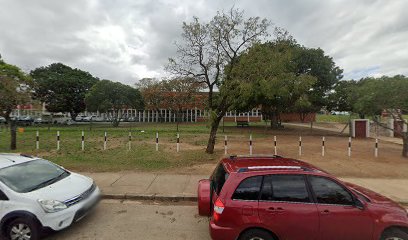
South African Council for English Education is a Non-profit organizations establishment in Kariega, Eastern Cape, South Africa
Kariega
Eastern Cape
Jansendal, Kariega
South Africa
Curriculum
The South African Council for English Education (SACEE) functions as a premier organisation dedicated to the promotion and enhancement of English language education across South Africa. Rather than delivering a traditional classroom syllabus, SACEE coordinates a spectrum of national projects, branch activities and support services designed to advance English proficiency, literacy and critical thinking among learners and educators.
Curricular activity centres on a mix of large-scale competitions, literary projects and debate platforms that bring English to life in school and community contexts. These initiatives operate alongside regional branches that organise creative and scholarly activities relevant to their local environments, including reading, writing and public discussion opportunities. The approach emphasises applied language skills, bilingual and multilingual literacy, and engagement with English as a medium for learning across subjects.
Key national projects compiling and promoting English are at the heart of SACEE’s curriculum-oriented offerings. The annual English Alive anthology gathers writings from high schools and colleges, serving as both a showcase for student voice and a practical teaching resource. The De Beers English Olympiad stands as a prestigious literary competition, offering substantial incentives and opportunities for top performers, including university tuition prizes and books. The Language Challenge and Puzzle Parades provide language-based puzzles and tests open to learners across grades, encouraging analytical thinking and problem-solving through English usage. Involvement in World Schools Debating Leagues further broadens linguistic competence, argumentation, and collaborative communication through competitive debate formats in participating branches.
In addition to these national projects, SACEE supports a wide range of branch-level activities. Branches such as those in Eastern Cape, among others, organise creative writing, spelling and debating events, as well as reader provision for primary pupils. These outreach programmes reinforce practical language development and literacy in local communities, with a view to sustaining long-term engagement with English education beyond the classroom.
A distinctive learning resource offered through SACEE is an editorial and proofreading service provided by a panel of experienced editors. This service is available to individuals and businesses within South Africa, delivering professional language support that complements educational activities and enhances written communication across a variety of contexts. Details and arrangements for this service are coordinated through the SACEE National Office.
Overall, the curriculum framework associated with SACEE centres on experiential, competition-led and project-based learning in English. It combines literary creation, language mastery, critical discussion and professional language support to foster higher standards of written and spoken English, while emphasising broad accessibility through branch networks and national initiatives. For further information on branch activities and national projects, the organisation’s website provides updating details and participation options.
- National projects: English Alive anthology, De Beers English Olympiad, Language Challenge and Puzzle Parades, participation in World Schools Debating Leagues.
- Branch activities: local competitions, creative writing, spelling, debating, and provision of readers for primary schools.
- Support services: professional editing and proofreading for individuals and businesses in South Africa.
For more information on SACEE’s programmes and opportunities, readers are encouraged to consult the official website: SACEE.
Faculties and Branches
South African Council for English Education (SACEE) operates as an organisation dedicated to the promotion of the English Language. While not a traditional university or college faculty structure, SACEE comprises a national framework supported by eight active branches across the country, including the Eastern Cape region. The Eastern Cape branch forms part of a network that undertakes activities to promote education through English and to enhance standards of written and spoken English in South Africa.
Branches are managed by volunteers and organise a range of local activities designed to engage learners and educators alike. These activities include creative writing competitions, spelling competitions, forum discussions, debating, and the provision of readers to primary schools. Each branch thus contributes to a broader, decentralised ecosystem of language promotion and educational outreach within its own area, while aligning with SACEE’s overarching aims.
In addition to branch-level programmes, SACEE coordinates several National projects that extend impact beyond local communities. These national initiatives encompass.
- The publication of English Alive, an annual anthology featuring writings from high schools and colleges in South Africa, an endeavour supported since 1967 and valued as a teaching resource.
- The De Beers English Olympiad, a joint project with the Grahamstown Foundation running since 1976, offering substantial prizes including cash awards, tuition, books and tokens.
- The Language Challenge and Puzzle Parades, a competition focused on language puzzles and tests, open to learners across all grades.
- World Schools Debating Leagues, with participation from branches in Johannesburg, Bloemfontein and Polokwane, linking regional activity to international debate forums.
Beyond competitions and projects, SACEE provides professional editing and proofreading services to interested individuals and organisations within South Africa. A panel of qualified editors offers services at reasonable rates, supported by the National Office for further information and arrangements.
For readers seeking detailed information on branch-specific activities, competitions, and outreach programmes, the SACEE website provides dedicated sections for each branch. The Eastern Cape branch’s activities contribute to the collective goals of SACEE, reinforcing language education across schools and communities in the region. Additional branches are envisaged in other provinces as the organisation continues to expand its network.
More information about SACEE, its branches, and national projects can be explored at the official website: SACEE.
Registration Details
South African Council for English Education (SACEE) operates as a national organisation dedicated to the promotion and improvement of English language education across South Africa. Established in 1955, SACEE supports a range of literary and language-based activities through eight active branches nationwide, including in the Eastern Cape. The organisation emphasises collaborative engagement with schools, educators and learners to enhance opportunities for English language study, writing, debating and related competitions.
For those seeking to engage with SACEE through formal registration or participation in its programmes, it is important to recognise that SACEE’s activities are largely organised at the branch level. The national structure co-ordinates four major projects and broader initiatives, while individual branches arrange local competitions, outreach programmes and events. Details about how to participate, register or enter specific competitions are typically provided by the relevant branch.
Where to apply or obtain information on registration and participation depends on the branch and the programme of interest. Prospective participants or schools are advised to explore the branch pages for their local area to access current opportunities. The SACEE website provides a central point of reference and additional context about the organisation’s scope and activities. For general information about SACEE, and to learn more about its leadership, structure and national projects, the About Us page can be consulted.
In terms of national projects and services, SACEE also offers a professional editing and proofreading service to individuals and businesses within South Africa. This service is supported by a panel of qualified editors and proofreaders. Details and arrangements for these services are handled through the SACEE National Office. Prospective clients seeking editorial support are advised to contact SACEE National Office for further details on scope, arrangements and governance of such services.
- Overview of SACEE’s activities and branches: information is available through the SACEE website and the branch pages (where applicable).
- National projects and programmes commonly associated with SACEE include publications, competitions and language challenges managed in collaboration with regional branches.
To access official information and to navigate to more granular details, the SACEE website offers a dedicated About Us section, which provides background on the organisation’s aims and operations. Visiting that page can help prospective participants identify the appropriate branch contacts or locations for registration and participation.
Contact or support channels referenced in SACEE materials indicate that the National Office is the primary point of contact for certain services, including editorial and proofreading offers. While specific contact details such as telephone numbers or email addresses are not listed here, the national office is the channel through which additional information can be sought.
For completeness and direct access, the following link to official information is provided: About Us.
Sorry, no records were found. Please adjust your search criteria and try again.
Sorry, unable to load the Maps API.
Education and Resources in Kariega, Eastern Cape
Located in the Eastern Cape, Kariega offers a varied landscape of educational opportunities that cater to learners and families at different stages. The area's schooling system encompasses public and independent institutions that provide foundational schooling, as well as preparatory and senior programmes. Across the townships and neighbourhoods, learners can typically access primary and secondary schools that offer core subjects, language support, and routes into further study or employment through structured curricula and examinations.
Beyond traditional schools, Kariega is connected to a broader network of educational facilities that support career development and lifelong learning. Technical and vocational education is represented by training centres and further education colleges that specialise in hands-on skills, crafts, and industry-aligned qualifications. These institutions often deliver modular courses, apprenticeships, and certifications intended to enhance employability and practical competence in sectors such as engineering, information technology, business services, and health care support.
Higher education opportunities in and around Kariega enable access to undergraduate and postgraduate study, as well as distant-learning options. Local learners commonly combine campus-based studies with flexible programmes designed to fit different schedules. Universities and formal adult-education providers in the wider region typically offer degree programmes, diplomas, and professional qualifications across faculties such as arts and humanities, sciences, education, and business studies. Prospective students are guided by admission processes that outline entry requirements, application timelines, and the submission of academic records, with many programmes accommodating diverse educational backgrounds.
Learning support and student services form a key part of the educational ecosystem. Schools and colleges often provide additional tutoring, learning support for learners with special educational needs, and guidance counselling to assist with course planning, study skills, and career options. Institutions may offer language assistance, academic workshops, and mentorship schemes designed to improve literacy, numeracy, and independent study habits. Where relevant, support services also address financial planning, visa and housing considerations for those relocating to pursue studies, though specific provisions vary by institution and programme.
Facilities and resources commonly encountered in Kariega include libraries with extensive collections, study spaces, and access to digital resources. Laboratories, workshops, and specialised teaching spaces support practical learning in science, technology, engineering, and applied disciplines. Sports facilities, fitness centres, and outdoor recreational areas contribute to a balanced student experience, while accommodation options—where available—range from on-site halls of residence to local lodging choices, designed to meet the needs of regional and visiting students.
Typical pathways through the education system begin with registration or enrolment in appropriate programmes, followed by regular assessment and progression opportunities. Academic planning often involves selecting subjects or modules aligned with future goals, whether aiming for higher education, skilled trades, or direct entry into the labour market. Information about admission criteria, deadlines, and required documentation is usually communicated by individual institutions, with guidance provided by school subject counsellors, college admissions offices, and university admissions centres.
In sum, Kariega offers a cohesive array of educational options that support learners from primary schooling through to higher education and vocational training. The combination of diverse institutions, learner services, practical facilities, and clear progression routes contributes to a learning environment that emphasises both knowledge development and practical preparation for the workforce.
- Public and independent schools serving different communities
- Technical and vocational training centres and further education colleges
- Universities and higher education providers accessible within the region
- Learning support, guidance services, and career planning resources
- Libraries, science and technology laboratories, and sports facilities
For those seeking more information, prospective learners and families can consult official education portals and regional education authorities, as well as the websites of local institutions, to obtain guidance on programmes, admissions, and available resources.