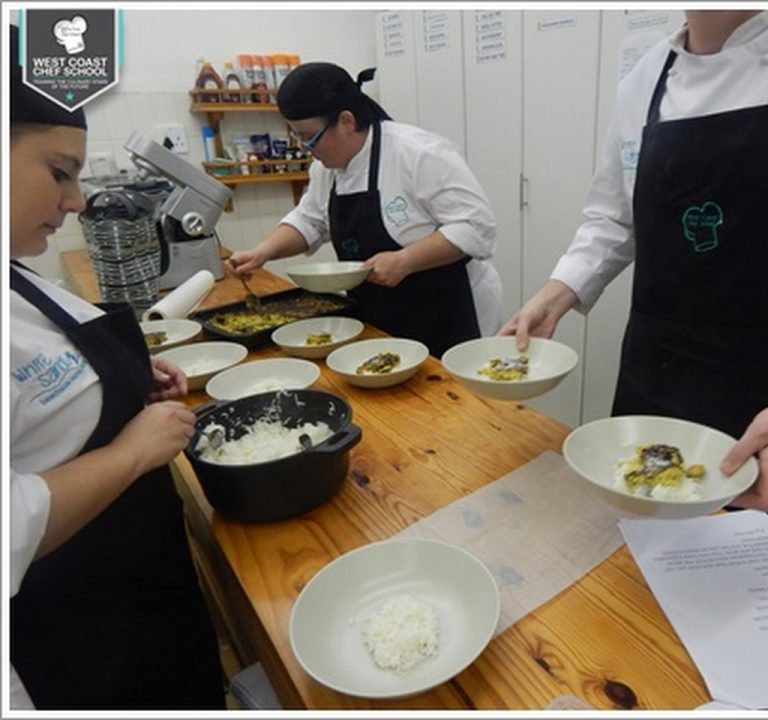
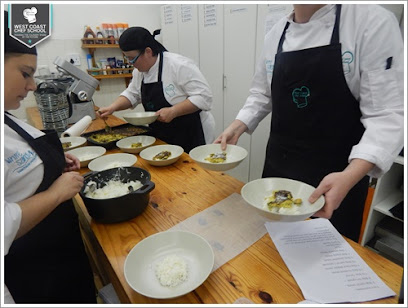
West Coast Chef School is a Cooking school establishment in Langebaan, Western Cape, South Africa
Langebaan
Western Cape
7357
South Africa
Curriculum
West Coast Chef School presents a structured curriculum designed to suit aspiring cooks at different stages of their careers, with programmes offered in both accredited and non-accredited formats. The school emphasises practical, hands-on training where learners gain real-world kitchen experience under the guidance of professional chef tutors. The intimate class sizes enable more personalised attention and feedback, contributing to a focused and supportive learning environment.
Programmes and levels span from introductory certificates to professional diplomas. The curriculum encompasses core culinary foundations as well as specialised areas intended to prepare learners for supervisory or management roles within the catering sector. Courses are designed to be relevant to the hospitality industry, with pathways that can support progression to higher levels of responsibility in professional kitchens or related food operations.
Areas of study within the curriculum cover a broad range of essential culinary competencies. Core topics typically include principles of food safety and health and safety, kitchen etiquette and professional standards, food preparation and cooking techniques, cold and hot food production, and essential kitchen equipment and knife skills. The broader curriculum also addresses menu planning and recipe costing, nutrition and dietary considerations, and professional development for cooks. In addition, specialised study in patisserie, HACCP, and food safety management for catering are described as part of the school’s broader offering, reflecting the aims of supporting both entry-level learners and those seeking progression into more advanced roles.
Infection prevention and control is presented as a distinct area within the curriculum, aligning with the need for sound hygiene practices in workplaces and commercial kitchens. The Highfield qualifications incorporated into the delivery reflect industry-recognised benchmarks for competence, from entry-level to supervisory levels, with adjustments for different work contexts such as catering and maritime settings. These qualifications are described as suitable for a range of candidates—from those starting their career in hospitality to professionals seeking to specialise or advance into supervisory responsibilities.
Short courses and professional training form part of the school's offerings, alongside longer, more formal programmes. These include topics such as infection prevention and control, and food safety-related courses that meet industry standards. The curriculum is designed to be practical and workplace-oriented, supporting learners who aim to enter employment or who wish to strengthen their qualifications for career advancement.
Supportive learning resources accompany the curriculum, with references to textbooks, portfolios of evidence, and practical components that reinforce theory with applied practice. Learners can expect a structured intake process, access to materials and evidence-based assessment, and opportunities to demonstrate competency through work-related tasks. The school's approach emphasises developing not only technical skills but also confidence, accuracy, and professional conduct in a bustling kitchen environment.
Overall, the curriculum at West Coast Chef School combines hands-on culinary training with accredited qualifications and targeted short courses, delivered by experienced tutors in a small-group setting. It aims to equip students with the practical skills, safety awareness, and managerial insight needed to pursue successful careers in hospitality, catering, and related food-service industries, both locally and internationally.
Faculties and Branches
West Coast Chef School operates as a small, intimate culinary college situated at Mykonos Resort Marina in Langebaan, Western Cape. The centre emphasises hands‑on learning and personalised attention, with an average class size typically in the mid‑single digits. The school presents itself as an internationally approved and accredited centre, reflecting its commitment to recognised professional standards within the hospitality and culinary sectors.
The institution describes its core remit through clearly defined course clusters rather than a large, multi‑campus structure. The primary areas of study are rooted in culinary instruction, complemented by specialised programmes in food safety and infection prevention. This structure supports both entry‑level pathways for newcomers to the industry and more advanced qualifications for those seeking supervisory or management responsibilities in professional kitchens or related environments.
Under the umbrella of culinary education, the school offers a range of accredited courses and non‑accredited short courses. The curriculum is designed to cover practical cookery skills, kitchen operations, and the business aspects of food service, with courses aimed at a spectrum of learners—from beginners exploring the hospitality industry to seasoned cooks pursuing formal qualifications. The delivery model emphasises active participation, with extensive practical cookery alongside theoretical study.
Programme outlines indicate several tiers and progression opportunities within the culinary field. Notable offerings include:
- Certificate in Food Preparation and Cooking (initial entry‑level qualification focusing on food preparation, cooking methods, and related workplace skills).
- Highfield qualifications at Level 2 and Level 3, including a Diploma for Professional Chefs and an international Diploma in Baking & Patisserie, designed for individuals working in catering or seeking to specialise in patisserie or supervisory roles.
- Level 4 Diploma in Culinary Supervision and Management (RQF), aimed at those aspiring to supervisory or managerial positions within the industry.
- Associated preparatory and support qualifications such as food safety, health and safety in catering, and related vocational awards that align with industry standards.
The school’s leadership and teaching team are presented as experienced culinary professionals. The management and teaching staff are described as professional chefs with extensive industry backgrounds, including roles as head chefs in reputable restaurants. This emphasis on professional practice underpins the school’s philosophy of “learning by doing,” with an emphasis on practical training, direct mentoring, and individual attention within small classes.
Facilities and campus specifics are not expanded beyond the Langebaan location, but the site’s setting within a resort environment is highlighted as part of the learning experience. The school provides information about its acceptance steps and administrative processes online, including application, acceptance, deposit payment, and start date allocation, underscoring a straightforward pathway into training and career development.
For prospective students seeking partnerships, additional information or the latest course outlines, the school’s website serves as the primary reference point. The address details, programme names, and progression routes are described in broad terms, ensuring potential applicants understand the organisational structure while avoiding unconstrained extrapolation about unconfirmed branches or facilities. Further details and updates can be found at the official website: West Coast Chef School.
Registration Details
The West Coast Chef School in Langebaan, Western Cape, offers a pathway into culinary training through a range of accredited and non-accredited courses. Prospective students can begin by submitting an application, after which an acceptance letter is issued if admission is confirmed. Following acceptance, a deposit is required to secure a place, and once the deposit is received, detailed information and a start date are provided. The registration process is designed to be straightforward and guided, with clear steps from application to commencement.
Acceptance and entry are governed by an outlined procedure. Applicants should be prepared to engage with an online application form or to download a postal or electronic copy, complete it, and submit it along with the required supporting documents. The school notes that admission decisions are communicated through an acceptance letter, after which the deposit must be paid to guarantee a place on the chosen programme. Upon receipt of the deposit, all pertinent information including the start date is supplied to secure enrolment.
Application links and access points are provided to streamline the process. Interested individuals can start with the online application or, if preferred, download the form and submit it via the school’s established submission channel. For convenience, an online application gateway is referenced here: Apply online. The school encourages applicants to review the entry requirements before submitting their materials.
Eligibility and entry criteria are stated for prospective students aged 16 and older for various qualifications. Certain programmes specify minimum age and prior qualification prerequisites, such as the completion of a prior level (for example, the Highfield pathway may require specific certificates or experience). Where age is specified, applicants must be at least 16 years old to enrol, with some courses indicating additional prerequisites. These criteria are designed to ensure suitability for the programme and alignment with industry standards.
Documents typically required at registration include a copy of a valid form of identification and a CV, as referenced in the acceptance process. Applicants assemble and submit these documents along with the completed application form. Additional materials may be requested during the application review, so it is prudent to prepare pertinent educational records or evidence of previous training where applicable.
Costs and funding terms are not detailed in this section of the directory. Prospective students should rely on the acceptance letter and subsequent deposit information for any financial obligations associated with securing a place. The general structure is: complete application, receive acceptance, pay deposit, and commence the programme once placement is secured.
Contact and support channels are provided through the school’s website, and prospective applicants are encouraged to consult the site for the most current information. General information about course offerings and intake periods—such as January and July intakes—can be found in the site’s sections for current programmes and announcements. For further guidance during the registration period, the primary portal remains the West Coast Chef School website: West Coast Chef School.
- Apply online: Apply online
- Documentation: copy of ID and CV (to accompany the application)
- Deposit: paid after acceptance letter is issued
- Start date: provided after deposit is received
Overall, the registration pathway emphasises a clear sequence from application to commencement, with emphasis on eligibility, submission of essential documents, and timely accommodation of a place within the chosen intake period.
Sorry, no records were found. Please adjust your search criteria and try again.
Sorry, unable to load the Maps API.
Education and Educational Resources in Langebaan
Situated on the picturesque West Coast of the Western Cape, Langebaan serves as a hub for learners and families seeking a broad spectrum of educational opportunities. The town itself hosts a range of primary and secondary schooling options, with many pupils continuing into post‑compulsory study either locally or in nearby towns. The surrounding region offers access to further education and higher education institutions, minimising travel while maintaining proximity to community life and family support networks.
Within Langebaan and its immediate hinterland, learners can typically expect to encounter a mix of statutory schools, independent or community schools, and preparatory programmes designed to support different study trajectories. These institutions commonly emphasise core subjects, language development, mathematics and sciences, alongside arts, humanities and technology. For families seeking specialised tracks, many schools provide elective options, sports participation and cultural activities that reinforce a well‑rounded curriculum.
Beyond traditional schooling, educational resources extend to further education and training opportunities. Local and regional training centres offer programmes in areas such as vocational skills, hospitality, healthcare support, information technology and construction. These pathways are often designed to meet workforce needs and provide practical qualifications that recognise different learning styles and paces. In addition, distance learning and online resources are increasingly accessible, enabling learners to study flexibly while remaining connected to regional support services.
Higher education access for Langebaan residents is supported by a network of institutions within reasonable travelling distance. Students commonly engage with universities and other higher‑education providers in larger towns and cities nearby, with programmes spanning arts, sciences, business, engineering, education and health disciplines. Admission processes generally involve submitting required academic records, meeting language benchmarks and adhering to intake timelines; however, specific requirements are best checked with the chosen institution, as arrangements may vary by programme and level of study. Guidance resources, student services and accommodation opportunities are typically available through these providers, assisting with registration, orientation and progression planning.
Learning support and student services are a feature of many educational offerings in the area. Libraries and study spaces provide access to reference materials, lending facilities and quiet areas for independent study. On‑campus or partner facilities may include science and computer laboratories, workshops, and equipped art or media labs to support practical learning. Sports facilities, fitness options and recreational programmes contribute to holistic wellbeing and community engagement, while recognised student support services help with mentoring, counselling and academic progression.
Typical pathways for learners in Langebaan often follow a progressive route: completing schooling with qualifications such as a national senior certificate or equivalent, exploring vocational or technical certificates, advancing to higher education degrees or diplomas, and pursuing professional or graduate studies as desired. Admissions are commonly framed around meeting minimum academic requirements, demonstrating readiness for the chosen programme, and adhering to application timelines. Prospective learners are encouraged to investigate multiple options, compare support services, and consider accommodation and commute arrangements when planning the next steps.
Overall, Langebaan offers a supportive environment for education and lifelong learning. The combination of local schools, access to further education and wider higher‑education opportunities within the Western Cape enables families to navigate varied routes that align with individual interests, career goals and personal circumstances. For those exploring options, web portals for regional institutions and education providers provide a starting point to discover available programmes, entry routes and support services.
- Primary and secondary schooling with varied subject choices
- Vocational and technical training centres
- Distance learning and online study options
- Near‑region higher education institutions (universities and colleges)
- Libraries, laboratories, sports and recreation facilities
- Student support, accommodation and orientation services
Website links to regional education providers can offer detailed, up‑to‑date information on programme availability, admissions timelines and entry requirements. These resources help families plan successful educational journeys from Langebaan, across the Western Cape and beyond.