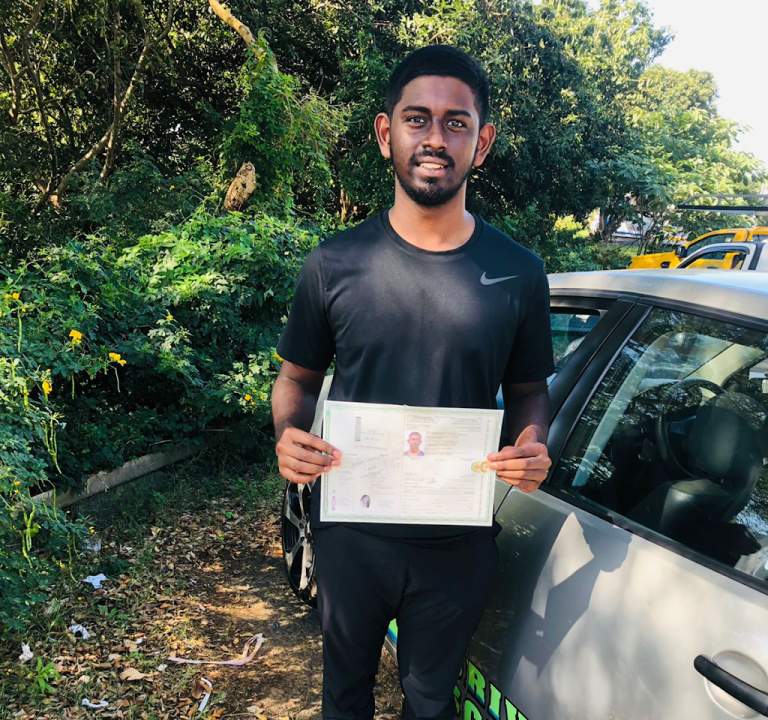
Vix Driving school is a Driving schools establishment in Isipingo, KwaZulu-Natal, South Africa
Isipingo
KwaZulu-Natal
Isipingo Rail, Isipingo
South Africa
Curriculum
Vix Driving School, based in Isipingo, KwaZulu-Natal, delivers a practical, outcomes-focused curriculum aimed at guiding learners through the entire pathway to obtaining a driver’s licence. The programme emphasises real‑world driving competence across both manual and automatic transmissions, with Code 8 and Code 10 lessons fully provided. This arrangement supports learners who require flexibility in vehicle choice while developing the essential skills for safe and responsible driving.
The curriculum is structured around a complete service model, starting from the initial booking of a learners’ test through to the final step of obtaining the driver’s licence. This end‑to‑end approach is designed to streamline the process for busy pupils, reducing the need for multiple separate arrangements and ensuring continuity of instruction and assessment. The school’s commitment to a thorough learner journey is reflected in its willingness to coordinate key milestones within a single service framework.
Teaching and practice take place across a variety of settings, with the school outlining its main testing grounds as Rossburgh, Pinetown and Winkelspruit. These locations are used to expose learners to familiar as well as varied driving environments, contributing to a rounded preparation for the official driving tests. The use of multiple testing grounds also suggests a curriculum that gradually builds confidence and technical proficiency in different traffic scenarios.
Instruction is delivered six days a week, indicating a flexible timetable designed to accommodate different learner schedules. The extended weekly availability supports consistent progression, enabling pupils to maintain momentum in their practice and progress through the stages of learning at a comfortable pace. While specific lesson lengths, durations, and progression criteria are not detailed publicly, the frequency of lessons implies a structured cadence intended to foster steady improvement and timely readiness for licencing.
In addition to core driving lessons, Vix Driving School provides practical pick‑up and drop‑off services for learners. This level of logistical support helps remove barriers to regular attendance, particularly for pupils balancing work, study, or family commitments. The inclusion of transport assistance is presented as part of a broader service ethos that prioritises convenience and learner accessibility within the Isipingo area and its surrounding districts.
Curriculum resources and distinctive learning features are not itemised in the publicly available materials. However, the combination of Code 8 and Code 10 instruction, coverage of both manual and automatic transmissions, partner testing grounds, and a full end‑to‑end service model collectively denote a practical, learner‑centred approach. The school positions itself as a longstanding provider in the Durban South region, with a focus on equipping pupils to attain their licences through hands‑on training, consistent scheduling, and supportive learner services.
For prospective students and families evaluating the programme, the key takeaways are the breadth of practical instruction across transmission types, the integrated pathway from test booking to licencing, the utilisation of multiple testing grounds to diversify experience, and the operational commitment demonstrated by six‑day service delivery and learner pickup/drop‑off support. While technical specifics such as individual lesson plans, assessment criteria, and fee structures are not publicly disclosed, the stated framework emphasises a pragmatic, structured approach to driver education within the Isipingo region and its environs.
Interested individuals are advised to contact Vix Driving School directly for the latest information on availability, scheduling, and any tailored options within the curriculum. The school’s stated aim remains to ensure learners are “fully equipped to attain your drivers licence” through comprehensive practical training and coordinated guidance throughout the licencing journey.
Faculties and Branches
Vix Driving School operates as a dedicated driving education provider with its base in Isipingo, KwaZulu-Natal. Established in 2002, the organisation has grown to become a prominent feature of the Durban South driving instruction landscape, offering a comprehensive suite of services designed to guide learners from enquiry to licence acquisition. The structure reflected in the operation centres on mobility, accessibility, and a broad, client‑focussed approach to driver training rather than a traditional university-style faculty arrangement.
The core activity revolves around practical driver training for both Code 8 and Code 10 licences, with instruction available in manual and automatic transmissions. Training packages are designed to cover the full journey, from the initial booking of the learner’s test through to the final step of obtaining a driving licence. This end‑to‑end offering positions Vix Driving School as a one‑stop service for aspiring drivers, reducing the need for learners to coordinate with multiple external providers.
In terms of spatial reach, the school is physically rooted in Isipingo but extends its testing and instructional reach to surrounding areas within the greater Durban South corridor. The positioning implies a client‑facing network rather than a single campus, with the service footprint extending from the Bluff to Winkelspruit. This geographical scope aligns with the practical emphasis on accessibility, enabling learners to arrange pickups and drop-offs as part of the training programme.
Within the operational model, the school references several main testing grounds that function as practical venues for assessments and driving practice. These testing grounds—specifically listed as Rossburgh, Pinetown, and Winkelspruit—serve as the contractual or logistical anchors for the licencing process. The use of multiple testing grounds suggests a distributed approach to assessments, providing learners with varied environments and traffic conditions to consolidate skills before certification.
The physical location in Isipingo is complemented by a visible public presence at a dedicated contact point for enquiries, which further indicates a client‑centred service design. While the primary site information focuses on the shop and contact details for arranging lessons, the overall description remains consistent with a decentralised, service‑oriented operation rather than a formal multi‑faculty academic structure.
Operationally, Vix Driving School advertises a six‑day week cadence, underscoring a commitment to flexible scheduling and broad access for learners. Pick‑up and drop‑off services are emphasised as part of the learner package, reinforcing the emphasis on convenience and personalised support. The combination of broad service coverage, multiple practical training grounds, and a clear end‑to‑end pathway from booking to licencing demonstrates how the institution organises its activities around learner progression rather than academic departmental divisions.
For prospective students seeking more details on locations, services, or enrolment, the contact page provides direct channels—including a mobile contact number and email address—together with a street‑level address at Shop No. 1, S Dass Centre, 20 Old Main Road, Isipingo Rail. This information reinforces the accessible, locally embedded nature of the school’s “faculties and branches” in the sense of its practical training divisions, service centres, and regional testing grounds rather than traditional academic faculties.
Registration Details
Vix Driving School, based in Isipingo, KwaZulu-Natal, operates as a comprehensive provider of learner and driver training services within the Durban South area and its surroundings. The organisation emphasises a complete journey from the initial booking of a learner’s test through to the final step of obtaining a driver’s licence. The service package covers both Code 8 and Code 10 licences, with tuition available for manual and automatic transmissions. Training is designed to be accessible across the local network, with dedicated testing grounds used to support the learner’s progression.
The registration or application process with Vix Driving School is presented as a streamlined, end-to-end service. Learners typically engage with the school to arrange the necessary steps for their driving progression, including the management of the learners test booking and subsequent driving instruction that leads towards licensure. The school operates on a six-day week, reflecting a willingness to accommodate learners across commonly busy periods, including weekends where required. A core aspect of the process is the provision of pick-up and drop-off services, which can simplify participation for learners who may have transport constraints or busy schedules.
To begin the process or to obtain further information, prospective learners are encouraged to make contact through the school’s established channels. While the specific online forms or deadlines are not described in the available material, the response channels appear to be straightforward and learner-friendly. Inquiries and confirmations can be directed to the contact points listed by the school, offering a clear path to initiate registration and to obtain guidance on next steps.
Where to apply or seek assistance is clearly signposted through the school’s contact options. Enquiries are welcomed via the listed telephone and WhatsApp line, as well as email, with the following details provided for direct communication:
- Phone/WhatsApp: 072 218 2928
- Email: [email protected]
The physical address for the Isipingo centre is Shop No. 1 - S Dass Centre, 20 Old Main Road, Isipingo Rail, KwaZulu-Natal. This information may assist prospective learners in arranging in-person visits to discuss registration requirements, course availability, and the range of services offered, including transport arrangements and testing locations.
Registration considerations and eligibility are presented as general parameters rather than highly prescriptive criteria. The information indicates that the school provides training for Code 8 and Code 10 licences, with coaching available for both manual and automatic transmissions. The inclusion of multiple testing grounds—Rossburgh, Pinetown and Winkelspruit—suggests an emphasis on practical exposure to varied environments, potentially aiding learners in meeting licencing requirements across different testing venues.
In summary, prospective learners can anticipate a registration experience that centres on a complete learning pathway facilitated by the school. This includes the scheduling of learner’s tests, ongoing driving instruction, and support through to licensure, accompanied by practical transport arrangements and a network of testing locations. For those seeking concrete steps or personalised guidance, contact the school directly via the provided channels or visit the site’s contacts page for more information and possible updates to services.
For reference and further communication, interested parties may visit the school’s contact portal or reach out through the listed channels to arrange an initial consultation or to obtain confirmation of available programmes and schedules. The structure of the information indicates a customer-focused approach designed to help learners progress with clarity and support.
Sorry, no records were found. Please adjust your search criteria and try again.
Sorry, unable to load the Maps API.
Education and Resources in Isipingo, KwaZulu-Natal
Isipingo, a coastal suburb of KwaZulu-Natal, offers a range of educational opportunities suitable for families and learners at different stages. The area typically features a mix of public and private primary and secondary schools, as well as nearby colleges and training centres that cater to vocational, technical and further education needs. The presence of nearby universities within the wider Durban region provides pathways for learners seeking higher education while remaining connected to the local community.
Within Isipingo itself and the surrounding district, learners can expect access to a variety of programmes. Primary and secondary schools commonly offer core academic subjects, along with specialised learning support where available, including assistance for learners with literacy or numeracy difficulties. Vocational and technical options may be located in nearby townships or urban centres, presenting programmes in fields such as engineering studies, information and communications technology, hospitality and tourism, business studies, and health sciences. These options support learners who are aiming to enter the workforce directly after schooling or to continue onto further studies.
Post-school pathways are often complemented by community education and training centres that provide short courses, apprenticeships, and adult education. Such centres can help learners develop practical skills, acquire professional certificates, and gain opportunities forCareer-focused training alongside traditional academic routes. Distance learning and online resources may also be available, allowing students to study flexibly from home or in shared community spaces.
Access to learning resources forms a central aspect of educational life in Isipingo. Local libraries and school libraries frequently offer borrowing services, quiet study spaces, and access to reference materials and digital resources. Computer laboratories, science laboratories, and multimedia rooms in schools and colleges enable hands-on learning and practical exploration across disciplines. Sports facilities and organised extra-curricular activities commonly accompany academic provision, contributing to a holistic student experience and supporting physical well-being and teamwork.
Accommodation is typically more readily arranged for learners attending nearby institutions rather than those based solely in the immediate Isipingo area. Students and families may consider shared housing or family housing arrangements within reasonable commuting distance to campuses and training centres. Public transport links and safe walking routes are important considerations for daily travel between home and learning venues.
Admissions and registration processes generally involve selecting an appropriate learning pathway, submitting required documentation, and meeting any age or residency criteria set by local authorities or institutions. In many cases, learners complete simple enrolment steps through school administrations, district education offices, or the admissions offices of colleges and universities within reach. Guidance is often available through school counsellors, community education services, and official information portals to assist prospective students with programme options, deadlines, and prerequisite qualifications.
Overall, Isipingo provides a practical and community-oriented educational landscape. The combination of primary and secondary schooling, vocational and further education options, supportive learning services, and accessible facilities supports learners in pursuing diverse academic goals, from foundational literacy and numeracy to specialised technical training and higher education prerequisites. Families considering educational development can expect a network of resources designed to accommodate different ages, interests, and life circumstances.
- Types of institutions: primary and secondary schools, local colleges, training centres, nearby universities within KwaZulu-Natal
- Common programmes: core academic subjects, vocational and technical courses, business studies, information technology, health sciences, hospitality
- Learning support and student services: literacy and numeracy assistance, guidance counselling, tutoring resources, special educational needs support where available
- Facilities and resources: libraries, ICT and science labs, sports fields and fitness spaces, multimedia rooms
- Typical pathways: school-based enrolments, college or training centre registrations, higher education applications, guidance through local authorities and institutions