
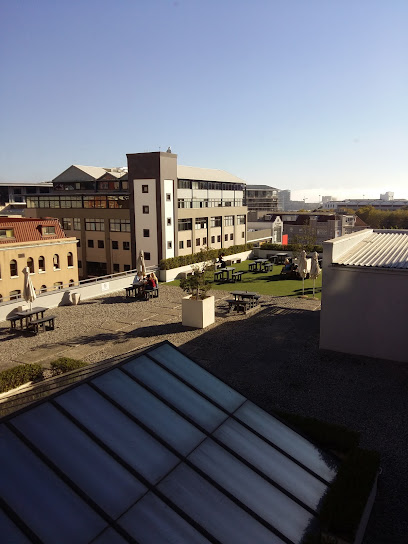
Vega School Cape Town is a Colleges establishment in Cape Town, Western Cape, South Africa
Cape Town
Western Cape
8001
South Africa
Curriculum
The Cape Town campus of Vega School, operating in collaboration with Emeris, presents a curriculum designed to be real‑world ready. The partnership noted on the campus page signals an emphasis on translating academic study into practical application within contemporary industries. This approach situates learning within a framework that aims to equip students with skills and perspectives that align with current professional expectations, preparing graduates to engage confidently with real workplace scenarios.
As a higher education institution with a focus on applied learning, the programme structure at Vega School Cape Town is described in terms of levels and pathways intended to bridge education with industry practice. While specific programme titles, durations, and entry requirements are not enumerated on the page, the overarching narrative points to a curriculum that progresses through stages aligned with professional relevance. The content suggests breadth across certain disciplines and disciplines‑in‑practice that are aimed at supporting employability through practical competencies, project work, and applied assessments.
The page positioning emphasises real‑world readiness, indicating that learning experiences are intended to reflect contemporary workplace contexts. This typically involves pedagogy oriented toward hands‑on projects, case studies, simulations, and collaborative work that mirrors team dynamics found in many organisations. The emphasis on practical relevance implies opportunities for students to engage with industry‑standard problems and to develop transferable skills such as problem solving, effective communication, and critical thinking within practical settings.
In terms of delivery and format, the page does not provide explicit details about online availability, blended learning, or flexible study options. Prospective students are encouraged to obtain further information through the campus contact channels or related official pages. The absence of specific delivery modes on this page does not preclude the possibility of varied formats; it simply reflects the information presented in this particular section. Interested readers should consult the broader Vega School or Emeris documentation for clarification on how programmes are delivered, including any online components or blended approaches that may be offered.
Beyond core programmes, the curriculum discourse on the Cape Town campus signals an overarching commitment to applied, practice‑based education. This often translates into practical training components, workshops, and opportunities that connect academic study with real‑world contexts. Students can expect an emphasis on developing professional competencies that are directly applicable in the workplace, with a focus on industry relevance and practical outcomes. The extent of such components, including short courses or professional training offerings, is not detailed on this page, but the framing suggests that the institution values scalable, employability‑driven learning experiences that extend beyond traditional degree coursework.
Support structures and distinctive resources commonly associated with applied programmes may include access to industry mentors, career guidance aligned with practical pathways, and facilities designed to support hands‑on learning. While the specific student support services or distinctive learning resources are not itemised on the Cape Town page, the broader context of Vega School’s positioning implies a focus on supporting learners as they transition from education into professional environments. Readers seeking tangible information about services such as tutoring, academic advising, or alumni and industry networks should reference the campus‑level contact channels or the main Vega School materials for definitive details.
For those exploring curriculum options at Vega School Cape Town, the page consistently frames the offering within a real‑world, industry‑engaged pathway. Although exact programmes, durations, fees, and entry criteria are not provided here, the stated aim is clear: to deliver a curriculum that connects academic study with practical professional demands, enhanced by the collaboration with Emeris. To obtain precise information about current programmes, delivery formats, and support services, prospective students should follow the official links and contact points referenced on the campus page.
- Nature of programmes and levels: described as geared towards real‑world readiness within an applied, industry‑linked framework.
- Areas of study and curriculum approach: emphasises practical application, project work, and industry relevance (specific disciplines not listed on this page).
- Short courses or professional training: mentioned in general terms as part of an applied learning ecosystem, without specific offerings on this page.
- Delivery modes: online or blended formats are not specified on this page; readers are advised to seek confirmation from official sources.
- Student support and resources: not itemised here; general implications point to practical career guidance and industry connections.
Overall, Vega School Cape Town presents a curriculum described as real‑world ready, framed by a partnership intended to enhance practical learning and industry alignment. For definitive programme details, delivery formats, and support services, consult the official campus materials and related pages.
Further information can be found via the Vega School website and the Emeris collaboration page referenced in campus communications.
Faculties and Branches
The Vega Cape Town campus, located in De Waterkant, Cape Town, forms part of Vega School’s presence in the Western Cape. The page for the campus emphasises a collaborative relationship with Emeris, signalling a combined offering aimed at preparing learners for real‑world professional environments. While specific faculties or departments are not itemised on the page, the alignment with Emeris suggests an integrated approach to programme delivery that bridges practical industry needs with higher education provision.
The available information indicates a single campus offering in Cape Town, serving as a central hub for students enrolled under Vega School’s Cape Town umbrella. The emphasis on collaboration with Emeris points to a shared focus on employability and applied learning, rather than a description of discrete faculties. Prospective students may encounter programme options and student services through the campus interface and the partner organisation’s resources, rather than through a standalone list of faculties on the page.
For prospective students and visitors, the page highlights a straightforward avenue for contact and engagement via an online form, reinforcing the campus’s readiness to assist with admissions, enquiries, and campus services. The campus location is specified as 130 Strand Street, De Waterkant, Cape Town, situating the site within the city’s urban core and enabling access to the broader Western Cape educational network. The partnership with Emeris is presented as a means to deliver education that is real‑world ready, aligning curricula and student support with industry expectations.
In terms of structure, the page does not present a detailed breakdown of faculties, schools, or departments. Instead, it outlines a collaborative framework and a physical campus that operates within Vega School’s Cape Town ecosystem. This approach suggests that students may engage with a unified Cape Town offering rather than a menu of independently named faculties, with potential programme pathways conveyed through the campus, Vega School’s central materials, and Emeris‑aligned resources.
Overall, Vega Cape Town is depicted as a single, prominent educational site in the city’s central district, supported by a strategic partnership with Emeris. Learners considering this campus should explore the official Vega School website and the Emeris resources for information on specific programmes, entry requirements, and available student services, while noting the emphasis on practical, industry‑aligned education conveyed by the partnership. For more information, interested readers can visit Vega School’sCape Town pages on the official site.
Registration Details
Vega School Cape Town operates within a partnership landscape that includes Emeris, emphasising education that is aligned with real-world needs. The campus presents a pathway for prospective students to initiate engagement through its official channel, with information and communication hosted on the Cape Town campus page.
For individuals considering enrolment or seeking further guidance on the registration process, the primary route is to make contact through the Cape Town campus’ official contact page. This channel provides a direct means to request information, ask questions, and begin the enquiry process in a structured manner. The page also reflects the campus’ practical approach to student outreach, including a digital form designed to capture inquiries and facilitate timely responses.
As the institution operates in Cape Town, Western Cape, the registration experience is framed by the campus location and its collaboration with Emeris. While specific steps, deadlines, or required documentation are not detailed here, prospective applicants are advised to consult the official campus page for the most accurate and up-to-date information regarding registration pathways and support.
The contact page for Vega School Cape Town can be reached via the following link:
Cape Town Campus – Contact and Registration.
Support channels available through the site focus on assisting applicants and enquiries. The campus page notes that a form is used to collect information from prospective students, facilitating a prompt response from campus staff. This form represents the primary mechanism for initiating official contact and beginning the registration conversation.
- Initiate contact via the Cape Town campus contact page to request information and guidance on registration.
- Engage with campus staff through the available enquiry form to receive tailored assistance and next steps.
- Access general information about the Vega School–Emeris collaboration and how it relates to programme delivery and real-world readiness.
While the published content does not list specific eligibility criteria, documents, deadlines, or fees, the recommended course of action is to use the official contact pathway to obtain current requirements and next steps directly from campus representatives.
Sorry, no records were found. Please adjust your search criteria and try again.
Sorry, unable to load the Maps API.
Education and Resources in Cape Town
Cape Town, nestled between Table Mountain and the Atlantic, offers a broad spectrum of educational opportunities for learners at every stage. The city supports a diverse mix of institutions, ranging from public and private schools to higher education providers, technical training centres and specialised learning organisations. This variety helps families identify pathways that align with academic goals, career interests and personal development needs.
Schools in the area typically cater to a range of curricula and approaches. Many offer standard programmes for secondary education alongside enrichment options such as language development, science and arts strands, and examination preparation. In addition, learner support services are commonly available, including assessment for learning difficulties, counselling, and programmes designed to foster inclusive education. Parents and guardians can expect schools to provide information about admissions timelines and registration processes, with some offering virtual tours and guidance sessions to explain entry requirements and progression options.
Further education and training opportunities are abundant in Cape Town. Vocational schools and private colleges frequently provide practical, career-focused programmes aligned with industry needs, including business administration, information technology, engineering trades, hospitality and creative industries. These institutions may offer part-time study, short courses, certificates, diplomas and advanced diplomas, along with pathways into higher learning for those seeking progression to university study.
Universities form a significant component of Cape Town’s educational landscape. The city hosts several reputable institutions that welcome both full-time and distance learners. Typical offerings include undergraduate degree programmes, postgraduate studies, research opportunities and professional courses across fields such as the sciences, humanities, health sciences and engineering. For prospective students, admission considerations usually involve prior academic results, prerequisites for chosen programmes and clear application timelines. Many universities also provide centralised services to assist with registration, financial planning, accommodation and student support.
Learning support and student services extend beyond the classroom. Libraries and information resource centres are common features, equipped with study spaces, digital resources and quiet zones for focused work. Modern learning environments often include computer labs, science and engineering laboratories, and makerspaces that encourage practical project work. Sporting facilities, performing arts venues and student unions contribute to a well-rounded campus experience, while on-campus accommodation ranges from residence halls to affiliated housing, offering opportunities for peer learning and social engagement.
Access to online and distance learning materials is widely available, with portals and platforms that enable learners to review course content, submit assignments and participate in virtual discussions. Support services such as tutoring programmes, language and maths support, and mental health and wellbeing resources help learners manage the demands of study and maintain progression across programmes.
Potential pathways in Cape Town typically begin with early planning, followed by informed choices about school subject combinations or programme selections. Admissions and registration processes are guided by the issuing educational authorities and individual institutions, with clear steps for submitting documents, meeting deadlines and confirming acceptance. Financial planning, including information on bursaries and grants where applicable, is often complemented by guidance on accommodation, campus life and orientation sessions to assist new entrants in settling into the next phase of education.
For those seeking more information, reputable sources include local education departments and university portals, which provide up-to-date guidance on curricula, admission requirements, and available support services. Examples of relevant online resources include official government and university sites that offer programme details, campus facilities, and student support information.