
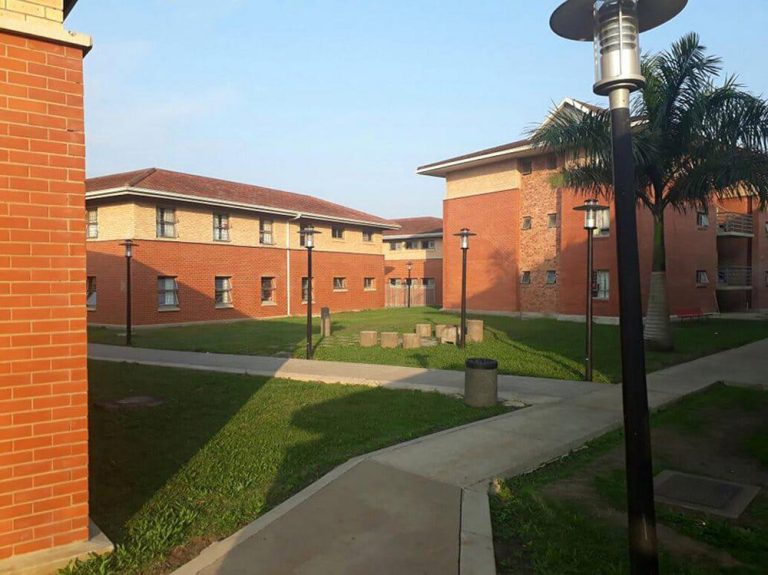

University of Zululand is a Universities establishment in Richards Bay, KwaZulu-Natal, South Africa
Richards Bay
KwaZulu-Natal
3900
South Africa
Curriculum
The University of Zululand offers a broad spectrum of academic programmes across its faculties, encompassing undergraduate and postgraduate study. Although specific course lists are not detailed in this overview, the institution emphasises a comprehensive curriculum designed to prepare graduates for competitive careers while addressing national and continental development needs. The curriculum is organised to integrate foundational knowledge with advanced study, enabling progression through various levels of study within the university’s disciplines.
Across its campuses, UNIZULU emphasises areas of study aligned with its core faculties, including humanities and social sciences; commerce, administration and law; science, agriculture and engineering; and education. This structure supports a diverse range of degree offerings and enables students to pursue research-informed learning within their chosen fields. The university’s online and blended learning provisions are evidenced by its e-learning platforms, providing digital access to learning resources and enabling flexible study approaches where available.
Curriculum design at UNIZULU is supported by dedicated teaching and learning services, with resources aimed at enhancing academic quality and student success. The presence of library services, the UNIZULU Science Centre, and other learning facilities indicates a curriculum that is complemented by practical resources, scientific enquiry, and opportunities for hands-on engagement. These resources contribute to a holistic approach to learning, integrating theoretical knowledge with experiential experiences.
Short courses and professional training components are implicit within the university’s broader curriculum offering, providing avenues for continuing education and entry into professional practice. While exact programmes and durations are not enumerated here, the structure suggests options for both degree-level study and targeted, shorter-form study designed to meet industry needs and personal development goals.
Online or blended study options are reflected in the university’s digital infrastructure and learning platforms. The presence of E-learning services and online learning portals indicates that some aspects of the curriculum can be accessed remotely, supporting flexible study arrangements and wider participation. Prospective students are encouraged to consult the relevant faculty pages for discipline-specific delivery modes and entry pathways.
Student support and engagement are highlighted through accessible teaching and learning services and support divisions. These include academic planning and quality assurance, information technology services, and student services departments, which collaborate to enhance curriculum delivery, assessment management, and academic progression. The university’s commitment to student-centred support is reinforced by its organisational structures designed to assist learners throughout their studies.
Distinctive learning resources highlighted by UNIZULU include the Library and the UNIZULU Science Centre, which together enrich the curriculum with research capability, science demonstrations, and resource access beyond standard classroom teaching. Such facilities are integral to an enquiry-based learning culture, enabling students to explore ideas, conduct experiments, and engage with cutting-edge scientific topics as part of their academic programme.
For those seeking further information on curriculum specifics, students and prospective applicants are advised to explore the university’s main site and the faculty pages. Guardian resources such as the undergraduate brochure and applying-to-study documents provide formal guidance on study pathways, entry processes, and progression opportunities, aligning with UNIZULU’s aim to make dreams become a reality through structured and well-supported study options. Website links are available to direct readers to current resources and updates on curriculum-related matters.
- Undergraduate and postgraduate study across UNIZULU’s faculties
- Curriculum complemented by Library and Science Centre facilities
- Teaching and Learning support and quality assurance mechanisms
- Short courses and professional training opportunities
- Online and blended learning options where available
Faculties and Branches
The University of Zululand operates as a comprehensive African university with multiple faculties and specialised campuses, each contributing to a broad range of programmes and student services. The structure centres on four main faculties, supplemented by dedicated campus facilities and cross-cutting divisions that support teaching, learning, research, and community engagement.
- Faculty of Humanities & Social Sciences – Offers programmes across humanities and social science disciplines. More information can be found at the faculty site: arts.unizulu.ac.za.
- Faculty of Commerce, Administration & Law – Provides degree and diploma programmes spanning business, management, economics, law and related fields. Detailed information is available at fcal.unizulu.ac.za.
- Faculty of Science, Agriculture & Engineering – Covers STEM disciplines including sciences, agricultural studies and engineering courses. Access the faculty site at science.unizulu.ac.za.
- Faculty of Education – Focuses on teacher education and allied programmes. More details are hosted via the Education faculty page: education.unizulu.ac.za.
In addition to the four main faculties, the university operates through specialised campuses and centres that support academic delivery and student experience. The Richards Bay Campus represents a notable branch, expanding access to UNIZULU’s offerings in KwaZulu-Natal’s urban and rural context. Details about the Richards Bay Campus can be found at rbay.unizulu.ac.za.
Several university-wide units contribute to the seamless functioning of programmes and student services. The Teaching & Learning division provides academic development and pedagogical support, while Research & Innovation coordinates scholarly activity and impact. Community Engagement links the university with local communities, facilitating service learning and collaboration beyond the campus. Each of these units maintains its own information page, hosted at tlc.unizulu.ac.za, research.unizulu.ac.za, and ce.unizulu.ac.za respectively. A dedicated Science Centre also exists to promote science outreach and engagement with learners and public audiences, accessible through sciencecentre.unizulu.ac.za.
Across these faculties, campuses and centres, the university emphasises a cohesive student experience that connects academic programmes with support services. The Office of the Registrar, Academic Planning & Quality Division, and Student Services Department coordinate across faculties to assist with admissions, registration, assessment, and student welfare. Access to essential information and services is provided through the university’s central site and linked divisions, ensuring prospective and current students can navigate programme choices, campus locations, and support available during the course of study.
Registration Details
The University of Zululand provides a structured pathway to registration through its Office of the Registrar, specifically the Admissions section. The process is designed to assist prospective applicants and facilitate enrolment targets across the university’s faculties and campuses. An external observer notes that the admissions function emphasises guidance for first-time entry applicants and collaboration with faculties to support successful enrolment outcomes.
Overview of the application/registration process is presented through central university pages, which describe the sequence from application to confirmation. Prospective students are encouraged to consult the university’s dedicated Apply area for initial steps, and to access information about admissions policies, programme options, and entry requirements as published by UNIZULU. The Admissions section within the Office of the Registrar hosts essential materials and links to navigate the registration journey.
Where to apply is clearly identified on the university’s site. Applicants should visit the central Apply hub to initiate the process. Guidance and related information are also accessible via the Admissions pages, where prospective entrants can locate programme information, entry requirements, and registration procedures. Direct references to applying and admission resources help orient new applicants and returning students alike. Readers can click through to the main registration portal and related academic planning and quality resources for additional context while assembling required materials.
Documentation and materials typically associated with the registration process are addressed in central university documents such as the Undergraduate Brochure and practical registration guidance. While exact forms, deadlines, and fees are not specified here, these resources provide general information about undergraduate study options and the steps involved in applying to study at UNIZULU. Other practical references include documents titled Undergraduate Studies and the Applying To Study guide, which may offer supplementary details for applicants planning their registration path.
For ongoing registration support and information, the university provides accessible channels through the main site. The Contact Us section offers a route to obtain help from university administration and the Registrar’s Office if further clarification is needed. Although direct communication details are not reproduced here, visiting the university’s official pages will reveal the appropriate contact points for admissions inquiries and registration assistance.
Notable resources and links visible to prospective applicants include:
- Apply — central hub for applying to UNIZULU
- Admissions — official admissions information from the Registrar
- Undergraduate Brochure 2026 — general undergraduate prospectus
- Undergraduate Studies — guidance on applying to study at UNIZULU
In summary, registration at the University of Zululand is channelled through the Office of the Registrar’s Admissions pages, with supporting materials available via the central Apply area and related undergraduate documentation. Prospective students are advised to consult the official pages for the most current guidance, and to use the university’s described contact points should any clarifications be required during the admissions and registration journey.
Sorry, no records were found. Please adjust your search criteria and try again.
Sorry, unable to load the Maps API.
Education and Resources in Richards Bay
Richards Bay, situated in KwaZulu-Natal, South Africa, hosts a diverse array of educational options that cater to learners at different stages. The landscape includes mainstream schools, further education and training colleges, universities in the wider region, and dedicated training centres. Together, these provide a range of pathways designed to support academic achievement, practical skills development, and lifelong learning.
Within the town and surrounding areas, schools commonly offer curricula aligned with national and provincial education standards. Learners can encounter a spectrum of programmes across primary, secondary, and senior phases, including opportunities for subjects aligned with science, mathematics, languages, arts, and humanities. Many facilities also feature learner support components, such as pastoral care, career guidance, and accessible support for learners with special education needs. Beyond the classroom, schools frequently provide sport, cultural activities, and extracurricular offerings that contribute to well‑rounded development and healthy school communities.
Further education and training are well represented through local colleges and specialised institutions. These settings typically deliver a mix of NQF‑aligned certificates, diplomas, and practical programmes geared towards industry needs. Subjects commonly available cover engineering trade skills, information technology, hospitality and tourism, business administration, health and allied disciplines, and vocational studies. The emphasis tends to be on hands‑on learning, work readiness, and opportunities to undertake industry placements or partnerships with local employers.
Higher education institutions within the broader KwaZulu-Natal region provide access to undergraduate and, in some instances, postgraduate studies. For learners seeking university routes, various campuses and regional facilities can offer programmes in fields such as natural sciences, engineering, social sciences, education, and creative disciplines. Prospective students are typically guided through standard admission processes, with attention to qualification recognition, equivalency considerations, and potential bridging or articulation options for those transitioning from college programmes.
Training centres and private providers often specialise in practical skills, enabling direct entry into chosen trades or service sectors. These establishments may offer short courses, nationwide trades qualifications, or professional development programmes designed to respond to local workforce needs. Information technology, business administration, digital literacy, and language courses are common examples, along with industry‑aligned certificates that can support career progression.
Learning support and student services characterise many educational institutions in the area. Support may include academic tutoring, language assistance, disability services, mental health resources, and guidance on study skills and time management. Schools and colleges frequently provide access to libraries and study spaces, computer labs, science and engineering laboratories, and well‑equipped workshops. Sports facilities, performing arts spaces, and on‑site accommodation or student housing options—where available—contribute to a conducive learning environment for those relocating or pursuing multi‑term courses.
Typical pathways for learners and families in Richards Bay involve exploring the local offerings, assessing recognised qualifications, and identifying appropriate entry points. Admissions and registration often require completion of relevant schooling or prior qualifications, submission of grade records, and meeting any programme prerequisites. Guidance is commonly available through school careers services, college enrolment offices, and university admissions portals. Prospective students are encouraged to investigate campus open days, online information, and the support services designed to aid applications, funding opportunities, and planning for subsequent steps in education or employment.
Overall, Richards Bay presents a fertile landscape for education and lifelong learning, with a mix of institutions that support academic study, practical training, and personal development. Access to libraries, laboratories, sports and cultural facilities, alongside student supports and clear progression routes, helps learners to chart coherent pathways from early schooling through to vocationally focused qualifications or higher education. For more information on specific programmes and timelines, prospective students can consult official university and college websites, regional education offices, and approved educational providers within KwaZulu-Natal.