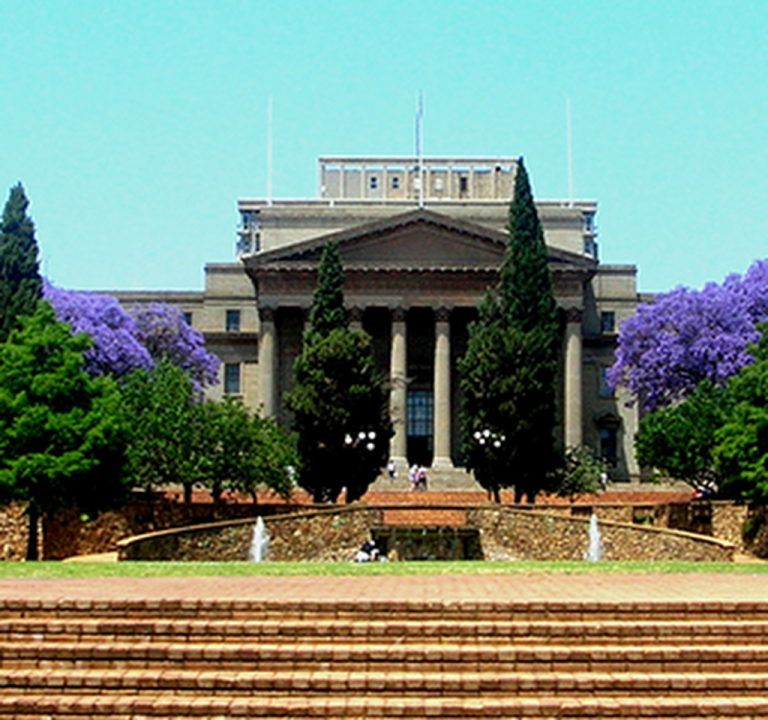
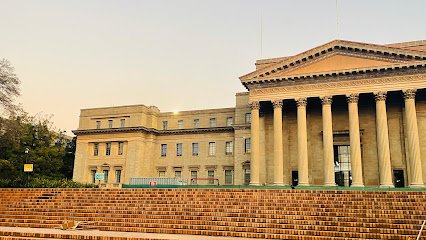
University of the Witwatersrand is a Universities establishment in Johannesburg, Gauteng, South Africa
Johannesburg
Gauteng
2017
South Africa
Curriculum
University of the Witwatersrand (Wits) presents a comprehensive, research-informed curriculum across five faculties, spanning the sciences, commerce and management, law, health sciences, and humanities. The university’s organisational structure emphasises interdisciplinary study, with numerous schools and centres aligned to address Societal needs in South Africa and beyond. The curriculum is designed to accommodate undergraduate, honours, master's, and doctoral qualifications, alongside professional and continuing education options that extend learning opportunities beyond traditional degree timelines.
Undergraduate study is organised through the faculties and affiliated schools, offering a broad range of disciplines that include business sciences, economics and finance, architecture and planning, civil and environmental engineering, chemical and metallurgical engineering, electrical and information engineering, and the biological, physical, and mathematical sciences. Postgraduate study builds on this foundation, enabling specialisation, research, and advanced professional preparation. While exact course lists and durations are not itemised here, the structure is described as encompassing a spectrum from foundational degrees to advanced postgraduate qualifications, with pathways that support both academic and professional trajectories.
Areas of study emphasise both depth and breadth. Within the Commerce, Law and Management domain, programmes explore business, management and legal studies, complemented by dedicated schools such as Wits Business School and related research centres. In Engineering and the Built Environment, attention is given to social and infrastructural transformation, with specialised disciplines spanning architecture, planning, civil and environmental engineering, chemical and metallurgical engineering, construction economics and management, electrical and information engineering, mechanical, industrial and aeronautical engineering, and mining engineering. The Health Sciences faculty foregrounds clinical and biomedical disciplines, while Humanities capture the Arts, Social Sciences, Education, and related disciplines. The Science faculty emphasises areas such as animal, plant and environmental sciences, computer science and applied mathematics, geography and environmental studies, molecular and cell biology, and statistics and actuarial science. This arrangement points to a curriculum that values cross-disciplinary synthesis as a core feature of study and research at Wits.
In addition to traditional degree programmes, Wits offers short courses and professional training through its continuing education channels. The university’s short course company, WitsPlus Pty (Ltd), is highlighted as offering a wide variety of programmes and courses, indicating a commitment to flexible upskilling and practical, career-relevant learning outside the regular degree structure. This includes opportunities for professionals and non-traditional entrants to acquire new competencies or update existing skills in a commercially oriented or practice-led format. While exact courses are not enumerated here, the emphasis is on accessible lifelong learning aligned to industry needs.
Online and blended learning options appear to be part of the broader learning ecosystem. Contemporary developments at Wits include digital platforms and resources for continuing education, with references to LinkedIn Learning as a vehicle for upskilling staff, suggesting that similar online resources may be available to students and external learners as part of formal or supplementary programmes. The existence of extensive online learning tools is reinforced by the university’s library and information services, which provide Advanced Search, e-books and e-journals, e-Wits Catalogue, and digital research tools. These resources support a curriculum that increasingly integrates digital literacy, research data handling, and scholarly access to contemporary knowledge.
Student support and engagement form an integral part of the curriculum environment. Campus life offerings, including museums, galleries, and innovation precincts, enrich curricular learning with experiential learning, research opportunities, and community engagement. Distinctive learning resources include the Origins Centre, Wits Art Museum, the Tshimologong Digital Innovation Precinct, and the Wits University Press, all of which contribute to curriculum enrichment through hands-on study, public scholarship, and professional practice experiences. The presence of these resources signals a curriculum that blends scholarly study with applied, real-world contexts and cultural heritage.
From a broader perspective, Wits maintains a commitment to accreditation and quality assurance, with statements on national and international accreditation. This underpins the credibility and transferability of its curriculum across study levels and disciplines. The university’s organisational ecosystem—comprising faculties, specialised schools, research institutes, and digital and library services—collectively supports curriculum delivery through research-led teaching, evidence-based pedagogy, and opportunities for experiential learning, internships, and collaborative projects with industry partners.
- Programmes spanning undergraduate to doctoral levels across five faculties
- Interdisciplinary and applied study aligned to societal needs
- Short courses and professional training through WitsPlus
- Online and blended learning resources supported by Wits libraries and digital platforms
- Experiential learning and specialist learning resources (Origins Centre, Wits Art Museum, Tshimologong Precinct, Wits University Press)
- Strong emphasis on accreditation and international recognition
Further information on specific programmes, study routes, and entry requirements can be found via the university’s faculties and official pages at www.wits.ac.za, as well as the dedicated continuing education and library resources portals.
Faculties and Branches
The University of the Witwatersrand (Wits) is organised around five broad faculties, spanning the sciences, commerce, law, management, engineering, health sciences and humanities. Each faculty comprises a range of schools or departments that deliver undergraduate and postgraduate programmes, supported by dedicated research units and professional services. The arrangement reflects Wits’ emphasis on interdisciplinary collaboration and its responsibilities to South Africa and the wider region.
The Commerce, Law and Management faculty brings together study streams in business, management and legal disciplines. It hosts a set of schools and centres focused on disciplines such as business sciences, economics and finance, and governance. Notable units mentioned in the faculty include Wits Business School and the Wits School of Governance, each aligned with degree programmes, executive education and policy research efforts. This faculty acts as a hub for programmes that prepare students for leadership roles in public and private sectors, with connections to professional accreditation bodies where relevant.
The Engineering and the Built Environment faculty emphasises technical excellence and societal impact, delivering degrees that address social, spatial and infrastructural development. It comprises a range of specialised schools and departments, spanning architecture and planning, civil and environmental engineering, chemical and metallurgical engineering, construction economics and management, electrical and information engineering, mechanical, industrial and aeronautical engineering, and mining engineering. The structure supports both traditional degree pathways and project-based learning geared toward infrastructure and technology-driven industries.
The Health Sciences faculty is recognised for developing health professionals and researchers who address community health needs. It encompasses several departments and schools focused on areas such as biomedical sciences, clinical medicine, oral health sciences and therapeutic sciences. The arrangement supports clinical training, laboratory-based research and translational health programmes that partner with affiliated hospitals and community health organisations where appropriate.
The Humanities faculty positions the Arts, Social Sciences, Education, Language and Literature as central pillars of study and enquiry. It comprises schools and centres including the Wits School of Arts, the Wits School of Education, and programmes that cover human and community development, as well as literature, language and media. The humanities framework emphasises critical thinking, cultural enquiry and engagement with social justice themes across South Africa and the continent.
The Science faculty focuses on foundational and applied sciences, aiming to generate new knowledge and contribute to development through research and education. Its schools and departments include areas such as animal, plant and environmental sciences; computer science and applied mathematics; geography, archaeology and environmental studies; molecular and cell biology; and statistics and actuarial science. The science faculty supports a broad spectrum of degree options, enabling interdisciplinary collaboration with other faculties where appropriate.
In addition to the faculty structures, Wits operates across multiple campuses and sites. The university spans seven campuses in Parktown and Braamfontein, with additional specialised facilities and precincts—including the Rural Campus in Mpumalanga, the Origins Centre and the Tshimologong Digital Innovation Precinct—facilitating campus life, research, and community engagement. Specific campuses and centres provide infrastructure for teaching, research, clinical practice and public engagement, reinforcing the linkage between academic programmes and real-world impact. Wits’ health, medical and scientific ventures also extend to dedicated facilities such as the private Wits Donald Gordon Medical Centre, underscoring collaborations between education, clinical care and industry.
Overall, the Faculties at Wits are designed to support a diverse array of programmes and student services, with schools and departments feeding into undergraduate degrees, postgraduate study, research activities, and professional pathways. The physical footprint across multiple campuses and centres enhances access to resources, partnerships, and experiential learning opportunities that prepare graduates for leadership in South Africa and beyond. For further information on specific programmes, schools or centres, consult the dedicated pages for each faculty or visit the university’s main site.
Further details and direct links are available at the university’s faculties pages: Commerce, Law and Management, Engineering and the Built Environment, Health Sciences, Humanities, and Science. General information about campus life and facilities can be found on the university’s main pages as well.
Registration Details
University of the Witwatersrand presents a structured registration process for commencing students, designed to transition smoothly from offer to active enrolment. The information below outlines the process as presented on the university’s official pages, with direct links to the online registration resources and related dates and funding information.
Registration is framed as a three-step sequence that begins with obtaining and accepting an offer, followed by online registration and the activation of essential student services. The first stage involves receiving a firm offer for admission. Once the offer is received, the next step is to accept the offer and complete the online registration. After registration is completed, the student’s Wits email account and other essential services are activated to support campus life and academic engagement.
In parallel with the offer and registration steps, a separate sequence emphasises financial and administrative readiness. The initial action is to settle the first fee payment or to confirm bursaries or scholarships associated with the offer. Subsequently, the registration must be completed before the stated deadline to ensure full access to enrolment records and campus services. Upon successful registration, students typically collect their official student cards, enabling access to campus facilities and services.
To begin the process, prospective and current students can access the online registration platform designated by the university. The portal provides a consolidated entry point for completing registration steps and reviewing important dates. The following links are relevant to the registration journey:
- Begin Your Registration: Begin Your Registration
- Know Your Dates: Know Your Dates
- Fund Your Journey (financial aid and scholarships): Fund Your Journey
The registration process is represented on the university’s site in a concise, stepwise format. Step 1 focuses on receiving and confirming the offer, Step 2 involves accepting the offer and registering online, and Step 3 concerns activating the Wits Student email and other essential services. An accompanying financial workflow mirrors this sequence: Step 1 concerns settling the first fee or confirming bursaries or scholarships, Step 2 requires completing registration before the deadline, and Step 3 involves collecting the student card. These elements collectively ensure that new students can access necessary online systems, academic services, and campus facilities from the outset of their studies.
For the most accurate and up-to-date information, it is advisable to consult the university’s official registration pages and the linked resources above. The university’s registration framework is designed to be navigable and to align with fee payments, bursaries, deadlines, and the activation of essential student accounts, thereby supporting a seamless transition into university life.
Sorry, no records were found. Please adjust your search criteria and try again.
Sorry, unable to load the Maps API.
Education and Resources in Johannesburg, Gauteng
Johannesburg, a major urban centre in Gauteng, offers a broad range of educational opportunities across primary, secondary, tertiary and professional training. The city is home to a mix of public and private institutions that serve diverse learning needs and aspirations. For families and learners, the landscape typically includes schools, colleges, universities and specialised training centres, each contributing to pathways from school to career or further study.
Primary and secondary education in Johannesburg often follows the South African curriculum framework, with options ranging from neighbourhood schools to independent and specialised institutions. Learners can encounter elementary to high school programmes, with core subjects such as languages, mathematics, sciences and humanities complemented by modern subjects and arts. Extra-curricular offerings—such as sport, arts, technology clubs and student leadership activities—are commonly available to support holistic development and wellbeing.
Colleges and further education facilities provide practical and vocational routes alongside traditional academic tracks. These institutions frequently offer certificate, diploma and higher certificate programmes designed to equip students with industry-relevant skills. In line with local demand, programmes may span fields such as information technology, engineering studies, business administration, hospitality, creative industries and health sciences. Flexible study options, including part-time study and evening classes, are often available to accommodate working learners and family commitments.
Universities in or around Johannesburg deliver more extensive undergraduate and postgraduate study, with faculties spanning the arts and humanities, sciences, engineering, business, education and health. While institutional specialities vary, common features include research and innovation opportunities, seminars and guest lectures, and access to modern laboratories and computer facilities. Prospective students typically engage with admission processes through centralised or institution-based application portals, guided by general entry requirements and subject to aptitude or qualification assessments.
Training centres play a vital role in workforce development, offering short courses, professional certifications and customised programmes for industries such as information technology, financial services, construction, tourism and creative sectors. These centres are valued for practical, hands-on learning, industry partnerships and supportive services that help learners to upskill, re-skill or transition between sectors.
Learning support and student services are commonly embedded across institutions in Johannesburg. Support may include language assistance, academic literacy programmes, tutoring services, disability access and counselling. Career guidance and employability services, including workshops, industry connections and placement opportunities, help learners navigate post-study options. Many institutions also prioritise student wellbeing through mental health resources, housing information and safe transport guidance for campus life.
Facilities and resources frequently found in the Johannesburg education ecosystem include well-stocked libraries, computer labs with internet access, science and engineering laboratories, and dedicated study spaces. Sports complexes, gymnasia, playing fields and recreational facilities support physical education and broader wellness. Accommodation options such as campus residences or nearby student housing are often highlighted for those relocating to study, with guidance provided on eligibility and application timelines.
Typical pathways lead from school through higher education or vocational training. Registration and admissions processes usually require completion of relevant school qualifications or prior learning, submission of documents, and meeting programme-specific eligibility criteria. Prospective learners are encouraged to research multiple programmes, consider accreditation where applicable, and consult official institutional pages or government education portals for up-to-date guidance on deadlines and requirements. In addition, community-based and online resources can offer supplementary information, support networks and flexible learning opportunities to suit varied circumstances.
- Pathways from school to higher or vocational education
- Academic programmes across faculties and disciplines
- Professional and vocational short courses
- Learning support, tutoring and language assistance
- Student services including counselling, careers guidance and wellbeing
- On-campus facilities: libraries, laboratories, sports centres and accommodation options
- Flexible study modes: part-time, evening, and online options