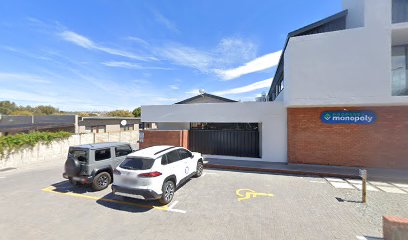
Towermaths International Pty Ltd is a Mathematics school establishment in Hartenbos, Western Cape, South Africa
Hartenbos
Western Cape
6520
South Africa
Curriculum
Towermaths International Pty Ltd presents a distinctive approach to mathematics education, concentrating on foundation numeracy skills for learners in the foundation phase, specifically from Grade R to Grade 3. The curriculum is designed to move away from rote counting towards a language-like understanding of numbers, with an emphasis on visualisation and comprehension that supports long-term mathematical fluency. The programme positions mathematics as the language of describing and understanding the world, encouraging young learners to see numbers as objects with tangible connections rather than abstract concepts to be memorised.
Central to the curriculum is a structured progression that begins with foundational concepts and progressively builds numerical sense. Learners are guided to visualise numbers and to construct a number tower, where each digit has a unique position. This visual and spatial representation supports early operations such as addition, subtraction, and the use of the equals sign, forming a solid base for more complex mathematical reasoning in later years. The method treats mathematics as an evolving system akin to learning a language, enabling pupils to recognise numbers and relationships by sight and pattern, rather than relying solely on procedural repetition.
Programmes and levels are intentionally targeted at the early years, with a focus on pre-primary and primary school stages. The emphasis on early numeracy is reinforced by an evidence-driven philosophy that draws on neurological perspectives about brain development between ages four and nine. This underpinning supports a curriculum designed to stimulate multiple senses and maintain high engagement, aiming to foster a positive attitude towards mathematics and reduce fear or anxiety associated with the subject.
In addition to the core curriculum, Towermaths offers a tutor-based delivery model and aims to extend access through active mentoring. The organisation operates a tutor system in which tutors are trained and licensed in the Towermaths methodology. This approach extends the reach of the curriculum by enabling trained educators to implement the Towermaths programme within schools or independent learning environments. The tutor model emphasises structured support for learners and ongoing collaboration with parents, schools, and tutors to ensure continuity and consistency in the learner’s mathematical development.
Assessment and progress monitoring are built into the programme through periodic feedback mechanisms. Parents receive monthly updates on the learner’s progress, and monthly testing provides ongoing data to guide instructional decisions. This transparent reporting aims to keep all stakeholders informed about attainment and growth, while informing instructional adjustments to meet individual learner needs.
Distinctive resources associated with the curriculum include practical instructional materials and multimedia tools that align with the visual and tactile nature of the Tower Maths method. The programme is complemented by interactive learning resources and materials designed to support classroom and home-learning environments. The emphasis on concrete representations—such as the number tower and related visual cues—helps teachers convey abstract concepts in approachable, concrete terms for young learners.
Beyond the classroom, the curriculum is supported by collaborative partnerships and professional development opportunities. Towermaths engages with partner organisations to extend access to numeracy improvement initiatives through private and public school partnerships. The organisation discusses tutor mobilisation and mentor support as part of its broader strategy to scale the programme, offering a framework for training, materials supply, and ongoing professional development for tutors. This approach underscores a commitment to sustainable, scalable implementation of the curriculum across diverse learning contexts.
The curriculum also intersects with short courses and professional training components designed to build capacity among teachers and tutors who wish to adopt the Towermaths methodology. While specific course titles, durations or fees are not itemised here, the focus remains on practical training, instructional coaching, and access to interactive webinars and downloadable lesson resources. These elements are intended to equip educators with the skills and confidence to deliver the Towermaths approach effectively, whether in classrooms or tutorial settings.
- Core focus: Foundation numeracy for Grade R–Grade 3, with a language-like treatment of mathematics and emphasis on visualisation.
- Learning approach: Multi-sensory engagement, number visualisation, and the number tower to foster conceptual understanding.
- Delivery models: Tutor-led implementation, with training and licensing for tutors to extend programme reach.
- Assessment and feedback: Monthly progress updates for parents and regular testing to guide instruction.
- Resources and tools: Practical instructional materials, multimedia supports, and interactive learning resources.
- Professional development: Short courses and training opportunities for teachers and tutors, plus webinars and downloadable materials.
Overall, the curriculum aims to equip early learners with solid numeracy foundations while offering flexible delivery through trained tutors, partner programmes, and accessible learning resources. The emphasis on early brain development, visual concepts, and ongoing assessment supports a coherent pathway from early numeracy to confident mathematical engagement in later stages of schooling.
Faculties and Branches
Towermaths International Pty Ltd operates a central administrative and programme framework centred on its founder-led approach to numeracy education for the foundation phase. The organisation emphasises a cohesive method that can be delivered through licensed tutors and a network of training and mentoring partners. While specific departmental naming is not extensively enumerated on the public site, the structure supports foundational mathematics programmes, tutor training, and learner engagement through a blend of classroom and mentor-led delivery.
Key components of the organisational footprint include a Head Office and training centre described in the Tutorship section, which is situated at Diaz Office Park in Mossel Bay. This centre serves as the hub for tutor registration, material provision, and mentor support, underpinning the nationwide and international outreach of Towermaths materials and methodologies. The Mossel Bay base indicates the presence of a national operational core from which regional activities can be coordinated, integrated with programme delivery and parent communication. More information about the general approach and career opportunities for tutors can be explored via the main site.
Geographically, the website confirms an international dimension through Towermaths Namibia, reflecting a branch or partner operation that began with the implementation of the Towermaths method in four primary schools in Namibia. This Namibia initiative illustrates how the organisation’s foundational numeracy programme can be extended beyond South Africa’s borders through collaborative school partnerships and teacher training processes. The Namibia project highlights the connection between the Towermaths methodology and public and private school engagement, reinforcing the model of deployment through partnerships rather than solely through in-house classroom delivery.
Within the South African context, Towermaths positions its offerings around core programmes centred on early numeracy development. The instructional framework focuses on the foundational numeracy skills for pre-primary and primary learners (Grade R to Grade 3). Although the site does not catalogue a long list of separate faculties, it delineates key programme strands, such as the Tutorship pathway and partnerships with schools via the Partnership Foundation model. These strands function as organisational channels to deliver the Towermaths method, provide teacher and tutor support, and facilitate parent engagement with learner progress.
The relationship between the faculties, branches and student services can be described as follows: the central headquarters oversees programme integrity, training, resource distribution and mentor support; regional or international branches/partners implement the curriculum within schools and communities; and learner engagement is supported through tutor-led instruction, school partnerships and ongoing reporting. Visitors to the site can access information about the various programme offerings, including the focus on visualising numbers, building a mental “tower” of numeracy, and using foundational operations, all of which underpin the learner services provided under the Towermaths umbrella. For further details on the programmes, prospective tutors or partnerships, the main site offers additional context and application pathways.
In summary, Towermaths International’s faculties and branches appear to be organised around a central headquarters for training and materials, a South African operational base, and international partner activity in Namibia, with programme delivery coordinated through tutor networks and school partnerships. More information can be found at the main website: Towermaths.
Registration Details
Towermaths International Pty Ltd, operating from Hartenbos in the Western Cape, South Africa, offers structured pathways for both learners and tutors to engage with the Towermaths methodology. Registration is the initial step for access to the Towermaths learning system, with dedicated application routes for different participants in the programme. An observer examining the process notes that registration is framed as a straightforward entry point to the Towermaths learning environment rather than a formal, bulky enrolment exercise.
For prospective learners, registration is positioned as the gateway to the Towermaths learner experience. The site provides a specific learner application pathway, designed to capture essential information and to initiate access to the learning materials and interactive elements. The learner application is clearly linked from the main pages, enabling interested students and their guardians to begin the process online. The exact steps are not elaborated in detail on the surface, but the implication is that completing the form and submitting it will initiate the learner’s involvement with Towermaths’ foundational numeracy programme.
For individuals interested in contributing as tutors, a separate tutor application route exists. This pathway is aimed at those who wish to implement the Towermaths programme within classroom settings or through independent tutoring arrangements. The tutor application is presented as an online form submission process, with a selection and interview step indicated for applicants if deemed necessary by a selection committee. The approach emphasises a low-cost, low-barrier entry, complemented by ongoing support from the Towermaths network once approved.
In addition to the formal application channels, the Towermaths site states that relevant documents and information are typically required as part of the registration process. While the precise list of documents is not reproduced in the site’s public text, the presence of clearly defined application paths suggests standard prerequisites associated with educational programmes and tutoring engagements. Prospective applicants are advised to consult the specific application pages for learner or tutor registration to determine any documents or data that must be provided.
Where to apply is straightforward in practice. The site directs interested parties to the learner and tutor application pages, each of which is accessible via direct links. The learner application page provides the pathway to enrolment for learners, while the tutor application page contains the route for prospective tutors. These links appear on the site’s navigation structure and are intended to streamline the initiation of the registration process.
Support and contact channels are mentioned for applicants who encounter issues. The site references a general contact approach through Towermaths’ email addresses for queries associated with the registration process. For learner and tutor registration questions, the content points to the principal contact channel, with a note that forms or application portals may provide additional guidance once accessed.
For convenience and transparency, the primary online registration links are provided here for potential applicants to explore directly:
- Learner Application: Learner Application
- Tutor Application: Tutor Application
- Parent/Registration (example access route referenced on the site): Register first here
Overall, the Registration Details section conveys a structured pathway into the Towermaths programme, with separate routes tailored to learners and to tutors. By design, the process remains straightforward, with online application portals and supportive contact avenues available to assist applicants through the initial stages of engagement with Towermaths’ educational approach.
Sorry, no records were found. Please adjust your search criteria and try again.
Sorry, unable to load the Maps API.
Education and Educational Resources in Hartenbos, Western Cape
Hartenbos sits within the Mossel Bay area of the Western Cape, a region that blends coastal living with access to a range of educational options. Learners and families encounter a spectrum of institutions designed to support different ages, abilities, and interests, from early years through to further education and specialised training. The surrounding district typically offers a balance of public schools, independent options, and practical training facilities that support local employment needs and lifelong learning.
In terms of schooling, the area commonly provides primary and secondary schooling within accessible local communities. Public and independently funded schools often follow the national and provincial curricula, with pathways that lead to the National Senior Certificate (NSC) or equivalent qualifications. Within these institutions, learners may find programmes that emphasise core academics alongside practical subjects, language development, arts, sport, and life skills. For families, the emphasis is frequently on a supportive learning environment, with emphasis on attendance, assessment, and progression to further studies or training.
Further education and training opportunities in the broader region commonly include vocational and technical colleges and learning centres. These venues typically offer a mix of diploma programmes, certificates, and short courses aimed at meeting local industry needs. Practical components—such as workshops, simulated laboratories, and hands-on training—are often integrated with classroom study to build employability and practical competence. For those seeking alternatives to traditional university routes, apprenticeship schemes and industry placements are commonly available through partnered training centres and employers.
Higher education access generally relies on nearby universities and satellite facilities within the Western Cape or broader national networks. Although institutions may not be located directly in Hartenbos, students often benefit from regional universities’ campuses or affiliated programmes that allow progression from school or college level. Guidance services in the region commonly outline admission frameworks, funding options, and recognition of prior learning, helping learners navigate pathways from school to higher education or to vocational accreditation.
Support services and resources play a vital role in the educational landscape. Libraries and learning resource centres associated with schools and public facilities offer study spaces, reference materials, digital resources, and quiet areas for individual or group study. Additional student services often include sections for tutoring, learning support, language acquisition, and referral pathways to specialised assistance for learners with additional needs. Guidance counsellors and career advisers frequently provide information on subject choices, subject combinations, and potential career directions, aiding families in planning education journeys aligned with interests and abilities.
Facilities and infrastructure commonly include well-equipped classrooms, science laboratories, computer labs, and technical workshops. Sports facilities, including fields, courts, and indoor spaces, support physical education and school teams, while accommodation may be available through regional accommodation providers or tertiary institutions for students from further afield. Transportation links—such as reliable local bus services or easy access to major road networks—help learners reach schools, training centres, and campuses with reasonable travel times.
- Typical pathways include progression from primary to secondary schooling, followed by enrolment in college-level certificates or diplomas, or entry to higher education through a university programme.
- Admissions generally require meeting age and academic prerequisites, submission of essential documents, and adherence to registration timelines set by schools or training centres.
- Students are encouraged to explore scholarships or bursaries offered by public bodies, educational institutions, and local organisations.
For broader official guidance, the Western Cape Department of Education provides information on policies, curricula, and learner support services relevant to this region. More details can be found online at relevant regional government portals and educational websites.