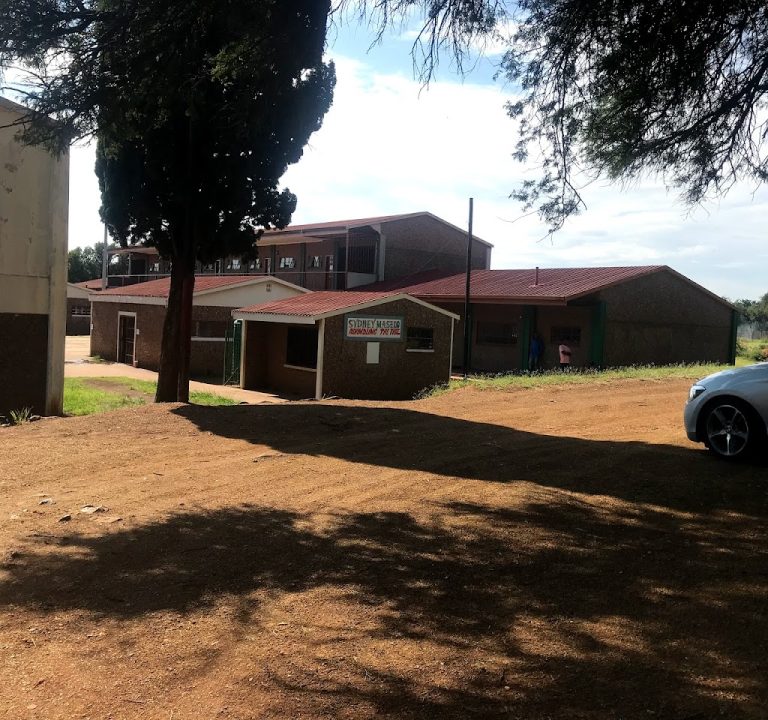
Sydney Maseko is a Adult education school establishment in Johannesburg, Gauteng, South Africa
Johannesburg
Gauteng
1809
South Africa
Curriculum
The Sydney Maseko Community Learning Centre (CLC) in Johannesburg, Gauteng, presents a framework of learning designed to be accessible and practically oriented for a diverse learner base. The curriculum is described as structured to support progression through multiple levels, from foundational learning through to more advanced, targeted training. While specific course lists and durations are not published here, the emphasis remains on delivering tangible educational outcomes that align with local community needs and sector requirements.
Across its programmes, the Centre aims to balance theoretical understanding with applied practice. The curriculum approach favours learner engagement and real-world relevance, with activities selected to foster transferable skills such as critical thinking, problem solving, teamwork, and effective communication. The focus appears to be on developing competencies that learners can utilise in workplace settings or further studies, responding to the demand for practical, employable qualifications within the Gauteng region.
The learning pathways are described in terms of different levels or stages, with the intention that learners may navigate from entry points to more advanced study as confidence and capability grow. The Centre positions itself as a hub for both foundational development and professional progression, offering a structure that supports personal growth alongside career readiness. This approach is aligned with community-centred education, where curriculum design takes into account local opportunities, industry needs, and the aspirations of learners.
Short courses and professional training form a notable element of the curriculum. While specific programmes are not itemised here, the Centre’s provision includes shorter, targeted offerings intended to upskill individuals for immediate application in their jobs or entrepreneurship endeavours. Such modules are typically designed to be time-efficient and practically oriented, enabling participants to gain valuable insights and credentials within a compact timeframe. The emphasis on short courses signals an awareness of diverse learner needs, including those seeking upskilling alongside other commitments.
Delivery methods are mentioned in the broader context of contemporary educational offerings. Where delivery modes are indicated on official materials, online or blended options are highlighted as feasible formats to enhance accessibility. The inclusion of flexible learning arrangements supports learners who require remote access, staggered study schedules, or a combination of face-to-face and digital engagement. This adaptability is positioned to broaden participation while maintaining the integrity and coherence of the curriculum outcomes.
The curriculum is complemented by a framework of learner support and success services. While specific services are not itemised in detail here, typical elements include guidance on progression routes, study skills development, and access to resources designed to sustain motivation and achievement. Support mechanisms are essential to maximise retention and to help learners transition from classroom concepts to practical implementation in work or further study. The Centre’s commitment to student support is presented as an integral part of the educational experience, reinforcing the overall aim of empowering learners to realise their potential.
In summary, the Sydney Maseko CLC’s curriculum is presented as a multi-level, practically focused framework that prioritises employability and lifelong learning. It emphasises progression through levels, the inclusion of short professional courses, and flexible delivery options where available. The programme design is described in terms that emphasise real-world relevance, community applicability, and supportive learning environments. For prospective learners seeking a sense of structure, progression, and practical outcomes, the Centre’s curriculum is portrayed as a pathway tailored to local needs and aspirations.
Further details about specific programmes, entry requirements, or exact timelines can be found through the Centre’s official page at: Sydney Maseko CLC.
Faculties and Branches
This section provides an overview of Sydney Maseko’s organisational structure as featured on the institution’s page for the City of Johannesburg community learning centre. The description focuses on the way faculties, schools or departments are presented and how these units relate to the delivery of programmes and student services in the Johannesburg context.
Where the site enumerates specific faculties, schools or departments, the information is presented as distinct organisational units. Each unit is associated with a defined scope of study or activity, and the page explains how these units collaborate to support learners across different pathways. The presentation aims to clarify how programmes are structured, including the alignment between academic or applied offerings and the support services available to students.
In relation to campuses, branches or learning centres, the section outlines the geographical and administrative footprint of the institution within the City of Johannesburg. It describes where learners can access facilities and services, and it indicates how multiple locations contribute to broader access to education and community programmes. Where the site mentions specific branches or centres, those locations are linked to particular programmes or student-facing functions, illustrating how students engage with the institution across different sites.
The material emphasises how the faculties or departments connect to programme delivery. It explains, at a high level, the pathways through which learners enrol, progress and complete their studies, including the role of support services in facilitating academic success. The description is crafted to convey the relationship between organisational units and the student experience, without overstating any single unit’s scope beyond what is stated on the page.
Overall, the section serves as a structural orientation for prospective students and other stakeholders. It highlights the existence of a multi-faceted educational offering anchored by clearly defined faculties, schools or departments, and supported by a network of campuses or centres within Johannesburg. For those seeking more detailed information on specific units, programmes or locations, the site provides direct access to the relevant pages and contact points via the institution’s main site.
For further details, including current programme offerings and campus information, Visit the institution’s official page: Sydney Maseko CLC – City of Johannesburg.
Registration Details
Australia-based and South African learners seeking entry to Sydney Maseko in Johannesburg, Gauteng, may be interested in general information about how to register or enrol. The available online materials from the official resource provide an overview of the institution and its offerings, but do not include granular, step-by-step registration instructions within the referenced excerpt. Prospective applicants are advised to consult the institution’s official pages for the most current guidance on registration pathways, timelines, and requirements.
Overview of the registration process, as described in the accessible content, suggests that prospective students should begin by engaging with the institution’s online presence to understand programme options, entry points, and any specific criteria that may apply to particular courses. While exact timelines and submission windows are not outlined in the supplied material, an indicative approach commonly employed by similar educational institutions is to explore relevant programme pages, gather the required information, and locate the appropriate application portal or contact point through the institution’s website.
Where to apply and how to initiate the process are typically communicated through the institution’s official site. In the current documentation, direct references to application portals or registration links are not explicitly listed in the excerpt provided. For those seeking to take the next step, the best course of action is to navigate to the institution’s online hub and locate any designated “Apply” or “Registration” sections. These sections commonly contain the application form, instructions for submission, and any steps related to placing an offer, accepting enrolment, or confirming place in a chosen programme.
Eligibility and entry requirements are crucial for applicants, yet the supplied content does not present a detailed list of prerequisites, qualifications, or benchmarks for admission to Sydney Maseko’s programmes. Given the absence of explicit criteria in the provided material, prospective students should review programme-specific pages to understand accepted prior qualifications, language requirements, age restrictions, and any special admission processes. If available, information on bridging courses, bridging options, or recognition of prior learning would typically appear within individual programme descriptors or the admissions section of the site.
Documents ordinarily requested during registration—such as identification, previous academic records, or proof of language proficiency—are not itemised in the supplied excerpt. To avoid potential delays, applicants are encouraged to consult the official site for a definitive list of required documentation for their chosen programme. In the interim, a typical applicant may expect to gather standard documents related to identity, prior studies, and any certificates pertinent to the course of interest, but no commitments about specific documents should be assumed without site confirmation.
Contact and support channels are essential for resolving questions about registration. The available material does not overtly display a dedicated contact pathway within the excerpt. To obtain direct assistance, prospective students should look for the institution’s contact options on the official site, which may include a general enquiry form, a support page, or a dedicated admissions contact. When seeking help, it is wise to identify the appropriate channel for admissions-related queries and to use the site’s navigation aids to reach the correct department swiftly.
For those ready to begin, visit the official site to locate the application or registration area and to access any available guidance. A direct link to the broader site is provided here for convenience: Sydney Maseko CLC – City of Johannesburg. Should more explicit application instructions appear on the page, they should be followed precisely to ensure proper submission and timely processing of the registration request.
Sorry, no records were found. Please adjust your search criteria and try again.
Sorry, unable to load the Maps API.
Education and Resources in Johannesburg, Gauteng
Johannesburg, the capital of Gauteng in South Africa, presents a diverse landscape of educational opportunities. Learners and families can encounter a wide range of institutions spanning the school sector, further education and training, higher education, and specialised vocational centres. The city’s educational ecosystem is characterised by a mix of public and private providers, urban campuses, and community learning hubs located across neighbourhoods and townships.
At the school level, primary and secondary education is typically offered through public and independent schools. Learners may follow national curricula or adapted syllabuses aligned with local requirements. Common routes include general academic programmes, as well as vocational and technical streams designed to build practical skills alongside core subjects. In many areas, secondary schools provide pathways towards higher education, professional training, or entry into apprenticeships and industry support programmes. Admissions processes generally involve registration through district or school authorities, with timelines standardised within the region.
Further education and training (FET) institutions in Johannesburg include dedicated colleges and training centres that offer diploma and certificate programmes. These centres often emphasise industry-linked qualifications in fields such as business studies, information technology, health and safety, hospitality, engineering trades, and creative disciplines. Flexible learning formats—such as part-time study, evening classes, and short courses—are commonly available to accommodate working learners and those balancing family responsibilities.
Higher education in Johannesburg is supported by multiple universities and specialised institutions. Students typically choose from undergraduate degrees, honours programmes, master's degrees, and doctoral study, alongside professional degrees in areas such as law, medicine, and education. In addition to full degree programmes, many campuses provide modular courses, continuing professional development, and research opportunities that attract regional and international learners. Collaborative partnerships between universities and local industry are often highlighted, with pathways available for transfer credits and articulation agreements.
Beyond traditional institutions, a broad spectrum of learning support services is commonly accessible to learners. Academic advising, study skills workshops, literacy and numeracy support, and counselling services help students navigate curricula and personal development. Tutoring schemes, peer mentoring, and language support are frequently offered at both secondary and tertiary levels. Special educational needs provision, disability services, and inclusive learning access are increasingly prioritised, with adjustments and accommodations designed to enable participation and success.
Facilities and resources commonly encountered include well-equipped libraries with guided study spaces, computer labs, science and technology laboratories, and art or design studios. Sports facilities and fitness centres are often available on school and university campuses, supporting both competitive and recreational participation. Accommodation arrangements exist on many campuses, with on-campus residences, partner housing, or approved hostel arrangements increasingly paired with student life support services.
Typical learning pathways emphasise a progression from foundational knowledge to specialised study. Individuals often begin with general schooling or introductory courses, move into vocational or diploma-level study, and subsequently pursue degree programmes or professional qualifications. Admissions processes are generally straightforward but may require registration steps, selection criteria, or submission of prior academic records. Prospective learners are advised to consult local education authorities, campus admissions offices, and official websites for application timelines, documentation requirements, and any language proficiency prerequisites.
For families and learners seeking accessible information, a range of portals and regional guidance resources consolidates details on institutions, courses, and student support services. Visitors can explore official university and college pages, municipal education services, and recognised accrediting bodies to gain up-to-date insights into available programmes, facilities, and pathways within Johannesburg and the wider Gauteng region.
- Schools offering general and technical streams, with secondary progression options
- FET colleges delivering diplomas, certificates, and short courses
- Universities providing undergraduate and postgraduate study, plus research opportunities
- Specialist training centres focusing on trade skills, healthcare, IT, and creative industries