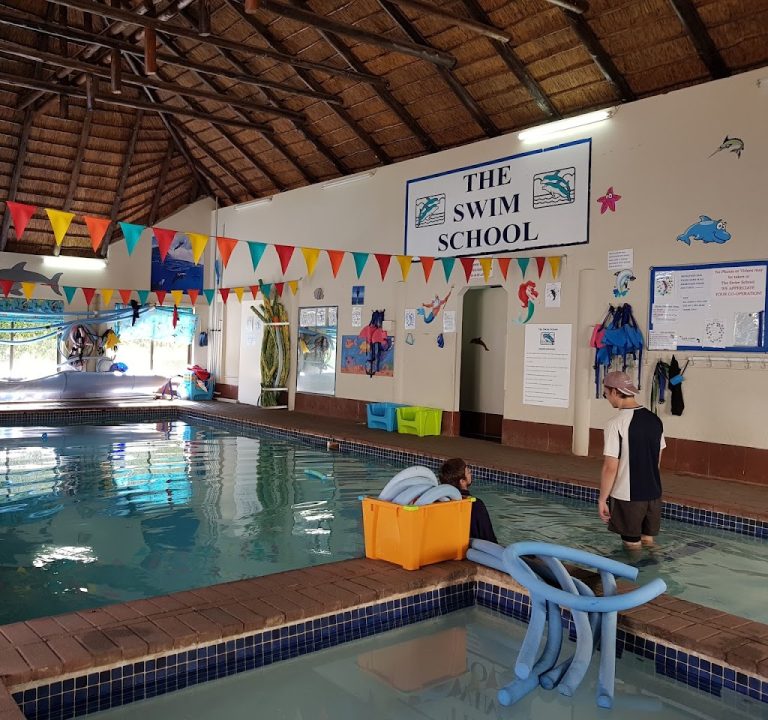
Swim School The is a Swimming instructors establishment in Roodepoort, Gauteng, South Africa
Roodepoort
Gauteng
1709
South Africa
Curriculum
The Swim School in Roodepoort, Gauteng offers a holistic approach to aquatic education that extends beyond basic stroke technique. The curriculum is designed to guide individuals through a progressive learning pathway, from first strokes in the pool to more advanced competencies in open water. Central to the offering is a focus on physical development, alongside emotional and cognitive growth, with programmes carefully structured to accommodate learners at all levels.
Programmes are organised to support sequential advancement. In the pool, learners begin with foundational skills and stroke development, building confidence and efficiency in water before moving on to speed training and increased endurance. The progression is underpinned by an assessment process that helps determine the appropriate class level for each individual, ensuring goals and comfort levels align with the pace of instruction. No prior swimming experience is required, and instructors tailor lessons to meet the unique needs of every swimmer, promoting a comfortable and effective learning experience.
The curriculum also integrates an Open Water Academy, which expands the scope from pool-based techniques to the real-world environments of dam, river, and sea swimming. This pathway complements traditional stroke work with adaptability to varying aquatic conditions. The Open Water programme covers a broad range of activities, including water polo, life-saving techniques, canoeing, and rowing, providing learners with a versatile skill set and opportunities to participate in aquatic sports beyond conventional lap swimming. The progression within Open Water emphasises reading currents, adapting to weather changes, and mastering survival skills, culminating in endurance events and competitive opportunities.
Areas of study within the curriculum are characterised by a blended emphasis on physical, emotional, and cognitive development. The programme aims to cultivate strength, coordination, and general fitness in a safe environment, while also fostering self-confidence, resilience, and problem-solving abilities. Instructors employ creative teaching methods designed to stimulate cognitive development and a thirst for knowledge that extends beyond the water. This holistic approach supports learners in developing transferable skills such as teamwork, discipline, and lifelong attitudes towards health and well-being.
Distinctive resources and supports within the curriculum include the school’s emphasis on safety, with pools that are equipped for modern safety requirements and monitored by qualified personnel. A strong safety culture is reinforced by a high level of supervision during lessons and the implementation of sanitisation protocols, contributing to a secure learning environment for swimmers of all ages. The school also maintains a presence in the broader aquatic community through affiliations with clubs and governing bodies, providing pathways for competition at various levels via Swim 1st Club and Central Gauteng Aquatics (CGA) registration. This structure offers learners the option to compete as individuals or as part of a registered academy team, linking instructional progress with competitive opportunities.
In addition to formal classwork, the curriculum is complemented by informal enrichment through the Swim School’s online and in-person learning supports. The organisation maintains a blog that explores water safety, the nature of swimming, and benefits of lessons, along with a gallery showcasing facilities, teams, and learning activities. While not described as a formal online learning platform, these resources contribute to a broader educational experience, helping parents and learners understand the broader context of aquatic education and safety. The curriculum is therefore supported by a combination of structured in-water instruction, hands-on practice, and accessible informational materials that reinforce core concepts outside of lesson times.
Overall, the curriculum at The Swim School is characterised by its flexible, learner-centred approach, its clear progression through pool and open water competencies, and its integration of safety, personal development, and competitive opportunities. By combining expert instruction with a progressive framework and real-world aquatic experiences, the school aims to nurture confident, capable, and resilient swimmers who can excel in water-based activities and beyond.
Faculties and Branches
The Swim School operates as an integrated aquatic institution that combines structured swimming instruction with holistic development. The core offering centres on progressive swimming curricula delivered by certified instructors, with an emphasis on physical, emotional, and cognitive growth. While specific campus names or branch addresses are not detailed within the provided materials, the organisation presents a unified programme range that can be accessed through the central site and its linked sections.
One prominent division within the organisation is the Open Water Academy. This programme extends the learn-to-swim journey beyond the pool, guiding participants from initial strokes to open water competence. The curriculum encompasses a spectrum of aquatic disciplines, including dam, river, and sea swimming, water polo, life-saving techniques, canoeing, and rowing. The Open Water Academy is designed to cultivate resilience, adaptability, and endurance, enabling swimmers to transition seamlessly from pool environments to diverse water settings.
The Swim School also communicates a commitment to competition and affiliated club structures. For swimmers seeking competitive avenues, the Open Water Academy notes an affiliation with the Swim 1st Club, with opportunities to participate as an individual swimmer or as a representative of the academy through CGA (Central Gauteng Aquatics). Such affiliations illustrate the school’s engagement with broader governing bodies and opportunities to demonstrate progress in formal swimming environments.
Across both the main school and the Open Water Academy, the organisation emphasises safety and well-being. Facilities include both indoor and outdoor pools equipped with modern safety measures, and a vigilant staff presence supports all activities. A simple assessment process is described to help determine appropriate class levels for learners, ensuring that programmes are tailored to individual starting points and goals. This approach aligns with the institution’s broader commitment to nurturing confidence, resilience, and lifelong skills through swimming and related activities.
In addition to programmes and facilities, the site highlights a holistic training ethos. Instructors are described as certified and dedicated to safeguarding a safe, enjoyable learning journey. The facilities and programmes are presented as a platform for development beyond mere technique, aiming to foster self-assurance, problem-solving, and cognitive engagement through learning in and about the water.
For prospective students, parents, and stakeholders seeking more information on structure, services, and pathways, the online presence provides quick access to essential resources. The main site offers direct navigation to sections such as About Us, Open Water Academy, and Blog, alongside practical pages for contact and frequently asked questions. These resources help illuminate how the various components relate to programmes and student services, even when explicit branch names or campus locations are not enumerated in the material provided.
- Open Water Academy as a dedicated pathway within The Swim School
- Competitive opportunities through Swim 1st Club and CGA affiliation
- Safety and assessment processes underpinning all programmes
Website links for further reference include the main site and relevant sections: https://www.theswimschool.co.za/about-us/ and https://www.theswimschool.co.za/open-water-academy/, along with the general contact and information pages. The content outlines the organisation’s aims and provisions without detailing discrete Roodepoort-specific campuses, focusing instead on the cohesive programme structure and its connections to wider aquatic activities and safety-minded practices.
Registration Details
The Swim School The in Roodepoort, Gauteng, South Africa welcomes learners of all abilities, with prior swimming experience not required. Registration for programmes begins with a straightforward assessment process designed to determine the most appropriate class level aligned with individual goals and comfort in the water. This assessment helps ensure that newcomers and returning swimmers alike are placed into the right environment to maximise progress and enjoyment.
To initiate the registration process, prospective swimmers are advised to reach out through The Swim School’s official contact channels. The school provides a dedicated contact avenue for enquiries and registrations, inviting interested families to Get in Touch and arrange the next steps. The primary point of contact is accessible via the site’s Contact page, which provides details for connecting with the team and scheduling assessments or admissions discussions. For convenience, the Contact page can be found here: Contact.
Registration steps, in summary, include:
- Reviewing the available programmes and determining suitability based on age, ability, and goals.
- Completing an assessment to establish the appropriate class level and progression path.
- Arranging a registration or welcome discussion with The Swim School team through the online contact options.
- Joining the chosen programme on the agreed start date, subject to the school’s scheduling and availability.
The site emphasises a safe and supportive learning environment, with continuous supervision by certified instructors and adherence to sanitisation and safety protocols during lessons. The emphasis on safety is central to the registration decision, ensuring that all participants can learn confidently in both indoor and outdoor pool settings.
Regarding where to apply, the primary application and registration pathway is through The Swim School’s official channels. The website frequently links to the main contact point and provides additional navigation options to learn more about programmes, open water opportunities, and general information. Interested readers can access general information and initiate contact via the main site, including the Quick Links section which directs users to the Contact page: Contact Us, or explore related information through the About Us and Open Water Academy pages for broader context.
While specific application forms, fees, or deadlines are not published in the available content, The Swim School’s approach relies on a personalised assessment and a direct registration conversation. Prospective swimmers or their guardians are encouraged to use the site’s contact options to arrange an initial meeting, have questions answered, and receive guidance tailored to individual circumstances.
For further information on the school’s ethos, facilities, and safety practices, readers may explore the site’s About Us, Open Water Academy, and Our Facilities sections. The Swim School’s overarching aim is to foster confidence, resilience, and lifelong aquatic skills, announced across the site as part of its commitment to well-being and holistic development. To initiate registration or for enquiries, visit the official Contact page: Get in Touch.
Sorry, no records were found. Please adjust your search criteria and try again.
Sorry, unable to load the Maps API.
Education and Resources in Roodepoort, Gauteng
Roodepoort, located in Gauteng, South Africa, sits within a vibrant corridor of educational provision that serves learners from early years through to higher education and continuous professional development. The area combines a mix of public and independent schools, vocational training centres, further education colleges, and proximity to universities in the greater Johannesburg region. Families and learners often encounter a diverse range of programmes designed to meet different interests and career paths, with emphasis on accessible entry points and practical learning.
Across Roodepoort and neighbouring districts, schools provide the standard progression from primary to secondary education, including facilities tailored to core academic subjects as well as arts, physical education and practical sciences. Independent schools frequently offer wider curricula and extended learner support, while public schools align with national and provincial guidelines, subject to local governance and resources. In addition to conventional subjects, many institutions support language development, technology literacy, and coding, reflecting contemporary educational priorities.
Further education and training institutions in the area offer a spectrum of programmes that mirror regional needs. Technical and vocational education and training (TVET) providers deliver diplomas and certificates in trades, engineering, information technology, hospitality, health, and business administration. These pathways provide hands-on learning, often with work-integrated opportunities to help learners transition into the job market. For those seeking higher education closer to home, nearby universities in the wider Johannesburg area offer undergraduate, honours, and postgraduate possibilities across faculties such as humanities, sciences, engineering, and business studies.
Learning support and student services play a significant role in Roodepoort’s educational ecosystem. Many institutions provide additional language assistance, tutorials, study skills programmes, and advisory services to help map individual progression. Accessibility considerations, including transport assistance for learners with special educational needs and support for mature or returning students, are features in various settings. Counselling, academic advising, and career guidance services are commonly available to help learners navigate choices about subjects, vocational pathways, and future study or work opportunities.
Facilities and resources frequently found in Roodepoort include well-equipped libraries with study spaces, computer laboratories, science and technology laboratories, and dedicated learning resource centres. Sports facilities, such as gymnasiums, playing fields, and courts, support healthy lifestyle choices and school teams. Some campuses offer accommodation options or partner with nearby student housing to assist both local and distant learners in accessing residential facilities during term time. Art studios, theatre spaces, and music rooms are common in schools and colleges that emphasise a broad, well-rounded education.
Typical study pathways involve administrative steps such as registration or enrolment during a clear annual cycle. Candidates often complete prescribed admissions requirements for their chosen level—ranging from school enrolment and subject selection to programme-specific prerequisites for college diplomas or degree courses. Admissions guidance, where provided, focuses on meeting minimum academic standards, meeting deadlines, and understanding important factors such as transport arrangements and accommodation needs. Information on bursaries, scholarships, and financial aid is frequently available through individual institutions or regional education offices, helping to widen access to educational opportunities.
- Public and independent schools offering primary and secondary education with core subjects and enrichment activities.
- TVET colleges providing diplomas and certificates in trades, technology, business, and hospitality.
- Nearby universities within the Johannesburg area delivering undergraduate and postgraduate study.
- Learning support services including tutorials, language assistance, and career guidance.
- Facilities such as libraries, laboratories, sports complexes, and accommodation options.
Overall, Roodepoort presents a multi-layered educational landscape where learners can pursue traditional academic routes, vocational training, and higher education, supported by a network of libraries, laboratories, and student services designed to promote success and lifelong learning. For the most up-to-date information, prospective students are encouraged to consult individual institutions and regional education authorities.
Further information can be explored through general education portals and local authority pages at reputable sources such as national and provincial education departments.