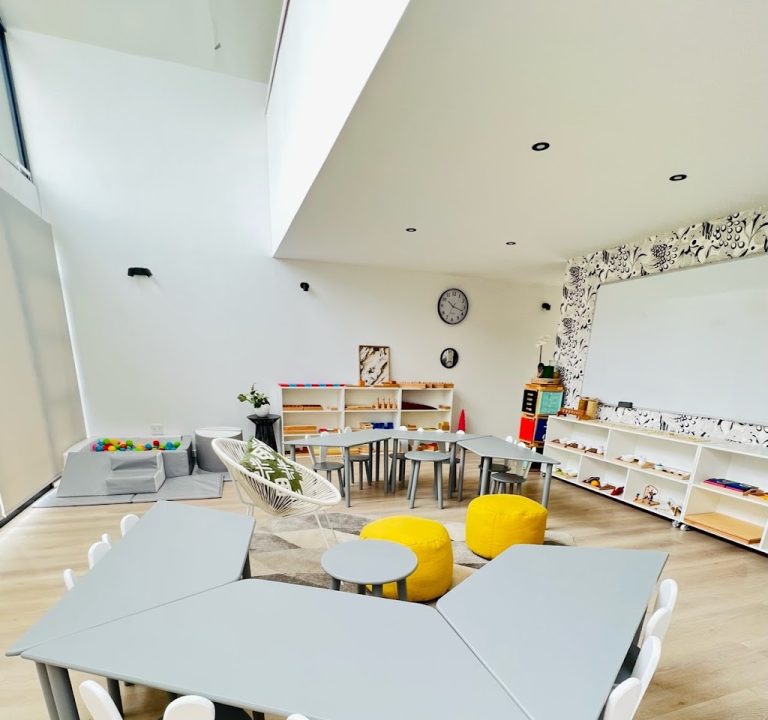
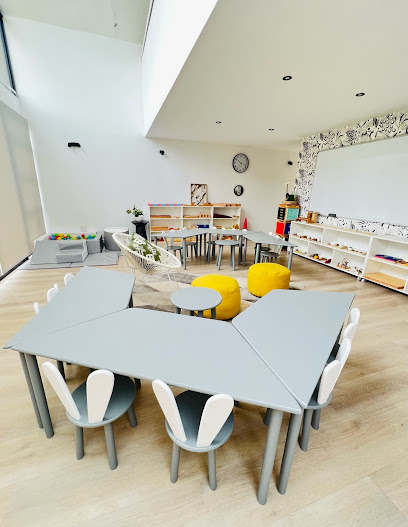
Sutherland Academy is a Education centers establishment in Muldersdrift, Gauteng, South Africa
Muldersdrift
Gauteng
1747
South Africa
Curriculum
Situated in Muldersdrift, Gauteng, Sutherland Academy presents a distinctive curriculum framework that blends a modern Montessori preschool ethos with ambitions for expansive educational opportunities. The preschool provision operates as a self-contained, 100% off the grid environment where learning continues uninterrupted, supported by a building engineered with the latest technology to enhance the student experience. The curriculum emphasises independence, curiosity and confidence as core learner outcomes, with a daily structure that integrates learning and play across age-appropriate groupings.
Within the Montessori programme, the curriculum is organised around five principal avenues: practical life, sensorial, language, mathematics and culture. This holistic approach encourages learners to engage with concrete, hands-on activities that support gradual acquisition of essential skills. Practical life activities help young children feel secure in their environment while developing both gross and fine motor abilities, alongside independence essential for everyday tasks. Sensorial work refines the child’s five senses, laying a solid foundation for mathematical thinking. Language development is fostered through experiences that support expression, reading and writing, while mathematics uses concrete objects to teach counting, place value and the basic operations. Cultural study broadens understanding of the natural and human world, encompassing living things, the earth, botany and zoology. The Montessori model treats the teacher as an “aid to life,” guiding rather than directing, and encouraging children to explore at their own pace within a prepared environment.
The programme structure at Sutherland Academy places emphasis on social interaction across mixed-age groups within the Montessori framework, allowing younger pupils to observe and learn from older peers. This cross-age collaboration is designed to mirror the real world, where learning happens continually across different stages of development. The school day is organised to balance focused learning with meaningful play, helping pupils to enjoy learning while gradually building concentration, organisation and problem-solving abilities.
Beyond the formal Montessori curriculum, the academy broadens its educational scope through a range of extracurricular and intramural offerings. Healthy meals are included, reflecting a holistic view of student wellbeing, and the timetable accommodates aftercare and holiday programmes for busy families. Extracurricular activities include Kids Coding, Soccer Stars, and Music Box, while Playball functions as an intramural activity. These additions extend learning beyond core academic subjects and provide opportunities to explore creativity, physical development and digital literacy in a structured, supportive environment.
Looking to the future, Sutherland Academy articulates an expanded curriculum vision aimed at internationally benchmarked standards. The “What we will offer” section signals the intention to provide a broad array of core and vocational subjects, with early indications of areas such as agriculture, culinary arts, gaming and coding, information technology, electrical trades, plumbing, carpentry and metal work. This aspirational phase reflects a commitment to preparing learners for a rapidly evolving job market and a world where adaptability and practical, hands-on skills are increasingly valued. While these subjects are not yet enumerated as definitive offerings, the stated intention demonstrates a forward-looking curriculum philosophy that seeks to integrate local context with global best practice.
The learning environment at Sutherland Academy is described as technology-rich, leveraging natural classroom technology to support twenty-first-century pedagogy. This commitment to leveraging technology aligns with the desire to create an education solution that enables learners to thrive in future work environments, and to participate in entrepreneurial education designed to foster prosperity. While the preschool Montessori curriculum anchors day-to-day learning, the broader school aims to provide blended and technologically supported learning experiences as it develops its vocational and enterprise-oriented offerings.
In summary, the Curriculum at Sutherland Academy combines a solid Montessori foundation for early childhood development with a strategic, forward-looking plan for broader subjects and practical skills. It emphasises independence, curiosity and collaboration while ensuring that learners have access to nutritious meals, supportive aftercare, and a spectrum of extra- and intramural activities. The distinctive features—off-grid operation, integration of technology, and a clearly stated commitment to vocational and entrepreneurial education—position the academy as an institution that seeks to equip pupils with adaptable skills for both higher education and the workforce. For further details on specific programmes, prospective families are encouraged to consult the school directly through the official website.
Faculties and Branches
Sutherland Academy, located within Country Gardens Estate, Nooitgedacht, Muldersdrift, Gauteng, South Africa, presents a structured educational offering centred on early years Montessori education with a clear pathway to broader vocational and technical studies in due course. The site positions itself as a modern learning community designed to minimise interruptions to study, with a focus on independent, curious and confident learners from an early age.
The primary operating unit described is the Montessori Preschool, which operates as a complete early childhood setting. The preschool is organised into three age-related groups—Infants (3–18 months), Toddlers (18 months–3 years), and Children’s House (3–6 years)—and emphasises practical life, sensorial experiences, language, mathematics and cultural learning. The programme aims to foster independence and a love of learning within a holistic, child-centred environment, supported by nutritious meals and a structured daily routine.
Beyond the classroom, the institution outlines a broader vision that includes internationally benchmarked education and a broad spectrum of core and vocational subjects. While specific faculties or departments are not exhaustively itemised online, the stated aims point to a multi-disciplinary approach that will eventually encompass subjects such as agriculture, culinary arts, gaming, coding, information technology, electrical work, plumbing, carpentry and metalwork. This indicates an ambition to provide both foundational academic preparation and practical, career-oriented learning, aligned with 21st-century skills and entrepreneurial education.
The academy's structure also anticipates integrated student services and activity programmes. The Montessori setting already includes aftercare and holiday programmes, and the preschool offers extra-curricular activities—such as Kids Coding, Soccer Stars and Music Box—with Playball included as an intramural activity. These elements illustrate a holistic approach to student development, combining formal academic learning with enrichment and physical activity to support diverse learner needs.
In terms of campuses and branches, the information available identifies a single primary site—Country Gardens Estate in Muldersdrift—where the preschool operates. There is no explicit reference to additional campuses or satellite branches, suggesting a focused flagship location for the current offerings. This localisation supports a cohesive student experience, with services and programmes designed to connect the early years provision with the academy’s broader educational ambitions.
For prospective families and learners, the relationship between these faculties, branches and programmes is straightforward. The Montessori Preschool provides a defined, age-appropriate curriculum that unfolds into a broader educational framework envisaged by Sutherland Academy, aligning early childhood development with future vocational and technical options. Admissions information and policies are accessible through the academy’s website, guiding prospective entrants through enrolment steps and required documentation, while the site also highlights policies relating to discipline, language and financial matters as part of the comprehensive educational environment.
Overall, Sutherland Academy appears to operate from a central Muldersdrift campus with a strong Montessori foundation, complemented by a forward-looking plan to expand into diverse, vocationally oriented study areas. The provision of aftercare, holiday programmes and a range of extracurricular activities further enhances the institution’s role as a complete early education and development hub within the local community. For more detailed current information, interested readers are encouraged to consult the academy’s website, including the Montessori Preschool pages and the About Us section.
Registration Details
Registration at Sutherland Academy is coordinated through the school's admissions process, which is outlined for prospective families on the official site. Interested parties are advised to make initial contact with the school to receive the steps involved in enrolment. The campus is located at Country Gardens Estate, Nooitgedacht, Muldersdrift, Gauteng, South Africa, 1747, in order to arrange an in‑person visit if convenient.
Prospective applicants are guided to the formal enrolment pathway provided by the academy. Enquiries and the receipt of enrolment steps can be initiated through the dedicated admissions route. A practical way to begin is to access the enrolment information page, which is hosted on the school’s website, and to follow the directions presented there for step‑by‑step guidance. The site encourages visitors to view and follow the steps in the order presented to ensure a smooth registration experience.
For applicants who prefer to prepare in advance, a set of enrolment documents is made available online. The primary document linked from the admissions section is the Financial Clearance Certificate, which is supplied as a downloadable file. Other policy documents related to admissions and school operation are also published on the site and may be consulted to understand the framework within which enrolment takes place.
Where to begin and how to proceed:
- Access the admissions page on the school’s website to view the enrolment steps. A direct link is provided to the enrolment information, typically labelled for applicants to follow.
- Review the available documents in the Enrolment Documents area, especially the Financial Clearance Certificate, which is provided as a PDF for download.
- Consult the policy documents to understand the school’s admissions policy, disciplinary procedures, debt management, and language policies, which are hosted on the site as PDFs.
- If an in‑person enrolment is preferred, arrange a visit to the Country Gardens Estate location to complete the process on site.
Eligibility and entry requirements are not itemised in detail in the public materials available here. The information provided focuses on the general pathway to enrolment rather than specific age or qualification thresholds. The school’s preschool information section does outline age groups for its Montessori programme, which may help families assess suitability in relation to age ranges, but it is prudent to verify exact eligibility with the admissions contact during the enrolment process.
For ongoing support and to initiate the enrolment process, interested parties can navigate to the Apply / Enrol page and begin theappointment process or arrange a visit to discuss registration in person. Accessible online resources include the Financial Clearance Certificate and various policy documents, which are hosted directly on the school’s website for convenience.
Contact and support are provided through the school’s official channels via the website. Details such as the main site navigation and the direct enrolment link are designed to assist applicants in locating the appropriate information quickly. Prospective families are encouraged to utilise these resources to gain a clear understanding of the registration pathway.
Links to explore:
Sorry, no records were found. Please adjust your search criteria and try again.
Sorry, unable to load the Maps API.
Education and Resources in Muldersdrift, Gauteng
Muldersdrift, situated on the fringes of Gauteng’s urban centres, offers a mix of educational opportunity set against a leafy, countryside backdrop. The area serves as a convenient home for families seeking accessible schooling, practical training, and pathways to further studies while remaining within reach of Johannesburg and its neighbouring campuses. Learners and carers can expect a combination of traditional school settings and more specialised access to equipping courses, often within easy commuting distance or through local partnerships with nearby institutions.
At the primary and secondary levels, a range of public and private schools provide curricula aligned with national standards, with emphasis on inclusive learning approaches and broad subject offerings. In addition to core academic subjects, learners commonly encounter a variety of enrichment programmes, including arts, sport, and technology, intended to broaden skills and nurture curiosity. The emphasis in Muldersdrift typically remains on a supportive learning environment that prioritises student welfare, gradual progression, and preparation for the next stage of education or training.
For families seeking further education and vocational training, the region benefits from nearby colleges and training centres that focus on practical competencies. These institutions commonly offer programmes across higher certificates, diplomas, apprenticeships, and short courses designed to respond to local industries and employment trends. Programmes may cover areas such as business administration, information technology, hospitality, manufacturing, and health-related skills. The availability of flexible learning options, including part-time study and evening classes, supports learners balancing work and study commitments.
Beyond formal qualifications, Muldersdrift and its surrounds host learning support services and student resources that assist learners throughout their educational journeys. Typical provisions include academic tutoring, language and literacy support, guidance on study skills, and access to information about study pathways. Counsel and career services—often located within schools or partner centres—help learners understand options such as matriculation, higher education entry, and entry into apprenticeships or industry training.
Facilities and resources commonly encountered in the Muldersdrift area provide practical help for students. Library spaces offer study areas and access to reference materials, while laboratories for science and technology subjects support hands-on learning. Computer suites and reliable internet access enable research, assessment preparation, and digital coursework. Sporting facilities and clubs encourage physical development and teamwork, while secure, affordable accommodation may be available nearby for learners who travel from further afield or require additional study time during exams or practical blocks.
Typical pathways for progression are presented in broad terms and aim to be straightforward and well-structured. Admission processes in schools and colleges generally require registration within set timelines, submission of prior academic records where applicable, and compliance with age and residency requirements. Prospective students are usually advised to consult official admission guides, attend information sessions, and plan for entry points aligned with the academic year. Where offered, articulation agreements between institutions help bridge from one level of study to another, supporting seamless transitions to higher levels of education or professional training.
- Public and private schools offering primary and secondary education
- Colleges and training centres with diploma, certificate, and apprenticeship programmes
- Libraries, computer labs, science and technology facilities
- Sports facilities, arts spaces, and student support services
- Accommodation options and transport considerations for learners
- Guidance on admissions, study pathways, and progression to higher education
- Information on flexible learning options and part-time study where available
Overall, Muldersdrift provides a supportive setting for learners and families seeking a blend of traditional schooling with accessible further education and practical training. The local ecosystem fosters gradual progression through education, supported by a network of facilities, resources, and guidance designed to prepare learners for the next step—whether that involves continuing to university-level study, pursuing a professional qualification, or entering the workforce.