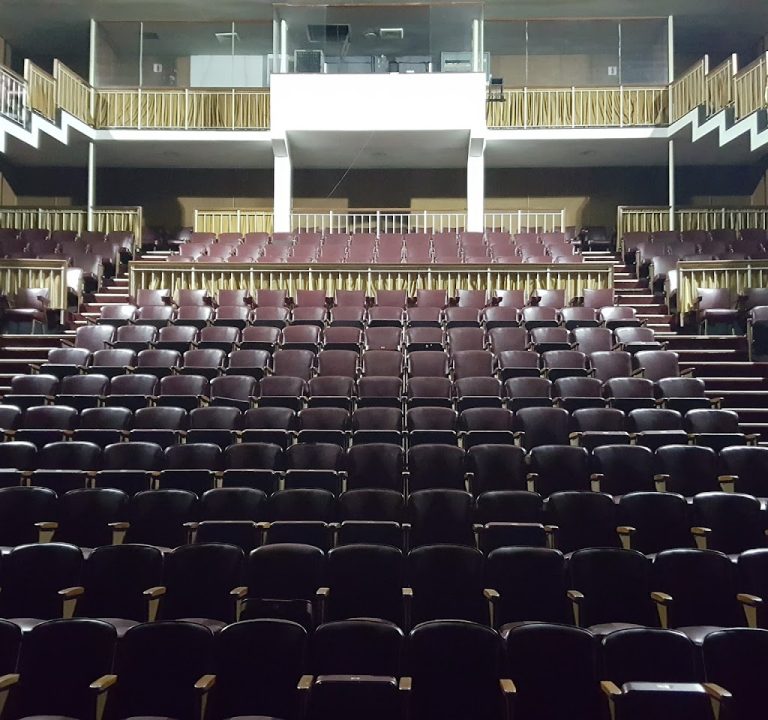
Rhodes University Theatre is a Drama school establishment in Makhanda, Eastern Cape, South Africa
Makhanda
Eastern Cape
6139
South Africa
Curriculum
The Rhodes University Drama Department in Makhanda (formerly Grahamstown) maintains an integrated, practice-based curriculum that reflects theatre and performance as a convergence of disciplines. The programme foregrounds a broad spectrum of study areas, uniting core theatre practice with critical and contextual study. The department emphasises an interdisciplinary approach, bringing together acting, directing, movement, physical theatre, choreography, applied theatre, theatre design, writing, theatre technology and arts administration as parts of a cohesive educational experience.
Undergraduate study forms a foundational element of the department’s shape, with a strong emphasis on practical engagement from early in the programme. Students are actively involved in making theatre from first year, collaborating on productions both on stage and behind the scenes. This emphasis on hands-on participation aligns with the department’s commitment to student-centred learning, where staff act as facilitators and mentors rather than solely as instructors. The result is a learning environment that integrates theoretical study with real-world production work, enabling students to develop craft, collaborative skills and professional habits in tandem.
Postgraduate study within Rhodes University’s Drama Department is positioned to build on the same integrated framework, offering avenues for specialised work across multiple artistic and technical domains. Postgraduate activity is described as diverse and practice-oriented, with opportunities to pursue distinct specialisations that contribute to the wider theatre ecosystem. Through these advanced programmes, postgraduate students contribute to public theatre events and examination projects, reinforcing the department’s reputation for rigorous, professional practice alongside scholarly inquiry.
The curriculum also benefits from close collaboration with two affiliated professional theatre companies—First Physical Theatre Company and UBOM! Eastern Cape Theatre Company. This distinctive arrangement provides participants with exposure to professional standards, industry networks and ongoing opportunities to engage with contemporary performance making beyond the classroom. Such partnerships help connect curriculum with the dynamic cultural life of the region and beyond, enriching learning with real-world artistic activity.
Rhodes University’s Drama Department is located within the milieu of the National Arts Festival, offering students the chance to participate in Africa’s largest annual celebration of the arts. This context adds an invaluable experiential dimension to the curriculum, enabling learners to observe, contribute to and reflect on high-profile productions while developing professional adaptability and an understanding of large-scale arts events.
In terms of delivery and resource provision, the department benefits from access to a vibrant academic and artistic milieu, with contributions from a range of professional artists and academic staff committed to providing a solid academic foundation alongside hands-on training. The broader university environment supports a spectrum of theatre-related activity, including public productions that are developed and presented for examination purposes and community engagement.
For potential entrants, the curriculum is framed around core disciplines and practical practice rather than fixed, prescriptive lists of courses. While course specifics such as exact modules, durations, entry requirements or tuition details are not itemised here, the department’s profile emphasises an integrated, student-centred approach that blends theory with performance, technical theatre, design, writing and arts administration. Prospective students are encouraged to explore the department’s productions and news sections to gain a sense of the ongoing work that characterises Rhodes University Drama.
Resources of note include access to the department’s public programmes and productions database, ongoing collaborations with professional theatre practitioners, and the institutional support of Rhodes University. Through these elements, the curriculum aims to cultivate adaptable, creative theatre-makers capable of contributing to both local and international performance contexts.
- Integrated study areas: acting, directing, movement, physical theatre, choreography, applied theatre, theatre design, writing, theatre technology and arts administration.
- Distinctive partnerships: two affiliated professional theatre companies (First Physical Theatre Company and UBOM! Eastern Cape Theatre Company).
- Contextual opportunities: participation in productions from early years and involvement in events linked to the National Arts Festival.
- Practice-led emphasis: staff act as mentors within a student-centred learning environment.
Further details about specific undergraduate and postgraduate offerings, as well as any short courses or blended learning options, can be explored through the department’s pages and related Rhodes University resources linked on the official site. External links to productions and departmental news pages provide additional insight into current curriculum-in-action and forthcoming learning opportunities.
Faculties and Branches
The Rhodes University Drama Department, based in Makhanda, Eastern Cape, is one of South Africa’s leading theatres and performance studies institutions. Described as an integrated programme, it encompasses a broad range of disciplines designed to develop both practical artistry and academic rigour.
Core areas of study include acting, directing, movement, physical theatre, choreography, applied theatre, theatre design, writing, theatre technology and arts administration. The department emphasises hands-on training alongside scholarly grounding, with a team of professional artists and academics committed to a solid academic foundation and creative practice.
Located in the home of the National Arts Festival, the department offers students exposure to Africa’s largest arts celebration, enhancing opportunities for performance, collaboration and audience engagement within a thriving cultural milieu.
Rhodes University Drama is notable for its two affiliated professional theatre companies, which augment the learning and performance experience: the First Physical Theatre Company and UBOM! Eastern Cape Theatre Company. These affiliations provide students with practical pathways into professional theatre environments while enhancing the department’s artistic programme.
Studying within the Drama Department includes undergraduate and postgraduate courses, with students actively participating in productions and related activities throughout the year. In line with a student-centred ethos, staff act as facilitators and mentors, guiding students as they contribute on stage and behind the scenes. Postgraduate work spans diverse specialisations, supporting the development of theatre events and experiences for public audiences and for assessment purposes.
- Disciplines and training: acting, directing, movement, physical theatre, choreography, applied theatre, theatre design, writing, theatre technology, and arts administration.
- Affiliated professional companies: First Physical Theatre Company and UBOM! Eastern Cape Theatre Company.
- Learning environment: integration of academics with hands-on production work, including opportunities to participate in productions from first year.
- Venue and context: based in Rhodes University, with connections to the National Arts Festival in Makhanda.
While specific departmental hierarchies or faculty names are not enumerated on the public pages, the Drama Department positions itself as a leading, practice-rich hub within Rhodes University, linking education with contemporary performance and public engagement. Further information about programmes and study options can be accessed via the department’s pages and its productions sections.
For those exploring theatre and performance at Rhodes University, the department’s structure emphasises an integrated approach, close collaboration with professional artists, and a strong emphasis on student-centred learning within a vibrant festival-driven context. More details are available on the official Drama pages: Rhodes University Drama.
Registration Details
Rhodes University’s Drama Department sits within a broader university framework that guides prospective students through the registration and enrolment process. The campus-based Drama Faculty outlines a clear pathway for applicants seeking places within Rhodes University, emphasising an online and, where necessary, manual submission route to accommodate varied access to digital services.
Registration and application for the 2025 academic year are addressed through the dedicated admission gateway, which aggregates essential information and links to the required steps. The site presents a concise overview of what needs to be considered and which portals to use to begin the journey. Prospective applicants should consult the gateway to understand the core stages and to locate the official channels for submission.
Application process overview
The information package indicates two principal routes for applications: an online application and a manual (paper-based) option. The online path is supported by a dedicated application platform, complemented by additional guidance on how to complete the submission. The process covers not only the initial application but also subsequent curriculum selection and related considerations.
Foundational guidance on the admission workflow is provided under a specific Application Procedure page, with an Online Application portal referenced for those who can access digital services. This structure supports a streamlined entry for applicants who meet the programme’s entry requirements and who can complete the steps within the university’s framework.
Where to apply
Key entry points include the following links, which are visible on the Drama and Admissions pages:
- Apply Online now! – the central online application platform
- Application Procedure – step-by-step guidance
- Online Application – practical gateway for submitting online applications
- A-Z List of Departments – a directory to locate the Drama department within the broader faculty structure
- Curriculum Selection – information related to choosing modules or majors
- Culture & Extra-curricular – contextual information that may support application considerations
Eligibility and entry requirements
The site points readers toward general information about undergraduate and postgraduate studies, with specific entry criteria typically determined per programme. Where explicit eligibility details are not stated on the Drama pages themselves, prospective applicants are advised to refer to the general admission gateway for the department’s listed programmes and to consult the Application Procedure page for guidance on acceptable qualifications and any programme-specific prerequisites.
Documents
Details about documentation are described within the admission gateway framework. Where exact document lists are not explicitly stated on the Drama pages, the gateway indicates that documents may be submitted online or mailed to Rhodes University. In cases where physical submission is required, applicants may prepare the standard set of academic records and supporting materials as directed by the admissions portal.
Post/joining steps and timelines
The available content does not specify deadlines, fees, or exact forms. Instead, it emphasises the general process and the accessible routes for submission, advising applicants to consult the Admission Gateway for definitive instructions and any updates to procedures.
Documents typically required
Where the site mentions documents, it does so in a broad sense. Applicants can expect to supply standard academic records and supporting information as part of the online or manual submission routes, with guidance provided in the Application Procedure and related pages. No custom or programme-specific forms are assumed here beyond the gateway’s guidance.
Contact and support channels
Direct contact information for the admission gateway is provided through the Rhodes University pages. Prospective applicants should rely on the official portals for the most current information, and follow the links above to access the admission programme and its support resources.
Additional programme context and updates can be explored through Rhodes University’s Drama Department pages and the University’s general admission portal. For general matriculation and registration support, applicants may navigate to the university’s broader information resources via the main site and the admissions gateway.
Note: Where contact details such as telephone numbers or email addresses appear in the site materials, these should be avoided in public-facing directory entries. Instead, use the official online paths provided above to obtain the latest contact options and submission instructions. The Drama Department’s activities and productions pages remain useful for understanding the realistic theatre environment that accompanies registration.
Sorry, no records were found. Please adjust your search criteria and try again.
Sorry, unable to load the Maps API.
Education and Educational Resources in Makhanda, Eastern Cape
Located in the Eastern Cape, Makhanda (formerly Grahamstown) hosts a diverse range of educational facilities that serve learners from early years through to higher education. The town sits within a broader regional system that emphasises access to quality schooling, practical training, and academic study, with pathways designed to support progression and lifelong learning. Visitors and residents alike can expect a cluster of institutions complemented by supportive services and well-equipped learning environments.
Types of institutions commonly found in Makhanda include primary and secondary schools, vocational and technical training centres, further education and training (FET) colleges, and a local university campus or nearby higher education partners. Schools typically offer age-appropriate curricula aligned with national and provincial guidelines, with a focus on core subjects such as languages, mathematics, science, social studies, and the arts. Many schools provide after-school clubs, sports programmes, and access to information technology resources to broaden learning opportunities beyond the classroom.
Higher education and specialised training are supported by nearby universities and colleges that offer a range of programmes. Typical programmes span undergraduate degrees, diplomas, and certificates across disciplines such as the humanities, sciences, business studies, education, and technology. Vocational and technical courses often emphasise practical competencies and industry-relevant skills to prepare learners for specific trades or professional roles. Bridging or foundation courses may be available to assist entrants in meeting admission requirements for higher study.
Learning support and student services are a feature of the educational landscape in Makhanda. Libraries located on or near campuses provide access to borrowing facilities, reference materials, study spaces, and quiet areas for individual work. Digital resources and open access to journals may supplement physical collections. Counselling, career guidance, and academic support services are commonly offered to help learners navigate transitions, manage workload, and plan future study or employment paths. Inclusive education provisions exist to accommodate diverse needs, including language support, assisted learning technologies, and accessibility facilities.
Facilities and resources facilitate a well-rounded student experience. Laboratories for science and engineering, computer laboratories with networked devices, and practical workshops are typical in higher education settings. Sports fields, gymnasia, and recreational spaces offer opportunities for physical activity and teamwork. Accommodation options, where available, can support learners who relocate for study, providing proximity to campuses and study-friendly environments. The surrounding community also contributes with outreach services, cultural programmes, and opportunities to engage with local businesses and organisations.
Typical pathways through the educational system in Makhanda begin with primary and secondary schooling, followed by transition into higher education or vocational training. Registration processes generally involve submitting prior academic records, completing application forms, and meeting any locally specified requirements within established timelines. Open days, information sessions, and online resources frequently accompany admissions to help prospective students understand programme options, funding opportunities, and progression routes. Guidance is often available to determine suitable educational trajectories based on interests, strengths, and career aspirations.
Below is a concise outline of common programme areas encountered locally:
- Secondary and post-secondary programmes in sciences, mathematics, languages, arts, and social sciences
- Vocational and technical training in information technology, engineering practices, hospitality, and health sciences
- Teacher education and education support programmes
- Business, management, and entrepreneurship studies
- Bridging, foundation, and access courses aimed at improving readiness for higher study
For further information, prospective learners can consult national and provincial education portals and regional institution pages to explore available resources, admissions timelines, and guidance on scholarships or bursaries. Local libraries and community learning hubs also provide educational materials and informal learning opportunities that supplement formal education.
Overall, Makhanda presents a balanced offering of schools, colleges, and higher education facilities supported by comprehensive student services and facilities designed to assist learners at multiple stages of their educational journeys. The environment encourages curiosity, discovery, and the pursuit of further study or skilled employment within the Eastern Cape and beyond.
External resources: South African Department of Basic Education, Department of Higher Education and Training.