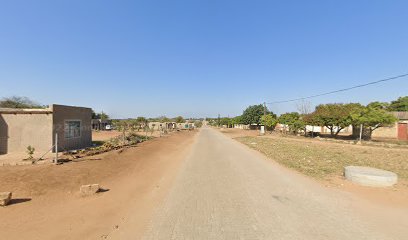
Phalaborwa and Namakgale_ Scienthematics Tutoring for maths and science extra lessons is a Education centers establishment in Phalaborwa, Limpopo, South Africa
Phalaborwa
Limpopo
1391
South Africa
Curriculum
Phalaborwa and Namakgale_ Scienthematics Tutoring presents itself as a dedicated provider of maths and science supplementary lessons in Phalaborwa, Limpopo, South Africa. The available online presence emphasises a specialised focus on mathematics and science support, with the intention of reinforcing school studies and developing confidence in key concepts. Within the scope of the listed material, the curriculum is framed to align with the needs of learners seeking additional guidance beyond standard classroom instruction, particularly at levels where foundational knowledge and problem-solving skills are essential for progression.
The site does not publish a detailed syllabus, course list, or explicit level-by-level progression. Consequently, the emphasis rests on the tutoring service’s core merit—targeted assistance in maths and science—rather than on publicly enumerated modules. This approach suggests a customised or ad hoc curriculum design, responsive to individual learner needs rather than a fixed set of topics. Without specific programme outlines, it remains appropriate to view the offering as a flexible framework intended to bolster understanding, technique, and application across relevant mathematical and scientific domains.
In terms of programme scope, the emphasis appears to be on supplementary support rather than a standalone, structured course collection. The description implies a focus on reinforcing classroom learning, addressing gaps, and building proficiency through practice and guided instruction. Learners may expect opportunities to engage with problem-solving strategies, practice exercises, and conceptual explanations that complement school curricula. However, definitive statements about levels, such as core subjects at particular grade bands or staged progression through a recognised curriculum, are not provided on the site.
Curriculum approach in such settings typically centres on diagnostic assessment to identify weaknesses and tailor sessions accordingly. While explicit assessment tools are not listed, the tutoring service’s orientation towards maths and science suggests an emphasis on quantitative reasoning, analytical thinking, and experimental understanding. The combination of these elements aims to promote both procedural fluency and conceptual mastery, supporting learners in preparing for assessments, exams, and practical recognitions of scientific principles.
Short courses or professional training opportunities are not described in the publicly available content. The absence of programme-specific information means potential students and guardians are encouraged to inquire directly for details regarding any time-bound courses, accelerated revision sessions, or targeted coaching blocks. Until such information is publicly stated, the available material positions the service as a maths and science enrichment option rather than a catalogue of discrete, formally structured courses.
Regarding delivery modes, there is no explicit information confirming online, in-person, or blended formats within the current content. In many contemporary tutoring contexts, offerings span a mix of individual sessions, small group work, and digital resources; however, such formats would need to be verified with the provider. Prospective clients are advised to check the official site for any updates on how sessions are conducted, including accessibility of remote learning tools or asynchronous materials.
Additional resources and student support services, when provided, often contribute to the distinctiveness of a curriculum in supplementary education. The site’s emphasis on maths and science tutoring suggests potential for targeted support mechanisms, including practice materials, problem-solving guidance, and concept reinforcement. Yet, specific resources such as worksheets, diagnostic tests, study plans, or tutoring aids are not explicitly described in the available content. Where resources exist, they would typically serve to complement classroom learning and foster independent study habits alongside guided instruction.
Distinctive features, if any, would likely emerge from how sessions are structured to address learners’ individual needs within the maths and science domains. The emphasis on extra lessons implies a focus on reinforcing understanding, supporting revision, and building confidence in problem-solving under conditions that mirror school assessments. Given the lack of published curricular details, interested parties should request a personalised outline or sample plan to gauge how the programme aligns with specific educational goals and school curricula.
For those seeking more information or wishing to explore how the curriculum may be tailored to a student’s specific requirements, the institution’s website serves as the primary reference point. Additional details, including any updates to programme offerings or changes to delivery formats, can be obtained by consulting the site directly at the official page.
Overall, the Curriculum section presents a concise portrayal of a maths and science tutoring service that prioritises supplementary, personalised support. While detailed course structures are not disclosed on the site, the emphasis remains on reinforcing core concepts, developing problem-solving proficiency, and providing a platform for learners in Phalaborwa and Namakgale to enhance their performance in mathematics and science subjects.
For further details and confirmation of current programme offerings, prospective learners and guardians are encouraged to visit the official website: Scienthematics Tutoring – Curriculum.
Faculties and Branches
Phalaborwa and Namakgale Scienthematics Tutoring is listed as offering maths and science extra lessons in Phalaborwa, Limpopo, South Africa. However, the current listing of the site returns a 404 error, and no explicit information about faculties, departments, campuses, or branch locations is available on the page at this time.
In the absence of clearly stated organisational units on the site, readers should expect a small, service‑oriented operation to centre on foundational mathematics and science tutoring. Where information is available from typical directory profiles, such services are often described as providing targeted support for learners across key school subjects, with programmes designed to reinforce core concepts, improve problem‑solving skills, and build confidence for assessments. The following general structure is commonly observed in similar tutoring operations, though it should be treated as a contextual guide rather than a confirmed fact for this particular entity:
- Facilities and learning spaces: A single teaching hub or multiple community‑based locations may exist, offering face‑to‑face sessions in a convenient town‑centre or school‑adjacent setting. Sessions typically cover maths and science topics aligned to local curricula.
- Programme streams: Tutoring provision is frequently organised around subject areas (e.g., mathematics and the sciences) with options for group workshops, one‑to‑one tutoring, and targeted revision programmes around exams and assessments.
- Support services: Beyond subject tuition, programmes may include access to learning resources, practice materials, and guidance on study habits, time management, and exam preparation strategies.
- Scheduling and accessibility: Programmes are usually scheduled to accommodate school timetables, with varying session lengths and frequencies to suit different learner needs and capacities.
- Student outcomes and progression: The core aim is typically to reinforce understanding, enhance academic performance, and support learners through milestone assessments within the local education framework.
Given the lack of explicit departmental or branch information on the current page, it is advisable for prospective students or guardians to monitor the site for updates or to search for official postings that confirm the presence of any faculties, branches, or specific centres. If a network of centres exists, details such as branch names, addresses, and service hours would usually be provided to help families locate the nearest convenient venue and to understand how the programmes align with local curricula and assessment standards.
For those seeking additional context, the business profile on the site may provide contact points, service descriptions, and links to related resources. It is important to note that no telephone numbers or email addresses are included in this listing, but website links can be consulted for further information.
In summary, while the current online listing does not disclose explicit faculties, campuses, or branch locations for Phalaborwa and Namakgale Scienthematics Tutoring, the service is positioned within the Limpopo region to provide maths and science extra lessons. Interested readers should refer to the public website for any forthcoming disclosures regarding the organisational structure, facilities, and branch network.
For those wishing to explore more, the website can be accessed at: https://scienthemathematics-tutoring-for-maths-and-science.business.site/?utm_source=gmb&utm_medium=referral
Registration Details
Phalaborwa and Namakgale Scienthematics Tutoring offers maths and science supplementary lessons to students in Phalaborwa, Limpopo, South Africa. An independent observer notes that the current online resource for this tutoring service presents a 404 error, indicating that the expected pages detailing registration information are not accessible at this time. Consequently, concrete details about the registration process cannot be verified from the provided site content.
Overview of registration expectations for similar organisations typically includes an outline of the steps required to enrol, the nature of any intake windows, and the primary contact channels for enquiries. In the absence of explicit information from the site, prospective learners and guardians are advised to monitor the site for updates or to seek confirmation through alternative, publicly visible contact points if they become available.
Where to apply
The available content does not include a direct application page or explicit instructions for submitting an enrolment request. The site address is provided for reference:
Users may wish to revisit the page periodically to check for newly posted application details, registration forms, or downloadable materials that may appear after the current error state is resolved.
Eligibility and entry requirements
There is no specific information available on eligibility criteria or entry requirements from the accessible content. When such information becomes available, typical criteria might address age or grade level, subject focus (mathematics and science), and availability of slots. Until then, no definitive statements regarding suitability or prerequisites can be provided from the site.
Documents typically required
The content does not indicate which, if any, documents are necessary for registration. Common documents for tutoring enrolment usually include proof of academic level, parental consent where applicable, and contact details, but such items cannot be confirmed from the current site content.
Contact and support channels
No direct contact details or support channels are visible within the supplied content. Should the site be updated with a contact page, enquiry form, or other communication options, those details would commonly guide prospective applicants to initiate registration or seek clarification. In the interim, the linked website remains the sole reference point for updates.
Practical guidance for prospective applicants
- Monitor the provided website URL for any posted registration information, deadlines, or downloadable forms.
- Look for announcements about intake periods, capacity limits, and age or grade eligibility when the information becomes available.
- Prepare typical enrolment documents in advance so that once details are published, the registration process can be completed efficiently.
- Be mindful of any updated contact options on the site that may facilitate direct enquiry about registration.
Note: The current page status points to a technical issue (404) on the site, and no verifiable registration steps, fees, deadlines, or required documents can be confirmed from the accessible content. For accurate and up-to-date information, it is recommended to recheck the site periodically or seek official communication channels if they appear on the platform in the future.
Sorry, no records were found. Please adjust your search criteria and try again.
Sorry, unable to load the Maps API.
Education and Learning Resources in Phalaborwa, Limpopo
Phalaborwa, located in the Limpopo province of South Africa, is a community with varied educational offerings that support learners from early childhood through adulthood. The town is served by a range of institutions designed to accommodate different learning needs, capacity for growth, and pathways into further study or skilled employment. The overall landscape emphasises accessibility, practical skills, and opportunities for lifelong learning within the local context.
Within the school sector, families typically encounter primary and secondary state schools that provide curricula aligned with national standards. These institutions commonly offer foundational subjects such as mathematics, languages, science, social studies, and arts, alongside extra-curriculars that foster well-rounded development. School-based support services often include guidance and counselling, assistance for learners with special educational needs, and programmes aimed at improving literacy and numeracy. Attendance patterns may reflect the regional calendar, with term schedules designed to balance academic progression and community life.
For those pursuing vocational and technical routes, training centres and technical education options are a practical choice. These institutions emphasise hands-on learning in trades and professional skills, such as engineering preparation, information technology, hospitality, business studies, and health-related training. Entry requirements are typically geared towards age and educational level, with assessments used to place learners in appropriate programmes. Apprenticeships and work-integrated learning opportunities are often highlighted as bridges to employment in the local economy.
Higher education in Phalaborwa and its surrounds comprises broad access to further studies at colleges and universities that offer diploma and bachelor’s level programmes, as well as professional qualifications. Students frequently encounter flexible study pathways, including full-time, part-time, and distance learning options, to accommodate work, family responsibilities, or commuting needs. Admissions are generally governed by standardised procedures, with considerations given to prior academic achievement, language proficiency, and any required entrance assessments. Support services can include academic advising, career guidance, scholarships or bursaries where available, and language or tutoring assistance to help learners succeed.
Learning support and student services are designed to aid academic progress and personal development. Libraries and information resources provide access to books, periodicals, online databases, and study spaces. Computer labs and classroom technology support digital literacy and research skills, while science laboratories and practical facilities enable experiments and applied learning. Sports and recreational facilities often accompany educational campuses, offering opportunities for physical development, teamwork, and healthy lifestyles. Some learners find accommodation through on-campus housing or nearby facilities, which can be important for those travelling from distant areas or requiring a stable study environment.
Typical pathways for progression include registration and enrolment at local institutions, followed by structured programmes aligned with learner interests and career goals. Students are commonly advised to explore entry requirements, funding possibilities, and available support services early in the application process. Orientation sessions, academic advising, and career information services help learners navigate course selection, credit transfer possibilities, and potential employer connections. Community learning hubs and outreach programmes often supplement formal education, providing literacy classes, computer training, and preparatory courses for examinations.
For up-to-date information on national and provincial education initiatives, potential learners may consult official resources such as government education portals and the Limpopo Department of Education. These sources offer guidance on admissions procedures, calendar dates, and programme availability across the district. Websites provide general descriptions of available study tracks, indicative timelines, and links to local institutions without implying endorsements or specific recommendations.
- General education themes: primary to tertiary progression, vocational training, and continuing education.
- Support and facilities: libraries, laboratories, computer access, sports, and accommodation options.
- Admissions framework: registration processes, eligibility, and advised preparation steps.
Overall, Phalaborwa presents a resilient and practical education environment, offering a spectrum of learning options that reflect the needs of learners and families in the region. Access to well-equipped facilities, diverse programmes, and supportive services enables informed choices and constructive pathways toward educational and professional goals. For further information, see national and provincial education portals for broad guidance and regional updates.