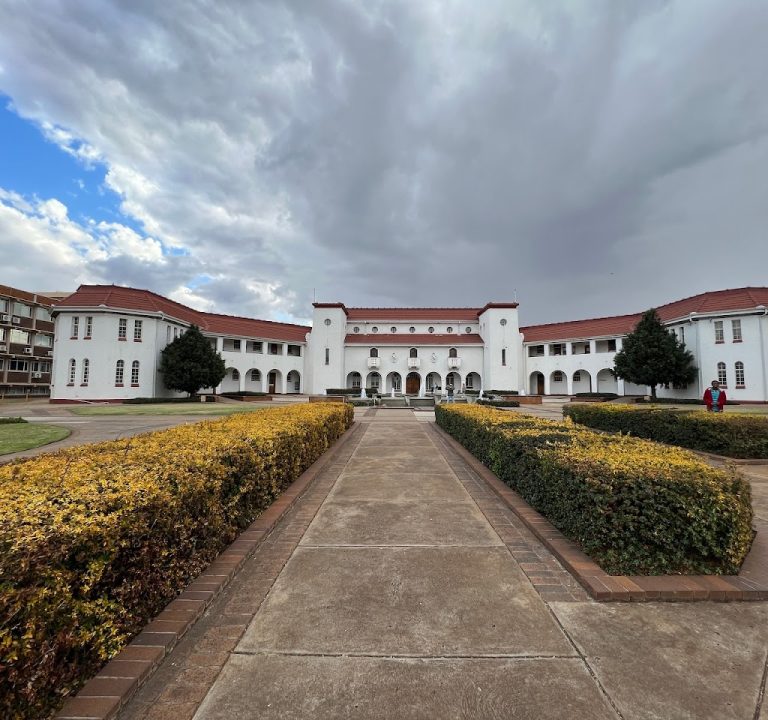
NWU Faculty of Law is a Educational institutions establishment in Potchefstroom, North West, South Africa
Potchefstroom
North West
Potchefstroom
South Africa
Curriculum
The NWU Faculty of Law in Potchefstroom presents a structured suite of programmes designed to develop well‑rounded legal practitioners who are conscious of public, private and mercantile law, as well as the broader social and constitutional context within which the law operates. Across three campuses, the undergraduate curriculum integrates core law subjects with complementary disciplines to foster critical thinking, ethical judgment and social responsibility. The faculty emphasises both theoretical grounding and practical skills, positioning graduates to contribute effectively within the legal profession and broader society.
Undergraduate offerings cover a range of routes into the legal profession. These include the Bachelor of Laws (LLB) and an Extended LLB option, all designed to prepare entrants for professional practice, further study or roles within public and private sectors. Complementary undergraduate qualifications with law subjects are the Bachelor of Arts with Law subjects (BA) and the Bachelor of Commerce with Law subjects (BCom), allowing students to combine legal studies with humanities or commerce, depending on career aspirations. The curriculum for these pathways emphasises public law, private and mercantile law, criminal and procedural law, and legal philosophy, with attention to bilingual or multilingual contexts and the diverse environments in which the university operates.
Postgraduate study in law is offered at both coursework and research levels. The faculty delivers a structured Master of Laws (LLM) through coursework, alongside an LLM by dissertation, enabling graduates to specialise or extend expertise in areas such as environment, trade, estate, labour and public law. Postgraduate programmes are complemented by active research endeavours and international collaborations, enriching curriculum content through exposure to current debates and comparative perspectives.
Two distinctive features underpinning the curriculum are the practical environments provided by Law Clinics and the faculty’s engagement with research and community influence. Law Clinics located at Mahikeng and Potchefstroom campuses offer experiential learning opportunities that connect legal theory with real‑world service, supporting justice and community engagement alongside academic study. This emphasis on service‑learning aligns with the faculty’s broader mission to contribute to constitutional democracy and social development.
In addition to formal teaching, the faculty culture includes participation in research projects and scholarly activity. Postgraduate research is bolstered by structured collaborations and international exchange agreements, enabling postgraduate researchers to benefit from diverse perspectives. The faculty’s research focus areas—such as law, justice and sustainability—inform curriculum development and provide learning resources through dedicated research units and journals, including the Potchefstroom Electronic Law Journal.
Educational resources and frameworks extend beyond traditional lectures to include research supervision and mentoring, with an emphasis on ethical practice and professional integrity. For prospective students and those seeking specialised knowledge, the faculty’s postgraduate options catalogue a variety of structured modules and research opportunities aimed at preparing graduates for academic, professional or policy‑oriented roles in South Africa and beyond.
Students and prospective applicants can explore programme details and progression routes through the faculty’s online resources. While online or blended delivery is not explicitly highlighted for every programme, the institution maintains comprehensive information hubs for undergraduate and postgraduate qualifications, admissions processes and progression pathways. The overarching curriculum approach emphasises interlinking theoretical foundations with practical experience, reflective practice, and active engagement with matters of public interest and justice.
- Undergraduate qualifications: BA (Law), BCom (Law), LLB and Extended LLB (Potchefstroom and Mahikeng campuses), with extensions where offered.
- Postgraduate qualifications: Coursework LLM, LLM by Dissertation, and other structured master’s degrees in law, with research‑focussed possibilities such as the LLD and related doctoral opportunities.
- Distinctive learning resources: Law Clinics (Potchefstroom and Mahikeng), the Potchefstroom Electronic Law Journal, and active research centres and chairs addressing themes such as environment, governance, and justice.
- Support and development: Research supervision, international partnerships, and opportunities for postgraduate exchange and collaboration.
For more information on specific programme structures, progression, and admission requirements, readers are encouraged to consult the faculty’s official pages, which provide detailed guidance on undergraduate and postgraduate pathways as well as ongoing research initiatives and student‑support mechanisms.
Faculties and Branches
The North-West University (NWU) Faculty of Law presents a comprehensive legal education and targeted research across multiple campuses, enabling engagement with both urban and rural environments. The faculty emphasises the connection between instruction, scholarship and community involvement, aiming to equip students with knowledge, ethics and practical skills suitable for professional life and for advancing the constitutional democracy of South Africa.
Structured as a single Faculty housing undergraduate and postgraduate activities, the NWU Faculty of Law operates across three campuses, reflecting its broad regional footprint and openness to diverse student cohorts. The presence of Law Clinics at both Mahikeng and Potchefstroom campuses highlights a commitment to hands-on learning and community service within real-world legal contexts. These clinics form an integral part of the practical training offered to students, complementing classroom-based study with service to justice.
Undergraduate studies are delivered through a School for Undergraduate Programmes that manages the core qualifications. The school coordinates curricula that interweave public law, private and mercantile law, criminal and procedural law, and legal philosophy to provide well-rounded, practice-oriented foundations. The undergraduate offerings span across the three campuses, ensuring regional accessibility for prospective law students. In Potchefstroom, Mahikeng and Vanderbijlpark, the faculty offers combinations of law subjects within bachelor programmes designed to prepare graduates for professional admission and further study.
Postgraduate offerings are central to the faculty’s academic profile, with Master’s and Doctoral programmes that span fields such as environmental law and governance, estate law, and international trade law. The postgraduate portfolio benefits from a sizeable and diverse academic staff, extensive international exchange opportunities, and a framework that supports co-promotion and collaboration with external partners. The LLM and related programmes emphasise both coursework and research components, with a structured approach to supervision and examination through the faculty’s governance structures.
The faculty’s three-campus arrangement supports a wide range of disciplines and specialisations within law, with specific reference to faculties, departments and research units that conduct cutting-edge work. In addition to traditional academic activities, the faculty maintains research clusters and chairs, connecting legal scholarship with sustainability, justice, finance and governance. Notable research themes include law, justice and sustainability, which are supported by centres and chairs that collaborate domestically and internationally.
Student services and academic pathways are designed to be responsive to regional needs. The Potchefstroom and Mahikeng campuses host Law Clinics and related services that assist students in applying theoretical knowledge to service-oriented work. The networked campus structure allows for shared resources and coordinated pathways from undergraduate entry to postgraduate specialisation, while maintaining distinct campus identities to reflect local contexts.
Prospective students and stakeholders can explore programmes and campus-specific information via the official NWU Faculty of Law website, including sections on undergraduate and postgraduate studies, staff, and research centres. The university’s online presence provides access to detailed campus information, academic calendars, and programme requirements across the three campuses: Potchefstroom, Mahikeng and Vanderbijlpark.
- Undergraduate Studies – School for Undergraduate Programmes (three campuses)
- Postgraduate Programmes – structured Masters and Doctoral offerings
- Law Clinics – Potchefstroom
- Law Clinics – Mahikeng
- Academic Staff – research and teaching personnel across campuses
Registration Details
The North-West University Faculty of Law, based in Potchefstroom, offers undergraduate and postgraduate programmes across three campuses. Prospective students should understand the general pathway for registration and what to expect during the application process, as well as where to submit applications and what information is typically required where stated by the faculty.
Registration overview and process
For undergraduate entry, applicants must follow the standard undergraduate application process, with online submission via the university’s applications portal. The Central Applications Hub (CAH) administers the process for first-year law degree applications and provides information on campus-specific requirements and aptitude testing. An aptitude test is required for all first law degrees. The CAH will communicate application results and provide guidance on the faculty aptitude test and next steps. Prospective students should prepare to supply academic results and motivation where indicated during the online application.
Postgraduate applications are welcome for the various master’s and doctoral qualifications offered by the Faculty of Law. Applications for postgraduate study close on 31 October of the preceding academic year. The Faculty provides a dedicated postgraduate application pathway to guide applicants through the process, including access to the Postgraduate Application Process pages for detailed steps.
Where to apply
- Online undergraduate applications: Online application
- Undergraduate study information and programmes: Undergraduate Studies
- Postgraduate study information and programmes: Postgraduate Programmes
- Postgraduate application process: Postgraduate Application Process
- Registration and orientation information for 2026: Registration & Orientation 2026
Eligibility and entry requirements
For undergraduate entrants, Grade 12 learners must meet the minimum requirements for the programmes studied. Applicants who previously studied at other institutions should have passed at least 60 credits in the same academic year. A motivation letter and previous results are required with online applications. The Central Applications Hub (CAH) coordinates aptitude testing and communicates results to applicants for first law degrees.
Direct information on postgraduate entry requirements is provided in the specific programme pages. Certain postgraduate pathways describe prerequisites such as the need to hold an LLM degree, relevant research proposals, and supervisory arrangements. Applicants are advised to consult the specific postgraduate programme pages for detailed admission criteria and timelines.
Documents typically required (where stated)
The site indicates that for undergraduate applications, a motivation letter and prior results should accompany the online application. For postgraduate pathways, programmes outline the need for research proposals, supervisor consultations, and other faculty-specific requirements. Where specific documents are requested, applicants should follow the guidance provided in the relevant online application sections and linked programme pages.
Contact and support channels
Answers to application-related questions for prospective students can be obtained via the university’s central application channels. The main online application portal and the corresponding faculty pages provide access to further information and guidance. For general prospective student enquiries, the faculty pages offer links to programme information and application paths, while the CAH handles application communication and aptitude testing details.
Additional resources
- Faculty of Law homepage: NWU Law Faculty
- Registration & Orientation 2026: Registration & Orientation 2026
- Undergraduate programmes: Undergraduate Studies
- Postgraduate programmes: Postgraduate Programmes
In summary, registration at the NWU Faculty of Law involves engaging with the Central Applications Hub for initial undergraduate admissions, following online application routes for undergraduate and postgraduate studies, and adhering to programme-specific requirements and deadlines as published on the official pages. The site emphasises general readiness for aptitude testing for first law degrees and references dedicated application processes for postgraduate studies.
Sorry, no records were found. Please adjust your search criteria and try again.
Sorry, unable to load the Maps API.
Education and Resources in Potchefstroom, North West
Potchefstroom, situated in the North West province of South Africa, offers a broad spectrum of educational options for learners of all ages. The town serves as a hub where primary and secondary schools provide a mix of foundational subjects and language offerings, while a range of further education and training opportunities supports skill development for the modern economy. The educational landscape emphasises accessibility, academic rigour, and practical preparation for higher study or employment.
Within Potchefstroom, learners can typically encounter public and private schools that cater to diverse learning needs. Primary schools focus on literacy, numeracy, and foundational sciences, while high schools extend programmes in mathematics, natural and social sciences, languages, and arts. Some institutions also offer specialised support services for students requiring additional guidance, including study skills development, counselling, and assistance for learners with mild learning differences. Families frequently value campuses that integrate sport and cultural activities alongside academic timetables, contributing to well-rounded development.
For post-secondary education, the town is connected to a network of further education and training providers. These centres commonly deliver diploma and certificate programmes across vocational fields such as information technology, engineering technologies, business administration, hospitality, health care support, and creative disciplines. Programmes are designed to accommodate different progression routes, allowing learners to enter the workforce directly after completion or to continue into higher education through bridging or credit transfer pathways. Short courses and professional development opportunities are frequently available to support career advancement and lifelong learning.
University options in the area typically offer degree-level study across humanities, sciences, engineering, and professional disciplines. Prospective students often encounter clear admission pathways that may involve meeting subject prerequisites, achieving defined academic results, and participating in selection processes where applicable. Higher education institutions also tend to provide a robust framework of student services intended to support academic success and personal wellbeing. These can include tutoring and academic support, language and study skills assistance, health services, and access to campus accommodation for both local and visiting students.
Learning support and student services commonly feature in Potchefstroom’s educational ecosystem. Library facilities across institutions are central to independent study and research, offering access to print and online resources, study spaces, and reference services. Laboratories—science, engineering, and technology laboratories—provide hands-on experimentation opportunities that complement theoretical learning. Computer centres facilitate information technology literacy and project work, while printing and multimedia resources support assessments and presentations. On-campus accommodation and university or college residences may offer meals, quiet study rooms, and social spaces, contributing to a supportive living and learning environment.
Facilities and resources extend beyond the classroom to sports, arts, and community engagement. Sports fields, gymnasiums, pools, and courts contribute to physical education and team participation. Arts facilities, such as theatres and rehearsal spaces, support performance, creative projects, and cultural events. Community education programmes, language courses, and lifelong learning classes are often available through local centres and partner organisations, broadening access for families seeking flexible study options.
Typical pathways for prospective learners involve exploring local school catchments or enrolment processes for secondary provision, followed by qualification-seeking routes through vocational colleges or academic programmes at tertiary institutions. Registration generally requires proof of prior study or qualifications, together with assessment through entrance tests, interviews, or formal documentation. Guidance services, school career counsellors, and tertiary admissions offices commonly provide information on requirements, application timelines, and scholarship or funding opportunities, enabling families to plan the next steps with greater confidence.
- Identify the appropriate level of study (primary, secondary, further education, or higher education).
- Explore available programmes and progression routes, including bridging and credit transfer options.
- Utilise learning support services such as tutoring, language assistance, and study skills programmes.
- Check for on-campus facilities, including libraries, laboratories, accommodation, and sports facilities.
- Follow official admissions or registration procedures through the relevant institution or education portal.
Overall, Potchefstroom presents a cohesive educational landscape characterised by accessible resources, supportive services, and clear pathways that accommodate diverse learner goals. The combined emphasis on academic achievement, practical skills, and personal development positions learners to pursue successful futures within the South African education system.