
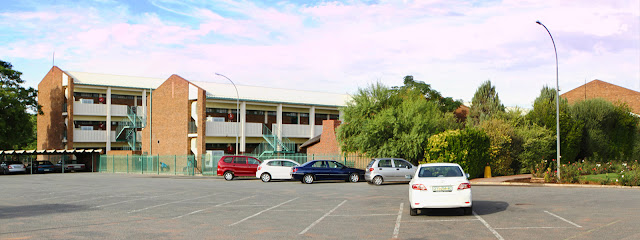
Northern Cape Rural TVET College is a Community college, TVET Colleges establishment in Upington, Northern Cape, South Africa
Upington
Northern Cape
8800
South Africa
Curriculum
Northern Cape Rural TVET College (NCR TVET College) presents a curriculum designed to bridge classroom theory with practical, industry-relevant experience. The offerings are structured to equip students with qualifications that open pathways to employment or further study, with an emphasis on real-world application and sector-ready skills. The college highlights more than 20 courses developed in partnership with industry, spanning Certificate and Diploma levels in Business and Engineering disciplines. These programmes are delivered across NCR TVET College’s five campuses in Upington, Kathu, Kuruman, Namaqualand and De Aar, ensuring accessible options throughout the Northern Cape.
The curriculum is framed around deliberately chosen areas of study that reflect contemporary workplace needs. In Business studies, programmes encompass administrative, organisational and management-related competencies, while Engineering and related design options introduce learners to fundamental engineering principles, manufacturing processes and hands-on fabrication activities. The college emphasises the integration of theoretical concepts with practical competencies to prepare learners for immediate workplace contribution or progression to higher levels of study.
In terms of specific subject areas, the college highlights programmes such as Office Administration, which focuses on equipping learners with the administrative and secretarial skills required across industries. Engineering streams include Fabrication and Fitting & Turning, which provide exposure to metalwork, welding, machining and related manufacturing processes. A Human Resource Management offering is also featured, designed to build capability in areas such as recruitment, labour relations, wellness and performance management, illustrating NCR TVET College’s commitment to a broad mix of technical and people-focused competencies within the workplace.
Beyond formal qualifications, the curriculum framework recognises the value of short courses and professional training to support ongoing skills development. While course lists are not exhaustively enumerated here, the college communicates its strength in delivering targeted, industry-aligned training designed to enhance employability and practical proficiency. The emphasis on practical components is illustrated in programmes like HRM in which a substantial practical segment is required to ensure readiness for industry roles. In this vein, some programmes integrate extended practical components or industry placement to consolidate learning outcomes with real-world practice.
The delivery approach at NCR TVET College combines structured coursework with access to well-equipped facilities and an experienced teaching team. The college advertises innovative facilities and materials, suggesting a learning environment that supports hands-on practice, simulations and applied projects. Such resources are positioned as core to realising students’ aspirations and enabling a smooth transition from study to work. The emphasis on state-of-the-art equipment and dedicated educators aims to provide students with both confidence and competence in their chosen fields.
Online or blended learning options are not explicitly detailed on the provided materials. However, the college’s commitment to accessible education is reflected in its multi-campus model, designed to bring programmes closer to potential learners across the Northern Cape. This campus network, combined with its partnership-driven course design, implies a flexible approach to study access, although specific online modules or blended pathways are not described in the available content.
Student support services are part of the college’s value proposition. Information about bursaries is highlighted, including the NSFAS offering that covers course fees, books and accommodation in certain circumstances. The inclusion of bursary information signals an awareness of financial aid as a component of the learner experience. The college also presents itself as being “close to you” through its five campuses, with a narrative emphasising support for academic, social and personal success. This suggests a holistic student support ethos, extending beyond purely academic outcomes to encompass broader well-being and success in studies and beyond.
Distinctive learning resources are underscored by references to skilled teaching staff and well-equipped facilities, positioning NCR TVET College as an instrument to help learners achieve their dreams. The college’s public-facing sections also highlight industry partnerships, which inform curriculum relevance and potential pathways to employment or further study. For prospective students seeking additional information or course specifics, the college provides direct access to course details via its website, including pages dedicated to particular programmes and about the broader curriculum framework.
- Certificate and Diploma courses in Business and Engineering
- Selected programmes such as Office Administration, Fabrication, Fitting & Turning, and Human Resource Management
- Industry-aligned curricula developed in partnership with industry
- Five campuses serving Upington, Kathu, Kuruman, Namaqualand and De Aar
- Innovative facilities and a dedicated teaching team
- Financial aid options, including NSFAS bursaries
Faculties and Branches
Northern Cape Rural TVET College (NCR TVET College) operates as a multi-campus technical and vocational education provider serving the Northern Cape. Observers note that the college is organised around a central remit of delivering Certificates and Diploma courses in Business and Engineering disciplines, designed in partnership with industry to equip students for immediate employment or further study. The institution presents itself as accessible across several regional sites, emphasising proximity and practical opportunities for learners across the province.
The college’s stated structure comprises five campuses, each positioned to serve different communities within the Northern Cape. These campuses are located in Upington, Kathu, Kuruman, Namaqualand and De Aar. The distributed campus model is described as a means to extend reach, support local access to education, and offer facilities capable of supporting a range of programmes aligned with industry needs. While specific departmental naming is not exhaustively itemised on the overview, the overall organisation centres on faculties or schools that prepare students for careers in business administration and engineering-related fields.
From an enrolment and programme perspective, NCR TVET College highlights a curriculum breadth that includes more than 20 courses. The focus is on combining theoretical study with practical skills, enabling a pathway from entry-level certificates to diploma qualifications. In this framework, learners may engage with courses such as Office Administration, Engineering-related pathways—including fabrication and turning processes—and related human resource management offerings. The emphasis throughout is on preparing students for the workplace, with acknowledgement of pathways to further study at university level where available.
Campus-level arrangements appear to support both classroom-based learning and practical experiences, drawing on well-equipped facilities and an experienced teaching team. The college’s stated aim to be “close to you” is reinforced by the multi-site footprint, which serves diverse communities and minimises travel barriers for prospective students. The structure also aligns with student services, such as bursary information and results access, underscoring a holistic approach to education that integrates financial aid and progress tracking with academic study.
In relation to student services and progression, NCR TVET College communicates that financial aid is available through the National Student Financial Aid Scheme (NSFAS) for eligible learners, with provisions that may cover course fees, books, and accommodation. Although specific campus-by-campus services are not itemised in the overview, the nationalised bursary framework is presented as a cross-campus support mechanism, reinforcing the link between financial aid and access to programmes across the five campuses.
For prospective students and stakeholders assessing NCR TVET College, the layout suggests a regional network with a common academic philosophy and aligned course offerings, delivered through multiple campuses. The arrangement enables students to select from a broad spectrum of business and engineering-focused programmes while benefiting from college-wide support services and the established partnerships that frame the college’s educational delivery.
- Campuses: Upington, Kathu, Kuruman, Namaqualand, De Aar
- Primary subject areas: Business Administration; Engineering and related design disciplines; general educational pathways leading to certificates and diplomas
- Student support: NSFAS bursaries and cross-campus access to results and information services
Further details on individual courses, campus facilities, and specific departmental offerings can be explored via the college’s website, which hosts information on courses, admissions, and student services.
Registration Details
Northern Cape Rural TVET College (NCR TVET College) presents a straightforward path to enrolment for prospective students seeking to study at campuses across Upington, Kathu, Kuruman, Namaqualand and De Aar. The college emphasises practical, industry-relevant programmes designed to equip learners with the knowledge and hands-on experience needed for successful entry into the workforce or further study.
Application/registration process overview
Potential applicants are invited to begin the process by visiting the college’s online entry point, which provides direct access to the application system. The college’s online portal includes an “Apply Now” option that links to the application page, enabling interested individuals to start their registration journey and submit required information through the college’s digital workflow. The availability of this online route underscores NCR TVET College’s commitment to accessible, user-friendly enrolment procedures for new students.
Where to apply
The primary application gateway is the college’s website via the “Apply Now” link. This link guides applicants towards the formal application process and related steps. For more information about the college’s offerings and how to begin enrolment, see the main site sections such as “See Courses” and “Our Courses”, which provide context on the qualifications available and the focus areas across the five campuses.
Eligibility/entry requirements
Specific entry requirements are not itemised in the provided content. The college presents its programmes as suitable for learners seeking certificates and diplomas in Business and Engineering, with pathways designed to align with industry needs. Where general guidance is available, it is noted that the college partners with industry to shape courses and that students may pursue qualifications that lead to employment or further study. Prospective applicants should refer to the online application portal for the exact criteria applicable to their chosen course and campus.
Documents typically required
The content does not list a definitive document set for every application. While no explicit itemised checklist is provided in this copy, it is common for TVET college applications to require identity documentation, prior academic results, and proof of residence. Since specific documents are not stated here, applicants should rely on the official Apply Now system to determine the exact documentation needed for their selected programme and campus.
Additional support and financial aid
Information is provided about bursaries and financial support, including the National Student Financial Aid Scheme (NSFAS), which offers loans and bursaries to qualifying students. Access to this financial aid is highlighted, with a note on what NSFAS can cover. Applicants exploring funding options should consult the college’s guidance on financial assistance and the NSFAS process to understand eligibility and coverage as it pertains to their preferred course.
Contact and support channels
Direct access to application-related information is available through the college’s website, including links to important sections such as “Apply Now” and “See Courses.” While no direct telephone or email contacts are listed in the provided content, the website remains the central hub for application instructions, course details and campus information. For additional guidance, prospective students can navigate the site’s pages and connect with the college through the available online resources.
Notes for applicants
Enrolment processes emphasise aligning learners with industry needs and providing pathways to employment or further study. By engaging with the online application portal, prospective students can access the most current information on courses, campus locations, and any updates to the registration steps. The college’s five-campus footprint in Upington, Kathu, Kuruman, Namaqualand and De Aar reinforces its regional approach to access to education across the Northern Cape.
Links for applied navigation:
- Apply Now
- See Courses
- Office Administration (example course)
Sorry, no records were found. Please adjust your search criteria and try again.
Sorry, unable to load the Maps API.
Education and Educational Resources in Upington, Northern Cape
Upington, a regional centre in the Northern Cape, provides a mix of educational pathways designed to support learners from primary school through to higher levels of study. The town serves as a hub for families seeking local schooling options as well as access to further training and skills development. While specific programmes and entry requirements may vary, the general landscape emphasises accessible learning, practical skills, and progressive routes to higher education.
Types of institutions commonly found in Upington include primary and secondary schools offering curricula aligned with national standards, supplemented by subject enrichment and language development programmes. In addition, technical and vocational pathways are typically available through technical and vocational education and training (TVET) variants, which focus on practical, career-oriented qualifications that align with local industries and employment opportunities.
Colleges and training centres in and around Upington often provide certificates and diplomas in fields such as information technology, business studies, engineering related disciplines, health and community services, and hospitality. Short courses, professional development programmes, and skill-building workshops may also be offered to support employability and lifelong learning. Distance learning options and online resources are commonly recognised as valuable supplements, enabling learners to study flexibly while balancing work or family commitments.
Higher education opportunities can be accessed through nearby universities and campuses, complemented by distance education providers that operate across the country. For many learners, the pathway from school to higher education involves completing the senior phase of schooling and meeting general language and numeracy needs, followed by application processes into diploma, degree, or specialised programmes. Guidance on admissions is typically provided through school guidance counsellors, college student services, or public information channels, with clear information on registration periods and required documentation.
Learning support and student services play a crucial role in Upington’s educational ecosystem. Inclusive education services, language support, study skills coaching, and tutoring are commonly available to assist learners facing academic challenges. Libraries and learning centres offer access to reading materials, study spaces, computer laboratories, and reference resources that support independent study and group work. Cultural and sports facilities frequently accompany educational institutions, helping to develop well-rounded learners with opportunities in athletics, arts, and community activities.
Facilities and resources of relevance to students and families include libraries with quiet study zones and IT access, science and computer laboratories, and dedicated spaces for practical workshops. Accommodation options, where applicable, may include campus residences, hostels, or approved private housing near institutions, allowing students to live locally while pursuing study and training programs. Transportation links and safe access to campuses are important considerations for daily travel between home and learning sites.
Typical pathways observed in Upington involve completing the qualifying school leaving certificate, exploring suitable college or programme offerings, and applying within announced registration windows. Students may progress through networks of schools, colleges, and distance education providers to attain qualifications that align with career goals. Financial aid avenues, bursaries, or fee-relief options may exist, subject to eligibility and institutional guidelines, and information about these supports is commonly distributed through schools and colleges or official education portals.
- Primary and secondary schools offering core subjects and language development
- TVET colleges and training centres delivering certificates and diplomas
- Distance learning and online learning resources for flexible study
- Libraries, computer laboratories, and study spaces for independent learning
- Inclusive education and tutoring services to support diverse learners
- Pathways to higher education through local campuses or distance programmes
Overall, Upington presents a practical and accessible educational environment, focused on equipping learners with foundational knowledge, practical skills, and clear routes to further study and employment. Information on current offerings, admission deadlines, and application requirements is best obtained directly from local institutions and official education platforms.