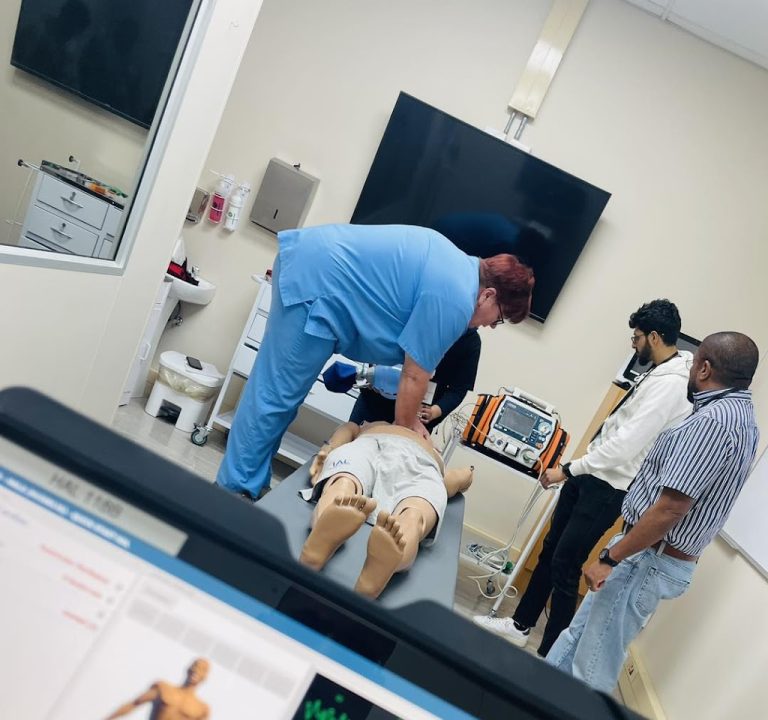
North West University, Faculty of Health Sciences- Training Center is a Educational institutions establishment in Potchefstroom, North West, South Africa
Potchefstroom
North West
2531
South Africa
Curriculum
The NWU Faculty of Health Sciences Training Centre in Potchefstroom offers a targeted, professional focus on emergency medical care for practising clinicians and allied health professionals. The centre is described as delivering expert and specialised training designed to enhance proficiency in high-stakes medical scenarios. While specific academic programmes or entry pathways are not itemised on the available public material, the content indicates an emphasis on advanced clinical skills and continuous professional development within urgent and emergency health care settings.
In terms of breadth, the offering appears to converge on the domain of emergency medical care, with programmes and courses aimed at developing practical competence for medical professionals who routinely encounter acute presentations. This includes scenarios that demand rapid assessment, decision-making, and action under pressure. The emphasis is on applying evidence-informed practice to real-world emergency situations, potentially spanning the spectrum from pre-hospital to in-hospital care, although the public information does not enumerate discrete modules or levels.
The curriculum approach at the Training Centre is described through its positioning as a centre for expert level training. This framing suggests a pedagogy rooted in applied clinical practice, scenario-based learning, and hands-on experiences that mirror professional duties. Learners are likely to engage with case-based discussions, physiological principles under emergency conditions, and the utilisation of standard emergency protocols. The information available does not specify learning methodologies in detail, such as whether instruction integrates simulation labs, live patient supervision, or mentored clinical practice; however, the emphasis on expert training implies a focus on high-utility skills that translate directly to professional performance.
Short courses and professional training are highlighted as a core feature of the centre’s offering. The available content indicates that these sessions cater to medical professionals seeking to augment their capabilities in emergency care. While explicit course titles, durations, or accreditation details are not provided, the presence of short courses aligns with an ongoing professional development model that accommodates busy clinicians and supports upskilling without committing to extended degree programmes. These courses are positioned to address immediate practice needs, enabling participants to update competencies in line with current best practice and evolving standards in emergency medicine.
Online or blended options are not explicitly described in the accessible material. Given the emphasis on specialist training for medical professionals, prospective learners may encounter a mix of in-person and potentially flexible delivery formats; however, without definitive statements, it is prudent to regard any online or blended offerings as uncertain. The centre’s public communications do not indicate specific distance learning components, but the reliability of professional capability development often benefits from such formats in emergency care education. Interested individuals are encouraged to seek direct confirmation via the centre’s contact channels for the latest delivery modes.
Support services and resources described in general terms for learners include access to expert-led instruction and professional training opportunities. While the published information does not enumerate student support services explicitly—such as academic advising, mentorship programmes, or library access—the centre’s focus on emergency medical care training implicitly places value on resources that support clinical capability development, ongoing learning, and professional readiness. Prospective participants should inquire about available support structures, including faculty supervision, practical placements, or access to clinical facilities, as part of programme enquiries.
Distinctive learning resources are not itemised in the available materials. Nevertheless, the centre’s designation as an expert training hub implies the utilisation of foundational resources required for high-calibre emergency medical education, such as up-to-date guidelines, clinical protocols, and access to teaching faculties with specialised expertise. While specific textbooks, simulators, or learning platforms are not named, learners can expect resources aligned with current practice standards in the field of health sciences and emergency medicine.
For up-to-date information on curricula, modules, and delivery formats, prospective students and professionals are advised to contact the NWU Faculty of Health Sciences Training Centre directly via its official page. Details regarding programme listings, entry prerequisites, durations, and fees are not publicly enumerated in the available material, but direct engagement will provide the most accurate and current overview of offerings and pathways into advanced emergency medical care education. More information can be found on the university’s Health Sciences Training Centre page at NWU Health Training.
Overall, the Curriculum section portrays a specialised, practitioner-focused education pathway designed to bolster clinical capabilities in emergency medical care for health professionals, with an emphasis on practical competence, professional development, and targeted short courses that support ongoing clinical excellence.
- Programme focus: emergency medical care for medical professionals
- Areas of study: applied clinical skills in emergency settings
- Curriculum approach: expert-led, practice-oriented training
- Short courses: professional training in emergency care (details not specified)
- Delivery modes: explicit online/blended options not confirmed in public content
- Support and resources: professional instruction with potential access to clinical resources
Notes: All information reflects publicly available material from the NWU Health Sciences Training Centre's communications; for definitive programme lists, entry requirements, fees, and accreditation details, direct contact is recommended through official NWU channels.
Faculties and Branches
The facility is a training centre associated with the NWU Faculty of Health Sciences, located in Potchefstroom, North West. It operates as a specialised hub delivering expert emergency medical care training aimed at medical professionals seeking advanced skills and knowledge in critical care settings.
As a distinct centre within the Faculty of Health Sciences, the Training Centre focuses on the provision of specialised courses designed to enhance clinical competencies in emergency medical response. The programme emphasis is on practical expertise and discipline-specific training that supports professional development within the health sciences field.
The centre’s activities are described as offering expert and specialised emergency medical care training. While the exact catalogue of courses is not detailed in the available materials, the centre is presented as a resource for practitioners seeking targeted instruction in airway management, acute care, trauma response, and related emergency medical disciplines. These offerings align with the broader mission of health sciences education to prepare and uplift medical professionals through focused, high-quality training.
Geographically, the Training Centre is based at 11 Hoffman Street in Potchefstroom, situating it within the North West region and facilitating access for students and professionals located in and around the university’s campus catchment. The arrangement mirrors common structures where dedicated centres operate under a faculty umbrella to provide practical training and professional development opportunities outside of traditional degree programmes.
In terms of student services and programme relevance, the centre is described as a source for information on specialised courses and training opportunities. While specific administrative details are not enumerated, the centre’s relationship to the Faculty of Health Sciences suggests coordination with broader academic support and potential alignment with continuing professional development needs for health professionals.
For prospective learners and professionals seeking further information, the centre’s online presence serves as a portal for course inquiries and updates. The emphasis remains on delivering practical, high-level training within a focused health sciences context, leveraging the resources and expertise associated with NWU’s Faculty of Health Sciences to support professional practice in emergency medical care.
- Focus: expert and specialised emergency medical care training for medical professionals
- Location: Potchefstroom, North West, South Africa
- Affiliation: NWU Faculty of Health Sciences
- Contact medium: online information via the centre’s page
Registration Details
North West University, Faculty of Health Sciences – Training Centre in Potchefstroom, North West, operates as a specialised provider offering emergency medical care training for medical professionals. The centre’s facilities are located at 11 Hoffman Street, Potchefstroom, South Africa, where prospective participants can enquire about available courses and capacity.
The information available publicly indicates that the Training Centre invites interested individuals and professionals to make contact for information about its specialised courses. As communications are conducted via a public social-media channel, enquiries about registration and course offerings are typically directed through that platform.
Registration and application details are not exhaustively listed on the accessible material. For prospective learners seeking entry into the centre’s programmes, it is advisable to pursue a direct enquiry to obtain current registration steps, course availability and any prerequisites. The public page provides a central point of contact and a means to request further information.
For those intending to apply or to gather more information, the centre’s public online presence can be used to initiate contact. Prospective applicants should refer to the official page for NWU Faculty of Health Science Training Centre to determine the correct procedure at the time of enquiry. The page to visit is:
Details such as deadlines, fees, specific entry requirements, and required documentation are not explicitly stated in the publicly accessible material provided. In the absence of stated particulars, the communication approach is to contact the centre directly through its main public channel to obtain accurate, up-to-date information.
Potential applicants are advised to monitor the centre’s public page for announcements regarding course schedules, registration windows and any related considerations. As with all programme registrations, it is prudent to secure confirmation of course availability and eligibility directly from the Training Centre prior to making any commitments.
Where relevant, additional information and updates may be found through the centre’s public contact point and through the NWU network connected to the Potchefstroom campus.
Sorry, no records were found. Please adjust your search criteria and try again.
Sorry, unable to load the Maps API.
Education and Resources in Potchefstroom
Potchefstroom, situated in the North West province of South Africa, presents a diverse landscape of educational facilities and learning resources for families and learners at all stages. The town is home to a variety of institutions that cater to academic, technical and vocational ambitions, as well as preparatory and supplementary support services that help learners navigate their educational journeys.
Among the most visible components of the local education ecosystem are primary and secondary schools. These institutions typically offer a range of curricula aligned with national standards, with possibilities for both standard and specialised streams. For families seeking broader options, there are independent schools and community schools that emphasise holistic development, multilingual learning, and inclusive classroom practices. Local networks often provide information on school open days, placement tests, and progression opportunities to post‑secondary study.
Higher education in Potchefstroom is characterised by access to a major university campus situated within the town. The campus offers a spectrum of study areas, including undergraduate degrees, diplomas and certificates across disciplines such as sciences, humanities, business and education. In addition to degree programmes, possibilities exist for shorter courses, continuing professional development and lifelong learning modules designed to upskill learners for the job market or academic pathways. Prospective students are typically guided through admissions processes that cover application timelines, selection criteria and required documentation, with registration and orientation sessions held at the start of the academic year.
Further education and training are supported by colleges and specialised training centres that provide vocational programmes and workplace‑relevant credentials. These centres are common entry points for learners seeking practical skills in areas such as information technology, hospitality, engineering technology, health sciences and creative industries. Flexible delivery is often available, including part‑time studies and evening classes to accommodate working learners or those balancing family responsibilities.
Learning support services form an important part of the educational infrastructure. Libraries and learning resource centres provide access to reference materials, digital databases, study spaces and quiet rooms for individual or group work. Some institutions offer tutoring, academic literacy programmes, language support and study skills workshops to help learners adapt to higher education expectations or upgrade foundational knowledge. Student services may also cover career guidance, counselling, disability support, and financial literacy, aiding learners in making informed decisions about their academic and personal development.
Facilities across Potchefstroom typically extend beyond classrooms. Modern educational campuses and schools often feature laboratories for science and technology, computer suites equipped with up‑to‑date software, lecture halls, and dedicated spaces for group projects. Sports facilities, gymnasia and fields support physical education and extracurricular activities, contributing to a balanced student experience. Accommodation options, such as student residences or hostels, are commonly available near campuses, with houses and flats that cater to varying budgets and preferences.
Potential learners may consider a general progression pathway that starts with choosing a suitable school or course, followed by application or enrolment, placement assessments where applicable, and the completion of initial enrolment tasks. Early exposure to campus tours, open days, virtual information sessions and guidance counsellors can help clarify study routes, funding approaches and anticipated timelines. While tuition and funding details are variable, many institutions provide information on scholarships, bursaries and payment plans to assist families in planning ahead.
Overall, Potchefstroom offers a supportive environment for education and skills development, with a network of schools, higher education institutions, vocational centres and learning resources designed to help learners pursue their goals, whether that path leads to further study, professional training or personal growth. For further information on specific programmes and admissions timelines, prospective students can explore official university and school websites.
- Explore general information about higher education options at the local university: North-West University.
- Consult local school directories and district education resources for up‑to‑date guidance on admissions and calendars.
- Investigate vocational training centres offering certificates and diplomas in applied disciplines.