Nomanzi Trade College is a Trade school establishment in Akasia, Gauteng, South Africa
Akasia
Gauteng
Klerksoord AH, Akasia
South Africa
Curriculum
Nomanzi Trade College focuses its curriculum on producing competent, job-ready electricians and plumbers through a specialised trade test preparation framework. As a private, QCTO-accredited trade test centre, the college centres its activities on equipping candidates with the practical skill sets and theoretical knowledge required to attain the Red Seal (Section 26D) trade test certificates. The programme structure is designed to support professionals at various stages—from those seeking initial pre-assessment guidance to those pursuing full trade test readiness and ARPL recognition.
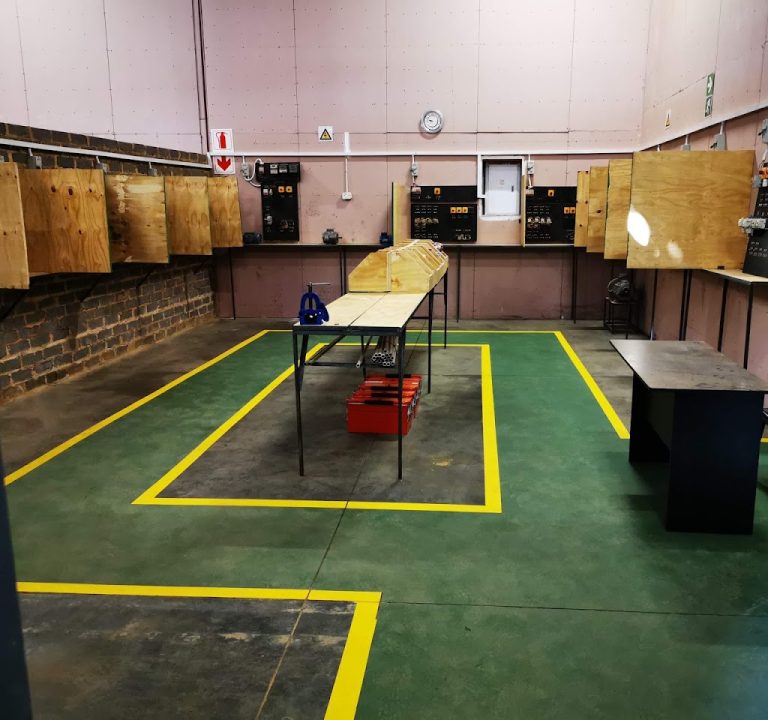
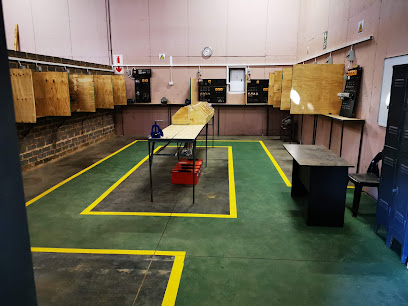
The primary offerings are targeted at two core trades: electrical and plumbing. The college conducts dedicated trade test preparation programmes that align with South Africa’s Section 26D requirements. These courses are delivered at two locations—Cape Town and Pretoria—where facilities are described as fully equipped trade workshops. The hands-on environment emphasises practical practice, knowledge consolidation, and the development of confidence ahead of the trade test, ensuring participants can demonstrate necessary competencies across relevant trades.
A notable element of the curriculum is the incorporation of Artisan Recognition of Prior Learning (ARPL). This feature allows suitably experienced practitioners to have relevant prior work validated within the formal accreditation framework, subject to the pre-assessment process. The ARPL pathway is integrated into the overall preparation programme, guiding learners through the appropriate steps and assessments leading to the trade test.
Course durations are linked to individual starting points and assessed need. The trade test preparation and ARPL phases are described as ten to fifteen working days for electrical applicants, followed by a two-day trade test window. For plumbing candidates, the trade test preparation and ARPL phase is generally ten working days, with the trade test itself typically spanning two working days. The overall scheduling is therefore a mix of assessment-driven timelines and formal test windows, designed to fit professional commitments while meeting industry expectations.
Curricular content is oriented towards ensuring competency in both practical execution and underpinning knowledge. The college communicates that training is delivered by qualified facilitators with industry experience, and that the programmes aim to prepare learners comprehensively for South Africa’s Red Seal standard. Informational materials point to the progression from pre-assessment to practical refinement, through to full trade test practice and certification, reflecting a complete, outcome-focused pathway rather than a conventional academic route.
In terms of delivery approach, the curriculum emphasises hands-on practice in well-equipped workshops, supported by professional guidance. This approach is designed to help learners refine practical skills, reinforce knowledge, and build the confidence needed to perform under assessment conditions. The centre’s emphasis on practical preparation suggests a training philosophy grounded in real-world applicability and standardised assessment readiness.
Beyond the core trade test preparation, the college outlines its role within a broader ecosystem of apprenticeship and vocational training. It engages with individuals as well as private and public entities, skills development providers (SDPs), and TVET colleges, indicating a collaborative approach to delivering accredited or recognised training aligned with industry needs. This positioning signals that the curriculum, while focused on the Red Seal pathway, sits within a network aimed at expanding access to trades education and raising workmanship standards across the sector.
Students new to the college can expect access to a structured workflow that begins with a pre-assessment to determine readiness, identify any knowledge or skill gaps, and customise the programme path. From there, the curriculum advances through guided practice sessions, targeted skill development, and culmination in the official trade test and ARPL processes. The overall design supports the development of a professional ethos and the technical proficiency required for successful employment or independent contracting in the electrical or plumbing trades.
- Programmes focus on two key trades: electrical and plumbing, offering dedicated trade test preparation and ARPL support.
- Locations at Cape Town and Pretoria provide access to fully equipped training workshops and facilitator-led instruction.
- Pre-assessment assessments identify gaps and tailor the learning pathway.
- ARPL integration supports recognition of prior learning within the trade test framework.
- Structured timelines outline ten to fifteen working days for electrical preparation and ten working days for plumbing, followed by a two-day trade test window.
- Professional facilitators deliver guidance and practical coaching throughout the programme.
For prospective learners and employers seeking further information on dates, fees, and registration, the college provides online access to registration details and trade-test information via its website. The curriculum is clearly positioned to meet the immediate needs of aspiring qualified tradespeople while aligning with national standards and industry requirements.
Faculties and Branches
Nomanzi Trade College operates as a private, QCTO-accredited trade test centre specialising in preparation for the electrical and plumbing Red Seal trades. The organisation offers dedicated trade test facilities in two key urban centres, enabling aspiring tradespeople to practise, refine practical skills, and gain confidence before undertaking formal assessments. The Cape Town site provides access to structured trade test preparation and ARPL services, while the Pretoria site offers parallel facilities for both preparation and assessment. Together, these campuses support a focused pathway from training to certification for electricians and plumbers.
In addition to its core trade test centre functions, Nomanzi Trade College emphasises high-quality, accredited training designed to meet South Africa’s demand for skilled tradespeople. The college’s facilities are equipped to deliver practical instruction within purpose-built workshops, alongside theoretical input that aligns with Section 26D Red Seal requirements. The aim is to prepare students not only to pass their trade tests but to demonstrate workmanship that meets industry standards in both residential and commercial contexts.
Programs are delivered in collaboration with private clients, businesses, skills development providers (SDPs) and TVET institutions, highlighting the college’s openness to partnerships that expand access to training and assessment. The model centres on preparing individuals for the trade test, supported by guidance throughout the ARPL process and through tailored pre-assessment to identify and address any gaps before formal testing. This structured approach helps ensure that learners arrive at their trade test with demonstrated competence and confidence.
Within the broader network of under-the-umbrella institutions, Nomanzi Trade College is part of a consortium of artisan training organisations owned by the same group. This includes Monster Plumbing College, which focuses on plumbing-focused training and seeks to bridge the gap between classroom study and real-world plumbing practice. Another affiliated institution, Newgen Trade School, operates alongside Nomanzi to provide additional pathways for young people and aspiring tradespeople seeking entry routes into the trades sector. While each institution maintains its own programme emphasis, the shared ownership signals a cohesive strategy to expand access, improve standards, and promote professional development across the trades.
Students accessing Nomanzi’s facilities can expect alignment between training activities and practical assessment, with clear progression from pre-assessment and ARPL to the formal two-day trade test. The centres in Cape Town and Pretoria are designed to support learners through contemporary trade practices, ensuring that the environmental and technological dimensions of modern electrical and plumbing work are reflected in the preparation process. For prospective applicants and employers, the centres offer a streamlined avenue to verify qualifications and to engage with training providers committed to quality and industry relevance.
- Campuses and centres: Trade test facilities in Cape Town and Pretoria, dedicated to electrical and plumbing trade test preparation and ARPL.
- Associated institutions: Monster Plumbing College and Newgen Trade School, operating under common ownership to diversify training offerings within the trades sector.
- Relation to programmes: Preparation, practice, and assessment for Section 26D Red Seal trade tests, with emphasis on practical skill development, pre-assessment, and recognised trade credentials.
For more information on registration and study options, prospective students can access the college’s online registration pages and related resources on the main website.
Registration Details
Nomanzi Trade College operates as a private, QCTO-accredited trade test centre with training facilities located in Cape Town and Pretoria. The college specialises in preparing skilled electricians and plumbers for the Red Seal (Section 26D) trade tests, offering a structured pathway that includes trade test preparation, ARPL (Artisan Recognition of Prior Learning) and ultimately the trade assessment itself. Registration is centred on enrolling for trade test preparation training, ARPL, and the subsequent trade test.
For prospective applicants, the college emphasises a practical, hands-on approach designed to enhance competency and confidence before sitting the trade tests. Training sessions and assessments are delivered through fully equipped workshops, with facilitators providing guidance to refine practical skills and applicable knowledge. The overall programme is structured to align with the needs of South Africa’s electrical and plumbing sectors, taking into account the requirement for recognised professional qualifications in the trades.
Where to apply is clearly indicated through the college’s dedicated registration portal for trade tests. Interested individuals can initiate the process by accessing the online registration page. The page is titled Trade Test Registration and is designed to capture the essential information needed to begin the preparation and assessment journey. The link to commence registration is provided here for convenience:
Registration usually occurs with classes starting weekly. Specifically, classes commence every Monday at the Nomanzi Trade College locations in Cape Town and Pretoria, allowing a steady flow of new entrants into the preparation and assessment cycle. The programme supports both individuals and organisations, including private and public employers, skills development providers (SDPs) and TVET colleges, reflecting the college’s commitment to broader industry development and capacity building.
Entry requirements and durations are defined within the programme information, with details available for both the Electrical Trade Test and the Plumbing Trade Test. Key publicly stated elements include:
- Minimum work experience: three years of proven work experience in the relevant trade (electrician or plumber) in South Africa.
- ARPL: completion of an Artisan Recognition of Prior Learning assessment is required as part of the pathway to the Red Seal trade test.
- Trade test preparation and ARPL duration: typically around ten to fifteen working days for electricians, and around ten working days for plumbers, depending on prior experience and pre-assessment outcomes.
- Trade test duration: generally two working days for both trades.
- Costs: indicative course fees are published for Cape Town and Pretoria (Electrical Trade Test: Cape Town – R19,500; Pretoria – R12,500; Plumbing Trade Test: Cape Town – R14,500; Pretoria – R12,500). The exact extent of any gap training and additional requirements will be confirmed at pre-assessment, including any associated costs.
Potential applicants should note that all preparation, ARPL, and trade test activities are designed to equip learners with the credentials necessary to perform to industry standards. While explicit application forms or deadlines are not detailed beyond the online registration page, the process is aligned with the college’s commitment to accessible, industry-focused training and timely progression toward the Red Seal qualification.
Sorry, no records were found. Please adjust your search criteria and try again.
Sorry, unable to load the Maps API.
Education and Resources in Akasia, Gauteng
Akasia, situated in Gauteng, offers a diverse tapestry of educational opportunities that cater to learners at every stage of development. The area combines a range of schooling options with tertiary and vocational pathways, supported by local libraries and learning centres that serve families and communities. For families seeking stability and progression, the locality provides a framework where academic aspirations can be nurtured from primary years through to higher education and adult training.
Within Akasia, learners can expect to encounter a spectrum of institutions. Primary and secondary schools form the core of basic education, delivering curriculum-aligned programmes that emphasise literacy, numeracy, and cultural understanding. In addition to mainstream day schools, there are specialised centres and schools that accommodate diverse learning needs, ensuring inclusive access to education for all pupils. Post-secondary choices include further education and training colleges that offer practical programmes aimed at preparing students for the workforce, alongside traditional universities in the wider Gauteng region that support undergraduate and postgraduate studies across a range of disciplines.
Colleges and training centres in the area commonly present programmes aligned with industry needs. Learners may encounter courses in business studies, information technology, engineering skills, hospitality, health and social services, and creative arts. Many programmes highlight applied learning, with hands-on modules, workshops, and work-integrated learning where feasible. Some institutions provide flexible study options, including part-time study and blended learning formats, which can be attractive for adult learners balancing commitments with education.
Student services and learning support are a notable feature of the local educational landscape. Guidance on subject choices, career pathways, and higher-education admissions helps learners make informed decisions about their next steps. Academic support services, such as tutoring and study skills development, are often available to assist students in meeting course demands. In addition, support for learners with particular educational needs aims to promote equitable access to education and to sustain attendance and progression.
Facilities across the Akasia area commonly include well-equipped libraries, computer laboratories, science and technology laboratories, and creative spaces that encourage exploration beyond the classroom. Sports facilities, gymnasiums, and outdoor fields frequently accompany academic campuses, supporting a balanced approach to physical education and team sports. Student accommodation may be available in some institutions or nearby housing options, which can be particularly relevant for students relocating to study away from home. Transport links and campus accessibility are important considerations during the admissions process, with many institutions providing information on travel planning and campus orientation.
Typical pathways for learners often follow a progression from primary education to secondary schooling, followed by options for higher education or vocational training. Admissions processes commonly involve the submission of academic records, completion of required registration processes, and adherence to established cut-off dates or application windows. While specific entry requirements and timelines vary by institution and programme, prospective students generally benefit from early planning, familiarisation with available courses, and attendance at open days or information sessions where possible.
For families exploring education in Akasia, local resources can include community learning centres, online portals, and district-level education offices that offer guidance on programmes, enrolment, and available support services. Links to official education portals, library networks, and career guidance services can provide up-to-date information on opportunities, deadlines, and the practical steps required to pursue a chosen path.
Overall, Akasia presents a resilient educational ecosystem characterised by a mix of basic schooling, technical training, and higher education options, complemented by supportive services and convenient facilities. This combination supports learners in building a solid educational foundation and identifying a clear route towards further study or entry into the workforce.