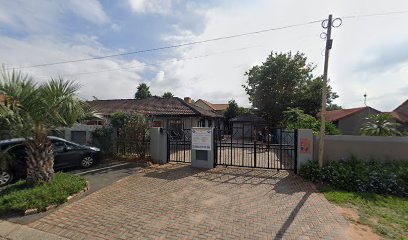
MIDRAND INNOVATIVE LEARNING CENTRE is a Education centers establishment in Midrand, Gauteng, South Africa
Midrand
Gauteng
1687
South Africa
Curriculum
The Midrand Innovative Learning Centre (MILC) presents an approach to education characterised by innovative learning methods and processes. The centre places emphasis on aligning teaching with learners’ passions and capabilities, embracing a personalised approach that seeks to cultivate curiosity, creativity and resilience. The curriculum is structured to respond to individual learners’ needs while maintaining a clear focus on core academic development and practical application.
Programmes and levels are delivered within a framework that values collaboration between teachers and parents. This partnership aims to support learners in achieving their goals, recognising that ongoing parental involvement can enrich classroom learning and reinforce skills at home. The curriculum emphasises small-class environments and individual attention as essential elements in realising each learner’s potential.
Areas of study within MILC are designed to foster holistic growth, combining foundational academic work with practical, learner‑centred activities. The centre highlights the importance of innovative learning processes, meaning that instruction may integrate varied pedagogical approaches to suit different learning styles and abilities. Details regarding specific subjects or syllabi are not listed publicly, but the emphasis remains on customised and quality learning that supports sustained growth.
In addition to standard classroom learning, MILC offers digital learning options, reflecting an awareness of contemporary educational modalities. Digital learning resources are presented as part of the centre’s broader commitment to accessible and flexible instruction, enabling learners to engage with content through multimedia and online platforms where appropriate. This blended approach seeks to maintain continuity of learning while accommodating individual pacing and preferred modalities.
Special needs support features prominently in MILC’s curriculum philosophy. A dedicated Special Needs Programme is highlighted on the centre’s site, indicating targeted strategies and resources to assist learners who require additional support. This commitment to inclusive education is complemented by a focus on collaborative planning with families, ensuring that interventions continue across home and school environments.
- Programme structure emphasising consistency, small classes, and individualised attention
- Areas of study framed to blend academic development with practical and innovative learning experiences
- Digital learning offerings to support blended or online engagement where suitable
- Special Needs Programme to address diverse learning requirements
- Parental involvement as a core component of the learner’s educational journey
For those seeking further information about the centre’s offerings, additional resources are referenced on the MILC website, including sections dedicated to online applications and partnerships. Prospective learners and families are encouraged to explore the site, particularly the Our Offerings and Digital Learning pages, to gain a clearer sense of how MILC’s curriculum and support services are designed to operate in practice. While specific course titles, durations, or entry requirements are not itemised in public pages, the overarching framework centres on innovative pedagogy, customised learning pathways, and a supportive, family‑oriented learning community.
Faculties and Branches
Midrand Innovative Learning Centre (MILC) operates as an innovative learning hub with a focus on contemporary methods and adaptive approaches to education. The centre emphasises understanding learner passions and capabilities, pairing creative pedagogy with structured support to foster meaningful learning outcomes. While detailed departmental nomenclature is not explicitly outlined on the site, the organisation presents itself as a cohesive educational entity rather than a traditional school, prioritising differentiated learning experiences and ongoing collaboration among educators, learners and parents.
From a structural perspective, MILC positions learning success along several pillars that guide its programmes and services. The emphasis on innovative learning methods suggests an approach that integrates varied instructional strategies, with potential alignment to specialised programmes such as those designed for learners with special needs. The existence of a dedicated Special Needs Programme page indicates that MILC channels attention and resources towards inclusive education, offering targeted support within its broader learning framework.
The centre’s expressed commitment to parental involvement signals a family-centred model where collaboration between teachers and parents is considered central to realising learners’ goals. This collaborative ethos informs student services, with parental engagement framed as an enabler of enhanced educational experiences both within the classroom and in home environments. While the site does not specify individual faculties or departments by name, the shared aim is to structure learning pathways that are responsive to each learner’s interests and abilities.
Milestones in the MILC model include the development of digital learning avenues, which are highlighted as part of the organisation’s offerings. Digital learning features alongside traditional instructional methods, suggesting a hybrid approach to delivery that may span online resources, interactive platforms and blended learning experiences. This digital component likely complements the centre’s core services, providing additional flexibility for learners and enabling continued engagement beyond the physical classroom.
In terms of geographical footprint, the site describes a primary MIDRAND base and a forthcoming expansion through a sister centre in Mnandi, Centurion. The Mnandi Innovative Learning Centre is noted as opening soon, signalling MILC’s growth strategy and a commitment to extending access to its learning models. The establishment of a sister centre implies a shared framework of programmes and supports, ensuring consistency in the MILC approach while addressing local needs across different communities.
Operational governance is indicated by reference to an executive management team responsible for guiding the pillars of the learner journey. The stated objective that learning should be innovative, exciting, stimulating and passion-driven reflects a deliberate institutional culture rather than a standard, uniform curriculum. This management emphasis suggests structured oversight of programme quality, learner services and stakeholder partnerships, including collaborations with external partners and contributors.
For prospective learners and families seeking clarity on the programme landscape, the MILC site directs attention to the core offerings available online, including access to information about what is offered, admission processes and pathways for online applications. The presence of dedicated sections for student offerings, partners and digital learning indicates a holistic framework where programmes, collaborations and leveraged technology intersect to support learner growth. Additional resources such as Special Needs Support pages point to a specialised dimension within the overall offerings, reinforcing MILC’s commitment to inclusive practice within a flexible learning environment.
Overall, Midrand Innovative Learning Centre presents a modern, service-oriented model that foregrounds innovation, family involvement and responsive learning pathways. The planned Mnandi branch suggests an expanding network designed to preserve the organisation’s distinctive approach while extending its reach to new communities across Gauteng.
For more information, readers can visit the MILC website and explore sections on offerings, partnerships and digital learning to gain a fuller sense of the programmes and services that characterise this education centre.
Registration Details
Midrand Innovative Learning Centre (MILC) presents an approachable registration pathway via its online platform. Prospective learners and their families can begin the process by accessing the centre’s admission resources and online application facilities through the official MILC website. The organisation emphasises collaboration between teachers and parents as part of the learner’s educational journey, a factor reflected in its registration approach and ongoing engagement with families.
The starting point for registration is the Online Application page, which provides the entry point for submitting the initial enrolment information. The online process is designed to be accessible and straightforward, with further steps and communications typically coordinated by MILC once an application has been submitted. For those exploring the process, the Online Application link offers direct access to begin or continue a registration submission at a time convenient for the family.
Where to apply: the primary route for registration is via the official MILC site. The Online Application page can be found here: Online Application. Additional information about MILC’s admission process and related offerings is available on the main Admission section of the site: Admission.
Eligibility and entry requirements are typically outlined within the centre’s admission materials. As such, prospective families are advised to consult the Admission section for any stated criteria and to verify what is required for enrolment. The centre’s philosophy centres on innovative learning methods and collaborative involvement, which may inform any assessment or alignment processes described in the official admission documentation.
Documents and prerequisites, when specified by MILC, are usually referenced within the online application and admission pages. Since no specific list is provided here, readers are encouraged to consult the Approved Admission resources on the MILC website for precise details on documentation, timelines, and any school-specific requirements that may apply. The information presented emphasises a supportive, family-inclusive approach to education, underscoring MILC’s commitment to an engaging learning journey.
Support and contact channels are typically available through the MILC website for applicants seeking assistance with registration. While direct telephone numbers and email addresses are not reproduced here, the site’s contact channels are accessible via the main site and the Online Application section. Applicants can expect to receive guidance from MILC’s administration during the registration process, with communications aligned to the learner’s progression from initial application to enrollment.
In summary, registration at Midrand Innovative Learning Centre invites families to begin online via the centre’s Online Application portal, with subsequent steps and eligibility details communicated through the Admission materials on the official website. The approach reflects MILC’s focus on innovative learning, parental involvement, and a supportive framework designed to help learners realise their potential within a calm and holistic educational environment.
Sorry, no records were found. Please adjust your search criteria and try again.
Sorry, unable to load the Maps API.
Education and Resources in Midrand, Gauteng
Midrand, a dynamic area within Gauteng, serves as a focal point for learners and families seeking a broad spectrum of educational opportunities. The locality combines a mix of schools, further education colleges, university campuses in nearby districts, and dedicated training centres. This variety supports diverse learner profiles, from primary and secondary schooling to vocational training and higher education pathways.
Within Midrand and its neighbouring regions, learners may encounter a range of institutions offering different programme structures. Schools commonly provide the standard South African matriculation routes alongside additional programmes designed to place learners on post-school trajectories. Further education colleges and private training centres frequently deliver practical and career-focused programmes, including business studies, information technology, engineering trades, health sciences, and specialised short courses. Tertiary options may include university satellite campuses or nearby institutions offering access programmes, bridging modules, and postgraduate study routes, subject to local availability and admissions policies.
Across the area, programmes are typically organised by level and modality. Core nationwide frameworks are often complemented by locally tailored curricula that address community needs and labour market demands. Flexible learning options may include part-time study, evening classes, and distance or blended learning formats, enabling learners to combine education with work or family commitments.
Learning support and student services are commonly available to assist learners throughout their studies. These supports may include academic tutoring, study skills workshops, language and literacy assistance, disability and accessibility services, counselling, and guidance on career planning. Admissions information, visa and registration guidance where applicable, financial aid advice, and information on bursaries or loans are often provided by institutions or their designated support centres. Guidance services frequently emphasise informed decision-making about progression paths, including apprenticeships, diplomas, bachelor’s degrees, and postgraduate study.
Facilities and resources found in the Midrand area typically enhance the learning experience. Libraries or study centres offer quiet spaces, reference materials, and digital resources to support research and independent study. Modern laboratories and workshops enable practical learning in science, technology, engineering, and mathematics. Sports facilities, outdoor recreation areas, and student common rooms contribute to a balanced campus life. Accommodation options, when available, may include campus residences or nearby private housing with appropriate safety and student support services. Access to computer laboratories, reliable internet connectivity, and appropriate software is often prioritised to support digital literacy and technical training.
Typical pathways for admission and progression are generally high-level and involve a combination of application or registration, submission of prior academic records, and completion of any required entrance assessments or bridging modules. Prospective learners are commonly advised to verify admission timelines, programme prerequisites, and available support services with the respective institution or its official website. Exploration of campuses through open days or virtual tours is often encouraged to help families and learners make informed choices about suitable programmes and environments.
Overall, Midrand provides a varied educational landscape that supports learners from school age through to further study and professional development. With a mix of teaching approaches, accessible support services, and well-equipped facilities, the area aims to accommodate diverse learning needs while guiding scholars along productive educational routes into higher study, skilled employment, or entrepreneurial endeavours. For more information on specific programmes and available resources, consult the official websites of local schools, colleges, and university or training centre partners.
Key resource types in Midrand
- Primary and secondary schools offering core curricula and enrichment programmes
- Further education and training colleges with vocational and practical courses
- University campuses and higher education access programmes in the surrounding region
- Private training centres delivering specialised short courses and professional diplomas
- Learning support services, counselling, and career guidance
- Libraries, study centres, laboratories, and computer facilities
- Sports facilities and student recreation spaces
- Accommodation options where available and safety-conscious accommodation guidance
For practical details and current offerings, reference official institution pages or regional education portals that outline programmes, intake periods, and registration procedures.