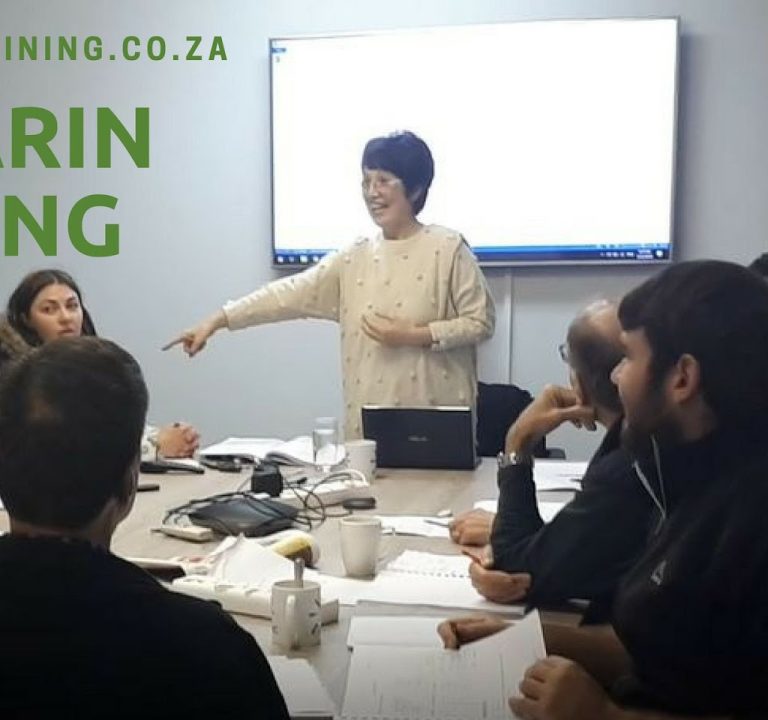

Mandarin Training is a Language school establishment in Edenvale, Gauteng, South Africa
Edenvale
Gauteng
2000
South Africa
Curriculum
Mandarin Training in Edenvale adopts a language syllabus that foregrounds practical communication, with a deliberate progression from listening and speaking to reading and writing. The core approach centres on spoken Mandarin at the outset; only after acquiring a foundational spoken vocabulary are Chinese characters introduced. This method aims to build confidence and functional ability in real-world contexts, making the language immediately applicable in everyday situations.
Programs are available for both beginners and more advanced learners. Courses are designed to accommodate adults at all levels, with the option of face‑to‑face lessons or online tuition via Skype. The blend of in-person and remote learning supports flexible schedules and geographic reach, enabling students to continue progression irrespective of location. In addition to standard language courses, the centre offers specialist translation and interpretation services, demonstrating the breadth of linguistic training available and its relevance to professional settings.
A distinctive short option is the A Flavour of Mandarin course, designed for those unsure about committing to a full programme. This introductory pathway comprises 10 hours of conversation and 2 hours of Chinese culture, offering a taste of the language before deciding on longer study. For learners wishing to continue beyond the short course, the provider invites entry into the general adults' Mandarin course, subject to interest and readiness.
Curriculum resources are rich and varied, supporting the practical orientation of the programmes. Textbooks, audio CDs and interactive media form part of the core material, with content designed by the lecturer to reinforce daily use. In addition, bespoke audio material is prepared for each group, complementing the standard resources and enabling custom practice tailored to specific learning needs. For online delivery, VOIP classes are available, featuring whiteboards and post-class support such as lesson summaries and assignments emailed after sessions. This combination of tangible resources and digital supplements helps learners progress at an accompanying pace while retaining engagement.
The course design also recognises the value of cultural literacy in language acquisition. Alongside linguistic instruction, there is emphasis on Chinese culture and etiquette, which supports clearer communication in professional and social contexts. When relevant, the curriculum integrates practical applications such as translating between Chinese and English, or preparing materials for official documents, contracts and video scripts, thereby equipping learners with transferable skills for business and diplomacy.
Classroom dynamics favour interactive and participatory learning. Classes are intentionally small, with no more than ten students, allowing ample opportunities for individual feedback and active participation. The combination of compact group sizes and structured progression helps sustain steady improvement and ensures learners receive focussed guidance on pronunciation, intonation and everyday expression before tackling more complex textual elements.
Support services extend beyond the core curriculum. The programme offers cultural engagements and opportunities for real-life practice, including outings to Chinese restaurants and markets that complement formal lessons. This experiential learning component supports the practical application of language skills and fosters cross-cultural understanding, contributing to a well-rounded learning experience. Additionally, the educator brings substantial professional credentials and a track record in distance teaching, court translation and interpretation, which informs a rigorous, workplace-oriented approach to language instruction.
Distinctive resources include published textbooks and multimedia learning aids, as well as a dedicated focus on distance education methods. The combination of traditional materials and modern digital tools reflects a commitment to accessible, flexible learning modalities, ensuring learners can study effectively whether in Edenvale or linked locations. Overall, the curriculum emphasises real-world utility, cultural appreciation and supported progression, positioning Mandarin Training as a practical, professionally-minded option for those seeking to acquire Mandarin in a structured, supportive environment.
For more information on programme levels, delivery modes and course topics, prospective learners can explore the centre’s website, which highlights the practical emphasis, blended learning options and materials used to reinforce language acquisition. The offerings are particularly well-suited to professionals seeking functional Mandarin skills for business, diplomacy or cultural exchange, as well as individuals pursuing personal language development.
Faculties and Branches
Mandarin Training operates from Edenvale, situated within the Johannesburg region of Gauteng, South Africa. The centre presents itself as a specialised language training provider focused on Mandarin Chinese, with its address listed for on-site encounters and personalised sessions. While the organisation does not publish a traditional university-style faculty structure on its site, it is anchored by a single principal centre under the leadership of Lucia Hau-Yoon, whose professional background spans decades of language teaching, curriculum development and cultural education.
The programmes offered are structured around adult learning and practical communication. Courses cater to beginners as well as more advanced students, emphasising listening and speaking before introducing Chinese characters. The instructional methods are deliberately hands-on and functional, designed to enable immediate use of language skills in real-world contexts. The delivery formats include face-to-face teaching at the centre and remote sessions via Skype, illustrating a hybrid approach to accessibility and flexibility for learners and professionals alike.
In addition to standard language training, the centre provides options that intersect with business and intercultural communications. Services extend beyond language tuition to include cultural guidance and practical insights into Chinese practices and customs. This broader scope supports meetings between Chinese delegates and South African businesses, and it positions Mandarin Training as a facilitator of cross-cultural understanding in professional settings. The emphasis on practical material is reflected in the curriculum and accompanying learning aids, which are designed to support learners as they progress from conversational Mandarin to more advanced usage.
Course materials are developed and curated by the lead educator, who has produced textbooks and multimedia resources to support self-study and classroom learning. The content is complemented by audio resources and interactive media, with particular attention paid to creating bespoke materials for groups or individuals. VOIP class options, whiteboard-enabled online sessions, and post-class summaries and assignments illustrate a commitment to continual feedback and structured progression, ensuring students receive tangible outcomes from each encounter.
Where programmes intersect with professional needs, Mandarin Training also functions as an interpreter and cultural broker for joint ventures and business collaborations. The organisation has a track record of providing translation and interpretation support for corporate and diplomatic contexts, reinforcing its role as a practical training hub rather than a purely academic institution. This capability underscores the centre’s capacity to serve both individual learners and organisations seeking specialised language services tied to Mandarin Chinese.
For prospective students and organisations exploring Mandarin Training, further information about courses, delivery formats and the broader services offered can be accessed through the main website. The Edenvale base situates the operation within the Gauteng Province, reflecting a focus on South African learners while maintaining links to international language and cultural expertise. The site notes the personnel involved, centred on Lucia Hau-Yoon, whose experience in education, translation and distance learning informs the centre’s approach to language acquisition.
Address: Mandarin Training, Edenvale, Johannesburg, South Africa, 1609. For more information, visit Mandarin Training.
Registration Details
Mandarin Training in Edenvale, Gauteng, South Africa, offers a range of Mandarin language courses designed to build practical listening and speaking skills before introducing Chinese characters. The organisation emphasises a structured approach to learning, with a focus on everyday communication and cultural context. Courses are available for adults at various levels, including beginners, and may be delivered face-to-face or via Skype, depending on the learner’s preference and circumstances.
For prospective students, the registration journey begins with selecting an appropriate course and delivery mode. Options include a “Flavour of Mandarin” introductory programme, which provides a taste of the language through a combination of conversation and cultural content, and ongoing adults’ Mandarin courses across levels. There is an emphasis on practical materials, complemented by textbooks, audio resources, and interactive media created for the course. Those seeking a flexible format can consider VOIP classes with digital support such as lesson summaries and assignments sent after sessions.
Registration does not appear to hinge on complex prerequisites; rather, the emphasis is on choosing a course that matches current ability and learning goals. Learners can tailor their experience by selecting a programme that prioritises oral proficiency at the outset, with reading and character work introduced progressively as vocabulary and confidence grow. Whether engaging in in-person sessions or remote learning, pupils are encouraged to participate actively in class and to benefit from regular feedback within a small-group setting.
To begin the registration process, interested individuals should consult the official Mandarin Training website for the most up-to-date information on course availability, delivery formats, and entry options. The site provides direct access to course descriptions and related learning resources, ensuring that prospective entrants can make an informed choice about the most suitable learning pathway. The organisation’s scholarly approach and positive feedback from past learners underline the value of planning ahead and selecting a course aligned with personal language aims.
Where to apply: the following pages on the Mandarin Training website contain current course options and related details. Potential entrants are encouraged to review these pages to determine the most appropriate programme and delivery method, then use the site’s guidance to initiate registration or inquiry. Apply and course information can be found at:
Documents typically associated with registration are not itemised in detail on the public pages. When seeking information, prospective learners should refer to the course pages for any guidance on required documentation or proof of eligibility. The provider’s materials emphasise practicality and cultural context, and the learning formats accommodate both newcomers and those pursuing more advanced study.
Support and contact channels are available through the website for prospective students seeking further information or clarification. While direct telephone numbers and electronic mail addresses are not listed in this editorial overview, the site itself acts as the primary conduit for inquiries and registration guidance. Interested applicants should use the site’s contact pathways to request information about availability, enrolment steps, and any delivery options that fit personal circumstances.
In summary, the registration process centres on selecting the appropriate Mandarin Training course, choosing the preferred mode of delivery, and consulting the official website for the latest guidance on how to proceed. The programme’s practical design, coupled with flexible learning arrangements, supports learners aiming to build functional Mandarin skills in a supportive environment.
Sorry, no records were found. Please adjust your search criteria and try again.
Sorry, unable to load the Maps API.
Education and Educational Resources in Edenvale, Gauteng
Located on the eastern edge of the Johannesburg metropolitan area, Edenvale offers a diverse range of educational options that serve learners of all ages. The neighbourhoods surrounding Edenvale provide access to a mix of government-funded schools, independent schools, further education colleges, and private training centres. This blend supports families seeking traditional curricula alongside vocational routes and specialised programmes.
Within primary and secondary education, learners typically encounter a spectrum of programmes designed to align with national curriculum standards while incorporating local educational priorities. Schools may emphasise core subjects such as languages, mathematics and science, as well as arts, physical education and social studies. In addition to regular classrooms, many institutions provide guidance services to support student wellbeing, study planning, and transition planning between school stages. Specialised support for learners with additional learning needs is commonly available through in-house teams or partner organisations, helping to foster inclusive classroom environments.
For those pursuing further education, the area is well connected to a range of colleges and private training providers. Available pathways commonly include certificate, diploma and higher certificate programmes, often designed with practical and industry-relevant outcomes in mind. Courses may cover areas such as business studies, information technology, hospitality, health and beauty, engineering technology, and creative disciplines. Training centres frequently offer short courses and work-ready modules aimed at improving employability, professional skills, and career transition readiness.
Numerous learners look to higher education opportunities in nearby urban centres. Universities and campuses within a reasonable commutable distance provide access to undergraduate and postgraduate programmes across faculties including commerce, science, engineering, humanities, and social sciences. This proximity enables gradual progression from school to higher education for those seeking advanced study or research opportunities, with guidance departments typically available to outline admission requirements and application timelines.
Learning support and student services commonly found in Edenvale and surrounding institutions include academic tutoring, literacy and numeracy support, language assistance, and counselling. Career guidance services help learners map potential study routes and employment pathways, while disability services aim to accommodate accessibility needs and adaptations required for examinations or campus life. Many institutions also provide financial aid information, bursaries or scholarships, and information on external funding opportunities, subject to eligibility and terms.
Facilities and resources play a central role in the learning environment. Libraries and media centres offer quiet study spaces, digital resources, and access to research materials. Laboratories, workshop spaces, and computing labs support hands-on learning in science, technology, and design subjects. Sports facilities, including fields and courts, contribute to a balanced approach to personal development and team activities. Accommodation options are typically available at nearby campuses for students relocating from other areas, with housing services assisting in finding suitable arrangements in collaboration with student communities.
Typical pathways begin with school-based progression into further education or higher education pipelines. Registrations and admissions commonly occur through formal applications within set timelines, with preparation periods that may include entrance assessments, portfolio submissions, or interviews depending on the programme. Early exploration of options, attendance at open days, and engagement with guidance staff are useful steps for families navigating these choices. Transport links, safety considerations, and flexible learning formats are increasingly factored into planning, reflecting the diverse needs of learners and households in Edenvale.
- Types of institutions: primary and secondary schools, private and public training providers, further education colleges, nearby universities.
- Common programmes: core academic subjects, vocational certificates, diplomas, higher certificates, and selected career-focused short courses.
- Learning support: tutoring, language support, disability services, counselling, and career guidance.
- Facilities: libraries, laboratories, ICT resources, sports facilities, study spaces, and campus accommodation in the broader area.
- Pathways: school-to-college or university routes, admissions processes, and guidance on funding opportunities.