Learn Studio is a Education centers establishment in Cape Town, Western Cape, South Africa
Cape Town
Western Cape
7801
South Africa
Curriculum
Learn Studio presents a personalised and flexible approach to education in Cape Town, placing emphasis on supporting individual learners within a calm, focused environment. The curriculum is designed to adapt to each pupil’s thinking process, with an aim to cultivate a lifelong love of learning and confidence in acquiring new skills. Instruction centres on fostering critical thinking, creativity, collaboration and communication, aligning with modern educational priorities that prepare learners for diverse futures.
The provision covers several pathways designed to suit different needs and circumstances. Homeschool assistance offers curriculum support, organisation and planning to complete work and assessments, delivered in small group settings with a maximum of seven students. This structure enables ongoing guidance while preserving the autonomy and depth typical of homeschooling approaches. For families considering international transition, emigration curriculum assistance helps bridge gaps and plan for new academic demands, drawing on personalised strategies to ease transitions between schooling systems.
Another key strand is the self-paced work space, which combines structured freedom with dedicated study areas and optional teacher assistance. This model allows learners to progress at their own pace while remaining connected to a supportive learning community. A further option comprises tutoring classes, delivering one‑to‑one support through a network of qualified teachers to address tests, challenging topics or structured weekly learning, as required.
Learning in Learn Studio is reinforced by practical, engaging methods. Case study experiences and testimonials describe the use of games and challenges to make learning enjoyable, with a focus on turning study into a meaningful activity rather than a chore. The team emphasises a student‑centred approach, prioritising individual attention, small groups and responsive planning to meet each learner’s needs.
Curriculum delivery is complemented by resources and experiences that extend beyond core subjects. The organisation highlights study skills and time management as practical competencies, helping learners organise notes, plan revision and develop a more effective approach to assessments. These areas are delivered through workshops and personalised guidance, supporting both home‑based and school‑based learners to achieve stronger academic outcomes.
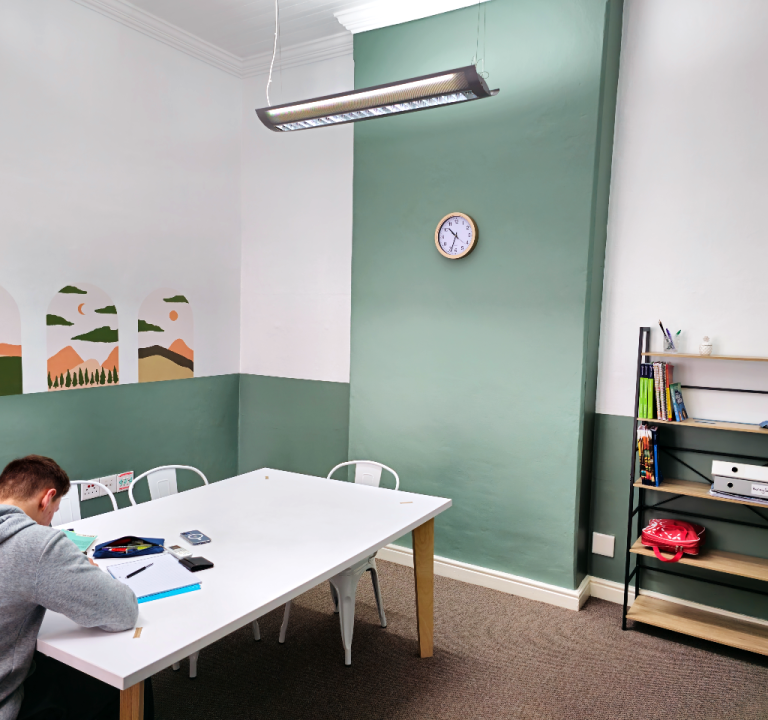
Learning environments are described as supportive and resourceful, with an emphasis on tranquillity and a space that nurtures confidence. The team’s professional approach blends theoretical knowledge with real‑world application, seeking to equip learners with future‑ready competencies that are useful across different subjects and contexts. The curriculum is complemented by opportunities for ongoing support, including specialist assistance for emigration planning and continuous access to tutoring services as situations demand.
In addition to formal or semi‑formal programmes, Learn Studio offers resources and guidance aimed at enhancing everyday study practices. The combination of small class sizes, personalised attention and an emphasis on enjoyable and meaningful learning creates an adaptable framework suitable for a variety of learners, including those navigating transitions between educational systems or preparing for new academic environments abroad.
- Programmes and levels: flexible pathways covering homeschooling support, emigration curriculum assistance, self‑paced work space and tutoring services.
- Areas of study: emphasis on core learning skills, with a focus on critical thinking, creativity, collaboration and communication; practical study skills and time management.
- Curriculum approach: learner‑centred, adaptive planning with small group sizes, individual attention and a mix of guided instruction and self‑paced progression.
- Short courses and professional training: study skills and time management workshops; targeted tutoring for specific subjects or assessments.
- Online or blended options: information indicates a flexible structure with in‑person spaces and advisory guidance for transitions; online resources are accessible via the Learn Studio website where relevant.
- Student support and resources: personalised guidance, coordination of home‑based learning, small groups, one‑to‑one tutoring, and emigration planning assistance.
- Distinctive learning resources: use of games and challenges to make learning interactive; emphasis on a calm, conducive learning environment and dedicated study spaces.
Further information and contact options are available through Learn Studio’s website, with pages dedicated to homeschooling assistance, emigration curriculum support, self‑paced spaces and tutoring services. These resources provide practical routes for families seeking tailored educational support in the Western Cape region.
Faculties and Branches
Learn Studio operates as a specialised educational studio based in Wynberg, Cape Town, within the Western Cape of South Africa. Rather than presenting a traditional faculty structure, the organisation aggregates a focused set of learning services designed to support personalised homeschooling and accompanying pathways. The central hub is complemented by targeted programmes that align with contemporary approaches to education, aiming to cultivate independent thinking and a lifelong enthusiasm for learning.
The studio houses a range of educational programmes described on its site as distinct offerings, each functioning as a facet of a cohesive learning environment. These include Homeschool Assistance, which provides curriculum support, organisation and planning within small-class settings (up to seven students) to enable a collaborative and individualised learning experience. This service emphasises the partnership between qualified teachers and families seeking a flexible alternative to traditional schooling.
Complementing homeschooling support is the Self-paced Work Space. This option balances freedom and structure, offering dedicated working areas and access to teacher assistance when required. It also highlights the social benefit of a homeschooling community, helping learners build connections with peers of similar ages while progressing at an appropriate pace.
For learners requiring targeted academic enrichment or preparatory support, the Tutoring Classes provide one-to-one or small-group learning support with qualified teachers. The tutoring framework seeks to bolster confidence, reinforce understanding ahead of assessments, and help establish steady routines during the week.
A further specialised offering is Emigration Curriculum Assistance, designed to bridge transitions for families moving between schooling systems, including preparations aligned with international curricula. This service highlights Learn Studio’s capability to adapt its educational approach to diverse regional systems, whether locally or abroad.
Staffing and programme delivery are led by a team described as enthusiastic, creative and innovative educators. The team members are recognised for planning and executing lessons that develop critical thinking, collaboration and communication skills—attributes regarded as essential for 21st-century learning. The team also includes profiles such as Victoria and Megan, who are cited for their roles in managing the learning environment and delivering personalised education, whichever programme is chosen.
In addition to the core services, Learn Studio positions itself as a community space designed to support the broader aims of lifelong learning. Its online presence provides information and access to contact points for families exploring available times and rates across the different programmes. For prospective students and their families, the site offers further details and pathways through linked pages, ensuring that the full spectrum of its educational offerings is accessible from the main hub in Wynberg.
- Homeschool Assistance: curriculum support, planning and small-group classes
- Self-paced Work Space: dedicated study areas with optional teacher assistance
- Tutoring Classes: one-to-one or small-group subject support
- Emigration Curriculum Assistance: bridging services for international transitions
Learn Studio’s primary address is listed as 1 Knutsford Road, Wynberg, with additional information available through the official website's contact pages. The collection of services collectively represents the studio’s approach to delivering flexible, student-centred education in Cape Town.
Registration Details
Learn Studio in Cape Town, Western Cape, offers a selection of learning options geared towards personalised support for homeschooling and structured study. Prospective families can explore a range of pathways, including Homeschool Assistance, Self-paced Work Space, Tutoring Classes, and Emigration Curriculum Assistance, each designed to support individual learning needs within a calm, focused environment.
Registration is addressed through direct enquiry and discussion with Learn Studio’s team. Interested families are encouraged to make contact to discuss available options, times and rates. Details and contact paths are provided on the official site.
Where to apply or inquire: information for engaging with Learn Studio is accessible via the main site and its contact page. Specific programme pages provide further context on each offering, and a general enquiry can be initiated through the site’s Contact Us section.
- Homeschool Assistance: Learn Studio supports curriculum planning, organisation and personalised instruction for homeschooling in a small-group setting (maximum of 7 students). See the Homeschool Assistance page for more information and to enquire about availability.
- Self-paced Work Space: This option combines dedicated workspaces with optional teacher assistance and opportunities to interact with a like‑minded homeschooling community.
- Tutoring Classes: One‑on‑one tutoring is offered to provide targeted learning support across subjects, with connections facilitated to suitable instructors within Learn Studio’s network.
- Emigration Curriculum Assistance: A service designed to bridge gaps and prepare learners for transitions to international curricula; further information and availability can be requested via the site.
Documents typically required for registration are not listed in the publicly available content. When making an enquiry, it is best to refer to the relevant programme page or the general Contact Us page for guidance.
Support channels and how to get help are provided online. Prospective families should use the site’s contact options to discuss availability, times and rates, and to initiate registration or programme enrolment. The official site provides direct access to further information and to the enquiry form.
Where to apply or enquire:
Contact Learn Studio, or navigate to the individual programme pages:
Homeschool Assistance,
Self-paced Work Space,
Tutoring Classes,
Emigration Curriculum Assistance.
Location: 1 Knutsford Road, Wynberg, Cape Town, Western Cape, South Africa.
Sorry, no records were found. Please adjust your search criteria and try again.
Sorry, unable to load the Maps API.
Education and Resources in Cape Town
Cape Town, in the Western Cape of South Africa, offers a diverse landscape of educational opportunities suitable for learners at all stages. From foundational schooling to higher education and specialised training, the city provides a range of pathways designed to accommodate varying interests, abilities, and career aims. The emphasis across many institutions is on accessibility, practical preparation, and promoting lifelong learning for families and communities.
Parents and learners typically encounter a spectrum of institutions. Public and independent schools provide schooling from foundation through to matriculation, with curricula that align to national standards and regional requirements. Secondary schools frequently offer a mix of traditional academic subjects alongside practical programmes, including information technology, business studies, science, and the arts. For families seeking broader options, there are grammar-focused schools, language-enabled programmes, and schools with special educational needs provision or support services, aimed at helping learners realise their potential in inclusive environments.
Colleges and further education centres in and around Cape Town present opportunities for vocational and technical training, apprenticeships, and bridging or foundation studies. These institutions commonly offer diplomas, certificates, short courses, and workforce-ready programmes that align to local industries such as engineering, health sciences, hospitality, and tourism. Small class sizes, hands-on workshops, and industry-linked projects are often emphasised to enhance workplace readiness and practical competence.
Universities situated in the metropolitan area or nearby provide a broad spectrum of undergraduate and postgraduate study. Typical offerings include bachelor’s and honours degrees, master’s programmes, doctoral research, and professional qualifications across faculties such as humanities, social sciences, science and engineering, business, law, and health sciences. In addition to degree programmes, universities may host foundation or access courses intended to support learners transitioning from school to higher education, as well as collaborative research centres and continuing education units that serve professional development needs.
Learning support services play a central role in many institutions. Language support, study skills workshops, tutoring, and disability and accessibility services are commonly available to help learners navigate academic demands. Careers guidance and student wellbeing offices frequently provide advice on study planning, internships, and personal development. Financial assistance may be offered through merit awards, bursaries, and information on relevant government or private schemes, with eligibility criteria varying by institution and programme.
Facilities and resources typically complement the educational experience. Libraries and learning resources centres often house extensive collections, quiet study spaces, and digital resources. Laboratory facilities across sciences and engineering support practical experimentation, while computer labs and multimedia studios sustain ICT-enabled learning. Sports complexes, fitness centres, and intramural programmes contribute to physical development and team-building. Accommodation such as university residences or partner housing options may be available for students moving from other areas, with management and support services in place to assist newcomers with housing, safety, and community integration.
Typical pathways for prospective students involve researching available programmes, meeting application deadlines, and preparing supporting documentation. Admissions considerations commonly include prior qualifications, subject prerequisites, and evidence of academic readiness or professional experience. Many institutions encourage early applications, open days, and counselling sessions to help families understand options, timelines, and funding avenues. Once admitted, students are guided through orientation, enrolment, and the establishment of academic plans that reflect chosen disciplines and career goals.
Overall, Cape Town presents a rich educational ecosystem with multiple entry points, robust support structures, and substantial public and private investment in learning resources. The result is a city where learners and families can explore complementary pathways—from school-based education to higher learning and vocational training—that align with local demand and individual aspirations.