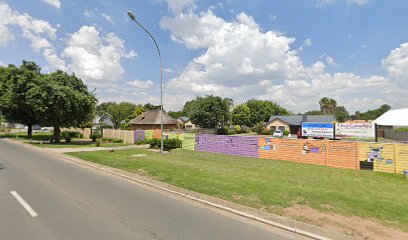
Kumon Maths and English Rynfield is a Tutoring services establishment in Benoni, Gauteng, South Africa
Benoni
Gauteng
1514
South Africa
Curriculum
Kumon Rynfield presents a distinctive curriculum that emphasises long‑term independent learning rather than short‑term test preparation. The centre’s approach centres on developing confident, self‑directed learners who can apply mathematical and language skills across different contexts. After a free assessment, each child begins at an individually set starting point, with progress tailored to their unique needs. This personalised placement is designed to build a solid foundation and gradually extend abilities beyond the standard school level, enabling pupils to realise their potential both at school and beyond.
The curriculum covers core subjects, with an emphasis on maths and English. In maths, the programme guides students from early numeracy through progressively challenging topics, ensuring that each key skill is mastered before moving on. The English component supports reading, comprehension, grammar and writing development through carefully structured daily worksheets. These materials are designed for both home and in‑centre study, creating a seamless learning loop that reinforces new concepts and nurtures fluency, accuracy and mathematical thinking alongside linguistic proficiency.
What distinguishes Kumon’s curriculum is its philosophy of self‑instruction backed by regular instructor support. The daily worksheets—used consistently at home and in the study centre—encourage students to discover answers for themselves while receiving guidance when necessary. This pedagogical model aims to cultivate independent learning skills, concentration, and resilience, rather than merely acquainting pupils with techniques for a forthcoming exam. Over time, learners build the confidence to tackle increasingly challenging problems and to take their learning into their own hands.
The centre operates within predetermined class hours, with sessions typically occurring during weekday afternoons. Pupils attend the study centre up to twice a week, complementing the daily home practice. The blended model of in‑centre and at‑home work reinforces self‑discipline and creates a consistent routine that supports steady progression through the curriculum. This structure also accommodates families seeking flexible arrangements, including online participation where available, ensuring that learning continues even when in‑person attendance may be constrained.
In addition to the standard progression through maths and English materials, Kumon Rynfield offers features that support ongoing study and student well‑being. The Kumon Connect platform is available, providing an additional layer of technology‑assisted learning and communication between students and instructors. While the programme remains rooted in its traditional worksheet method, technology integration is positioned to enhance support, tracking, and engagement, helping learners stay connected with their targets and progress between visits to the centre.
Support for learners extends beyond the worksheets themselves. Instructors closely observe each student’s work, ensuring assignments are pitched at the right level and that pace aligns with individual development. This attention helps to prevent underchallenge and overstrain, keeping motivation high and facilitating steady, sustainable growth. The aim is for every child to become an independent, advanced learner with a positive attitude to study. Through regular assessment and ongoing adjustment of starting points and workloads, the curriculum remains responsive to changing needs and evolving capabilities.
Parents and carers can expect a clear pathway from initial diagnostic work to future progression. With an emphasis on building independent study skills, the Kumon curriculum supports school work by enhancing foundational competencies in mathematics and literacy and by fostering a self‑driven approach to learning. Although the programme does not align to a single external school curriculum, its worldwide application and diagnostic‑led methodology aim to supplement and enrich classroom learning, helping learners perform more confidently across the curriculum.
For families seeking a structured, goal‑oriented educational experience, Kumon Rynfield outlines a practical, long‑term framework that concentrates on mastery, consistency, and personal growth. Regular assessments, a clearly defined starting point, daily worksheets, and flexible study options combine to offer a cohesive, supportive environment in which learners can cultivate the habits and skills that underpin lifelong learning.
- Programmes focused on maths and English with an individualised starting point after assessment
- Daily worksheets designed for home and in‑centre learning
- In‑centre sessions up to twice weekly, with optional online components
- KUMON CONNECT available to augment learning and communication
- Instructor support that guides, but does not dominate, the learning process
- Centre facilities and accessibility aimed at creating a supportive study environment
Faculties and Branches
Kumon Rynfield, located in Benoni, Gauteng, is presented as a dedicated study centre rather than a traditional faculty campus. The centre operates under the Kumon framework, providing focused study programmes in maths and English designed to foster independent learning and long-term study skills. The homepage for the Rynfield centre emphasises a personalised starting point for each pupil, determined after a free assessment, and highlights ongoing progress through well-structured, daily worksheets.
The centre presents two core strands within its offering: Kumon Maths Programme and Kumon English Programme. Each programme is described as a self-learning pathway supported by regular instructor guidance, with the aim of developing confidence, concentration and problem‑solving abilities. The materials are set at individual starting levels, enabling progression that aligns with, and often extends beyond, international standards for the student’s age. While the content is organised into mathematics and language study, the emphasis remains on developing independent learners who can carry their skills into school and beyond.
The Rynfield site notes flexible delivery options, indicating that Kumon study can take place at the centre or online. This arrangement is supported by daily worksheets designed for both at‑home and in‑centre learning, allowing pupils to maintain regular practice irrespective of location. The presence of Kumon Connect further reflects the centre’s integration of technology to support learning, enabling ongoing interaction between learners and instructors beyond traditional class times.
In terms of structure, the centre offers classes during designated hours, with sessions typically occurring in the early afternoon to late afternoon. Class times are listed as between 13:15 and 18:00 on Mondays and Wednesdays, with an average study time of about 30 minutes per subject. These timings suggest a compact, highly consistent programme designed to fit around pupils’ school days, while still providing opportunities for regular centre attendance and guided practice.
Facilities at the Kumon Rynfield centre are described as practical and learner‑friendly. The centre provides secure parking, an independent reading area, wheelchair access and a dedicated parent waiting area, in addition to a specific early learner section and secure access. These facilities support a family‑friendly environment where parents can observe or drop off learners, and where younger pupils can be accommodated within a well‑structured learning setting.
As with other Kumon centres, the Rynfield location communicates a strong focus on assessment, progression, and family involvement. After the initial diagnostic assessment, pupils embark on personalised study plans, and progress is monitored to ensure advancement beyond the Kumon International Standard where appropriate. Information about the centre is reinforced by a link to the broader Kumon South Africa platform, which highlights the network of centres, the global methodology, and the available helpdesk for additional information.
For those seeking further details or to initiate a needs‑based educational plan, prospective families can book a free assessment or contact the centre online via the Kumon South Africa site. The Rynfield centre therefore functions as a specialised branch within Kumon’s educational network, providing dedicated maths and English programmes through a blend of in‑centre and digital learning modalities.
Website: Kumon Rynfield – Benoni
Registration Details
The Kumon Rynfield centre in Benoni offers a straightforward path to starting the Kumon journey, beginning with a free assessment designed to identify each child’s starting point. Following the assessment, the overall aim is to place the student on an individualised programme that progresses at a pace tailored to their needs. This approach emphasises independent learning and consistent daily practice, with support available from the centre’s instructors as required.
Applicants are invited to initiate the process by booking a free assessment. The centre provides online booking options for assessments, enabling parents and carers to select a suitable date and time. Details and link references for arranging the assessment can be found on the Kumon Rynfield pages. Once the assessment is completed, the student’s starting level and study plan are established, subject to ongoing monitoring to ensure appropriate challenge and progression. More information about the centre’s approach and ethos can be explored by following the available “Read More” link on the Rynfield site.
Registration at Kumon Rynfield involves a one-time enrolment step followed by ongoing monthly fees for each subject studied. The pricing posted for this centre indicates a one-off registration fee of R700. In addition, there is a monthly fee of R770 per subject. These figures are presented as the published rates for the centre and reflect the typical model of combining a registration payment with regular monthly contributions for individual subjects. It is noted that children attend regularly either at the study centre or online, and that daily Kumon worksheets are used to support both in-centre and at-home learning. Prospective families should consider this flexible arrangement when planning study routines and logistical needs.
The centre’s facilities and delivery model are designed to support independent learning. Kumon Connect is listed as available, suggesting opportunities for online or blended study alongside centre-based sessions. Class times at Kumon Rynfield are shown as running during designated hours within the centre’s operating window, with typical per-subject study times specified as around 30 minutes per subject. The programme is designed to help students build consistent study habits, focus, and confidence, supporting baseline skills that can extend beyond the Kumon worksheets and into broader schoolwork.
For those seeking further information or clarification, the Kumon Rynfield site provides several points of contact. A dedicated “Ask me a question” option is available, and enquiries can be initiated via the link provided on the centre page. Parents and carers may also pursue the standard pathway to book a free assessment or to book a place by selecting the “Book now” option. Interested readers can consult the downloadable brochure for additional details about Kumon study, accessible via a dedicated link on the site.
Where to apply and how to proceed are clearly laid out through the site’s links. The primary route is to book a free assessment online, after which the student’s personalised plan and registration are processed. The URLs visible on the site include the assessment booking page and the general Kumon Rynfield contact and information pages. Prospective users should use these links to commence the registration process and to access the Helpdesk for further guidance if needed.
Centre location and accessibility are provided for reference: Kumon Rynfield is located at 127 Pretoria Road, Benoni, Gauteng. The site presents a comprehensive overview of the centre’s facilities, including secure parking, a dedicated reading area, wheelchair access, a parent waiting area, and a Kumon Connect facility, illustrating the environment in which students undertake their daily Kumon activities.
For ongoing support and updates, the centre encourages engagement through its online tools and help resources. Prospective families can begin with the free assessment and follow the linked steps to secure a place in the programme.
Book your FREE assessment • Book now • Ask me a question • Download the brochure
Sorry, no records were found. Please adjust your search criteria and try again.
Sorry, unable to load the Maps API.
Education and Resources in Benoni, Gauteng
Benoni, located in Gauteng, offers a diverse range of educational opportunities that cater to learners at different stages of their academic journeys. The area hosts a mix of primary and secondary schools, further education colleges, higher education institutions nearby, and a variety of training centres that support skills development and continuing education. These institutions serve families seeking convenient access to quality learning experiences within the local community and its surrounding towns.
Within Benoni, learners can typically find primary and secondary schools offering a broad spectrum of curricula, often aligned with national education standards and provincial requirements. In addition to core subjects, schools commonly provide enhanced programmes in languages, mathematics, science, arts and physical education, with opportunities for extra-curricular activity that supports well-rounded development. Public and independent options may be available, each with its own emphasis and support structures. For those seeking preparation for higher education or professional training, nearby colleges and universities offer flexible routes that range from diploma and certificate programmes to degree qualifications.
Higher education and further training in the region emphasise practical, career-oriented learning. Students might encounter a mix of accredited diploma programmes, certificates in specialised fields, and university-linked courses that blend theoretical and hands-on study. Classes are frequently structured to accommodate full‑time study, part‑time study, and distance or blended learning, helping learners balance educational ambitions with work or family commitments. Vocational and technical training centres in the area commonly focus on trades, construction, information technology, health sciences, hospitality, and business administration, among others, providing pathways to entry-level roles, apprenticeships, or further study.
Learning support and student services are commonly reflected in libraries and study facilities, with quiet study spaces, resource lending, and access to digital databases. Guidance counsellors or student advisory services are often available to assist with academic planning, course selection, and transitions between different levels of study. Language support, tutoring programmes, and exam preparation resources may also be offered to help learners overcome barriers and realise academic potential. In addition, learner assistance programmes frequently address inclusion, providing support for learners with diverse educational needs or backgrounds.
Facilities around Benoni typically include well-equipped laboratories for science and technology, computer labs with up-to-date software, and modern classrooms designed for collaborative learning. Sports facilities such as football, netball, cricket, athletics tracks, and gyms are common, supporting physical education and school sport programmes. Accommodation is typically available through some institutions or nearby student housing options, which can be helpful for learners from outside the immediate locality or those pursuing longer study periods. Safe transport links and on-campus security practices are often highlighted as integral parts of the student experience.
Visitors and prospective learners will generally follow straightforward admissions and registration processes, subject to the policies of the respective schools or institutions. This typically involves submitting necessary documentation, meeting any age or progression requirements, and selecting suitable programmes or pathways. Information about deadlines, fees, and specific entry criteria is usually available through official institution websites or guidance offices. Prospective students are encouraged to explore a range of options, compare curricula, and consider support services and facilities when planning their educational journey.
Overall, the Benoni area presents a broad landscape of educational resources, aimed at supporting learners from primary level through to tertiary study and vocational training. By combining accessible institutions, diverse programme offerings, and supportive learning environments, the region facilitates clear progression routes and ongoing development for families and individuals alike. For more information and current course offerings, visitors may consult official education portals and institution websites serving Gauteng and the Benoni area.