
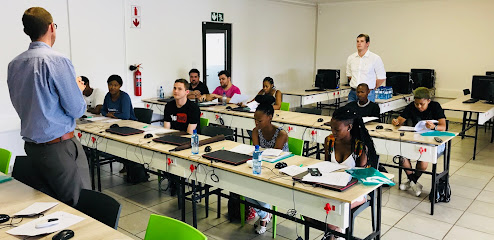
ITCA Potchefstroom is a Education centers establishment in Potchefstroom, North West, South Africa
Potchefstroom
North West
Potchefstroom
South Africa
Curriculum
IT Certification Academy (ITCA) delivers a curriculum that is designed to align closely with current industry requirements and global certification standards. The approach emphasises practical, hands-on learning alongside recognised qualifications, ensuring that students acquire both theoretical understanding and applicable technical competence. The curriculum is quality assured through collaboration with leading training partners and SETA accreditation, reinforcing its relevance to employers across the public and private sectors.
Programmes span a broad spectrum of information technology disciplines, with emphases on core IT foundations as well as specialist tracks. Learners encounter courses and pathways in areas such as cybersecurity, digital forensics, coding and software development, networking, and web development. The programme mix also covers cloud and productivity technologies, including Microsoft Office and Microsoft Azure, reflecting the growing importance of cloud-based skills in contemporary workplaces. Where appropriate, the curriculum integrates industry-recognised certifications to enhance employability and professional credibility.
Two central features characterise ITCA’s curriculum approach. First, the focus on practical experience: students engage with real-world scenarios, hands-on labs, and applied projects designed to mirror workplace environments. This hands-on learning philosophy is complemented by theoretical instruction that builds a solid conceptual framework for technical problem-solving and decision-making. Second, the curriculum continuously evolves through partnerships with industry leaders and accreditation bodies, ensuring content stays current with technological advances and market needs.
The academy’s pathways are supported by a broad ecosystem of certification and micro-credential opportunities. Through collaborations with Microsoft, CompTIA, Certiport, Cisco, and other sector partners, the curriculum integrates internationally recognised standards alongside local SETA qualifications. This enables a blended and multi‑faceted learning journey that can prepare learners for professional examinations while developing soft skills and professional competencies valued by employers.
In addition to dedicated IT tracks, ITCA emphasises soft skills and skills development as a critical complement to technical learning. Corporate and employed professionals can access targeted short courses and training designed to enhance communication, teamwork, problem-solving, and workplace readiness. This holistic approach helps bridge the gap between classroom learning and the demands of contemporary work environments, supporting learners at various stages of their careers.
Delivery formats include online components and blended options, reflecting the institution’s established online campus and its partnerships with regional training centres. The blended delivery model supports flexibility for students who balance studies with work or other commitments, while preserving the integrity and rigour of the assessment and certification processes. This structure enables access to ITCA’s curriculum from multiple locations and allows for staged progression through certificates, diplomas, and professional qualifications as appropriate to individual goals.
Distinctive learning resources are highlighted through the academy’s emphasis on industry-aligned content and practical exposure. Hands-on learning experiences, taught by experienced instructors, are complemented by access to a network of career support services and industry connections. The curriculum is reinforced by a suite of resources and partnerships that help translate classroom achievement into tangible career opportunities, including collaboration with major technology providers and professional bodies.
ITCA’s corporate footprint demonstrates the breadth of engagement beyond traditional degree or diploma programmes. The curriculum is supported by corporate training initiatives, with sector-specific courses designed to meet organisational needs. This includes customisable training solutions and professional development options that align with client requirements and industry standards, reinforcing the real-world relevance of the programme offerings.
Overall, the Curriculum at ITCA Potchefstroom emphasises a robust, industry-informed education that blends technical proficiency with employability skills. The combination of accredited IT tracks, recognised certifications, practical laboratories, flexibility in delivery, and active career support positions graduates to respond effectively to evolving technology landscapes and marketplace demands.
Faculties and Branches
IT Certification Academy (ITCA) presents its education offering as a broad IT-focused provider with a footprint primarily in Pietermaritzburg, Durban, and an online campus. While specific details about a Potchefstroom campus are not explicit in the primary materials, the organisation describes a structure centred on sector-aligned IT training, industry partnerships, and professional certification pathways rather than conventional on-site faculty divisions.
The organisation markets a range of sector education and training authority (SETA) accredited programmes, alongside soft skills and skills development courses designed for corporates and employed professionals. The emphasis is placed on industry relevance and international certifications in collaboration with recognised partners, including Microsoft, CompTIA, Certiport, and Cisco. This places ITCA within a framework that aligns curricula with practical, job-ready outcomes rather than traditional departmental silos.
In terms of organisational structure and delivery, ITCA highlights collaboration with industry-leading training partners and public and private sector stakeholders to ensure quality and relevance. The approach suggests a flexible, partnership-driven model rather than a fixed, single-campus faculty system. This enables diverse programme delivery across multiple locations and formats, including an online campus that supports learners who may not have access to a physical campus.
When describing how programmes relate to student services and career preparation, ITCA positions its offerings as work-ready and industry-recognised. The programmes are designed to support immediate workplace application, professional certification readiness, and ongoing skills development. Corporate training footprints are underscored through specific examples of enterprise engagements, reflecting a service model that integrates classroom learning with workplace-real-world training and assessments.
- Key programme areas emphasised include Microsoft Office training, CompTIA qualifications, MICTSETA courses, and cyber security-related curricula, with additional emphasis on soft skills and broader skills development for workforce entrants and professionals.
- Strategic partnerships with major technology and certification bodies (Microsoft, CompTIA, Certiport, Cisco) underpin the curriculum’s international recognition and portability.
- Delivery channels include regional presence (Pietermaritzburg and Durban) and an online campus, indicating a multi-location and flexible-access model rather than a single, location-bound faculty structure.
- Industry-aligned services extend to corporate training engagements, bespoke programmes, and bursary or scholarship initiatives aimed at widening access to IT education and improving employment outcomes.
For a prospective student or partner seeking Potchefstroom relevance, the available materials describe ITCA’s overarching framework rather than a detailed Potchefstroom-specific faculties, schools, or branch sites. The information confirms a commitment to transferable IT education, certification progression, and employer-aligned training, delivered through a network of campuses and online access that emphasises practical skills and industry readiness across its broader footprint.
Registration Details
IT Certification Academy (ITCA) presents an accessible route into IT and related disciplines for prospective students in Potchefstroom, North West. The organisation emphasises a broad range of sector-approved courses delivered in partnership with industry leaders, with a focus on work readiness and practical skills. Registration information is presented through the main ITCA website, which directs applicants to course offerings and entry pathways rather than a single standalone registration page. Interested individuals are advised to begin by exploring the available courses to identify programmes that align with career goals and prior qualifications.
Overview of the application pathway centres on selecting a suitable course and proceeding through the online information and application flow provided by ITCA. Although specific step-by-step registration instructions are not detailed in the public pages, the site highlights a comprehensive portfolio of SETA-accredited IT courses and related professional development options. Prospective applicants can access the course catalogue and enquiry resources via the main site to determine eligibility, prerequisites, and the nature of the certification earned upon completion. The emphasis remains on guided access to suitable programmes rather than a one-size-fits-all registration process.
Where to apply: potential applicants should start by reviewing the course listings and then utilise the site’s navigation to engage with the appropriate registration or enquiry pathways. The ITCA “Find A Courses” section consolidates available options and serves as a practical entry point for those seeking registration information. For direct exploration of the offerings, the following link is provided on the public site: Find A Courses. In addition, opportunities such as “No Matric? No Problem!” indicate accessible admission routes that emphasise inclusivity and progression into IT study, encouraging prospective learners to explore registration possibilities without a matric certificate. Details on any bespoke or corporate registration options may be found by following the general guidance on the ITCA site or contacting the institution through its corporate and outreach channels.
Eligibility and entry requirements: the public pages mention a broad appeal to matriculants, graduates wishing to be work-ready, and individuals seeking IT training without necessarily holding a matric certificate. Where explicit, general statements regarding matriculation or readiness are provided, they should be used as initial guidance. Specific course entry requirements, age criteria, and language proficiency standards are not listed in the accessible content provided and are expected to be clarified within the individual course pages or via direct enquiry to ITCA.
Documents typically required: the available content does not enumerate a standard set of application documents. Therefore, applicants should consult the relevant course page or contact ITCA for a definitive checklist. Typical inclusions in similar programmes may include identification, proof of prior education, and, where applicable, sponsorship or employer details; however, no such items are stated explicitly here. Prospective students are advised to refer to the individual course information to determine any document requirements and to prepare accordingly.
Contact and support channels: while the provided content does not list specific Potschefstroom-based contact details, ITCA maintains a public presence online with global links and social media profiles. Prospective applicants can navigate to the main ITCA website for further information and support, and may utilise the site’s enquiry features or linked pages to obtain direct assistance. For broader context and updates, visitors can also explore related pages and news items on the ITCA site, including partnerships, bursaries, and corporate training information. It is recommended to use the main site’s contact options or the “Find A Courses” page to initiate registration-related inquiries.
In summary, registration at ITCA Potchefstroom follows the general ITCA framework of selecting a suitable course, consulting the course pages for entry prerequisites, and engaging with the online pathways provided on the main site. The primary gateway to application information is the ITCA course catalogue, accessible via Find A Courses, with additional guidance available through the site’s recent announcements and enrolment-related news. Prospective students are encouraged to consult the linked resources, check for any updates, and reach out through the public contact avenues suggested on the website for personalised registration assistance.
Sorry, no records were found. Please adjust your search criteria and try again.
Sorry, unable to load the Maps API.
Education and Resources in Potchefstroom
Potchefstroom, located in the North West province of South Africa, is recognised for a diverse range of educational opportunities that support learners from primary through to higher education. The town sits within a network of schools, colleges, universities and specialised training centres that together form a comprehensive learning ecosystem. For families, the breadth of provision means that students can pursue academic, technical and vocational aims within a relatively compact regional setting.
Primary and secondary education in Potchefstroom typically presents a mix of public schools and independent establishments. Across these settings, learners commonly encounter programmes aligned with national curricula, with opportunities to participate in language development, mathematics, sciences, arts and physical education. Secondary schooling often offers senior programmes or tracks designed to prepare pupils for university entrance, further studies or direct entry into apprenticeships and trades. Support services at this level commonly include counselling on subject choices, study skills workshops and guidance on examination preparation.
Higher education in the area is characterised by a well-established university presence alongside various vocational and technical institutions. The university sector typically provides undergraduate and postgraduate programmes across faculties such as humanities, sciences, business, engineering and health sciences. Beyond degree courses, distance learning options and continuing education programmes may be available to accommodate working students and lifelong learners. For those considering research or specialised study, access to libraries, computer laboratories and academic support services is a common feature of campus life.
Training and skills development are supported by a range of centres that focus on practical competencies. Technical and vocational programmes commonly cover fields such as information technology, engineering trades, hospitality, agriculture and healthcare related disciplines. Short courses, certifications and modular training pathways offer flexible routes for career advancement, workforce upskilling and entry into new industries. Apprenticeships and workplace-based training are often facilitated in collaboration with local employers and industry bodies, providing hands-on experience alongside theoretical instruction.
Learning support and student services form an important part of the educational landscape. Local institutions typically offer academic advising, tutoring programmes, disability services, and language support to assist learners from diverse backgrounds. Financial guidance, scholarship information and bursary opportunities are commonly available through both institutional channels and community organisations. Additionally, information on admissions, registration timelines and programme prerequisites is typically accessible through official portals or student services offices, with clear guidance provided to prospective applicants about required documents and deadlines.
Facilities and resources play a central role in Potchefstroom's educational appeal. Libraries and information hubs provide quiet study spaces, access to journals and digital databases, and study rooms for group projects. Laboratories equipped for sciences and engineering are common on university campuses and technical colleges, enabling practical experimentation and research activities. Sports facilities, supervised recreation and extracurricular clubs contribute to a balanced student experience, while on-site accommodation and nearby housing options help to support students relocating for study. Transport links and campus amenities commonly ease daily life for learners and families alike.
Typical pathways for progression usually involve a straightforward admissions or registration process at the outset of each academic year. Prospective learners are encouraged to explore programme options, understand entry requirements at a high level, and verify available intake periods. Bridging courses or foundation programmes may be offered to assist students transitioning from school to higher education or from different disciplines. Guidance on course selection, career planning and progression opportunities helps learners map out education plans that align with personal goals and local employment prospects.
- Types of institutions: primary and secondary schools, private and public colleges, universities, and vocational training centres.
- Typical programmes: national curricula at school level, undergraduate and postgraduate degrees, diplomas, certificates, and technical trades.
- Learning support: academic advising, tutoring, language assistance, counselling, and accessibility services.
- Facilities: libraries, laboratories, sports complexes, student accommodation, and study spaces.
- Pathways: admissions guidance, registration procedures, bridging or foundation courses, and career planning resources.