Industry Training Centre South Africa is a Training centres establishment in Kurland, Western Cape, South Africa
Kurland
Western Cape
6600
South Africa
Curriculum
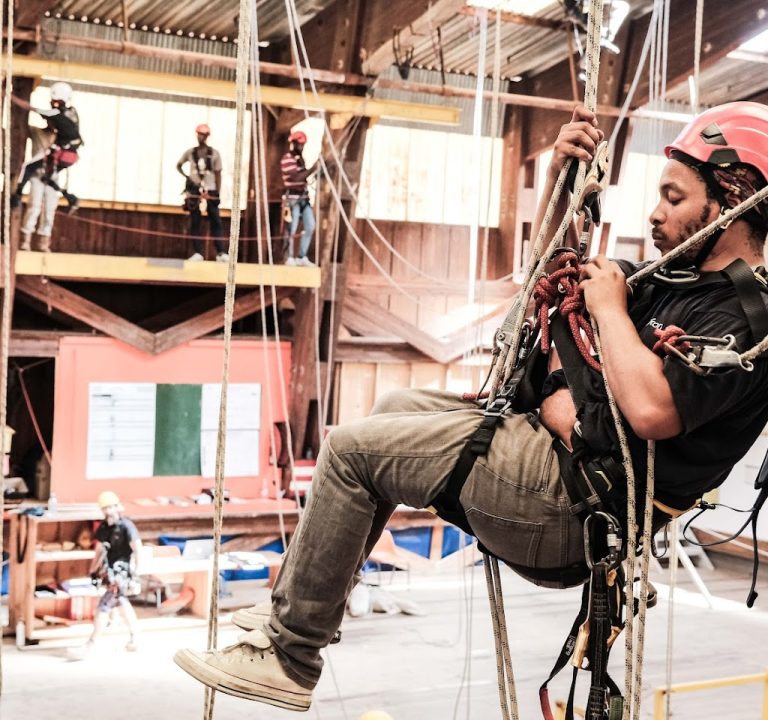
Industry Training Centre South Africa (ITC) offers a specialised slate of rope access, wind training and rigging courses designed to meet international standards while serving South Africa’s energy and heavy industry sectors. The curriculum centres on practical, safety‑driven training delivered by experienced instructors drawn from oil and gas, nuclear and renewable energy backgrounds. The centre emphasises applying theory to real‑world tasks, with an emphasis on working at height, rigging and lifting operations, and wind turbine maintenance competencies.
Rope access training under the IRATA framework forms a core element of the curriculum, with levels 1, 2 and 3 available. These courses provide the international qualification required for work in vertical environments and are recognised for broad employability across multiple industries, including offshore sector roles. The IRATA training pathway is complemented by specialised wind and blade maintenance training, including GWO (Global Wind Organisation) offerings such as Basic Safety Training and Blade Repair, to support professionals working in wind generation facilities.
In addition to rope access and wind training, ITC delivers OPITO‑certified rigging courses. This includes the OPITO Rigger Initial course, which introduces fundamentals in rigging and lifting operations; the Rigger Competence Assessment (previously Stage 3) to certify practical competence; and the Rigger Competence Reassessment (previously Stage 4) for ongoing verification of capabilities. Each OPITO route is designed to ensure that riggers meet industry expectations for safety, performance and adherence to recognised standards. The curriculum aligns with internationally recognised standards to provide a credible foundation for progression into more advanced roles within the energy and infrastructure sectors.
The courses are structured with clear progression and practical emphasis. For example, the OPITO Rigger Initial course combines theoretical learning with hands‑on practical exercises in lifting operations, and typically includes a written knowledge assessment. The Rigger Competence Assessment comprises theory and practical components intended to certify that learners can plan, prepare and execute lifting operations safely. The Rigger Competence Reassessment follows a similar two‑day format focusing on reassessment of existing competence. Course delivery is supported by a high instructor‑to‑learner ratio to maximise tuition quality and hands‑on supervised practice.
Timeframes vary by programme. OPITO Rigger Initial is described as a 3‑day training course, while Competence Assessment and Reassessment are 2‑day courses. Specific daily schedules are provided for some courses, with typical full‑day sessions and breaks. The centre publishes weekly delivery for several OPITO units, with practical assessments conducted as part of the programme. Entry requirements emphasise physical capability, medical fitness and appropriate identification, reflecting the safety‑critical nature of the work involved.
Curriculum delivery favours a blend of theory and practical application. The practical components involve demonstrations and supervised performance of lifting operations, rope access tasks or rigging activities, followed by assessments in line with course outcomes. The emphasis on real‑world applicability is designed to equip participants with the skills needed to perform effectively in demanding environments such as offshore rigs, onshore plants and wind farms.
Distinctive resources and learning environment contribute to the curriculum. ITC highlights professional equipment from trusted brands such as Petzl, underscoring a commitment to industry‑standard tooling and safety gear. The training centre is positioned to offer a supportive environment, including free accommodation on site for course participants, with amenities such as Wi‑Fi and DSTV. This combination of equipment quality, experienced instructors and a supportive accommodation model helps foster a focused learning atmosphere and practical proficiency in the curriculum.
Additional information and course specifics are accessible via ITC’s course pages and linked providers. Readers seeking ongoing learning opportunities or formal certifications can explore the IRATA, GWO and OPITO pathways through the ITC site, including direct pages for each course family. The curriculum is designed to provide a solid stepping stone for careers in rope access, wind energy, lifting operations and related technical fields, with international recognition that facilitates mobility within South Africa and beyond.
- IRATA Rope Access Training: Levels 1, 2 and 3
- GWO: Basic Safety Training and Blade Repair
- OPITO: Rigger Initial, Rigger Competence Assessment, Rigger Competence Reassessment
For more details on course delivery, locations and schedules, prospective learners can consult the Industry Training Centre website and the specific course pages linked within the site. All courses are located at ITC’s Plettenberg Bay facility in Kurland, Western Cape, with options for accommodation and travel arrangements as outlined by the centre.
Faculties and Branches
Industry Training Centre South Africa operates from its campus near Plettenberg Bay, in the Kurland/Crags area of the Western Cape. The facility is positioned as a specialised centre for at-height and offshore related training, drawing on expertise across several industries to support career development and workforce readiness. The site’s surroundings and infrastructure are tailored to provide practical, hands-on instruction in demanding environments, with direct access to equipment and real-world scenarios used in rope access, wind turbine maintenance, and rigging operations.
The Institute’s emphasis on safety and professional standards is reflected in its programme mix, which centres on accredited credentials for personnel in high-risk sectors. Core offerings include IRATA rope access training, GWO safety training, and OPITO courses for rigging and lifting — all designed to equip technicians and supervisors with industry-recognised qualifications. These faculties enable students to progress from foundational to advanced levels, with practical assessments conducted at the training centre under supervision by experienced, industry-informed instructors.
Within the Rope Access and Wind Safety streams, the centre provides instruction that aligns with international standards for at-height work. The IRATA rope access programme is presented in levels 1, 2 and 3, enabling learners to build a recognised, globally understood skillset suitable for work in areas such as wind farms, electrical and geotechnical projects, and maintenance in vertical environments. The GWO (Global Wind Organisation) training covers essential safety disciplines pertinent to the wind energy sector, while OPITO courses address rigging, lifting operations and related competence assessments that are widely recognised in the offshore petroleum and energy industries.
Facilities at the Plettenberg Bay site are complemented by accommodation provisions during training, including on-site lodging options that support longer coursed study and hands-on practice blocks. Training activities emphasise a low instructor-to-candidate ratio, enhancing personalised tuition and ensuring that practical competencies are consolidated through repeated, supervised practice.
In terms of structure, the institution’s offerings are organised into faculties or programme streams rather than separate faculties in the traditional university sense. Each stream (IRATA rope access, GWO and OPITO) functions as a self-contained training pathway with its own entry requirements, course schedules and certification outcomes. The ITC framework emphasises the bridging of theoretical knowledge with practical application, enabling learners to progress from introductory modules to fully certificated competencies recognized by industry authorities and employers worldwide.
Locations are concentrated in the Plettenberg Bay corridor, with the Kurland Brick and The Crags locality serving as the primary training hub. The campus’s alignment with regional industry needs means that programmes are especially pertinent to opportunities in the local and wider South African energy, construction and maintenance sectors, while also supporting international mobility for skilled rope access and rigging personnel. Interested prospective students can explore the centre’s course pages and booking information via the official website.
For more information on the centre’s offerings and how these programmes connect with student services and career pathways, further details are available at the Industry Training Centre’s website: Industry Training Centre South Africa.
Registration Details
Industry Training Centre South Africa (ITC) offers a range of specialised training programmes centred on rope access, wind turbine capabilities, and rigging for the offshore and onshore energy sectors. The centre operates from its facility in Kurland, The Crags, Plettenberg Bay, Western Cape. Prospective learners should approach the institute to understand the entry routes, course availability and any preparation required ahead of enrolment. The ITC site emphasises practical, industry-aligned training with a focus on safety and internationally recognised standards.
Registration and application processes are described in general terms across the ITC pages. Interested individuals are advised to review the specific course pages for OPITO and IRATA/ GWO offerings, as these pages outline prerequisites, timing, location and the nature of the training. Where explicit application steps are not stated, the process is typically understood to involve selecting a suitable course, reviewing the entry requirements, and engaging with ITC through the provided contact channels to register or request further information.
Locations and delivery sites are stated clearly on the pages. The main training address is:
- Industry Training Centre (ITC), Kurland Brick, The Crags, Plettenberg Bay, 6602, South Africa. GPS coordinates are provided on the course pages for mapping and travel planning.
Potential attendees can find direct references to applying or enquiring through the site’s contact options. A prominent prompt invites visitors to reach out with questions and provides a direct link to the ITC contact page. In addition, several course pages include an “View Map” or location detail to assist with planning and logistics. Where maps or location links are visible, they should be used to confirm travel arrangements prior to attendance.
Eligibility and entry requirements are addressed in some of the programme outlines, particularly for OPITO and IRATA offerings. When stated, these requirements cover aspects such as medical fitness, identity documentation, and prior training or experiential prerequisites. In cases where a course explicitly states the need for medical clearance or proof of identity, prospective learners should prepare the relevant documentation in advance of registration. If a course page does not list specific prerequisites, the general recommendation is to ensure readiness for practical, physically demanding activities and to comply with any medical or identity verification that the centre requires at enrolment or on arrival.
Documents typically required for registration, when specified, include evidence of identity and, for certain OPITO assessments, proof of prior training or workplace experience. The ITC pages emphasise compliance with safety standards and the necessity of being medically fit to participate in physically demanding rigging and lifting operations. Prospective learners should ensure they can provide the necessary documentation as part of the registration process, and be prepared for any on-site medical screening or declarations that may be requested by ITC.
Support and contact channels are clearly presented on the site. For general inquiries or to initiate the enrolment process, interested individuals can use the “Have a question? Click here to contact us” option, which links to ITC’s contact page. Additional information about course delivery, accommodation and travel is offered on the OPITO and IRATA course pages, which also reference their respective standards bodies for further guidance. Weathering the logistics of travel is facilitated by the centre’s accommodation offering, described as free for the duration of the course, subject to space availability.
Overall, registration with Industry Training Centre South Africa centres on selecting an appropriate course, confirming eligibility, arranging any required documentation, and communicating with ITC through the official contact pathways. Applicants should utilise the linked course pages for specific dates, locations and prerequisites, and rely on the contact options provided to complete the enrolment process.
Direct links to course information and contact pages are available on the Industry Training Centre website, including options to view course details and locations online.
Sorry, no records were found. Please adjust your search criteria and try again.
Sorry, unable to load the Maps API.
Education and Resources in Kurland, Western Cape
Located within the Western Cape, Kurland sits within a region where learners encounter a broad spectrum of educational provision. The area typically features a mix of public and independent schools, inclusive of co‑educational and single‑sex institutions, offering curricula aligned with national and provincial standards. Beyond compulsory schooling, families can often access a range of further education and training opportunities that support diverse pathways into further study or employment.
Across Kurland and its surroundings, schools usually provide preparatory, intermediate and senior phases, with subject options that reflect local priorities such as languages, mathematics, sciences, practical and technical subjects, and arts and humanities. Learners can expect programmes appropriate for different levels, including national senior certificate routes and alternative qualifications that emphasise vocational outcomes. Independent schools may offer additional enrichment programmes and a broader array of elective subjects, while public schools typically emphasise foundational skills and broad access for all learners.
Higher education in the Western Cape is supported by a network of public universities, colleges and specialised training centres in nearby towns and cities. Students may access campus‑based programmes, professional qualifications, and alternative study routes such as distance or blended learning. Local colleges often provide diplomas, certificates and articulation options that connect with university programmes, apprenticeships or entry‑level careers in sectors such as engineering, health sciences, information technology, business and hospitality.
Learning support and student services are a common feature in the region. Many institutions offer inclusive education services, literacy and numeracy support, guidance and counselling, as well as learning skills workshops designed to assist pupils and students in managing study demands. Arrangements for learners with additional needs are typically explored through pupil support teams, with appropriate assessments, adjustments and resources where required. Language support, exam preparation, and mentoring schemes are frequently highlighted as part of a comprehensive learner experience.
Facilities in Kurland and nearby campuses commonly include well‑stocked libraries, computer labs and science laboratories, enabling practical learning and independent study. Sports facilities and organised extracurricular activities are often highlighted as important components of student life, contributing to physical wellbeing and teamwork. Student accommodation, where available, is usually provided through on‑campus residences or nearby hostels, offering access to safe and affordable housing during term time.
Typical pathways for learners and families begin with school registration processes handled through the provincial education authorities or individual schools. Guidance on subject choices, progression routes and compulsory requirements is usually available through school career offices, guidance counsellors or regional education portals. For those pursuing further study, information on college and university entry requirements, admissions timelines, and available bursaries or financial aid is commonly offered by institutions and by government schemes. Prospective applicants are advised to review official entry criteria, submit applications within set windows, and utilise available support services to compile portfolios, references or required documentation.
For those researching educational opportunities in Kurland, nearby district and provincial resources provide current information on programmes, facilities and admissions. Website portals associated with the Western Cape Education Department and regional institutions offer authoritative guidance, while individual college and university pages outline specific courses, campus facilities and student life.
- General education options include public schools with primary and secondary curricula.
- Further education and training colleges offering diplomas, certificates and practical programmes.
- Universities and accredited higher education institutions providing undergraduate and postgraduate study.
- Learning support services, guidance, and accommodation where available.
- Libraries, laboratories, sports facilities, and practical resources to enhance study and learning.
For further information and official guidance, visitors may consult provincial and regional education portals and individual institutions’ pages available online.