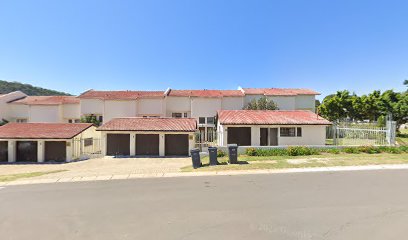
IJKA South Africa is a Karate school establishment in Plettenberg Bay, Western Cape, South Africa
Plettenberg Bay
Western Cape
Plettenberg Bay
South Africa
Curriculum
IJKA South Africa’s curriculum is grounded in the original principles and fundamentals of Shotokan and Budo karate as taught by Nakayama Masatoshi sensei, and is delivered through a structured, nationally recognised framework. The programme emphasises character development alongside physical skill, aligning with the organisation’s five maxims: seeking perfection of character, sincerity, effort, etiquette and self-control. Training is designed to be accessible across ages and abilities, with an emphasis on gradual progression through clearly defined levels.
Programmes and levels are organised to accommodate younger learners, beginners and more experienced karateka alike. For the youngest students, the Dinky Karate pathway (under-6 age group) introduces karate through games and activity, while building early foundations in etiquette, discipline and social interaction. This early-stage programme forms part of IJKA SA’s broader curriculum, enabling a smooth transition into formal graded practice as pupils mature. The organisation describes Dinky Karate as a stepping stone that supports will-building and character formation in a playful but purposeful setting.
Junior and senior belt progression follows a dojo-based grading structure, with a formalised programme for children over six and separate kyu (coloured belt) and dan (black belt) pathways for older participants and adults. Grading criteria include performance of full kata as outlined in the syllabus at the point of belt colour changes, with dan grades overseen by the IJKA SA chief instructor and a panel of senior examiners. The progression framework recognises milestones from junior belts through to dan grades, reinforcing consistent practise and personal development over time.
The curriculum also conveys a comprehensive set of karate terms, techniques and tactical knowledge to support learning. Learners gain familiarity with command sequences, blocks, strikes and kicks, as well as stances and movement. Beyond technical instruction, the teaching materials emphasise the broader language of karate, including kata terminology, kumite concepts and embu (practice forms), which helps students articulate and internalise the art in a structured manner.
In addition to core technique and kata practice, the curriculum incorporates character-building elements drawn from IJKA’s values and the 5 Maxims. Students are encouraged to cultivate qualities such as respect for others, self-discipline and perseverance, both inside the dojo and in daily life. This holistic approach aims to support steady personal growth, confidence and social responsibility alongside physical ability.
Learning resources and structure are supported by a network of dojos across South Africa and beyond, ensuring access to trained instructors and a consistent standard of teaching. The organisation emphasises continuity of instruction through dojo-level leadership, with senior instructors guiding gradings, mentorship and development programmes. While specific course lists and fees are not enumerated in the public materials, the curriculum is described as a coherent system that blends foundational karate knowledge with progressive skill development and ethical formation.
Short courses and professional training components are designed to complement ongoing practice, presenting opportunities for focused learning around core karate skills, terminology and pedagogy. While the available information does not specify standalone modules or durations for these add-ons, the structure supports regular, incremental advancement through the belt syllabus and the broader educational aims of IJKA SA.
Online or blended options are not explicitly stated on the current site. The emphasis remains on dojo-based training conducted under the supervision of qualified instructors, with grading and progression administered at national or dojo levels as appropriate. Prospective parents and learners in Plettenberg Bay and the Western Cape can access the broader IJKA SA framework via the official website for enrolment and information on how to participate in the programme locally.
For more information on the curriculum, prospective students and their families can learn about Dinky Karate, the grading pathways, and the organisation’s values through the IJKA SA website. The curriculum is presented as a disciplined yet supportive path that aims to balance physical development with character education, producing karateka who are both skilled practitioners and principled individuals.
Further details and enrolment information are available at IJKA SA.
Faculties and Branches
IJKA South Africa operates as a national federation within the International Japan Karate-Do Association, with its central administration in Johannesburg and a broad network of dojos across the country. The organisation emphasises the original principles of shotokan and budo karate, maintaining a coherent structure that supports instruction, grading and character development for karateka of all ages. While specific branch sites are not listed here, the federation notes that well over 3,000 students train in more than two dozen venues throughout South Africa and in other neighbouring countries, illustrating a distributed framework of training centres designed to serve diverse communities.
Within this framework, the core focus rests on calibrated programmes delivered through a hierarchy of training locations. Dojos function as learning hubs where students progress through age-appropriate curricula, from the introductory Dinky Karate programme for younger children to junior, kyu and dan grading tracks for older pupils and adults. Each dojo typically operates under a dojo head who administers the local syllabus, conducts levels of practice and oversees assessments in collaboration with the national chief instructor and authorised examiners. This structure enables a consistent delivery of technique, kata, kumite and terminology across the federation while allowing some localisation to reflect regional needs.
The federation’s approach to education is complemented by a formal pathway of progression and grading. Dinky Karate introduces young learners to karate-related games and foundational etiquette, while junior belt and kyu grading align with the broader IJKA SA syllabus. Dan grading is conducted at national level up to high ranks, with higher grades subject to international procedures. This progression framework is designed to foster discipline, perseverance and self-control, supporting students in attaining personal development alongside physical skill. Although branch specifics are not enumerated here, the national grading framework applies uniformly across participating centres, creating a seamless learner journey from early exploration to advanced mastery.
In addition to instruction, IJKA South Africa provides information about philosophy, history and terminology associated with karate practice. Public-facing materials describe the five maxims of karate—character, sincerity, effort, etiquette and self-control—and articulate the organisation’s commitment to inclusivity regardless of race, gender, creed or socio-economic status. The materials also highlight the International IJKA network, including the Japan-based leadership and the role of the IJKA SA chief instructor, who oversees standards and examiner eligibility for national examinations.
For prospective students and parents seeking involvement in Plettenberg Bay or other regional communities, the federation emphasises accessibility and community-building through its wide network of dojos. While particular branch addresses or campus details are not itemised in this overview, possible learners are encouraged to explore the IJKA SA website for information about enrolment, testing windows and dojo-specific schedules. The site provides projectable resources such as testimonials, enrolment procedures and programme descriptions, which illuminate how branches connect with student services and progression pathways across the country. Interested individuals can visit the federation’s pages for Dinky Karate, grading, terminology and historical context to gain a fuller understanding of the structure and educational aims that underpin the Plettenberg Bay presence and the broader IJKA SA network.
For further information, including local branch participation details and enrolment opportunities, readers are advised to consult the official IJKA South Africa website: http://ijka.co.za/.
Registration Details
The IJKA South Africa programme provides a clear pathway for prospective students seeking to begin or continue their karate training. Prospective enquirers are directed to the IJKA SA enrolment information, which outlines the basic requirements and steps involved in joining the association’s karate programme. The enrolment page emphasises the importance of proper documentation and a straightforward notice period when a student exits the programme, reflecting the organisation’s commitment to structured participation and continuity in training.
Overview of the application/registration process:
- Potential students or their guardians view the official enrolment information to understand the process and obligations involved in joining IJKA SA.
- Registration typically involves submitting the appropriate forms and ensuring that required documentation is supplied at the time of enrolment.
- There is an emphasis on providing a notice period should a student decide to leave the programme, supporting orderly transitions between terms.
Where to apply:
- Applications for enrolment are facilitated through IJKA SA’s official application page, which provides access to the registration materials and next steps. The primary entry point for registration is available at the IJKA SA application section: Apply.
Documents typically required (as stated):
- A copy of the student’s birth certificate to establish age and eligibility for programme levels.
- A completed Indemnity form to accompany the enrolment documentation.
- Additional enrolment materials may be provided or requested by the dojo or IJKA SA administration, in line with the standard membership process.
Contact and support information:
General information about IJKA SA enrolment and the registration process is accessible through the organisation’s central website. For further details or clarification, prospective students and guardians can refer to the IJKA SA website, which hosts the enrolment page and related information. If more specific contact details are required, they are typically available on the main site or the dedicated registration pages, including the direct application link above.
Notes and context:
- The registration page notes that a one-calendar-month notice is required from a parent when a student quits, highlighting a formal approach to discontinuation.
- The available indemnity form can be downloaded directly from the enrolment page, enabling guardians to complete and return it as part of the registration package. The link to download the indemnity form is provided on the enrolment page as part of the registration materials: Indemnity Form.
Overall, the Registration Details section presents a concise, directory-style outline of how to join IJKA SA, what documents to prepare, where to apply, and the procedural expectations around enrolment and withdrawal. The information centres on the official application pathway and the essential documentation required to support a smooth registration experience.
Sorry, no records were found. Please adjust your search criteria and try again.
Sorry, unable to load the Maps API.
Education and Educational Resources in Plettenberg Bay
Plettenberg Bay, a coastal town in the Western Cape, presents a varied landscape of educational opportunities suitable for learners of all ages. From early childhood development to higher education pathways, the town sits within a broader regional framework that supports school readiness, progression, and lifelong learning. The surrounding area hosts a mix of public and private institutions designed to accommodate diverse needs and aspirations.
Types of institutions commonly available include primary and secondary schools that follow South Africa’s national curriculum structures, with many offering additional programmes such as languages, arts, physical education, and life orientation. In addition to mainstream schooling, there are Ebacc-like subjects and enrichment opportunities that may emphasise STEM, arts, or vocational paths. Local learning environments frequently provide access to tutorial support, after-school activities, and guidance services aimed at helping learners negotiate academic choices and transitions.
Post-secondary options in and around Plettenberg Bay span further education colleges, vocational training centres, and access routes to recognised higher education institutions. Learners may encounter certificate, diploma, and higher certificate programmes, along with enabling courses designed to prepare students for more advanced studies or direct entry into the workforce. Higher education access generally relies on standard admissions processes coordinated through national and provincial systems, with guidance offered on prerequisites, application timelines, and recognised credential pathways.
Learning support and student services are available to assist diverse groups, including students with additional learning needs, those returning to education after a break, and adults pursuing upskilling or career-change opportunities. Support departments typically address academic coaching, study skills, language development, and access arrangements for examinations. Guidance on career planning, subject selection, and further study options is commonly integrated into school and college programmes, including informational materials and online resources provided by regional departments of education.
Facilities and resources frequently encountered in Plettenberg Bay include well-stocked libraries, science and computer laboratories, workshops for technical subjects, and dedicated spaces for arts and culture. Sports complexes and outdoor facilities are common, enabling participation in fields such as football, rugby, netball, swimming, athletics, and adventure education. Student accommodation is not as prevalent within town boundaries as in some larger urban centres, but may be available through regional housing schemes, campus residences, or nearby towns for learners relocating for study.
Technology and connectivity are elements of the educational landscape, with schools and colleges increasingly incorporating digital platforms for coursework, assignments, and communication. In many instances, learners can access online portals for timetable information, submissions, and resource discovery, alongside traditional printed materials and on-site learning aids. Local museums, cultural centres, and community libraries also contribute to informal education by providing exhibitions, workshops, and literacy programmes that complement formal schooling.
Admissions and registration typically follow standard administrative processes set by national and provincial authorities. Prospective students are advised to verify eligibility, submit required documentation, and meet application deadlines through official channels. Publicly funded options align with regional education departments, while private providers, subject to accreditation, offer alternative routes with their own enrolment criteria. Information on official guidance, curriculum frameworks, and admissions timelines can be found through national and provincial education websites and local authorities.
- Explore primary and secondary schooling options aligned with the national curriculum.
- Investigate further education and training colleges offering certificates and diplomas.
- Consider higher education pathways linked to regional universities and recognised institutions.
- Utilise learning support services, libraries, and study facilities to foster academic success.
- Plan for accessible accommodation, transport, and wellness resources where applicable.
For broad guidance on national and provincial education structures, general admissions information, and accessible resources, reputable sources include the Department of Basic Education and the Western Cape Government’s education portals. Additional information may be consulted through local council pages and district education offices to reflect the regional provision available to Plettenberg Bay learners and families.
Website references for general information: Department of Basic Education, Western Cape Government, and relevant regional pages for Knysna District and Plettenberg Bay developments.