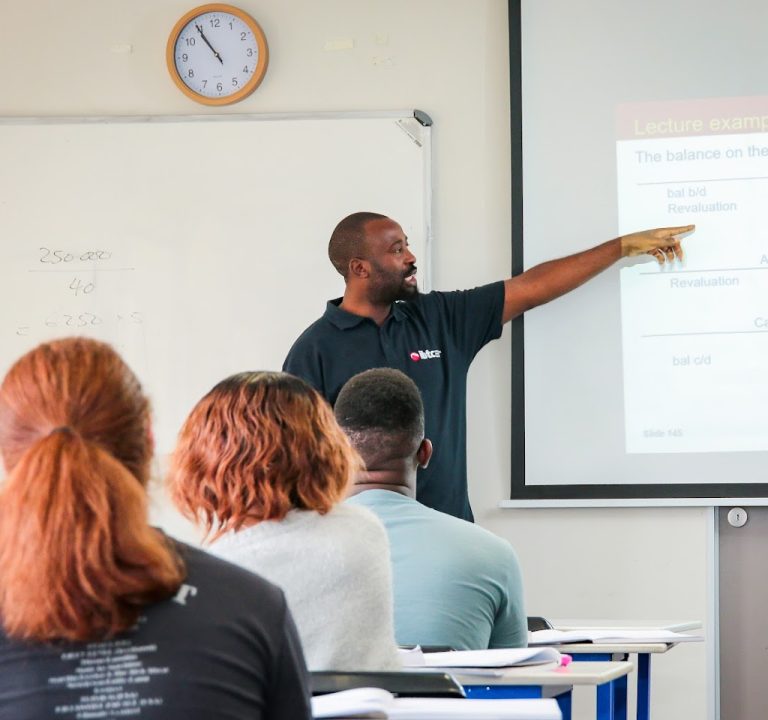

IBTC Cape Town is a Business schools, Colleges establishment in Cape Town, Western Cape, South Africa
Cape Town
Western Cape
District Six, Cape Town
South Africa
Curriculum
IBTC Cape Town presents itself as an institution focused on practical business education and professional training, with a dedicated online presence that guides prospective students to explore available courses through the main website. The school’s public outlet highlights a courses section, suggesting a programme structure built around distinct offerings that can be browsed by prospective learners. However, on the publicly accessible pages, detailed information about specific programmes, levels, core modules, duration, entry requirements or fee schedules is not itemised in a way that delineates a formal curriculum for each course. This leaves room for interpretation of the breadth and depth of study, and signals the importance of consulting the institution’s official course listings for definitive curriculum content.
From the information available on the site, IBTC Cape Town appears to position its curriculum around professional and practical business training. The emphasis is likely to centre on applied skills relevant to business environments, with programmes designed to equip learners with actionable capabilities rather than purely theoretical knowledge. The presence of a dedicated “courses” page implies that the curriculum is structured into discrete offerings, enabling students to select modules or programmes that align with career goals. For a prospective student or partner evaluating how the curriculum aligns with industry needs, the site’s outline suggests a modular approach typical of professional training providers, where learners complete defined units that culminate in a recognised credential or completion certificate.
In terms of curriculum approach, the site’s layout demonstrates an orientation toward accessible learning pathways. The reference to a learner account and the linked course information indicates a possible framework that supports self-directed study, guided progress, and ongoing access to course materials through an online or blended environment. While explicit statements about online delivery, blended learning, or distance education are not provided in the visible pages, the existence of an online user portal often accompanies blended or digital-first programmes in similar institutions. Readers are encouraged to verify whether any courses are delivered wholly online, in-person, or through a hybrid model by reviewing the course descriptions on the official site or by contacting the college directly.
Regarding short courses and professional training, the available navigation to the courses section signals that the curriculum likely includes shorter, focused offerings designed for rapid upskilling or targeted professional development. Short courses in a business college context typically address practical competencies—such as administration, management support, finance fundamentals, customer service, or project-related skills—completed within weeks or months. In the absence of precise course titles and syllabi on the site, those seeking targeted learning should consult the course listings to identify short courses that best match professional needs and career objectives.
The curriculum’s distinctive learning resources may lie in the institution’s emphasis on practical application and real-world relevance. Although the exact resources are not itemised on the homepage, typical features worth noting for a reputable educational directory entry include access to industry-relevant simulations, case studies, practical assignments, and career-focused support services. Prospective students should look for information about facilities, libraries, digital learning platforms, and any partnerships with industry or professional bodies that could enrich the curriculum and enhance employability. The site’s structure implies a student-facing system that could support ongoing learning journeys through an array of materials and resources, again requiring a closer review of the official course descriptions to confirm available tools and supports.
Extracurricular activities and student support services often complement a curriculum by offering networking events, mentoring, career guidance, and skills development beyond core course content. While these elements are not explicitly detailed on the visible pages, their inclusion would be consistent with a professional training college aiming to prepare learners for workplace success. For those assessing the curriculum from a directory perspective, confirming the existence and scope of such support services will require consulting the individual course pages or speaking with the admissions team through the institution’s official contact channels on the main site: IBTC Cape Town.
In summary, IBTC Cape Town’s published site provides an entry point to information about programmes and course offerings without delivering a full curricular map. The absence of explicit course lists, durations, fees, accreditation details, and entry requirements means that potential students should refer to the official courses section and related pages for precise curriculum descriptions. The institution appears to present a practical, professional orientation to business education with an emphasis on accessible learning pathways, short courses, and professional training. For a comprehensive understanding of the curriculum, access to the complete course syllabi, delivery modes, assessment methods, and progression opportunities is essential.
- Primary source: the institution’s courses page and main website
- Key areas to verify: programme levels, core modules, short courses, delivery formats (online/blended/in-person), assessment methods, progression and articulation, and any learning resources or student support services
- Official site: IBTC Cape Town
Faculties and Branches
The available online material for IBTC Cape Town does not publicly enumerate specific faculties, schools or departments. The site presents a general courses section and user account functionality rather than a detailed listing of disciplinary divisions or campus organisations.
Where information is visible, it relates to programme access and student services rather than internal organisational units. Prospective students can navigate to the dedicated courses page to view available programmes and related offerings, and may create or log into an account to manage applications or registrations. No distinct branch locations or campus names are explicitly described within the pages provided.
Given the absence of clearly stated faculties or branches on the supplied content, readers seeking a structured overview of academic divisions or multiple campuses should consult the main website or contact the institution directly for authoritative details. For reference, the courses section can be accessed via the site’s Courses page: https://ibtc.co.za/courses.
Other navigational elements apparent on the site include account-related features (create account and login) and standard policy links such as Terms of Use and Privacy Policy. These indicate a framework for programme enrolment and student services, without exposing a formal breakdown by faculties or regional branches on the publicly visible pages.
Registration Details
Registration for IBTC Cape Town is presented through the college’s online platform, with an emphasis on account-based access to course information and processing. Prospective students navigate to the online registration path to establish their personal account, which serves as the primary channel for engaging with available programmes and further steps in the enrolment process.
Where to apply is clearly indicated through the institution’s online interface. The registration pathway is accessible via the dedicated Create account page, which forms the first step in the process. This page invites new users to create an account as part of the registration workflow and provides the mechanism to proceed with applications or course enquiries. Access to this page is complemented by the option for returning users to log in, should an account already exist.
Within the visible content, the online registration experience is framed by terms that govern use of the platform. By initiating registration, prospective students acknowledge that terms of use and the privacy policy apply to their account and activities on the site. These legal documents are linked from the Create account area to ensure users can review the responsibilities and protections associated with online registration and data handling.
The materials available in the provided site content do not specify course-specific deadlines, application fees, or required forms. Consequently, no site-stated timelines or fee structures are described in this section. Should further information be provided elsewhere on the site, it would be prudent to consult the main registration or courses pages for any updates to deadlines or charges. At present, the details visible in the available content focus on initiating account creation and accessing the registration pathway rather than outlining programme-level entry requirements or submission checklists.
Users are encouraged to utilise the online registration interface as the primary entry point for engaging with IBTC Cape Town’s offerings. The platform appears to centralise access to course information and enrolment actions, with navigation options to create an account or to log in for existing users. The presence of the Terms of Use and Privacy Policy within the account creation flow underscores a structured approach to data handling and user rights within the online environment.
For further actions or information beyond the scope of the visible content, reference to the main IBTC Cape Town website sections, such as the courses and account pages, is advised. The linked pages provide the contemporaneous paths to registration and programme details and are accessible via the site’s standard navigation links. Potential applicants should monitor these pages for any updates to the registration process, documentation requirements, or institutional guidelines that may be introduced over time.
- Apply / Register: Create account
- Log in (existing accounts): Log In
- Terms of Use: Terms of Use
- Privacy Policy: Privacy Policy
Sorry, no records were found. Please adjust your search criteria and try again.
Sorry, unable to load the Maps API.
Education and Resources in Cape Town, Western Cape
Cape Town sits at the heart of South Africa’s Western Cape, offering a diverse landscape of educational opportunities for learners at all stages. The city supports a broad spectrum of institutions, from primary and secondary schools to higher education campuses and specialised training centres. Across public and private sectors, learners can typically access programmes that suit different interests, career goals, and academic readiness.
Public and private schools in the area generally provide curricula aligned with national standards, with lessons designed to build foundational skills in literacy, numeracy, sciences, and social studies. Many schools also offer additional language support, study skills development, and enrichment activities such as arts, sport, and technology clubs. Family involvement often occurs through school communities and parent organisations, contributing to a supportive learning environment. Access to transport, uniform policies, and age-appropriate progression can influence the day-to-day experience, alongside the availability of after-school care and holiday programmes in some schools.
Higher education opportunities in Cape Town are usually categorised into universities and other post-secondary institutions. Universities commonly provide undergraduate and postgraduate degrees across a range of disciplines, including arts and humanities, sciences, engineering, health sciences, and business faculties. Technical and vocational pathways may be offered through further education colleges and specialised training centres, with diploma and certificate courses that emphasise practical skills and industry relevance. These options often enable learners to pursue professional qualifications, apprenticeships, or continued study in graduate programmes, depending on prior study and period of study.
Learning support and student services form a key part of the educational landscape. Campuses and schools typically provide academic advising, language assistance for non-native speakers, tutoring support, and access to mental health and welfare services. Disability support services are commonly available to assist learners with accessibility needs, including adapted assessment formats and assistive technologies. Career guidance and placement services are frequently offered to help learners understand options after study, plan a pathway, and gain industry exposure through internships or work-integrated learning where possible.
Facilities and resources in Cape Town are designed to support both study and student life. Libraries and information hubs commonly provide quiet study spaces, computer laboratories, and access to online databases and e-learning platforms. Laboratory facilities in scientific and technical disciplines enable practical experimentation and project work. Recreational facilities, sports fields, gyms, and fitness programmes contribute to holistic development and well-being. Student accommodation is available on some campuses and nearby neighbourhoods, with a range of housing options that may include meal plans and support services for new learners adjusting to campus life.
Typical learning pathways usually begin with school completion and proper registration in the chosen post-school route. Admissions processes often involve submission of educational records, qualification recognition where applicable, and adherence to application timelines. Entry requirements vary by programme level and field of study, but many programmes expect a combination of prior coursework, assessment results, and language proficiency. Financial assistance, including bursaries and scholarships, may be available through institutions or external providers, with guidance often provided through student services offices or dedicated portals.
In summary, Cape Town offers a rich educational ecosystem with diverse institutions, supportive services, and a range of facilities that collectively accommodate learners from school age through higher education and professional training. The city’s resources aim to enable informed choices, smooth transitions between study levels, and successful progression along educational and career pathways.
- Types of institutions: schools, further education colleges, universities, and training centres.
- Common programmes: undergraduate degrees, diplomas, certificates, and practical/vocational courses.
- Support services: academic tutoring, language assistance, welfare and disability services, career guidance.
- Facilities: libraries, laboratories, sports and recreational facilities, and accommodation options.
- Typical pathways: registration and admissions processes, qualification recognition, and information on financial aid.
For more information, prospective learners may explore official education portals and regional resources that outline programme offerings, campus facilities, and application timelines.