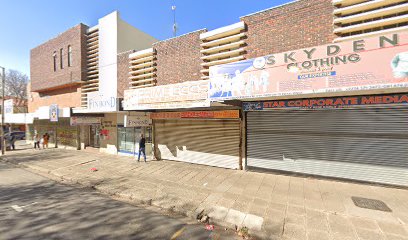
Iaureate le beauty training academy krugerdrop is a Beauty schools establishment in Krugersdorp, Gauteng, South Africa
Krugersdorp
Gauteng
1732
South Africa
Curriculum
Laureate Le Beauty Training in Krugersdorp, Gauteng, offers a structured curriculum designed to prepare learners for professional beauty therapy work both locally and internationally. The organisation emphasises international standards and keeps its training up to date by updating courses every three to six months to reflect current industry trends. An emphasis on practical, hands‑on learning is evident across the range of programmes available, with a focus on translating theory into real-world service delivered in a spa or salon setting.
The curriculum centres on a broad spectrum of beauty disciplines, spanning nail technology, manicure and pedicure, eyebrow and lash treatments, shaping, make‑up artistry, facial therapies, massaging, and waxing. These areas are available through a combination of modular courses and full qualifications, allowing learners to tailor their study to individual career goals. The school highlights its VTCT accreditation, an internationally recognised UK awarding body, which enables learners to pursue certificates that are widely recognised for employment both in South Africa and abroad. In this way, the curriculum supports learners who aim to work in top standard beauty spas or to establish their own businesses upon completion.
Programs are designed to be flexible and accessible. The institution offers modular courses that can be taken individually or in defined combinations toward a full qualification. Small class sizes—limited to around ten learners per class—facilitate personalised feedback and one‑to‑one interaction with tutors, aiding skill development and competence assessments. The learning approach combines theoretical instruction with practical demonstrations and supervised practice, ensuring learners acquire hands‑on techniques in a supportive environment.
In addition to core beauty therapy qualifications, the curriculum includes short courses and professional training opportunities that help widen skill sets and employability. These include make‑up artistry, facial massage and skincare, body massage (including Swedish, hot stone, Indian, and aromatherapy modalities), nail technology, waxing, eyelash and eyebrow treatments, and nail art. Such offerings enable students to build a diversified portfolio that aligns with current beauty industry demands and enables a flexible career trajectory.
Educational delivery is designed to accommodate diverse lifestyles. The school advertises pay‑as‑you‑go modular courses with study planned around personal schedules, allowing learners to begin at multiple points throughout the year. This flexibility is paired with the ability to complete a complete VTCT qualification by combining relevant modular units, or by pursuing stand‑alone certificates as preferred. For those seeking a holistic pathway, the VTCT qualifications provide a recognisable framework that culminates in internationally examinable assessments.
Support and progression underpin the curriculum. The institute commits to mentoring and coaching as a core component of the student experience, with additional emphasis on employability through job placement assistance and industry networking. Guidance extends beyond formal assessment; mentors help learners navigate weaknesses, celebrate strengths, and chart individual career paths. This holistic approach is complemented by a history of collaboration with non‑profit and community organisations, underscoring a broader commitment to empowerment and professional development within the beauty sector.
Distinctive resources linked to the curriculum include access to VTCT‑accredited certificates issued upon course completion, ensuring that credentials carry international credibility. The school also positions itself as a supplier of industry products and tools, offering learners exposure to professional materials and the latest beauty technologies as part of the training experience. Regular workshops and updates on new products and techniques further reinforce the curriculum’s relevance to current practice.
Whether pursuing a full VTCT pathway or a collection of specialised modules, learners in Krugersdorp benefit from a curriculum that blends international standards with practical execution, flexible delivery, and robust student support. The programme structure supports aspiring beauty therapists, make‑up artists, and nail technicians in building confidence, technical proficiency, and a professional portfolio ready for employment or entrepreneurial ventures in the South African beauty landscape and beyond.
- 18 VTCT qualifications offered, including Level 1–3 Diplomas and NVQ Awards in various beauty disciplines
- Modular, pay‑as‑you‑go courses with flexible study options
- Small class sizes and one‑to‑one tutor support
- Mentoring, coaching, and job placement assistance
- Internationally recognised VTCT certificates upon completion
Faculties and Branches
Laureate Le Beauty Training operates as a multi‑campus institution recognised for delivering internationally aligned beauty qualifications. While the primary focus remains on vocational excellence within the beauty therapy sector, the organisation’s network of campuses supports learners across several major centres, including a Krugersdorp base. The Krugersdorp site forms part of a broader footprint that keeps pace with industry demand and offers access to VTCT‑accredited programmes, enabling graduates to pursue opportunities both nationally and abroad.
The education model emphasises practical mastery across a range of beauty disciplines. Programmes span nail technology, manicures and pedicures, eyebrow and lash treatments, waxing, makeup, facials, massage and related therapies. The courses are designed to accommodate varying levels of prior study, from introductory certificates to more advanced diplomas, with the VTCT framework providing internationally recognised certification that supports employability within leading spas, salons and self‑employment ventures.
Within the organisation, faculties or departments are organised around core beauty disciplines that feed into VTCT qualifications and modular course options. The structure supports progression from foundational skill sets to specialist certificates, while ensuring consistency with international standards. This approach allows learners at the Krugersdorp campus, and at other regional sites, to access coherent pathways aligned with industry requirements and future employment prospects.
In addition to programme delivery, the network emphasises student services and employability. The schools highlight flexible study options, affordable fees, and the opportunity to study part‑time or in modular formats. The VTCT accreditation underpins the credibility of certificates issued upon completion, recognised by employers in South Africa and overseas. The organisation also notes activities beyond formal coursework, including mentoring, coaching and pathways into job placements when possible, reflecting a holistic view of student success.
Geographically, Laureate Le Beauty Training presents a dispersed but interconnected set of campuses. The Krugersdorp branch operates alongside branches in Johannesburg, Pretoria, Cape Town, and Gqeberha (Port Elizabeth), with additional expansion indicated in the organisation’s description of its footprint. This network enables learners to choose a campus location that best suits commuting needs, while maintaining access to the same standard of VTCT‑aligned curricula and student services across sites.
For prospective students, the arrangement implies that programme content—whether delivered at Krugersdorp or another campus—is underpinned by standardised syllabi and assessment criteria. The VTCT qualifications catalogue spans Level 1 through Level 3 offerings, touching on beauty therapy, nail technology, facial and massage therapies, waxing, lash and brow treatments, and make‑up artistry. While precise campus‑specific faculties are not itemised beyond the general categories, the structure indicates a coherent ecosystem in which learners can navigate through related subjects and achieve recognised qualifications.
Overall, the faculties and branches concept at Laureate Le Beauty Training positions Krugersdorp as an integral node within a nationwide and regional network. The emphasis remains on delivering internationally standard beauty education at affordable rates, complemented by flexible study arrangements and pathways to employment or self‑employment within the vibrant beauty industry.
Registration Details
Laureate Le Beauty Training Academy in Krugersdorp, Gauteng, South Africa offers a pathway into professional beauty therapy through a range of VTCT-accredited qualifications. The institution emphasises international standards, approachable pricing, and flexible study options designed to support aspiring therapists in pursuing recognised qualifications both locally and internationally.
Registration overview – prospective students can begin the process by exploring the dedicated registration section on the academy’s website. The registration page provides the entry point for those interested in enrolling in the available VTCT courses and modular options, including nail, beauty therapy, waxing, makeup, and pampering treatments. The school operates as part of Laureate Le Beauty Training, which emphasises small class sizes, affordability, and a supportive pathway to employment or entrepreneurship in the beauty industry.
Where to apply – the site features a Registration page that serves as the primary route for enrolment. Applicants should navigate to the page labeled Registration to start the enrolment process and to access any further guidance provided by the school. The Registration page is accessible via the site’s navigation and linked content.
Eligibility and entry requirements – the information available indicates that Laureate Le Beauty Training delivers VTCT qualifications, with emphasis on internationally recognised certificates issued through VTCT. The programme highlights include small class sizes and flexible timetables to accommodate different learner needs. Potential entrants should consider VTCT accreditation and the availability of monthly instalment payment options as part of their financial planning. Specific eligibility criteria, deadlines, or prerequisite courses are not detailed on the pages reviewed.
Documentation usually required – the content reviewed does not list exact documents required for registration. Therefore, no specific document checklist is provided here. It is recommended that prospective applicants consult the Registration page for the most accurate and up-to-date guidance.
Additional context – Laureate Le Beauty Training presents itself as an established provider with over a decade of operation and partnerships that support students from diverse backgrounds. The academy’s About Us section notes VTCT accreditation, international recognition, and a focus on flexible study arrangements to accommodate different learners. While details such as contact channels are not enumerated in this summary, the website’s structure suggests that the Registration page will be the authoritative source for next steps and any direct contact information related to enrolment.
For those seeking more information on accreditation, course scope, or progression through VTCT qualifications, the site offers links to VTCT course listings and the broader course overview. These pages provide additional assurance regarding the scope of study and the international standing of Laureate Le Beauty Training’s certificates.
To start the journey, visit the Registration page on the official site: Registration.
Sorry, no records were found. Please adjust your search criteria and try again.
Sorry, unable to load the Maps API.
Education and Educational Resources in Krugersdorp, Gauteng
Krugersdorp, situated in Gauteng, forms part of a broader regional network that supports learners from primary age through to adult education. The area typically offers a mix of schooling options, technical and vocational training opportunities, and access to higher education institutions within a reasonable travelling distance. The landscape is characterised by a blend of public and independent schools, supplemented by specialised centres that cater to diverse learning needs and interests.
Within schools, learners commonly follow a national curriculum framework that emphasises foundational knowledge, practical skills, and preparation for further study or employment. Secondary education in the area often provides both general matriculation routes and vocational tracks, enabling students to tailor their studies towards university entry, diploma programmes, or trades-based qualifications. For younger pupils, a spectrum of primary schools supports holistic development, with emphasis on literacy, numeracy, socialisation, and physical education.
Independent and private providers, alongside public institutions, contribute to a varied educational mix. These organisations may offer supplementary programmes, after-school support, or alternative schooling models designed to meet different learning styles and needs. In addition, night classes and part-time options can be found in certain training centres, enabling adults to pursue new qualifications while balancing work and family commitments.
Higher and further education opportunities are accessible through regional campuses and nearby tertiary institutions. Students may encounter a range of programmes, from certificates and diplomas to degree studies in fields such as applied sciences, business, information technology, and creative disciplines. While specific offerings differ by institution, general pathways typically include a registration or admissions process, submission of academic records, and alignment with a suitable programme length and currency of skills.
Addressing learning support and student services is a common feature across many facilities in Krugersdorp. Learners may have access to academic support centres, language and literacy assistance, and guidance on study techniques. Counselling and welfare services are often available to assist with personal development, mental health awareness, and career planning. Rural and urban transport options, safe accommodation near campuses, and assistance with bursaries or financial aid are typically provided by various organisations and institutions to ease participation for families and individuals.
Facilities and resources commonly encountered by learners include modern libraries with quiet study zones, computer laboratories, science laboratories, and well-equipped workshops for practical experiments and hands-on training. ICT resources, high-speed connectivity, and multimedia learning environments contribute to flexible study. Sporting facilities, recreational spaces, and arts and cultural activities are often integrated into campus life, supporting a balanced educational experience. In many settings, student housing or nearby accommodation supports shifts in programmes that extend into evenings or weekends.
Typical pathways begin with an application or registration process at the relevant school or institution. Entrance requirements generally align with age, prior qualifications, or assessment outcomes, and prospective students are advised to review key deadlines and document needs well in advance. Guidance on course selection, progression routes, and accreditation helps learners navigate transitions from school to further study or direct entry into apprenticeships and employment. Learners and families are encouraged to explore open days, information sessions, and advisory services to make informed choices about programmes, campuses, and support services available in and around Krugersdorp.
- Primary and secondary schools (public and private)
- Technical and vocational training centres
- Further education and training colleges
- Nearby universities and university colleges
- Adult education and continuing professional development programmes
Overall, Krugersdorp and the surrounding Gauteng area provide diverse educational resources designed to cater to different learning goals, offering a range of programmes, supportive services, and practical facilities to help learners progress along their chosen paths.