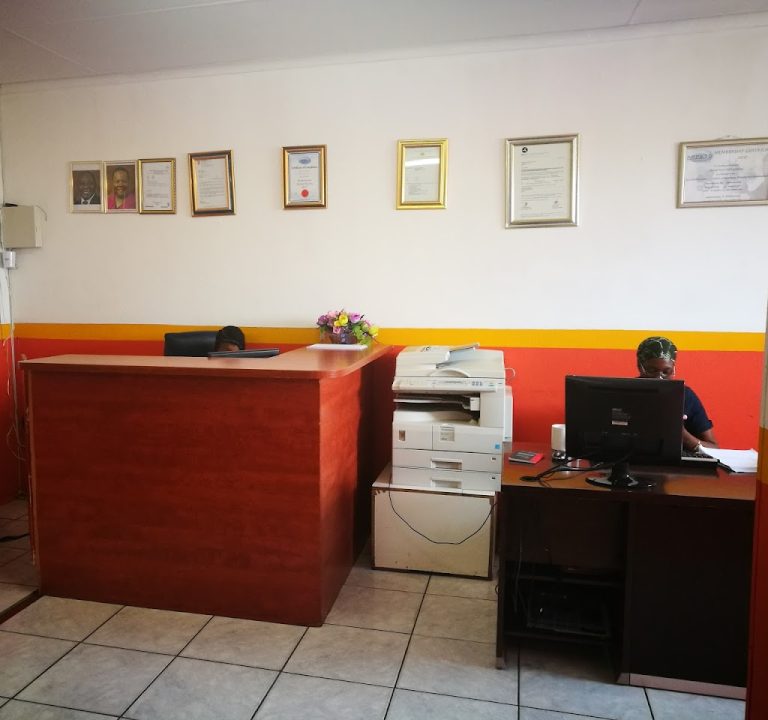

Global Tech College is a Private colleges establishment in Rustenburg, North West, South Africa
Rustenburg
North West
Rustenburg
South Africa
Curriculum
Global Tech College, situated in Rustenburg, North West, offers a range of programmes designed to align with South Africa’s DHET and QCTO frameworks, with quality assurance provided by Umalusi and related SETAs. The college presents both engineering and business streams, delivering recognised qualifications that integrate theoretical study with practical workplace application over structured timeframes.
Engineering studies are available from N1 to N6 under the NATED framework. The N1–N3 tier focuses on foundational knowledge across several disciplines, including Electrical Engineering, Motor and Diesel Mechanics, Civil Engineering, Boiler Making, and related trade theory. Modules typically cover Mathematics, Engineering Science, and sector-specific core subjects (for example, Electrical Trade Theory for Electrical Engineering or Building Drawing for Civil Engineering). Progression to N4–N6 introduces more advanced topics such as Building and Structural Construction, Power Machinery, and specialised design and analysis components. The range emphasises both theoretical understanding and practical competencies, preparing learners for subsequent work-integrated learning in the engineering sector.
Business disciplines are offered at N4–N6 levels, with programmes such as Business Management, Financial Management, Human Resource Management, Marketing Management, Management Assistant, Public Relations, Public Management, Travel and Tourism, and Educare. Each programme presents a structured set of modules—examples include Financial Accounting, Management Communication, and Computer Practice in Business Management; Economics and Cost Accounting in Financial Management; and Labour Relations alongside Personnel Management in Human Resource Management. These modules are designed to cultivate management acumen, financial literacy, interpersonal skills, and administrative capability for commercial and public-sector environments.
In addition to traditional NATED offerings, the college advertises a portfolio of short courses and technical training through its mining, construction, and related disciplines. Such courses cover safety (Fire Fighting, First Aid, OH&S), machinery operation (drill rigs, LHD scoop, cranes, and other heavy equipment), and artisan-level trades (Boilermaking, Diesel Mechanics, Rigging, Electrical, and related trades). The material indicates a blend of practical, occupation-specific instruction with foundational knowledge, delivered in shorter timeframes to equip individuals with recognised vocational competencies.
Across the curriculum, emphasis is placed on a blended learning approach that connects classroom theory with real-world application. Engineering and business qualifications are structured to incorporate practical placements or workplace relevance, reflecting the college’s commitment to experiential learning within industry settings. Modules are designed to provide not only subject-specific expertise but also transferable skills such as problem solving, numeracy, communication, and IT literacy, supporting graduates in diverse career paths within the engineering, construction, and business sectors.
Curriculum delivery is complemented by accessible learning resources and digital tools. The college maintains a student portal, which supports learners with access to class timetables, test dates, assignment materials, exam schedules, and academic records. This portal facilitates ongoing communication and organisation, contributing to a more streamlined learning experience and enabling students to track progress throughout their studies.
Online and application processes are acknowledged as convenient pathways for prospective and current students. An online application facility exists for learner enrolment, while bursary information and application materials are available on the college’s site for those seeking financial assistance, subject to campus submission requirements. While specific entry requirements, fees, and durations are not itemised in detail here, the curriculum framework remains explicit about the levels of study, the areas of study, and the structured progression from theory to workplace application.
Distinctive learning resources highlighted on the site include the broad spectrum of specialised trade and engineering modules, the inclusion of practical components across N4–N6 business programmes, and the availability of computer training and corporate training offerings. Computer-related programmes cover essential software suites and specialised packages, reinforcing digital competencies relevant to modern workplaces. Corporate training emphasises customised solutions, enabling organisations to align staff development with business objectives while adhering to accreditation standards.
- Engineering Studies: N1–N6 (Electrical, Mechanical, Civil, Boiler Making, Water and Wastewater, Chemical Engineering, and related disciplines)
- Business Management, Financial Management, Human Resource Management, Marketing Management, Public Relations, Public Management, Travel & Tourism, Educare (N4–N6)
- Mining and heavy industry training: safety and machinery operation courses, artisan-level qualifications
- Computer training and corporate training: foundational to advanced IT skills, with accreditation noted
- Student support: access to a dedicated student portal for academic and administrative information
Overall, the Curriculum at Global Tech College presents a pragmatic blend of theory, practical application, and industry-relevant skills, underpinned by accreditation bodies and a pathway to further study or employment within engineering, business, and technology sectors.
Faculties and Branches
Global Tech College operates as a private college in the North West province of South Africa, with registrations and accreditations aligned to DHET, QCTO, Umalusi and MICTSETA. The college emphasises hands-on engineering, business studies and information technology skills, providing programmes that integrate theoretical learning with practical workplace application. The focus is on supporting students from diverse backgrounds to access recognised qualifications and to progress through National Qualifications Framework studies.
Within the Engineering Studies framework, programmes span from N1 to N6, encompassing Electrical, Mechanical, Civil, Boiler Making, Water and Wastewater Treatment, Chemical Engineering and related specialisations. These courses combine mathematical and engineering fundamentals with discipline-specific theory and practical components, aligning with the requirements of the NATED/Report 191 pathway and associated industry skills. The college positions these offerings as a core element of its technical and vocational training portfolio, with emphasis on both theory and field application.
In the domain of Business and Utility Studies, Global Tech College provides N4–N6 level programmes, including Business Management, Financial Management, Human Resource Management, Marketing Management, Management Assistant, Public Relations, Public Management and Travel & Tourism. The structure mirrors industry needs by combining entrepreneurial, financial, administrative and communications disciplines, designed to prepare learners for roles in management, administration and service sectors. The curriculum integrates computer practice and information processing as essential components of modern professional practice.
Other skill areas reflected in the college’s offerings include information technology and computer training. The Computer Training and Corporate Training pages describe provision of Basic, Intermediate and Advanced computer skills (such as Word, Excel, PowerPoint, Access and more), alongside specialised software training (including Pastel and related business applications). The corporate training approach emphasises customised courses to meet organisational needs, with an emphasis on building digital competencies and practical business outcomes.
Global Tech College maintains a multi-campus footprint to support regional access. The Vryburg Campus is highlighted as a location within the college’s network, with Rustenburg acting as a primary hub. A Rustenburg presence is corroborated by campus references and by a listed address in Rustenburg on related pages. The campus network is positioned to support student services such as enrolment, registration, timetabling, assessment logistics and exam administration through its centres of study and examination activities.
- Faculties/Schools/Departments: Engineering Studies (N1–N6), including Electrical, Civil, Mechanical, Boiler Making, Water and Wastewater Treatment, Chemical Engineering; Business Management, Financial Management, Human Resource Management, Marketing Management, Management Assistant, Public Relations, Public Management, Travel & Tourism; Information Technology and Computer Training; Corporate Training.
- Campuses/Branches/Centres: Rustenburg (main hub), Vryburg Campus; additional campus activity is indicated through online and regional outreach, with services designed to facilitate enrolment, application and ongoing student support.
- Relation to programmes and services: Programmes are described as DHET/QCTO/Umalusi/MICTSETA-accredited, with clear links between theoretical study and practical application in work placements. Student services include online application pathways, campus visits for enrolment, and access to a student portal for profiles, timetables, assessments and examination dates. Further information about bursaries and the prospect of accommodation and job placement is noted in the college’s material.
For further details on specific courses, campuses and how various faculties integrate with programme delivery, prospective students can visit the official site sections on Engineering Studies, Business Management, Computer Training and Campus pages via the Global Tech College website.
Registration Details
Global Tech College is a registered South African private college with several national quality and accreditation bodies. The college provides an outlined registration process designed to welcome new students and guide them through enrolment for available courses. Prospective students should prepare to follow the steps below to secure a place at Global Tech College in Rustenburg, North West.
Registration process overview
Enrolment is presented in a sequence of practical steps intended to simplify the process. The initial phase involves gathering essential identification and prior academic documentation. Applicants then follow an online or on-campus path to submit their application, after which the college requires submission of the supporting documents. The process culminates with placement into the chosen programme upon successful processing by the admissions team.
Where to apply (including visible links)
Online application is available via the college’s dedicated online application page. An explicit Campus Application Form is also used for on-site registration at the nearest Global Tech College campus. The college provides a direct application form link for download here: Application Form.
On-campus visits and online avenues
For applicants who prefer to apply in person, it is advised to visit the nearest campus to complete the Campus Application Form and to hand in the required documentation. Online pathways are also available to initiate the application process, followed by submission of required documents at a suitable stage.
Documents typically required
The college requests the following core documents to support the registration:
- Your South African ID or passport
- Latest academic results
Optional documents may include IDs/passports of parents or guardians, or a death certificate where applicable, depending on individual circumstances.
Disability information
Applicants are encouraged to indicate any disability during the online application and provide relevant details to assist with appropriate accommodation or support arrangements.
Next steps after submission
Following the submission of the application and required documents, applicants should await confirmation of registration and course allocation. Successful entrants will proceed to enrolment into the chosen course and begin the programme as per the college’s scheduled start dates.
Contact and support channels
For guidance on registration or to obtain the most current information, applicants may refer to the college’s official website sections on registration and online application. The college’s online presence includes course pages and the bursary page for additional information, as part of Global Tech College’s wider offering. No direct telephone numbers or emails are listed in this section; where available, relevant website links are provided to assist with application and registration materials.
Locations and campus information
Global Tech College operates campuses in North West, including the Rustenburg area. Applicants are advised to verify campus details and opening hours via the college’s online resources and on-site during a campus visit.
Sorry, no records were found. Please adjust your search criteria and try again.
Sorry, unable to load the Maps API.
Education and Resources in Rustenburg, North West
Rustenburg, situated in the North West Province of South Africa, offers a diverse tapestry of educational opportunities suited to learners at different stages. The area hosts a range of institutions that support academic attainment, practical skills, and personal development across communities. From secondary schools to further education and training centres, the local landscape emphasises accessible learning for families and individuals seeking progression paths.
Types of institutions commonly encountered in and around Rustenburg include public and private secondary schools, further education and training (FET) colleges, specialised training centres, and campuses affiliated with universities in the wider North West region. Schools typically provide curricula aligned with national standards, including core subjects such as languages, mathematics, science and social studies, with some offering additional support programmes for learners with diverse needs. At the tertiary level, learners can find programmes across vocational, technical, and academic streams, designed to prepare graduates for workplace or further study.
Common programmes and levels reflect the varied aims of learners. For secondary pupils, the emphasis is on meeting national qualification requirements and preparing for post‑school options. For those pursuing higher education and training, offerings often include certificate and diploma qualifications, as well as degree‑equivalent studies through regional institutions. Many learners in Rustenburg explore career‑oriented programmes in areas such as engineering, information technology, health sciences, hospitality, business studies, and creative industries, depending on local provision and partnerships with training providers. Adult education and continuing learning opportunities also feature, supporting career changes, skills upgrading, and personal interests.
Support services and student welfare provisions are an important aspect of the local learning environment. Learning support commonly covers access to guidance counselling, academic tutoring, literacy and numeracy development, and, where available, programmes for learners with learning difficulties. Registration and admissions processes are generally straightforward, with guidance on required documentation and timelines provided by individual institutions or district education offices. Prospective students are encouraged to consult official enrolment information early, ensuring familiarity with recognised qualifications and recognised routes for progression.
Facilities and resources frequently found in Rustenburg’s educational ecosystem help learners realise their goals. Modern libraries and study spaces provide quiet environments for reading, research, and assignments, while laboratories and practical facilities support experiments and hands‑on learning in science, technology, engineering and mathematics (STEM) fields. Sports complexes, recreation areas, and arts spaces contribute to holistic development and community engagement. Some campuses and centres offer accommodation options for students who travel from surrounding towns, subject to availability and institutional policies.
The pathway from school to post‑school learning often involves selecting a suitable institution, identifying relevant programmes, and understanding entrance requirements. Learners may consider bridging courses or foundation programmes where appropriate, and explore options for credit transfer between institutions. Prospective students are advised to review admission criteria, application windows, and any language or assessment prerequisites. Local education authorities and university hubs in the region can provide guidance on recognised qualifications, career pathways, and support services.
- Public and private secondary schools with diverse subject offerings and support services.
- Further education and training centres offering certificates and diplomas in technical and vocational fields.
- Colleges and university campuses within reach for regional students, often collaborating with local employers.
- Libraries, laboratories, computer suites, and sports facilities that enrich the learning experience.
- Guidance and counselling services, career information, and learner support programmes.
- Accommodation options for students from out of town where available.
For further information on education governance and regional resources, visitors can consult the North West provincial department of education and related official portals. Examples include provincial education pages and university sites that outline local provision and progression opportunities. These sources help outline typical pathways and establish a clear first step for those seeking to embark on educational journeys in Rustenburg and its surroundings.
Website resources to begin with include the North West provincial education portal and Northwest University, which collectively provide context on programmes, admission approaches, and student services relevant to learners in the area: