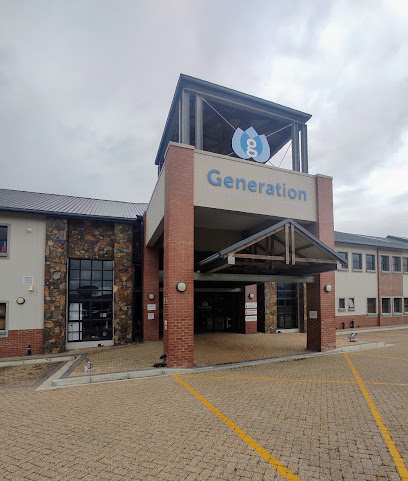
Generation Schools Somerset West is a Private colleges establishment in Cape Town, Western Cape, South Africa
Cape Town
Western Cape
7130
South Africa
Curriculum
Generation Schools Somerset West sits within a network that offers an innovative curriculum blending Montessori principles, Cambridge frameworks and alternative education approaches. This combination is designed to support learners in Cape Town, Western Cape, by encouraging curiosity, resilience and a love of learning through a holistic educational experience.
The curriculum at Generation Schools is organised to accommodate a range of levels and learning styles, emphasising core academic exploration alongside practical, real‑world learning. By integrating Montessori methods with Cambridge‑influenced instructional practices and alternative education principles, the approach seeks to foster independent thinking, critical inquiry and personalised progression for students at the Somerset West campus.
A distinctive feature of the curriculum is its emphasis on independent, student‑centred learning. The programme aims to invite experience and inquiry, with an emphasis on developing learners who can navigate challenges with confidence and creativity. This focus aligns with the institution’s goal of nurturing curious, capable individuals who are prepared for further study or skilled engagement beyond school.
Across the Somerset West campus, the curriculum is supported by unique resources and pedagogical strategies that differentiate it from more traditional models. While specific course lists and qualification pathways are not detailed publicly, the overarching model presents a blend of structured, guided learning and opportunities for self‑directed exploration, aiming to cultivate thoughtful, well‑rounded graduates.
- Integrates Montessori-inspired approaches with Cambridge‑style assessment and alternative education principles
- Focuses on independent thinking, problem solving and experiential learning
- Supports personalised progression within a blended framework that connects foundational skills with higher‑level enquiry
For those seeking further information about the Somerset West campus and its curriculum, the campus page provides snapshots of programmes and campus‑specific details. More details can be found at the Generation Schools website, which outlines the broader philosophy and approach guiding all Generation Schools campuses, including Somerset West.
Faculties and Branches
Generation Schools Somerset West sits within a wider network of campuses that share a unified approach to learning, combining Montessori principles with Cambridge-inspired curricula and alternative education pathways. The arrangement emphasises flexibility in delivery while upholding consistent academic standards across locations. Although the Somerset West campus operates as a distinct site, it aligns with the group’s commitment to nurturing independent, critical thinkers who are equipped to engage with diverse subjects and real‑world challenges.
Across the network, the schools pursue a layered educational model designed to address different learner needs. The Montessori component emphasises hands-on, student-led activity and sensory-based learning, while Cambridge elements integrate accredited curricula and internationally recognised assessment standards. The integration of alternative education practices further broadens the range of programmes available, aiming to support students who benefit from varied instructional approaches. The overall structure supports both subject mastery and the development of essential skills such as problem solving, collaboration and self-directed study.
At the Somerset West site, the environment reflects the broader philosophy: a campus‑based setting where programmes are delivered in a way that supports individual progression. The school’s ethos prioritises student-focused design, ensuring that lessons and activities are tailored to foster curiosity and critical thinking. While specific department names are not enumerated in the publicly available material, the combined model implies concurrent access to language, mathematics, sciences, humanities and creative subjects, delivered through a blend of Montessori methods, Cambridge supervision and alternative education practices. This approach aims to prepare learners for both further study and practical application in everyday life.
The network also emphasises support services and student wellbeing, recognising that a cohesive educational experience extends beyond curriculum delivery. The campuses provide a framework in which learners can explore subject interests, develop study competencies and receive guidance through transitions between programme streams. The Somerset West campus participates in this system by offering a gateway to the broader Generation Schools family, enabling pupils to benefit from cross-campus resources, when appropriate, and to engage with a framework that values purposeful commitment and student focus by design.
For prospective families and learners seeking clarity on campus access and programme alignment, the Generation Schools’ site presents a consolidated picture of the network, including separate pages for each campus. The Somerset West page situates the campus within the wider family, while the “Our Campuses” section provides quick references to the other locations in the Western Cape and beyond. The approach highlights the interconnected nature of faculties and branches, with common aims across sites and campus‑level adaptations to local context.
- Campuses within the Generation Schools network include: Hermanus, Imhoff, Sandown Institute, Sunningdale, Taroko and Somerset West. Each site maintains a distinct identity while sharing core educational principles and curricula.
For more information on programme structure, campus offerings and relevant parent or student resources, visitors can explore the official website, which hosts detailed pages for each campus and links to policy and contact information.
Registration Details
Generation Schools Somerset West, located in Cape Town within the Western Cape of South Africa, offers an enrolment pathway through the group’s shared registration framework. Prospective learners and families are guided towards the central enrolment portal used by Generation Schools via the Enrol Now option. The portal provides a straightforward entry point for initiating the registration process and begins the pathway toward being considered for a place at the Somerset West campus as part of the network’s flexible curriculum approach, which blends Montessori principles with Cambridge and alternative education elements.
To begin an application, interested parties should use the available Apply/Enrol Now link associated with Generation Schools. The site provides direct access to the registration portal, helping families start the process online. While specific step‑by‑step instructions or deadlines are not itemised on the public pages, the Enrol Now link is presented as the entry point for prospective students seeking admission at Generation Schools campuses, including Somerset West. This aligns with the online enrolment pathway used across the group’s campuses.
Where to apply: the primary application route is through the group’s online enrolment portal, with the following link available for immediate access:
For those exploring the Somerset West campus specifically, additional information about the campus and its offerings can be accessed via the dedicated campus page. This page provides insights into the campus location within Somerset West and links to further campus details and the broader Generation Schools network. Prospective families are encouraged to review the Somerset West campus description to understand the local context within the larger framework of Generation Schools’ curriculum and values.
Eligibility and entry requirements are not itemised in the publicly available materials supplied here. In keeping with the stated approach, general admissions principles align with the network’s aim to foster independent and critical thinking through an integrated educational model. Where specific prerequisites exist, they would typically be clarified during the application process or on the campus‑level communications after an initial enquiry.
Documents typically required for registration are not enumerated in the provided content. As such, no definitive checklist can be supplied from the available public pages. Prospective applicants should prepare to engage with the enrolment process through the portal and await campus‑level guidance, at which point the precise documentation required would be confirmed by Generation Schools Somerset West or the wider admissions team.
Contact and support channels are presented publicly to assist families seeking information. While direct telephone numbers and email addresses are not listed here, the site offers several convenient channels to connect with Generation Schools:
Families are encouraged to consult the Somerset West campus page for specific campus details and any campus‑level advisories. The Junior, Senior or Cambridge‑influenced programmes offered by Generation Schools may influence admission considerations, so engagement through the official portal and campus communications is recommended to obtain the most accurate guidance on registration timelines, eligibility criteria, and required documentation.
Links of potential relevance include the Somerset West campus page for campus‑specific information and the general enrolment link for initiating applications:
Overall, registration at Generation Schools Somerset West follows the network’s online enrolment pathway, with campus‑level confirmation and further guidance provided after the initial application. Prospective families should utilise the Enrol Now link to begin, then monitor the campus page and official communications for subsequent steps, requirements, and timelines.
Sorry, no records were found. Please adjust your search criteria and try again.
Sorry, unable to load the Maps API.
Education and Educational Resources in Cape Town
Cape Town, a coastal city in the Western Cape of South Africa, offers a diverse range of educational opportunities for learners at every stage. The metropolitan area supports a spectrum of institutions that cater to school-age pupils, tertiary students, and adults seeking new skills or career progression. The landscape combines public and private providers, with options that reflect national curricula alongside locally developed programmes designed to meet community needs and industry demand.
Schools in Cape Town typically provide inclusive environments with core academic programmes complemented by specialist subjects and extracurricular activities. Public and independent primary and secondary schools commonly offer programmes aligned with national standards, with opportunities to engage in language studies, mathematics, sciences, arts, and physical education. In addition to academic curricula, many institutions place emphasis on life skills, citizenship education, and preparation for higher education or the world of work. Support services within schools and colleges frequently include learning support, counselling, and programmes aimed at improving literacy and numeracy, as well as guidance on career pathways.
Further education and training in the city are supported by a variety of colleges and training centres. Vocational and technical courses are often available across multiple levels, enabling learners to gain practical qualifications in areas such as information technology, engineering, hospitality, business administration, health sciences, and creative industries. These programmes are designed to provide skills aligned with local industries, offering entry routes for school leavers and adults seeking to upskill or transition to new careers. Short courses and modular options are commonly offered to accommodate flexible learning arrangements and the needs of working learners.
Higher education in Cape Town is enriched by several universities and campus-based facilities. These institutions typically offer undergraduate and postgraduate programmes across faculties such as humanities, sciences, engineering, business, and health sciences. Access to research libraries, computer labs, specialised laboratories, and study spaces supports scholarly activity, with structures in place to facilitate collaboration, independent study, and interdisciplinary learning. Campuses often provide academic advising, bursaries or scholarships information, and student services designed to support wellbeing, accommodation planning, and financial literacy.
Learning support and student services are central to the educational experience in the city. Libraries and learning resource centres frequently open long hours to assist with research, reading, and digital learning. Access to laboratories, makerspaces, and technology-enabled classrooms helps learners engage with practical experimentation and problem-solving. Student services commonly cover orientation programmes, accommodation assistance for those relocating to study, financial guidance, disability services, mental health resources, and career development support. Accessibility and inclusion initiatives aim to broaden participation across diverse communities and pathways.
Facilities and resources commonly found in Cape Town's educational offerings include libraries with quiet study zones, computer labs with networked resources, science and engineering laboratories, art studios, performance spaces, sports facilities, and on-campus accommodation or nearby lodging options. Safe and well-maintained campuses frequently provide dining facilities, student unions, and opportunities for community engagement, volunteering, and cultural exchange. For families and learners, information on campus tours, open days, and admissions fairs is typically available through institutional websites and local education hubs.
Typical pathways for learners navigating the education system in Cape Town begin with school completion and the completion of required assessments. This may lead to further study in a college or alternative education and training provider, with articulation possibilities into higher education or apprenticeship-style programmes. Admissions processes generally involve submission of academic records, application forms, and guidance interviews or assessments, with a focus on aligning aspirations with suitable programmes and funding opportunities. While specifics vary between institutions, the overall trajectory emphasises informed choice, supported study planning, and access to resources designed to enable progression and lifelong learning.
Resources for further exploration
- University websites and campus pages offering programme guides and student support information
- College and training centre portals detailing courses, enrolment steps, and flexible learning options
- Local education authorities and community education hubs providing guidance on admissions and pathways