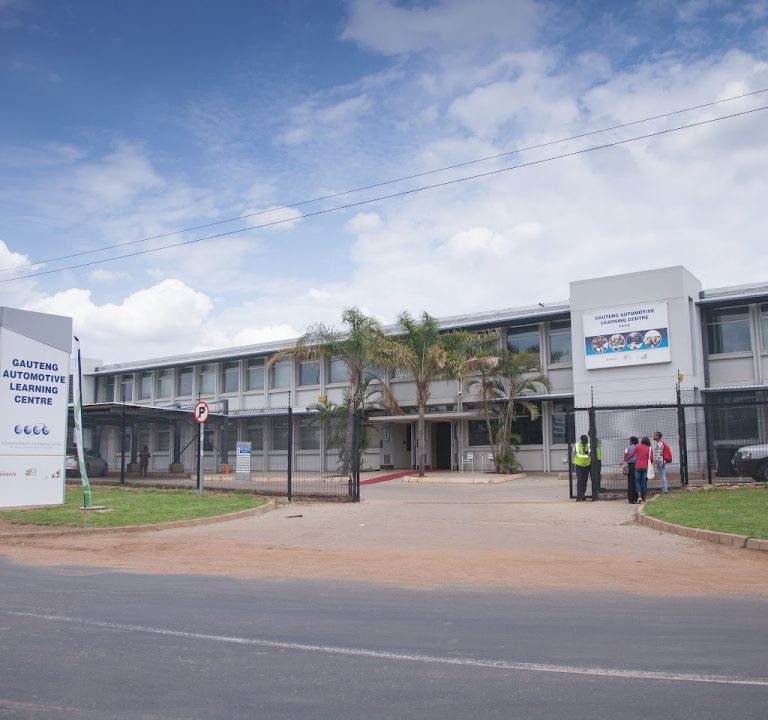

Gauteng Automotive Learning Centre is a Colleges establishment in Akasia, Gauteng, South Africa
Akasia
Gauteng
0200
South Africa
Curriculum
The Gauteng Automotive Learning Centre (GALC), established as part of the Automotive Industry Development Centre (AIDC), is described as a state-of-the-art facility dedicated to skills and development training within the automotive sector. As a specialised hub, GALC functions within a broader ecosystem designed to strengthen capability across the automotive industry in Gauteng. The centre’s positioning emphasises practical skills development aligned with the needs of local manufacturers and suppliers, with the aim of enhancing global competitiveness and industry readiness.
In terms of programmes and levels, the centre operates within a framework that supports automotive skills advancement through its association with the AIDC. While specific course lists, durations, entry requirements, and fee structures are not detailed in the available material, the centre is presented as a centre of vocational and practical training designed to upskill individuals for industry employment. The emphasis is on delivering hands-on learning that can bridge the gap between education and industry requirements, supported by infrastructure intended to facilitate real-world, workshop-based training.
Areas of study at GALC are described within the broader context of the AIDC’s skills development and training mandate. The automotive focus covers core technical disciplines relevant to the sector, with an underpinning philosophy that combines technical know-how with practical application. The inclusion of a dedicated Trade Test Centre within the Gauteng Automotive Learning Centre signals a pathway for formal recognition of acquired competencies, and suggests a curriculum structure that integrates assessment and certification components aligned with industry standards.
The curriculum approach appears to emphasise applied learning, supported by the facility’s resources and equipment suitable for practical demonstrations, exercises, and hands-on practice. Although the exact modules or modules’ sequencing are not listed in the available information, the learning design is indicated to be responsive to industry needs, with alignment to the standards expected by employers and Original Equipment Manufacturers (OEMs) who participate in the automotive sector’s ecosystem in Gauteng.
Short courses and professional training form a notable aspect of GALC’s offering, based on the centre’s role within the AIDC’s portfolio of capacity-building initiatives. Where precise short-course topics and durations are not published in the source material, the indication is that short courses exist as a component of the centre’s activities, designed to deliver focused, industry-relevant competencies in a relatively condensed time frame. These offerings are likely to be shaped by current industry priorities and may cater to upskilling existing workers, entry-level technicians, and professionals seeking targeted certification.
Online or blended learning options are not explicitly stated in the available material. The emphasis remains on a physical, skills-based training environment housed within a state-of-the-art centre, which implies a predominantly face-to-face delivery model with possible opportunities for practical demonstrations, use of workshop facilities, and in-person assessments. Prospective students and employers may wish to consult the AIDC for the latest information on delivery formats and any blended learning opportunities that could complement hands-on training.
Student support services and extracurricular or enrichment activities are not detailed in the supplied content. However, the centre’s integration within the AIDC’s broader framework—alongside incubation programmes and township automotive hubs—implies an ecosystem of support for business development, entrepreneurship, and workforce capability. The presence of the Trade Test Centre further suggests a pathway to formal qualification recognition, which can be a key component of student development and career progression within the automotive sector.
Distinctive learning resources highlighted by the available material include the state-of-the-art facilities at the Gauteng Automotive Learning Centre and the formalised Trade Test Centre. These resources position GALC as a focal point for practical, standards-based automotive training, with infrastructure purpose-built to support hands-on learning and industry-aligned assessment. The centre’s role within the AIDC’s network—linking skills development to enterprise support and regional automotive hubs—adds to its appeal as a recognised venue for skills progression and professional development in Gauteng’s automotive industry.
For readers seeking further details on curriculum specifics, delivery modes, and current short courses, the Automotive Industry Development Centre maintains a range of information across its online presence, including pages dedicated to the Gauteng Automotive Learning Centre and related incubation programmes. More information can be found at the AIDC website: https://aidc.co.za/the-gauteng-automotive-learning-center/ and the main site: https://aidc.co.za/.
Faculties and Branches
The Gauteng Automotive Learning Centre (GALC) operates within the Automotive Industry Development Centre (AIDC), a subsidiary of the Gauteng Growth and Development Agency (GGDA). The GALC is described as a state-of-the-art facility dedicated to skills and development training within the automotive sector, emphasising practical training and industry-aligned programmes.
Within the AIDC framework, the centre forms part of broader capacity-building initiatives that include incubation and trade-focused facilities. A key component of the GALC offering is its Trade Test Centre (TTC), which was formalised as part of the AIDC’s expansion of training and assessment capabilities. The TTC supports formal trade testing in line with industry standards, reinforcing the centre’s role in credentials and mobility for automotive technicians.
The broader AIDC structure includes specialised programmes and hubs designed to bolster enterprise development and supplier growth. Notably, the Chamdor Automotive Hub is highlighted as part of the network of Automotive Enterprise Hubs established to extend incubation and support to automotive businesses. While specific faculties or departments within the GALC are not catalogued in detail, the centre’s alignment with skills development, training, and trade testing suggests a focus on technical training, automotive trades, and related professional development areas.
In addition to its core teaching and assessment functions, the GALC lies within an ecosystem that features incubation programmes aimed at supporting black-owned enterprises and other enterprise development initiatives. This integration underscores a holistic approach to workforce development, combining skills training with pathways to entrepreneurship and industry engagement.
- Faculties/departments: The centre is positioned as a skills and development training facility within the AIDC, with a particular emphasis on trade testing and technical automotive training through the Trade Test Centre.
- Campuses/branches/centres: The Gauteng Automotive Learning Centre operates as part of the AIDC network, with related automotive hubs such as the Chamdor Automotive Hub contributing to the broader ecosystem of training and enterprise support.
- Relation to programmes and services: Key services include skills development and training for the automotive sector, formal trade testing via the TTC, and links to incubation and enterprise development programmes within the AIDC framework.
Further information about the Gauteng Automotive Learning Centre and its place within the AIDC can be found on the official site, which provides details on the TTC, incubation initiatives, and the wider network of automotive hubs and support services. Visiting the AIDC site offers insights into how these elements connect to training opportunities and industry collaboration.
Registration Details
The Gauteng Automotive Learning Centre, located in Akasia, Gauteng, forms part of the Automotive Industry Development Centre’s (AIDC) offerings dedicated to skills and development training within the automotive sector. As a state-of-art facility, the centre provides programmes designed to equip individuals with practical competencies aligned to industry requirements, supporting progression within the local automotive ecosystem. Prospective learners and organisations seeking specialised training can refer to the linked resources on the AIDC website to understand the scope of activities linked to the centre and related initiatives.
Registration or application information is presented within the broader context of the AIDC’s training and development framework. While specific application steps and deadlines are not itemised in the public content provided, interested parties are advised to consult the dedicated page that describes the Gauteng Automotive Learning Centre for current details. The centre is part of a wider suite of programmes, including talent development, enterprise support and sector-focused incubation, all curated to strengthen skills and employment outcomes within Gauteng’s automotive sector.
Those seeking to engage with the Gauteng Automotive Learning Centre should navigate to the official pages maintained by the Automotive Industry Development Centre (AIDC) for the most up-to-date information. This includes reviewing the overview of the Learning Centre and accessing related pages that outline other training initiatives and facilities managed by the AIDC. Listed resources provide context for the centre’s role within the province’s automotive skills development landscape and point to potential pathways for registration through the AIDC’s platform.
Where to apply or obtain further information is referenced through the AIDC’s site structure. The primary portal for the Gauteng Automotive Learning Centre confirms the facility’s existence and intent, while additional pages offer deeper insights into the broader training ecosystem. Applicants should begin by visiting the central AIDC site and then follow the links to the Gauteng Automotive Learning Centre page for programme-specific details. Links are provided below to facilitate navigation to these official sources.
Eligibility and entry requirements, where stated on the site, are framed within the context of the AIDC’s objectives to develop the automotive sector. If available, such information is typically presented on the Learning Centre page or in related programme sections; no specific criteria are listed in the cited summary. Reasonable expectations include alignment with the centre’s focus on skills development and sector-specific training needs, but precise eligibility rules should be checked on the official pages linked above.
Typical documentation or prerequisites are not enumerated in the provided content. Potential applicants are advised to review the official pages for any prerequisites, application forms, or supporting documents specified by the AIDC. When available, these details will appear in the same official sections that describe the Gauteng Automotive Learning Centre and its training offerings.
For further assistance or to confirm programme details, the AIDC’s site offers contact points and stakeholder information through its Quick Links and programme pages. Although direct telephone numbers are not reproduced here, the main site remains the authoritative source for official contact channels and updated information. Learners and organisations can rely on the official links to obtain the latest guidance on registration.
To begin exploring opportunities at the Gauteng Automotive Learning Centre, visit the official page listed above and navigate to related training and qualification pathways. The AIDC’s overarching mission and partner network ensure a coordinated approach to skills development, and the Learning Centre is positioned as a key element within this strategy.
Sorry, no records were found. Please adjust your search criteria and try again.
Sorry, unable to load the Maps API.
Education and Resources in Akasia, Gauteng
Akasia, situated in Gauteng, lies within a region that offers a diverse range of educational opportunities for learners of all ages. The area typically hosts a mix of public and private schools at primary and secondary levels, along with specialised training centres that cater to different interests and learning styles. Within easy reach are institutions that provide academic, technical, and vocational routes, reflecting a broad spectrum of options for families navigating junior, senior, and further education.
Within Akasia and its neighbouring suburbs, learners often encounter several types of institutions. Public schools usually follow national curricula with classroom-based learning, assessment programmes, and support services designed to assist progression to upper grades. Private schools may offer additional facilities or slightly different teaching approaches, while language options and after-school activities can vary between campuses. In addition, local and regional training centres commonly provide focused programmes in areas such as information technology, business administration, hospitality, and health sciences, sometimes in partnership with larger educational networks.
For those seeking higher education or professional qualifications, nearby towns and cities in the Gauteng region host universities and technical colleges. Common pathways include progression from secondary schooling to diploma or certificate programmes at technical and vocational institutions, followed by further studies towards bachelor’s degrees or higher certificates. Adults returning to study frequently find continuing education options and short courses that align with workforce needs, offering flexible study modes and part-time schedules.
Learning support and student services are an important feature of the local education landscape. Schools and training providers tend to offer guidance on study planning, academic skills development, and examination preparation. Where appropriate, learners may access tutoring, language support, or customised learning plans to address diverse needs. Student wellness and counselling services are often available through school counsellors, campus offices, or community partners, supporting both academic success and personal development.
Facilities commonly found in the Akasia area include libraries or resource centres, science and computer laboratories, and specialist rooms for arts, technology, and physical education. Sports facilities, halls, and outdoor fields frequently accompany educational sites, enabling participation in organised activities and school teams. Some institutions also provide on-site accommodation or partner with nearby housing options for students who live further afield, contributing to a supportive study environment.
Typical pathways to follow involve a straightforward progression from enrolment to attendance and assessment. Prospective learners are usually guided through registration processes, curriculum choices, and the submission of required documentation. Admissions timelines and entry criteria vary by institution and programme, but general routes include completing essential registration steps, selecting a programme of study, and meeting any language or grade prerequisites. Financial planning is an important consideration, with many providers offering guidance on fees, funding options, and bursaries where available.
Overall, Akasia serves as a practical hub for educational access in Gauteng, with a mix of schooling, tertiary, and vocational resources that support learners and families in planning and realising educational goals. The surrounding region enhances opportunities through collaborative programmes, shared facilities, and a variety of study pathways designed to accommodate different interests, academic levels, and life circumstances.
- Public and private schools offering primary and secondary programmes
- Technical and vocational training centres with industry-aligned courses
- Nearby universities and further education colleges
- Learning support services, counselling, and academic development
- Libraries, laboratories, IT suites, and sports facilities
- Accommodation options and on-campus or partner housing
- Guidance on admissions, registration, and study planning