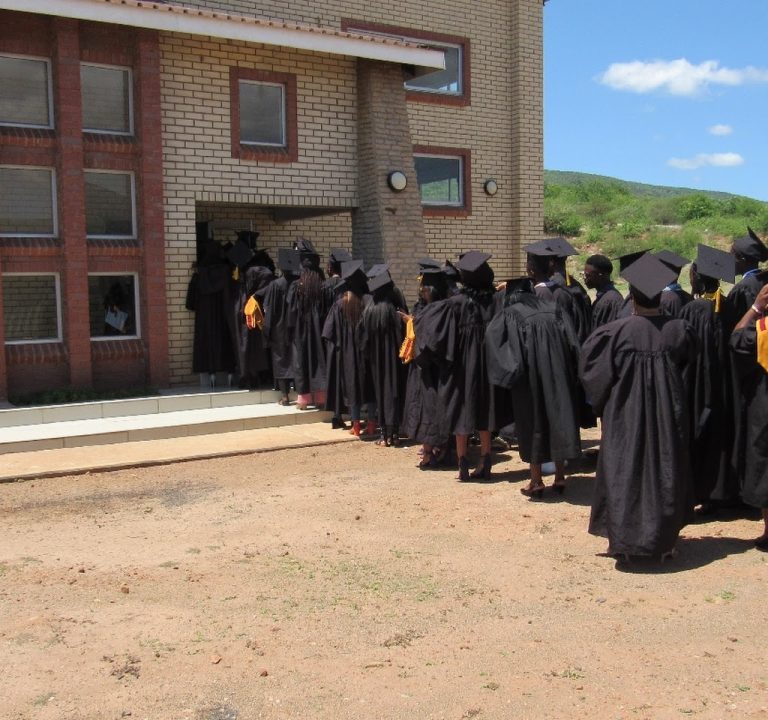

FOURWAYS PRIVATE COLLEGE is a Colleges establishment in Tshikombani, Limpopo, South Africa
Tshikombani
Limpopo
Nzhelele, Tshikombani
South Africa
Curriculum
Fourways Private College, situated in Tshikombani, Limpopo, presents a carefully structured curriculum designed to support learners across multiple levels of schooling. The approach emphasises breadth and progression, with a framework that aims to build foundational knowledge alongside higher-order thinking skills. The college’s curriculum is presented as a cohesive system intended to support continuity of learning and to foster academic development throughout the learner’s journey at the school.
Across its programmes, the college adopts a holistic view of education, combining core academic subjects with opportunities for personal growth and skill development. The curriculum is outlined to accommodate learners at various stages, offering a progression from foundational study through to more advanced topics. This structure is intended to enable pupils to make steady academic gains while also engaging with disciplines that broaden perspectives and encourage curiosity. While specific course listings and levels are not itemised here, the programme framework is described as organised to support regular assessment, feedback, and targeted support where needed.
In keeping with a comprehensive school model, the curriculum is designed to integrate essential subjects with opportunities for enrichment. Learners are encouraged to develop practical competencies alongside theoretical understanding, with emphasis on developing literacy, numeracy, and communication skills. The college’s approach to study seeks to foster independent learning habits, collaborative problem solving, and responsible study practices that learners can carry forward into post-school pathways. The curriculum is conceived to be adaptable within a broad educational aim: to equip students with a solid academic foundation while promoting resilience, adaptability, and lifelong learning dispositions.
Educators at Fourways Private College are described as delivering instruction and assessment through a structured framework that supports clarity of learning objectives. The emphasis is on transparent expectations and regular feedback, enabling learners to recognise progress and identify next steps. Where applicable, the curriculum is designed to align with broader educational standards and regional expectations, while remaining responsive to the needs of the local community and the school’s distinctive context. The school places value on consistency in instructional practice, ensuring that learners encounter coherent content across subjects and terms.
Beyond the standard academic programme, the college acknowledges the importance of well‑being, governance, and student support as integral elements of the curriculum. It is typical for schools of this type to provide guidance and pastoral care structures, as well as access to academic support services designed to assist learners in managing workloads, preparing for assessments, and staying engaged with their studies. Details on specific support mechanisms are not listed here, but the overarching aim is to create an environment where learners can thrive academically while receiving appropriate guidance and encouragement.
Fourways Private College also indicates an emphasis on environments that promote discipline, structure, and high expectations. The curriculum is presented as part of a broader educational plan that seeks to cultivate responsible citizenship, respectful interaction, and constructive participation in school life. While exact subject lists, durations, and required entry criteria are not provided in this overview, the institution positions its curriculum as a framework that supports meaningful learning experiences and the personal development of each learner.
For readers seeking more detailed information about the specific levels, subjects, and progression paths available at Fourways Private College, the college’s official website offers direct access to current programme outlines and related resources. Visitors may wish to consult the site for up-to-date information on how the curriculum is implemented in practice, including any notable pedagogical approaches, assessment regimes, or student support offerings that are described there. Further information can be found at the college’s website.
Faculties and Branches
Fourways Private College, located in Tshikombani, Limpopo, presents its organisational structure through faculties, schools or departments as outlined on the college’s website. The site describes how these units are designed to support a range of programmes and academic pathways, with each division aligned to the college’s educational offerings and student services.
Details regarding the specific names of faculties, departments, or specialised centres are provided online, and the structure is described in relation to the programmes available to students. The arrangement typically reflects a coherent framework that connects curriculum streams with teaching and learning activities, ensuring that learners can access relevant academic support and resources through the appropriate division.
The college’s campuses, branches or centres are presented in connection with the academic and support services available to students. Information about where each programme is delivered, how students access campus facilities, and the ways in which campuses support learning, is outlined on the website. This helps prospective and current students understand where to find particular areas of study and related student services.
Where the site provides concrete details, programmes are linked to the relevant faculties or departments, demonstrating how each track fits within the larger institutional framework. The relationship between faculties and student services—such as academic advising, careers guidance, and support for study skills—is often described to illustrate how learners navigate their studies across different locations or centres.
For anyone seeking a concise overview of the college’s organisational design and location of facilities, the website serves as the primary reference point. Visitors can explore the available faculties and branches to gain insight into how programmes are structured and where services are provided. More specific information about the names of faculties, the exact branch locations, and the available programmes is accessible through the college’s site at Fourways Private College.
Registration Details
Registration at Fourways Private College in Tshikombani, Limpopo, is presented as a structured process for prospective students seeking admission into the college’s programme offerings. Information regarding how to initiate enrolment, alongside any programme-specific prerequisites, is provided on the college’s official website. Visitors are advised to review the latest guidance on the site to understand the exact steps, timelines, and requirements, as these can change and are updated by the institution.
The overall registration pathway is described in terms of an application or registration process that may be accessed via the college’s online resources. The site directs applicants to consult the appropriate sections for a clear outline of the steps involved, including any online forms, submission portals, or alternative submission methods that may be available. Because details such as deadlines, submission formats, and indicative timelines are not fixed in this summary, it is essential to rely on the current information published on the college’s official pages for accuracy.
Where to apply is indicated through the college’s official channels. Potential applicants should navigate to the college’s website and look for the designated Apply or Registration area to begin the process. The home page and linked sections provide the most up-to-date route for initiating an application, and may include direct links to online forms or application portals. For accessibility, the primary website is Fourways Private College, and any specific application pages will be surfaced through that site as they become available.
Eligibility and entry requirements are presented by the college but are not itemised here. When available, these requirements typically cover the academic or programme-specific criteria, which may include prior qualifications or prerequisites. Readers should consult the college’s published entry criteria on the official site to determine whether a particular programme is suitable, and to confirm any age, language, or policy-related prerequisites that apply to registration.
Documents typically required for registration are not enumerated in this overview. If the college states specific document requirements on its site, those details should be prepared in advance of submission and uploaded or delivered according to the indicated method. In the absence of explicit listing in this summary, applicants should refer to the official Registration or Apply pages to confirm the exact document set requested for a given programme.
Support and contact options, where provided, are accessible via the college’s official site. For assistance, applicants should use the support channels published on the college’s platform, which may include a contact page or enquiry form accessible through the website. The general point of reference remains the college’s online presence at Fourways Private College, where up-to-date contact details and guidance are available.
Sorry, no records were found. Please adjust your search criteria and try again.
Sorry, unable to load the Maps API.
Education and Resources in Tshikombani, Limpopo
Tshikombani, situated in Limpopo, South Africa, presents a varied landscape of educational opportunities that cater to learners at different stages. The area typically hosts a range of institutions designed to support local families—from primary and secondary schools to further education and training facilities. The emphasis across these institutions is on accessible learning, practical skills, and pathways that connect learners with further study or employment opportunities within the surrounding region.
Schools in the district commonly offer the standard South African curriculum elements, with programmes spanning early literacy, mathematics, sciences, languages, and social studies. In addition to core subjects, many schools provide extracurricular activities that contribute to personal development, teamwork, and leadership. Learners often encounter a mix of public and community-based schooling models, with emphasis on inclusive education and support for diverse needs. Within the broader Limpopo context, students may encounter grade-focused progression from Grade 1 through Grade 12, culminating in annual examinations and recognised certificates or senior certificates that align with national standards.
Further education and training pathways are available for learners seeking practical or technical qualifications. Local colleges and private training centres frequently offer vocational programmes in areas such as business administration, information technology, hospitality, construction, and health care support. These institutions emphasise hands-on learning and industry-relevant skills intended to improve employability and career progression. For some learners, there are bridging or articulation options that link school-leaving qualifications to higher education spaces or skilled trades.
Higher education access in the region may be facilitated through universities within reachable distances, offering degree programmes across disciplines such as education, sciences, engineering, humanities, and social sciences. Prospective students typically navigate admissions processes that assess prior study, language proficiency, and readiness for university-level study. Information on entry requirements, selection criteria, and application timelines is commonly provided by individual institutions and regional education authorities. Prospective learners are encouraged to explore multiple pathways, including transfer or progression routes from further education to university study when applicable.
Learning support and student services form a visible part of the educational ecosystem. Schools and tertiaries commonly provide guidance counsellors, academic support staff, and specialised services for learners with additional needs. Where available, these services assist with study planning, academic monitoring, and adjustments to learning environments. Language support, tutoring, and mentorship programmes may also be offered to foster confidence and improve educational outcomes for diverse cohorts.
Facilities and resources typically associated with education in Tshikombani include libraries or resource centres, science and computer laboratories, and practical spaces for technical and vocational work. Many institutions strive to maintain safe, well-equipped campuses with spaces for study, social interaction, and sport. Sporting facilities or access to local clubs are often highlighted as integral to student life, reinforcing physical well-being and community ties. Accommodation options, while varying by institution, may be aligned with residential facilities for students from outside the immediate area or for those pursuing longer study programmes.
For those exploring possibilities, a general pathway often begins with information gathering about available schools and colleges, followed by registration or enrolment processes at the chosen institution. Admissions cycles, documentation requirements, and orientation sessions are typically guided by the respective school or college. Prospective learners are encouraged to consult official websites and regional education offices for up-to-date guidance on programmes, funding opportunities, and placement tests.
- Key resources often include school prospectuses, college course guides, and higher education portals that outline available programmes and entry mechanisms.
- Family and community networks frequently provide insights into suitable options for different ages, interests, and aspirations.
- Online portals and government education pages may offer information on admissions timelines, learner support services, and study resources.
Overall, Tshikombani and the surrounding Limpopo region present a practical profile of education and learning resources that support both academic achievement and skill development. The mix of schools, training facilities, and higher education opportunities helps learners chart routes toward further study, training, and eventual employment within South Africa.
Further information can be explored through official education portals and regional resource centres, which provide ongoing guidance on available programmes, admissions processes, and student support services. South Africa Department of Basic Education and regional education authorities remain key points of reference for learners seeking current information about schooling and training options across Limpopo.