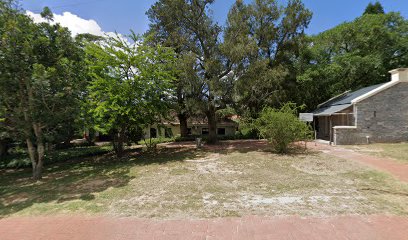
Environmental Learning Research Centre (ELRC) is a Research institute establishment in Makhanda, Eastern Cape, South Africa
Makhanda
Eastern Cape
6139
South Africa
Curriculum
The Environmental Learning Research Centre (ELRC) at Rhodes University in Makhanda, Eastern Cape, offers a distinctive, research‑led approach to environmental learning and sustainability education. Its curriculum emphasises postgraduate study and researcher‑led inquiry, rooted in a collaborative, socially engaged framework that connects scholarship with practice across local, national and international partners.
Programmes and levels carved from the ELRC’s strengths include doctoral, masters and postgraduate diploma pathways. The centre hosts a thriving postgraduate research programme comprising a substantial cohort of master’s and PhD scholars—currently reported to number around fifty to sixty. Doctoral studies focus on Environment and Sustainability Education and contribute to knowledge on learning, sustainability and system change within education and social contexts. The MA/ MSc pathway is represented by a Masters in Education with an Environment and Sustainability Education specialisation, designed for practising environmental education, training and development. This master’s programme is a full‑thesis degree that may be undertaken on either a full‑time or part‑time basis, with in‑person teaching blocks scheduled throughout the year. In addition, the centre runs a leading PhD programme in this field on the African continent and hosts a notable Diploma pathway in Sustainability Learning at the postgraduate level.
Short courses and certificate offerings form an important component of the ELRC curriculum. The centre positions itself as a provider of research‑informed short and certificate courses, delivered in partnership with local and international collaborators. The Postgraduate Diploma in Sustainability Learning is highlighted as an inaugural offering—the first of its kind in Southern Africa—complemented by a broader programme of short courses. These provisions enable practitioners, educators and institutions to engage with cutting‑edge ideas while pursuing learning in customised formats. Details on exact courses, durations and entry requirements are not listed publicly, but the emphasis is clearly on flexible, practice‑relevant study that can accommodate varied schedules and professional commitments.
Areas of study and research themes within ELRC’s curriculum are organised through several interlinked research programmes. Six core strands structure the centre’s scholarly activity and supervise or collaborate with postgraduate students:
- Community Learning and Empowerment — exploring how communities learn to become empowered and resilient in the face of social‑ecological risk and change (for example, loss of ecosystem services and climate change).
- Educational Quality & Research Relevance — examining how environment and sustainability education can enhance educational quality and relevance across schools, colleges and universities.
- Social Learning & Global Change Research — aligning with transformative learning priorities identified by the UN Decade of Education for Sustainable Development to re‑orient society towards sustainability.
- Green Skills Research Programme — a collaborative, cross‑institutional endeavour involving partners such as Wits REAL, studying the skills required for sustainability and capacity building in environmental work.
- Workplace Learning & Sustainability — investigating how new sustainability practices are learned within workplaces and how learning systems enable or constrain such processes.
- Evaluation Research Programme — continuing a long tradition of examining the relationship between environment, learning and evaluation, dating back to the field’s seminal discussions in the 1980s.
Distinctive learning resources and spaces support the curriculum. The ELRC Sustainability Commons has been developed as a space for social innovation, bridging the boundaries between academia, public sector and civil society; between theory and practice; and between knowledge, learning and human agency. Through such initiatives, the centre’s learning resources aim to connect research with real‑world change and to foster collaborations that extend beyond university boundaries. The centre’s research and teaching programmes contribute broadly to this Sustainability Commons and to transformations in Education and Social‑Ecological Systems.
Delivery modalities within the ELRC curriculum reflect its emphasis on applied scholarship. While the Masters in Education emphasises in‑person teaching blocks with flexible, part‑time options, the clearest signal is one of blended and contextually responsive delivery. Short courses and the Postgraduate Diploma in Sustainability Learning indicate a commitment to modular, shorter‑form study that can be aligned with professional development needs. The ELRC also maintains an active network of research chairs and post‑doctoral fellows, alongside associated researchers, which enhances the supervision, mentorship and exposure available to postgraduate students.
Overall, the ELRC’s curriculum combines high‑level theoretical enquiry with practical imperatives in sustainability education. It emphasises graduate‑level research capacity, policy‑relevant inquiry, and transformative learning, underpinned by a network of international partnerships and a dedicated institutional space—the Sustainability Commons—that supports innovative, collaborative work across sectors.
For further information about the ELRC’s study options, prospective students can consult the institute’s pages on postgraduate diplomas, short courses and doctoral and master’s studies, as well as the specific research programmes and chairs that frame current activity. Additional detail about curricula and entry requirements is provided on the seated pages dedicated to studying at the ELRC and related Rhodes University resources.
Website references: ELRC sections on Studying, Research Programmes, and the Sustainability Commons provide primary guidance and context for the curriculum and its distinctive features. https://www.ru.ac.za/elrc/studying/ | https://www.ru.ac.za/elrc/researchprogrammes/ | https://www.ru.ac.za/elrc/sustainabilitycommons/
Faculties and Branches
The Environmental Learning Research Centre (ELRC) operates as a centre of environmental learning innovation within Rhodes University, located in Makhanda, Eastern Cape, South Africa. Rather than a single faculty, the ELRC functions as a specialised hub that brings together postgraduate researchers, teaching staff, and environmental education practitioners to pursue collaborative work across disciplines. Its structure centres on research programmes, doctoral and masters studies, and ongoing partnerships that connect campus activities with regional, national and international domains.
At the heart of the ELRC’s academic offering is a robust postgraduate research programme. The centre hosts a steady cohort of Master’s and PhD scholars—around 50 to 60 at any given time—who contribute to a diverse range of projects and publications. This includes the supervision of doctoral studies in Environment and Sustainability Education, which is led by the Murray & Roberts Chair of Environment and Sustainability Education, and a Master’s in Education with a specialisation in Environment and Sustainability Education. A distinctive feature is the Postgraduate Diploma in Sustainability Learning, described as an inaugural offering in Southern Africa, alongside a growing portfolio of short courses delivered through its research-informed programmes. Further information on programmes is available through the ELRC’s dedicated study pages.
The ELRC also houses and coordinates several active research programmes that frame its scholarly activity and its impact on policy and practice. These programmes cover Community Learning and Empowerment, Educational Quality & Research Relevance, Social Learning & Global Change Research, Green Skills Research, Workplace Learning & Sustainability, and Evaluation Research. Each programme outlines its focus and the kind of supervision and collaboration available to postgraduate students, reflecting the centre’s emphasis on social scientific methodological innovation and the transformation of education and social–ecological systems. More detail on each programme can be explored through the ELRC’s Research Programmes pages.
In terms of leadership and research capacity, the ELRC hosts two prominent research chairs: a Tier 1 DSI/NRF SARChI Chair in Global Change and Social Learning Systems, and a Rhodes University Chair in Environment and Sustainability Education. These chairs anchor high‑level research and attract collaborative partnerships with universities and organisations around the world. The centre’s collaborative ethos is reinforced by engagements with more than fifty partners globally, spanning local to international contexts. The Sustainability Commons stands as a dedicated space for social innovation, drawing together the university, public sector and civil society to bridge theory, practice and human agency.
Regarding location and campus structure, the ELRC is embedded within Rhodes University’s Makhanda campus network. Its building—often featured in the university’s virtual and physical campus mappings—serves as the focal point for postgraduate supervision, seminars, and research activities. While the ELRC collaborates across the broader university ecosystem, its programmes and services are designed to support postgraduate students’ learning journeys, including access to short courses and certificate offerings that complement degree study.
For prospective students and partners seeking further information about study options, research collaborations or ongoing projects, interested readers are encouraged to consult the ELRC’s pages on Research Programmes, Masters and PhD studies, and the Postgraduate Diploma in Sustainability Learning, as well as the pages describing its chairs and associated researchers. The ELRC’s commitment to social relevance and applied environmental learning is reflected in its cross‑cutting courses, research outputs, and active external partnerships.
Registration Details
The Environmental Learning Research Centre (ELRC) at Rhodes University in Makhanda, Eastern Cape, South Africa, presents a broad postgraduate and taught programme portfolio that attracts a diverse cohort of Master’s, PhD and post‑graduate diploma students. The centre emphasises research‑led and research‑informed learning in environment, sustainability and education, with programmes designed to support both academic development and practical application in social‑ecological contexts.
Registration and application to ELRC programmes are overseen through Rhodes University’s admissions framework. Prospective applicants should follow the official application pathways provided by the university, including online submission and alternative methods where online access is unavailable. The university’s admission gateway aggregates essential information for applicants, including the steps required to initiate the application process and the scholarship and funding options that may be relevant to postgraduate study.
Overview of the application process:
- Access the relevant application channels through the university’s admissions hub. The primary route is an online application, complemented by guidance on the application procedure and curriculum selection where appropriate.
- Review the programme offerings at ELRC, including the Masters in Education with an Environment and Sustainability Education focus, the Doctoral programme in Environment and Sustainability Education, and the Postgraduate Diploma in Sustainability Learning and related short courses. Availability may vary by intake and cohort demand.
- Prepare and submit the required information via the chosen submission method. If online submission is not feasible, manual submission and document dispatch are supported through Rhodes University’s processes.
- Monitor the application status through the university’s application platform and follow any post‑submission guidance provided by the Admissions team or the ELRC coordinating contacts.
Where to apply and how to access application materials:
- Apply Online now: Apply Online now
- Application procedures and related guidance: Application Procedure
- Online applications portal for postgraduate study: Online Application
- Additional information about studying at ELRC: Studying at the ELRC
Documents typically required are not itemised in detail on the ELRC pages. Where document submission is involved, Rhodes University notes that documents may be submitted online or mailed if required. For applicants opting to submit documents by postal mail, Rhodes University indicates that documents can be posted to the Student Bureau, Rhodes University, PO Box 94, Makhanda, 6140. This approach accommodates applicants without reliable online access.
Eligibility and entry requirements are aligned with Rhodes University’s postgraduate offerings. While specific programme entry criteria are described in Rhodes’ admissions materials, the ELRC content here does not prescribe exact deadlines, fee amounts, or bespoke forms. Prospective applicants should consult the official application gateway and the ELRC pages linked above for the latest entry requirements and programme specifics.
Support and contacts for prospective applicants are routed through Rhodes University’s admissions systems. In addition to the main application pathways, prospective students may consult the ELRC’s public information on postgraduate study and related courses. The site links to relevant resources and news items, including information about short courses and ongoing research programmes.
For further assistance with registration and admissions queries related to ELRC programmes, applicants are advised to use the Rhodes University admissions channels and the ELRC’s linked pages for studying and research opportunities. Access to resources through the university’s site provides guidance on next steps, eligibility considerations and where to submit supporting documentation.
Sorry, no records were found. Please adjust your search criteria and try again.
Sorry, unable to load the Maps API.
Education and Resources in Makhanda, Eastern Cape
Situated in the Eastern Cape, Makhanda (formerly Grahamstown) presents a diverse tapestry of educational opportunities for learners and families. The town hosts a mix of educational pathways, from primary and secondary schools to higher education institutions, as well as vocational and community training centres. This range supports a continuum of learning that can be tailored to varied interests and future ambitions.
Schools in Makhanda typically offer a broad curriculum aligned with national standards, often including English and local language provision, mathematics, science, humanities, and arts. Many institutions provide additional programmes in information technology, physical education, and life skills. Across the town, learners may encounter state-funded and independent schools, with different settings and support structures designed to assist students at various stages of development. Transitional routes from secondary to further study are well established, with guidance on subject choices and qualification pathways normally available through school careers services or district education offices.
Higher education and tertiary provision are a notable feature in the area. Rhodes University, a recognised university with a strong emphasis on the arts, sciences, and humanities, contributes to a diverse academic environment. In addition to degree study, clear routes exist for diplomas, postgraduate programmes, and professional qualifications. Local and regional colleges and training centres offer vocational courses and skills programmes that focus on practical outcomes, including business administration, computer studies, hospitality, and trades. These avenues provide flexible options for learners seeking accelerated routes into the workforce or further study.
Learning support and student services are commonly available to assist learners with a range of needs. Academic advising, tutoring programmes, and language support resources can help learners adapt to new subjects or undertake challenging courses. Where relevant, mental health and wellbeing services, confidential counselling, and access to accommodation guidance are usually offered through institutions or partner organisations, ensuring a supportive learning experience. Access to career information, internship opportunities, and preparatory workshops is often facilitated through university and college student services, as well as community education programmes.
Facilities and resources in Makhanda typically include well-stocked libraries with study spaces, computer laboratories, science laboratories, and specialised rooms to support arts and performance. Sports facilities, recreation areas, and gym spaces are commonly available, sometimes through partnerships with educational institutions and local clubs. Accommodation options may include student residences or approved off-campus housing, with guidance on suitability and safety considerations. Digital resources, including online libraries and learning management systems, enhance access to materials and course modules for both on-campus and remote study.
Typical pathways through the education system in Makhanda involve a combination of formal qualifications and recognised entry points. Post-secondary routes frequently begin with selecting a field of study or a vocational programme, followed by admission or registration processes aligned with the governing body or institution. Students are often advised to review programme prerequisites, application windows, and funding options where available. Articulations between programmes, transfer opportunities, and progression to honours or master’s study may be discussed with academic advisors or faculty representatives to map a coherent progression plan.
For those exploring local options, visiting campus open days, speaking with guidance staff at schools, and consulting institution websites can provide practical information on programmes, facilities, and support services. More information can be found through official education portals and the respective institutions’ online resources.
- Primary and secondary schooling with diverse curricular offerings
- Universities and polytechnic-style provision for degrees and diplomas
- Vocational and skills training centres for practical qualifications
- Libraries, laboratories, ICT facilities, and sports amenities
- Student services, wellbeing support, and accommodation guidance
Potential learners and families can explore options at Rhodes University and other local providers to understand available courses, entry routes, and timelines. The educational landscape in Makhanda supports a coherent journey from early schooling through higher education and lifelong learning.