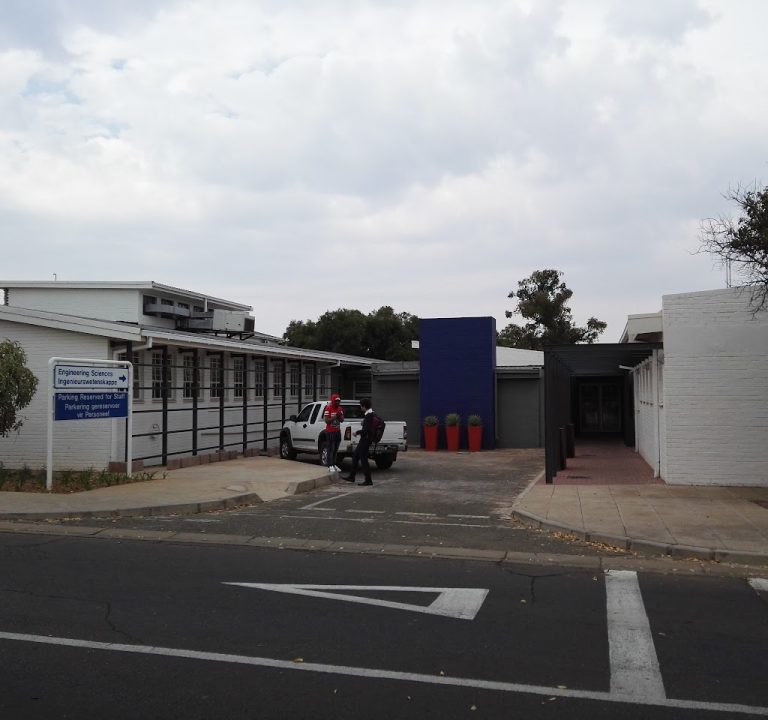
Engineering Sciences is a Engineering school establishment in Bloemfontein, Free State, South Africa
Bloemfontein
Free State
9301
South Africa
Curriculum
The Engineering Sciences unit in Bloemfontein, Free State, presents a breadth of curricular offerings designed to ground students in the fundamentals of engineering while enabling practical application to local and regional contexts. The curriculum is structured to support progression from foundational study through to advanced postgraduate work, with emphasis placed on the integration of theory, experimentation, and problem-solving. As an externally positioned centre within the broader Natural and Agricultural Sciences faculty, the engineering sciences curriculum is framed to align with national aims for engineering capability, industry relevance, and research preparedness.
Undergraduate study in Engineering Sciences emphasises core knowledge across essential engineering concepts, coupled with opportunities for applied learning. Students engage with foundational courses that build mathematical, scientific, and technical competencies before progressing to more specialised or interdisciplinary modules. The programme design reflects a commitment to developing analytical thinking, design thinking, and the ability to translate abstract ideas into workable solutions. The curriculum supports diverse interests within engineering disciplines while maintaining a coherent structure that facilitates timely progression through degree milestones.
Postgraduate options extend the scope of study into honours, masters, and doctoral work. These levels typically emphasise research-led inquiry, advanced design challenges, and deepening expertise in chosen areas of study. The curriculum framework for postgraduate study is designed to foster independent inquiry, critical evaluation, and effective communication of complex technical concepts. Prospective postgraduate students can expect pathways that encourage collaboration with research groups, access to specialist laboratories, and opportunities to contribute to ongoing projects relevant to the region’s engineering needs.
Areas of study within Engineering Sciences are organised to support both breadth and depth. The curriculum enables students to explore interdisciplinary connections, leverage practical laboratories, and participate in project-based engagements. A focus on real-world applicability helps to connect coursework with industry expectations, public sector needs, and technological advancement. The programme portfolio is designed to accommodate evolving industry trends while maintaining rigorous academic standards, ensuring graduates are prepared for further study or employment in engineering-related fields.
In addition to formal degree curricula, the unit offers short courses and professional training intended to address continuing professional development requirements and industry accreditation needs. These offerings provide bite-sized or modular learning experiences that enable practising engineers and other professionals to update knowledge, acquire new skills, or obtain targeted credentials. Details of available short courses and the scope of professional training are published through official channels and are subject to periodic review to reflect current practice and demand.
Blended and online learning components may be incorporated into certain modules or programmes where appropriate. These options can enhance flexibility for students balancing study with work or other commitments, while sustaining the integrity and rigour of the engineering curriculum. When online or blended learning is available, it is supported by structured instructional design, interactive resources, and timely academic guidance to maintain engagement and progression.
Support for students enrolled in Engineering Sciences includes access to dedicated learning resources, academic advising, and appropriate student services. The curriculum is complemented by facilities and equipment that enable hands-on experimentation, measurement, analysis, and testing. Emphasis is placed on cultivating ethical professional practice, teamwork, and effective communication, which are regarded as essential components of the engineering education experience.
For prospective students and collaborators seeking further information, details about specific programmes, entry pathways, and assessment structures are provided through the faculty’s official pages. The curriculum is described in terms of its objectives, learning outcomes, and alignment with broader educational and industry standards, all of which are intended to ensure that graduates are well prepared for skilled technical work, continued study, or professional registration as appropriate.
- Further information and official course details: Engineering Sciences – About ENSCI
Faculties and Branches
The Engineering Sciences section, situated within the University of the Free State’s Bloemfontein campus, forms a key component of the university’s Faculty of Natural and Agricultural Sciences. As an external observer notes, the structure is presented to illuminate how engineering disciplines are organised across departments, research units and related support services. The arrangement aims to provide clarity on how programmes tie into undergraduate and postgraduate study, as well as how student services are distributed in relation to teaching and research activity.
Within the Engineering Sciences offering, information is typically organised to show the relevant faculties or schools (where applicable), the constituent departments, and any associated centres or institutes. This layout helps prospective students and partners understand which academic units are responsible for particular programmes, laboratories, and specialised facilities. The page emphasises that academic programmes are delivered through these departments and units, with coordination across teaching, learning resources, and research activities to support learner progression and scholarly achievement.
In terms of geographic reach, the section identifies Bloemfontein as the primary operating location for the Engineering Sciences sector within the university. Where there are additional campuses, branches or outreach centres connected to engineering studies, the page notes their relationship to the programmes and services available to students, including access to faculty administration, admissions information, and library or learning support arrangements. The description remains purposely high-level when exact names and locations of branches are not stated, ensuring accuracy without speculation.
The content also highlights how students engage with these structures in practice. Learners interact with departmental units for curriculum delivery, project work, and assessment activities. Support services—such as academic advising, research mentorship, and access to laboratories and equipment—are linked to the relevant faculties and departments, ensuring a cohesive student experience from enrolment through to graduation. Where applicable, links to the main faculty site and related resources are provided to guide visitors to detailed information on specific programmes, entry requirements, and faculty calendars.
For those seeking detailed programme information, timelines, or eligibility criteria, the page directs readers to consult the official university site, including sections dedicated to engineering disciplines, departmental pages, and any campus-wide resources that describe student support services and research facilities. The structure reflects a balance between transparency about organisational units and a responsible presentation of what can be confirmed from current public materials.
Interested readers are encouraged to explore the broader university resources at the linked pages to obtain definitive details about faculties, departments, campuses, and centres related to Engineering Sciences in Bloemfontein, Free State, South Africa. Access to programme outlines, research opportunities, and student services is provided through the university’s official website.
Registration Details
Engineering Sciences, presented within the Faculty of Natural and Agricultural Sciences in Bloemfontein, Free State, South Africa, forms part of the University of the Free State’s broader admissions framework. Prospective students are advised to follow the university’s central process for applications and registrations, which guides applicants through the standard pathway for entry to engineering programmes at undergraduate and (where applicable) postgraduate levels.
The page dedicated to ENSCI (Engineering Sciences) provides a high‑level overview of how prospective entrants should approach registration. It emphasises that the registration journey is aligned with the institution’s established admissions framework, and that applicants should consult the university’s official admissions resources for precise steps, timelines, and requirements. This approach helps ensure that applicants access the most current information as policies and procedures may be updated by the university.
Where to apply and how to begin the process are typically outlined through campus or faculty links within the university’s admissions ecosystem. While specific action items (such as application portals, deadlines, or form types) are not detailed in this section, the content directs readers to use the central admissions channels to start or progress their application for ENSCI programmes. For those seeking direct context about ENSCI, the page serves as a key reference point and provides navigation to related information hosted within the university’s site.
For applicants wishing to locate the ENSCI page directly, or to explore related information about registration and programme entry, a reference to the part of the site focused on Engineering Sciences is provided. This resource is intended to support decision‑makers with general guidance while directing users to official admissions pages for definitive requirements and procedures. Access to the broader university domain is encouraged to ensure the most accurate and up‑to‑date information is consulted.
In terms of next steps, readers should plan to engage with the university’s central admissions processes, adhering to any instructions published on the official site. The emphasis remains on using authoritative university channels to confirm eligibility and to complete the registration workflow, rather than relying on third‑party summaries. This ensures transparency and aligns with institutional governance for academic admissions.
For convenience, the ENSCI content is linked to the full page describing Engineering Sciences, which offers context and serves as a navigation point for applicants seeking more detailed guidance. Prospective students are encouraged to review the linked materials on the university’s site to understand the general approach to registration and to locate the precise application avenues that apply to their chosen programme. See the ENSCI overview for reference: About ENSCI.
Sorry, no records were found. Please adjust your search criteria and try again.
Sorry, unable to load the Maps API.
Education and Resources in Bloemfontein, Free State
Bloemfontein, the capital of the Free State, functions as a central hub for education and lifelong learning. The city hosts a diverse array of institutions that serve learners from school age through to higher education and professional development. Across the metro area, families can encounter a mix of traditional schools, technical training centres, and universities, all connected by a network of libraries, learning support services, and student facilities.
Schools in Bloemfontein typically span a broad spectrum, ranging from public and independent primary and secondary schools to specialised institutions focusing on arts, sciences, or multilingual education. Schools commonly emphasise core academic outcomes alongside emphasised programmes in mathematics, science, languages, and information technology. Many campuses support extracurricular activities, with venues for music, drama, sport, and clubs that contribute to a well-rounded schooling experience.
Higher education in Bloemfontein centres on two principal providers. One is a comprehensive university offering undergraduate and postgraduate programmes across faculties such as humanities, business, sciences, and health sciences, with pathways for professional qualifications and research opportunities. The other pillar consists of technical and vocational education and training (TVET) colleges, which provide practical courses, diplomas, and certificates aligned with industry needs. Together these institutions support pathways into careers, further study, or combined study and work approaches.
Beyond degree and diploma options, Bloemfontein hosts a variety of learning hubs and training centres that cater to competencies in information technology, business administration, engineering, hospitality, health and social services, and creative industries. These centres often emphasise flexible delivery, including short courses, evening classes, and modular programmes designed to fit different schedules and responsibilities within families.
Learning support and student services are a notable feature of the educational landscape. Libraries and information centres provide access to reference materials, digital resources, study spaces, and group work areas. Academic support may include tutoring programmes, study skills workshops, language assistance, and accessibility services designed to accommodate diverse learning needs. Guidance on study routes, career planning, and financial literacy is commonly available through student services offices and community education programmes.
Facilities and resources typically extend to modern laboratories for science, engineering, and technology programmes, equipped study zones, computer labs, and dedicated spaces for practical work. Sports and recreation facilities support health and wellness alongside competitive and recreational activities. On residential fronts, some campuses offer accommodation options, which may include designated spaces for international or non-local students and on-site amenities that foster community living.
Typical pathways in Bloemfontein begin with a registration or admission process that confirms eligibility for programmes, followed by orientation programmes that acquaint learners with campus life, resources, and support services. Prospective learners are usually advised on choice of study, credit transfer where applicable, and progression routes acrosslevels. For families, information on deadlines, eligibility criteria, and funding options is commonly available through official college and university portals, with guidance available at information centres and open days.
For those seeking a starting point or exploring options, reputable institutions in Bloemfontein host online presence that details programmes, admissions timelines, and student resources. Examples of institutions with established online information include national and regional university and college sites, such as the University of the Free State at https://www.ufs.ac.za and Motheo TVET College at https://www.motheo.ac.za. These platforms provide general guidance and direct visitors to relevant departments and student services without assuming any particular programme choice.