
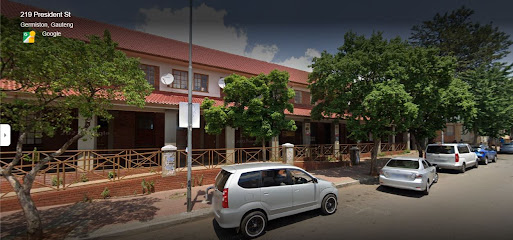
Ekurhuleni City College is a Private colleges establishment in Germiston, Gauteng, South Africa
Germiston
Gauteng
1401
South Africa
Curriculum
The curriculum at Ekurhuleni City College is presented as a comprehensive framework designed to nurture lifelong learning and responsible, global citizenship. As an external observer would note, the institution positions its academic offering as practical and outcome‑focused, with emphasis on rigorous teaching and meaningful learning experiences across its programmes.
Across levels, the college highlights its commitment to a broad and diverse range of study areas through accredited programmes. The emphasis is on delivering education that aligns with industry expectations and real‑world applications. While specific course lists are not detailed in public-facing summaries, the framework is described as including more than thirty accredited programs, suggesting a breadth that spans foundational studies, vocational preparation, and potentially higher education entry pathways. This breadth enables students to pursue studies that match varied interests and career trajectories while maintaining alignment with recognised standards of quality and assessment.
A distinctive feature consistently echoed in the college’s materials is the connection between curriculum and the professional sector. The institution cites a substantial network of industry partners, underscoring a philosophy that learning is reinforced through practical engagement, work‑relevant competencies, and opportunities to connect classroom study with employment realities. Such partnerships are typically understood to support curriculum design through input on industry needs, simulated or workplace learning experiences, and potential pathways to employment after completion.
Outcomes and performance figures are presented as indicators of curricular effectiveness. The college reports a 100% pass rate across cohorts and an impressive graduate employment rate of 95%, suggesting that the curriculum is crafted with clear assessment targets and a strong emphasis on preparing students for successful transitions into the workforce or further study. While individual programme details and progression routes are not itemised in the available materials, these statistics provide an overall sense of the college’s instructional impact and the real‑world relevance of its curriculum offerings.
The student journey is supported by the college’s broader academic environment, which is described in terms of “comprehensive curriculum” and the involvement of “exceptional teachers.” This framing implies a pedagogy that blends subject knowledge with professional skills, critical thinking, and problem‑solving capabilities, all rooted in a framework that values both academic rigour and practical applicability. Readers may infer that teaching practices prioritise engagement, feedback, and mentoring as essential components of curriculum delivery.
In terms of additional learning opportunities, the available information focuses on the core curricular provision and its alignment with industry. While short courses, professional training modules, online or blended learning options are not explicitly detailed in the public materials, the presence of a large number of Accredited Programs and a robust network of Industry Partners signals potential avenues for extended learning and upskilling beyond traditional degree or diploma pathways, subject to institutional offerings and progression routes.
For prospective students and stakeholders, the curriculum narrative suggests a campus community centred on robust academic standards, practical relevance, and sustained employability outcomes. The combination of accredited programmes, industry collaboration, and demonstrable success metrics positions the curriculum as a core pillar of the college’s mission to inspire lifelong learning and foster responsible, globally engaged citizens.
Further information on the full range of programmes, specific entry requirements, durations, and any optional delivery modes (such as blended or online study) can be obtained via the college’s official channels.
Website: Ekurhuleni City College
- More than 30 accredited programmes
- Over 100 industry partners
- High employability outcomes for graduates
- Strong pass rates across cohorts
Faculties and Branches
Observations of Ekurhuleni City College indicate a broad, programme-focused education system, with the institution presenting a robust slate of accredited offerings and an emphasis on developing employability through industry partnerships. While specific faculty, school, or department names are not detailed on the public pages, the site frames its academic life around a comprehensive curriculum delivered by qualified teachers and supported by extensive programmes.
The college highlights its commitment to academic excellence and lifelong learning, positioning itself as an organisation that guides students through a range of accredited programmes. The emphasis on preparation for global citizenship and professional pathways is reflected in the stated mission and the breadth of offerings described in the public materials.
In terms of scale and outcomes, the institution reports substantial participation and achievement. The site presents figures that suggest a sizeable student body and a dedicated teaching cadre, alongside high performance metrics. These indicators imply a structured approach to programme delivery, student support, and assessment across the college’s operations.
Programme breadth is underscored by indicators such as the number of accredited programmes and the extent of industry collaboration. While exact names of faculties or departments are not enumerated in the public content, the reference to accredited programmes and extensive industry partnerships points to a coordinated framework intended to align academic study with professional demand and employability outcomes.
Student services and progression appear to be integrated with the college’s general offering. The public materials emphasise mission-driven learning and graduate outcomes, suggesting that student support, pathways to further study or employment, and engagement with industry partners are considered integral to the educational experience.
- Over 30 accredited programmes
- More than 100 industry partners
- 500+ current students; 40+ teachers
- 100% pass rate (as stated in quick statistics)
- 10,000+ students enrolled historically
For prospective students and partners seeking a clear map of faculties, campuses, or branches, the public pages encourage engagement through the central website, which provides access to further information and contact points. The absence of explicit departmental names does not diminish the evident emphasis on structured, outcomes-focused education and a network of professional linkages that support learning and graduate success.
Registration Details
Ekurhuleni City College, situated in Germiston, Gauteng, South Africa, presents a comprehensive educational offering designed to support learners across a broad range of accredited programmes. The college emphasises lifelong learning and the cultivation of responsible, global citizens, with a track record reflected in strong student outcomes and a broad network of industry partners. The information available highlights a settled emphasis on accessible programmes and an active approach to student progression through registration processes managed by the college administration.
In terms of the application and registration pathway, prospective students are encouraged to engage with the college through its central contact point to obtain current guidance on eligibility, programme selection, and how to commence the registration process. The available online presence includes a dedicated contact section that directs visitors to further information and support. This section serves as the primary channel for initial enquiries and for arranging next steps in the admissions journey.
The college highlights a sizable enrolment landscape and a strong teaching body, signalling an environment where learners may explore a range of accredited programmes. While specific procedural details, forms, deadlines, or fee structures are not outlined in the publicly visible material, the institution’s contact resources are positioned as the route to personalised assistance. Engaging with the college through the indicated contact channel is the recommended way to obtain up-to-date information on registration requirements, programme options, and any required documentation.
For those seeking to learn more about what is on offer, the college’s programme breadth includes more than thirty accredited programmes and partnerships with industry, which may inform programme choice and career prospects. The combination of a strong academic framework, extensive student services, and sector linkages is presented as foundational to the registration experience, with guidance available through the official contact point when plans are formalised into an application. The emphasis remains on clarity, accessibility, and supportive pathways for prospective learners navigating entry into the college.
Where to apply and how to obtain assistance:
- Contact the college through the official Contact page to initiate inquiries and obtain programme-specific guidance: Contact
Notes for prospective applicants:
- Exact steps, deadlines, and required documents are not detailed in the publicly available material. Guidance on these aspects is provided after contacting the college and speaking with admissions or administrative staff.
- Programme information and accreditation status are highlighted as key elements of the college’s offering, which may influence registration decisions.
In summary, registration at Ekurhuleni City College is positioned as a guided process supported by direct communication with the college via its contact channel. Prospective students should reach out to obtain current entry criteria, permitted pathways, and any documentation requirements applicable to their chosen programme. The college’s online presence reinforces a commitment to accessible education, industry-aligned programmes, and an environment conducive to academic achievement.
Sorry, no records were found. Please adjust your search criteria and try again.
Sorry, unable to load the Maps API.
Education and Educational Resources in Germiston, Gauteng
Germiston, situated in Gauteng, presents a diverse landscape of educational opportunities for learners and families. The area is characterised by a mix of public and private schools, further education and training centres, and access to higher education institutions within reach of the suburb. This breadth of options supports a broad range of academic interests, career pathways, and lifelong learning goals.
Within Germiston itself, learners can typically find a number of primary and secondary schools offering curricula aligned with national standards and, in some cases, regional or school-specific programmes. These schools commonly provide a spectrum of support services designed to assist pupils with diverse learning needs, including tutoring, guidance counselling, and study skills development. The emphasis is often on building essential academic foundations, critical thinking, and preparation for higher education or workforce entry.
For post-secondary advancement, the area is well connected to various colleges and training centres that specialise in practical and vocational education. These institutions commonly offer a mix of diploma, certificate, and applied short courses across disciplines such as business studies, information technology, engineering trades, health care, hospitality, and creative industries. Programmes are frequently designed to align with industry standards and local employment opportunities, providing learners with transfer pathways to further study or immediate work readiness.
Higher education access is supported by nearby universities and university campuses within Johannesburg and the broader Gauteng region. Prospective students typically encounter a straightforward admissions framework that includes application submission, academic credential evaluation, and selection where relevant. Many institutions also provide general information on financial aid, bursaries, and payment plans, alongside clear guidance on acceptance timelines and enrolment processes. The overall aim is to help applicants navigate from enquiry to registration with confidence, while recognising that entry requirements vary by programme and level of study.
Learning support and student services play a central role in Germiston’s educational ecosystem. Libraries and digital resources are important anchors, offering study space, reference materials, and access to online databases. Academic support can extend to writing centres, mathematics and science assistance, and language support for learners requiring additional help to engage with course material. Personal wellbeing services, career guidance, and disability support are commonly available to promote inclusive learning and to assist students in managing academic demands alongside personal responsibilities.
Facilities and resources commonly seen across Germiston’s educational landscape include well-equipped classrooms and laboratories, dedicated computer suites, sports facilities, and spaces for creative and performing arts. While accommodation is more typical around larger universities or campuses outside the immediate municipality, some local providers may offer student housing or information on housing options nearby. Safe transport links and accessible campus layouts are considerations that frequently feature in planning for learners and families alike.
Typical pathways for learners include preparing for senior phase examinations, applying to colleges for practical qualifications, and pursuing undergraduate programmes at universities. Registration usually involves submitting required documentation, meeting any programme prerequisites, and completing course selection within the advised intake period. Throughout these stages, prospective students can expect clear guidance on timelines, required materials, and available support services to facilitate a smooth transition into the chosen educational route.
- Primary and secondary schools with broad curricula and supportive learning environments
- Further education and training centres offering diplomas, certificates, and short courses
- Nearby universities and campus-based study options with transfer pathways
- Libraries, study spaces, tutoring, and career guidance services
- Accessible facilities, laboratories, and digital resources to support diverse learners
Overall, Germiston provides a coherent framework for education and lifelong learning, enabling families to locate appropriate institutions, access essential services, and plan constructive educational trajectories within Gauteng.