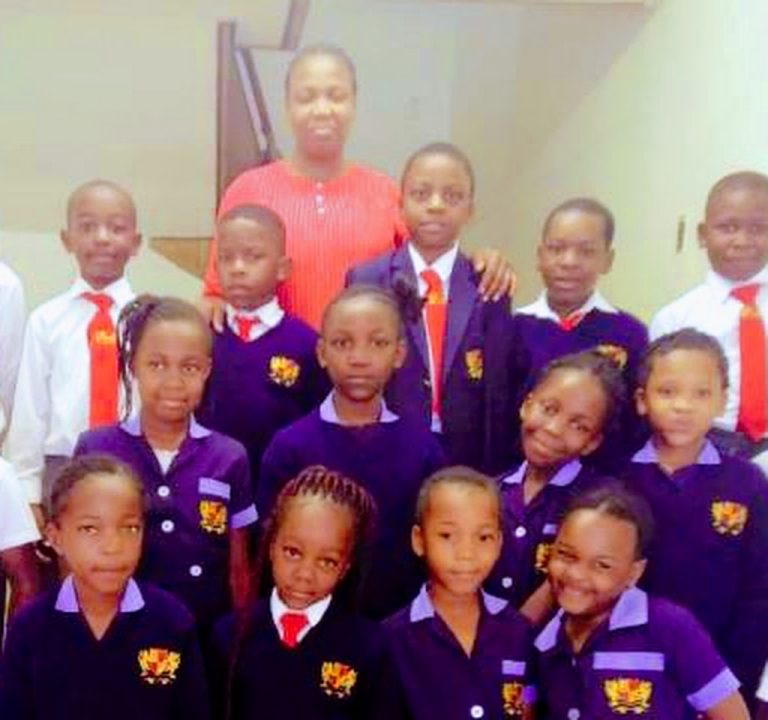
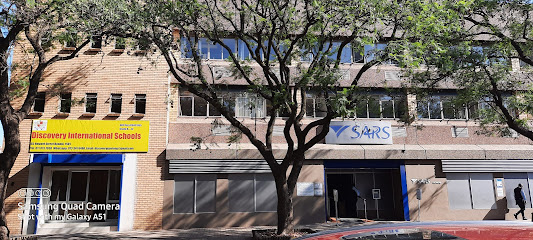
Discovery International schools is a Educational institutions establishment in Benoni, Gauteng, South Africa
Benoni
Gauteng
1501
South Africa
Curriculum
Discovery International Schools in Benoni, Gauteng, pursue a broad, modern curriculum that spans from primary through to the senior phases. The approach is informed by international frameworks and emphasises a well-rounded education designed to develop academic capability alongside critical thinking, creativity and global awareness.
Curriculum areas cover core subjects such as languages, mathematics and science, together with humanities, the arts, physical education and information and communication technology. The emphasis is on integrating knowledge across disciplines and encouraging learners to explore concepts through enquiry-based learning, collaborative projects and real-world applications. This approach aims to foster resilience, problem-solving skills and adaptable learners prepared for further study and diverse futures.
The curriculum framework supports progression through clearly defined stages, with assessment designed to monitor understanding, growth and mastery. While specific programme structures are not itemised in detail here, the site signals a blend of foundational grounding and opportunities for depth in various subject areas, enabling learners to build a solid academic profile while pursuing personal interests and strengths.
In addition to traditional subjects, the school highlights the development of language skills and global perspectives as integral components of the curriculum. This aligns with a commitment to international-mindedness, intercultural understanding and responsible citizenship, preparing learners to engage with a diverse world.
Online or blended learning formats are referenced as part of the school’s delivery options, reflecting contemporary approaches to instruction. These modalities support flexibility in learning, enable continuity of study beyond the classroom and can complement face-to-face teaching with digital resources and asynchronous activities where appropriate.
Beyond classroom learning, Discovery International Schools offer a range of short courses or professional development opportunities for staff and students. While specific courses are not enumerated here, the inclusion of additional training and enrichment elements indicates a holistic educational ecosystem designed to extend learning beyond the standard timetable.
Support services are mentioned as a feature of the school’s curriculum ecosystem, contributing to students’ academic achievement and personal well-being. These services may include academic support, guidance and pastoral programmes aimed at helping learners navigate curriculum challenges, manage workloads and maintain well-being throughout their schooling.
Distinctive learning resources and facilities are highlighted as part of the curriculum delivery. The school’s environment is described as one that can enhance instruction through access to diverse materials, technologies and spaces that support active learning, collaboration and independent study.
Overall, the curriculum at Discovery International Schools in Benoni is portrayed as a cohesive system designed to balance rigorous academic content with opportunities for personal growth, creativity and global awareness. The programme aims to prepare learners for further education and for responsible participation in a rapidly changing world.
For more detail on current programmes, subject offerings, and delivery options, see the school's official site: Discovery International Schools.
Faculties and Branches
Discovery International Schools presents a structured, school-wide framework that organises teaching and support services into distinct faculties and departments, designed to deliver a cohesive educational experience across its Gauteng network. The arrangement emphasises continuity of learning from early years through adolescence, while ensuring specialised provision at each stage of development. Within this model, faculties and departments are positioned to coordinate curricular delivery, assessment programmes, and student services in ways that align with the institution’s overarching educational aims.
Where the site clarifies its organisation, it notes a campus-based approach that situates learners within a network of centres throughout Gauteng. The Benoni location forms part of this regional structure, contributing to the broader access offered by Discovery International Schools. The publication of the site’s materials indicates that programmes are implemented through a series of school-level divisions, with each campus supporting the specific needs of its pupil cohort while maintaining alignment with the school’s common academic standards and enrichment opportunities.
In terms of services, the arrangement fosters collaboration between academic departments and student support teams. This includes guidance on curriculum choices, language development, and extra-curricular engagement, with the intent of providing a well-rounded pathway for learners as they progress through different stages of schooling. The connectivity between campuses helps ensure consistency in pedagogy, assessment practices, and the utilisation of shared resources, which can enhance the student experience across the Gauteng network.
Accessibility and continuity are also reflected in the network’s campus structure. Although the precise names of individual faculties or departments are not extensively itemised on the public pages, the organisational description conveys a framework in which learners can move through a sequence of learning environments that correspond to their age and ability level. This arrangement supports a programme architecture that integrates core subjects, language acquisition, sciences, mathematics, and humanities within a unified educational trajectory, while permitting campus-specific adjustments where necessary to respond to local context and capacity.
For prospective families and learners, the site’s outline of campuses and centres indicates that the Benoni location is part of a wider educational network. The existence of multiple campuses suggests opportunities for cross-campus collaboration, shared enrichment activities, and access to a broader spectrum of facilities and services. The structure is designed to maintain consistency in student experience, while allowing for site-based adaptations to meet community needs, staffing configurations, and available resources.
Further information about specific faculties, departments, and the exact configuration of branches can be found through Discovery International Schools’ official site, which outlines the network’s approach to curriculum delivery, student services, and campus coordination. Visitors are advised to consult the website for the most current descriptions of programme structure and campus details.
- Benoni campus within the Gauteng network
For more information, see the official site: Discovery International Schools.
Registration Details
Discovery International Schools in Benoni, Gauteng, South Africa provide information for prospective families about the registration process through their official website. The overview presented here follows the guidance available on the school’s site and offers a concise summary for potential applicants evaluating admission steps.
Application/registration process overview: prospective families typically begin by seeking information and confirming suitability for the programme through the school’s online resources. The site outlines the general sequence of steps involved in applying, and serves as the primary channel for initiating the process. Applicants should consult the official platform for the most current guidance and any specific requirements tied to the applicable intake.
Where to apply: the primary point of access for applications is the official Discovery International Schools website. Relevant sections and links on the site direct applicants to the registration pathway or to pages that describe how to begin the admission process. For convenience, the homepage can be used as a starting point to locate the appropriate application or enquiry options.
Eligibility and entry requirements: where stated, the site includes eligibility criteria and entry considerations. If explicit requirements are not detailed in the published materials, readers are advised to refer to the official admission information on the school’s site to determine what is applicable for each year group or programme. No additional or speculative requirements should be assumed without verification on the official platform.
Documents typically required: the website may mention common documentation associated with the registration process. Where such details are provided, these items should be prepared in advance to facilitate a smooth application. If the site does not specify particular documents, applicants should consult the official admission information to avoid submitting items that are not required.
Contact and support channels: contact options for admissions or general enquiries are typically available on the official site. Prospective families should use the supported channels listed on the Discovery International Schools website to obtain personalised assistance or to clarify any aspect of the registration process.
Checklist reference: for one-stop guidance, visitors are encouraged to review the official admission information on the school’s website. Applications and questions are managed through the site’s designated pages, where updates and additional instructions are published as needed.
Further information and access: for those seeking to begin the registration journey, details and links are available at the Discovery International Schools website: Discovery International Schools. A dedicated “Apply” or admissions section may be present on the site to facilitate the process.
Sorry, no records were found. Please adjust your search criteria and try again.
Sorry, unable to load the Maps API.
Education in Benoni, Gauteng: Resources and Pathways
Benoni, situated in the Gauteng province, offers a diverse landscape of educational opportunities suitable for learners at different stages. The area supports a range of institutions that provide formal schooling, post‑school training, and avenues for lifelong learning. Families can expect access to a mix of public and independent schools, specialised centres, and adult education options, with connections to wider networks in the region.
Within the primary and secondary spectrum, a typical offering includes state and fee‑paying schools that follow national or provincial curricula. Learners commonly encounter programmes aligned to the Foundation Phase, Intermediate Phase, Senior Phase, and further education and training phases. High schools often present pathways towards National Senior Certificate qualifications, with subject options spanning languages, mathematics, sciences, humanities, arts, and technology. In addition, vocational and technical tracks are increasingly available in various settings, guiding learners towards practical skills alongside academic studies.
Post‑secondary education in and around Benoni encompasses colleges and higher education institutions that specialise in applied and professional training. These centres frequently offer diplomas, certificates, and short courses across fields such as information technology, business studies, hospitality, health care, engineering supports, and creative industries. Local campuses commonly provide flexible study modes, including part‑time and distance learning options, to accommodate learners balancing work or family commitments.
Universities within reach from Benoni connect learners to broader degree programmes in disciplines including the arts, sciences, engineering, commerce, and education. Access points typically involve centralised admissions processes and year groups that run on standard academic calendars. Prospective students are advised to consult official portals for up‑to‑date information on prerequisites, application windows, and funding opportunities.
Learning support and student services
Across institutions in the area, learning support services emphasise inclusive access to education. Typical resources include academic tutoring, study skills workshops, language support for non‑native speakers, and advisory services to assist with study planning and progression. Counselling and welfare services frequently address mental health, personal development, and transition planning between phases of schooling or into higher education and training. Accessibility considerations—such as wheelchair access, assistive technologies, and communication support—are commonly offered to ensure wider participation.
Facilities and resources
Facilities commonly found in Benoni include well stocked libraries offering both print and digital resources, study spaces, and quiet rooms. Laboratories for science and technology subjects provide practical opportunities to complement theoretical study, while ICT labs support computer‑based learning and coding activities. Sports fields, courts, and gymnasia contribute to a balanced approach to education, with opportunities for organised athletics, fitness training, and recreational activities. Some campuses provide accommodation or partner with nearby housing providers to assist with living arrangements for longer programmes and student placements.
Typical pathways and admissions considerations
Admissions in Benoni generally follow standard higher education and school registration processes. Prospective learners are advised to prepare academic records, identification documents, and any subject‑specific prerequisites. Many institutions publish clear timelines for applications, enrolment, and orientation. Transitional pathways often include bridging or foundation programmes designed to support learners entering higher education or technical training from varied educational backgrounds. Financial planning, including bursaries and scholarships where available, is a common consideration in the lead‑up to enrolment.
Overall, Benoni offers a supportive learning ecosystem with a spectrum of institutions and services. The combination of diverse programmes, dedicated support, and well‑equipped facilities enables learners and families to navigate education and training with options that align to individual goals and futures.