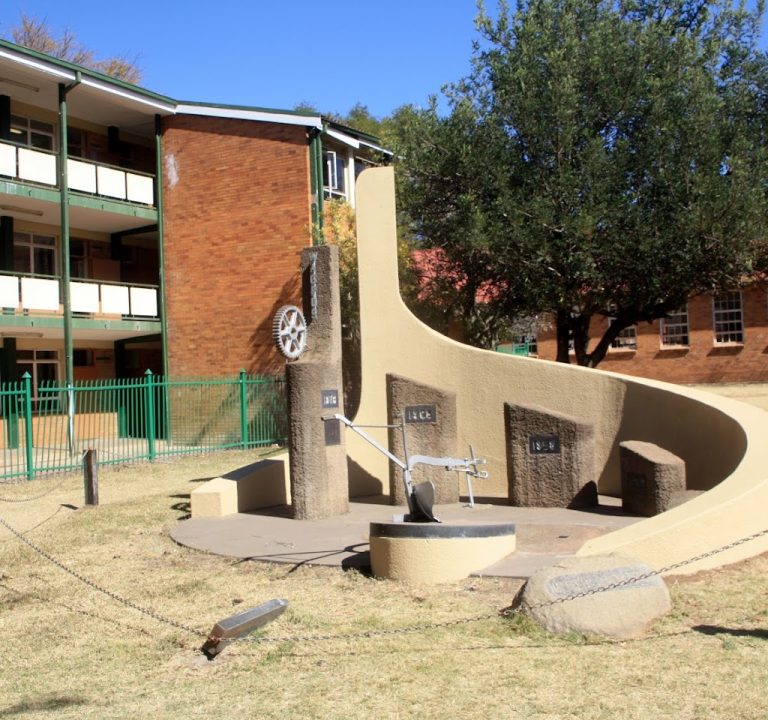
Die Hoërskool Wagpos is a College of agriculture establishment in Brits, North West, South Africa
Brits
North West
South Africa
Curriculum
Die Hoërskool Wagpos, located in Brits, North West, offers a structured curriculum designed to cater for a diverse student body. The school has three primary study directions to guide learners through their secondary education: Academics, Agriculture, and Technical studies. This tripartite framework enables pupils to specialise according to their interests and career ambitions while remaining rooted in a broad, academically sound foundation.
Across these study directions, the institution aims to support learners in developing core competencies that are valuable both within school and beyond. The emphasis rests on fostering critical thinking, practical application, and problem-solving abilities, alongside the development of personal and interpersonal skills. The school’s long-standing commitment to a value-driven environment is reflected in daily practice and in the ethos that shapes interactions among learners, staff, and the wider school community.
In addition to academic offerings, Die Hoërskool Wagpos provides a wide range of sporting and cultural activities. These extracurricular options are designed to complement classroom learning, promote teamwork and leadership, and enhance the student experience. Participation in sports and cultural programmes helps to cultivate discipline, resilience, and a sense of school community, contributing to the overall development of students during their secondary schooling years.
Beyond formal courses, the school emphasises respect, integrity, loyalty, and pride as guiding values. These principles underpin both instructional approaches and daily school life, supporting learners as they navigate their educational journeys. The result is an environment where academic pursuits are balanced with personal growth, character formation, and responsible citizenship.
Approximately 900 learners enrol at Die Hoërskool Wagpos each year, reflecting the school’s capacity to accommodate a large and varied student body within its three study directions. The size and breadth of the school community contribute to a dynamic learning atmosphere, where learners can engage with peers and teachers across a range of subjects and activities. The school’s experience and established structures aim to provide stability and clear pathways for progression through the senior phase of schooling.
For families seeking information on admissions, support, or school life, the school provides clear channels for contact through its official website. The online presence offers insights into the curriculum framework, upcoming events, and general school information, helping to inform decisions about study options and school engagement.
- Three study directions: Academics, Agriculture, and Technical studies
- Broad sports and cultural programme to support extracurricular engagement
- Value-driven school ethos emphasising Pride, Loyalty, Integrity, and Respect
- Large, active learner community with a focus on holistic development
Further information and contact details are available via the school’s website: Die Hoërskool Wagpos.
Faculties and Branches
Die Hoërskool Wagpos in Brits, North West, offers a structured trio of study directions designed to accommodate diverse student interests and career pathways. The school presents three main faculties or study streams: Akademies, Landbou, and Tegnies. These options provide a framework for learners to pursue academic, agricultural, or technical credentials within a single, cohesive secondary education environment.
Within these study directions, students can access a broad spectrum of subjects and elective choices, enabling both specialised focus and broad preparation for further study or vocational training. The arrangement supports the school’s aim to deliver a well-rounded curriculum while aligning with individual strengths and future ambitions.
In addition to academic programmes, Die Hoërskool Wagpos emphasises a wide range of sport and cultural activities, contributing to a holistic educational experience. The institution upholds a value-driven ethos, emphasising pride, loyalty, integrity and respect in daily school life. These values are intended to guide behaviour, foster community, and enhance personal development among learners.
As a community, the school serves a large cohort—more than 900 learners each year—under the leadership of a principal who oversees the strategic direction and daily operations of the institution. For prospective parents and students seeking more information, the official website provides further details and contact options: Kontak ons.
While the three study directions constitute the core structuring of academic offerings, the school’s framework supports additional guidance and student services aligned with these faculties. In the context of Die Hoërskool Wagpos, the faculties of Akademies, Landbou and Tegnies function as primary gateways to the subjects, term timetables and practical experiences that characterise the school’s educational model.
Registration Details
Die Hoërskool Wagpos, situated in Brits, North West, provides learners with structured pathways across three principal study directions: Akademies, Landbou, and Tegnies. As a long‑standing institution with a focus on value‑driven education, the school emphasises pride, loyalty, integrity and respect within daily operations, sport, and cultural life. Prospective families are invited to consider the school’s broad offering as they plan the next steps in their learners’ education.
Overview of the registration process is presented in a manner consistent with publicly available information. Potential applicants are encouraged to initiate contact with the school through the official channels listed on the school’s website to obtain current guidance on progression from inquiry to enrolment. The school emphasises a holistic approach, ensuring that applicants understand the breadth of opportunities across academic tracks, agricultural studies and technical disciplines, as well as the extensive co‑curricular programme that supports learner development beyond the classroom.
The institution notes that it supports a sizeable learner body, and it is clear that capacity and placement considerations are addressed through established school procedures. While exact step‑by‑step instructions, deadlines or form requirements are not reproduced in the general overview, the process is described in terms of accessibility and clarity for families seeking admission. General expectations are that prospective learners meet the school’s entry standards for the chosen study direction and that appropriate documentation follows the formal application process once it is initiated.
For a direct point of contact and to receive up‑to‑date guidance, interested parties should utilise the school’s official contact resource. The primary public channel provided is a dedicated contact page on the school’s website, which serves as the gateway to further information and application instructions. This supports the emphasis on transparent communication and easy access to registration details for families exploring schooling options in the region.
Where to apply: the school’s website provides a central hub for correspondence and application information. Interested families are advised to visit the official site and follow the path to the contact section for personalised guidance. A convenient link is available for initiating contact: Kontak ons. The site acts as the authoritative resource for updates on admissions and related procedures, subject to annual adjustments and policy changes.
Eligibility and entry requirements are presented in broad terms, reflecting the school’s commitment to a broad spectrum of learners across its three study directions. Specific criteria, grade prerequisites, or intake limitations are not itemised in this overview; instead, prospective entrants are advised to obtain the latest formal guidance directly from the school via the website link above. This approach avoids speculative timelines or numerical thresholds and ensures accuracy in the current admissions cycle.
Documentation typically required for registration is not listed in the general content provided here. In line with the instruction to avoid inventing deadlines, fees or forms, this section notes that the exact documentation will be conveyed through official communications once an initial inquiry is made. Families are encouraged to prepare commonly requested materials such as identification, guardianship details, and prior school records, and to confirm the precise requirements with school admissions staff during the enquiry process.
In sum, registration details for Die Hoërskool Wagpos point applicants towards direct engagement with the school via the official site. The institution promotes a welcoming, values‑driven environment with diverse curricular options and a robust extracurricular programme. Prospective families are urged to use the indicated contact route to obtain the most current and complete admissions information, ensuring a smooth and well‑informed journey from inquiry to enrolment.
Sorry, no records were found. Please adjust your search criteria and try again.
Sorry, unable to load the Maps API.
Education and Resources in Brits, North West
Brits, a town in the North West Province of South Africa, sits within a region rich in educational provision that serves learners from diverse backgrounds. The local landscape typically includes a spectrum of institutions designed to support academic achievement, practical skills, and lifelong learning. Learners and families encounter a mix of schools, further education options, higher education institutions, and specialised training centres, all aligned with common national and regional frameworks for admission, progression, and quality.
Schooling in the area commonly comprises primary and secondary offerings administered by provincial public schools, as well as independent and trust-managed options. Parents and students may encounter curriculum choices that prepare learners for national examinations, with guidance available on subject selection, assessment timelines, and pathways beyond compulsory schooling. Many families access schools that provide a range of learner support services, including language development programmes, learners with special educational needs, and programmes to promote numeracy, literacy, and study skills. In addition, some schools offer after-school activities and holiday programmes that support holistic development and reinforce classroom learning.
Further education and training in the Brits region often feature a cluster of technical and vocational training centres. These institutions typically emphasise practical, industry-aligned programmes that lead to certificates, diplomas, and higher certificates. Programmes commonly cover construction, engineering technologies, information communication technologies, business administration, hospitality, and health-related fields. The focus for many learners is on combining theoretical foundations with hands-on experience, making use of simulated environments, workshops, and work-integrated learning where available. Flexible learning options, including part-time and distance study, may also be offered to accommodate working learners and those balancing family commitments.
Higher education in the area may be represented by universities or universities of technology accessible to residents and students from nearby towns. These institutions generally provide undergraduate and postgraduate study across faculties such as sciences, engineering, humanities, social sciences, and business. Access pathways often include recognised qualification benchmarks, credit transfer opportunities, and guidance on programme selection that aligns with career aims. In many cases, prospective students benefit from information resources detailing admissions windows, selection criteria, and financial aid possibilities, without presuming specific institutions or entry requirements.
Supported learning and student services play a central role in the educational ecosystem. Common provisions include academic advising, libraries with study spaces and reference materials, and information hubs offering study skills guidance. Counselling services may address career planning, mental health support, and personal development, while disability services can assist with reasonable adjustments and accessible learning. Additionally, many learning environments prioritise safe and inclusive spaces, safeguarding policies, and clear referral pathways for learners seeking additional help.
Facilities and resources typically extend beyond classrooms to include libraries with print and electronic resources, computer labs with internet access, science laboratories, and practical workshops. Sports and recreation facilities are often available to promote physical well-being and teamwork, complemented by accommodation options where relevant for students relocating to the area. Local partnerships with employers and community organisations may provide information about internships, placements, and experiential learning opportunities that support transition from education to work.
For families considering progression, common admissions processes revolve around straightforward registration and orientation, subject to the standards set by the relevant authorities. Prospective learners are encouraged to explore available programmes, understand entry requirements at a high level, and identify timelines for applications and funding opportunities. Websites for provincial education departments, individual institutions, and recognised training providers offer general guidance, event calendars, and downloadable prospectuses to help navigate the pathway from early schooling to higher education and skilled employment.
The educational landscape in Brits thus offers a broad spectrum of opportunities for learners and families, with a focus on practical pathways, comprehensive support services, and accessible resources designed to foster academic growth and lifelong learning.