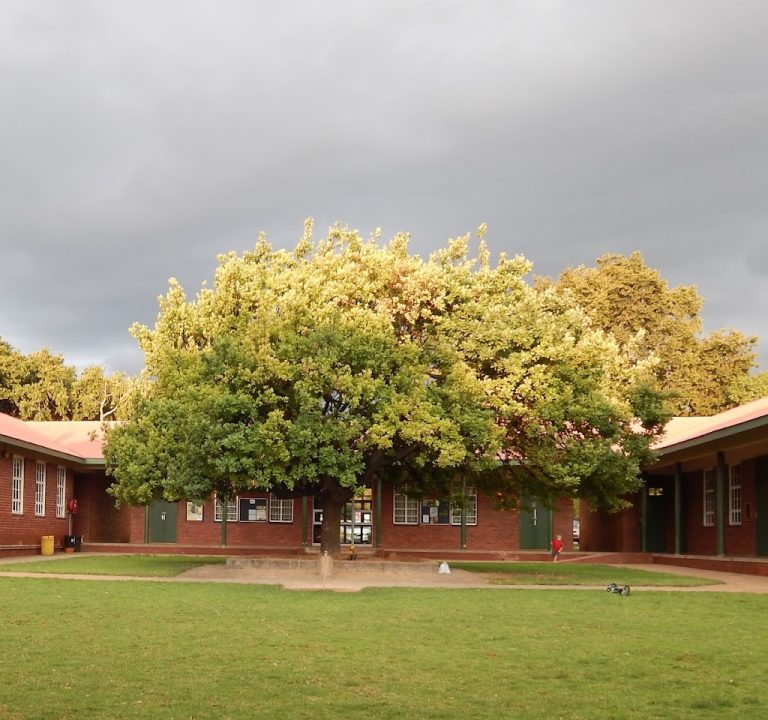
Deutsche Schule Kroondal is a Private educational institutions establishment in Kroondal, North West, South Africa
Kroondal
North West
0350
South Africa
Curriculum
Deutsche Schule Kroondal in Kroondal, North West, South Africa presents a holistic curriculum designed to nurture academic achievement alongside character development within a Christian framework. The school serves learners from early childhood through to upper primary, emphasising continuity of growth and personalised support as pupils progress through their educational journey. The campus highlights a strong commitment to multilingualism, a distinctive feature of the curriculum that shapes communication skills, cultural understanding, and global awareness.
At the foundation, the earliest learners enter Die Spatzennest, the school’s kindergarten for three-year-olds, where exploration and social-emotional development form the bedrock for later learning. This early stage is followed by Graad R, which concentrates on the essential emotional and academic skills foundational to a happy, balanced school experience and readiness for Grade 1. The emphasis throughout these early years is on fostering confidence, curiosity, and resilience while establishing routines and social competencies that support lifelong learning.
Graad 1–7 represents the core of the school’s primary programme. The curriculum aims to maintain a high academic standard by complementing the South African CAPS-aligned framework (with reference to the KABV curriculum), ensuring learners receive rigorous instruction alongside opportunities to extend their learning beyond the core syllabus. A notable feature of the programme is the introduction to a European language, German, which broadens linguistic horizons and supports cognitive development as part of a multilingual approach. This triadic language landscape—Afrikaans, German, and English—ensures learners engage with language in diverse contexts, fostering communication skills, cultural insight, and global competence.
Beyond core academics, the curriculum at Deutsche Schule Kroondal integrates diverse areas of study to cultivate well-rounded individuals. The school highlights language proficiency as a central strength, emphasising both the practical and cultural value of multilingual literacy. Students experience language development through the combination of Afrikaans, German, and English instruction, which serves to open doors to further study, travel, and professional opportunities.
The school’s distinctive subjects and initiatives extend into agricultural science and applied engineering perspectives, with explicit attention to sustainable food systems, mechanical problem-solving, and real-world projects. By weaving landwirthschaft and related technologies into the learning mix, learners engage in practical, forward-looking activities that connect classroom knowledge with contemporary industry and societal needs.
A broad learning ecosystem supports personal growth and extracurricular engagement. The curriculum is enriched through programmes and activities that encourage leadership, teamwork, and self-directed learning. Learners are invited to participate in cultural, artistic, and athletic endeavours, with sport and performing arts framed as essential components of a balanced education. The school’s culture emphasises community involvement, parent engagement, and service-mindedness, reinforcing the character education that underpins daily academic life.
Specialised pathways and support services are evident in the school’s approach to student welfare and blended learning options. The naskoolsentrum provides structured after-school care and supervision, ensuring a safe and nurturing space for learners to complete homework, engage in supervised activities, and receive additional guidance as needed. The presence of a well-supported learner-to-teacher ratio supports individual attention, enabling personalised feedback and targeted academic assistance.
Distinctive resources and partnerships further enhance the curriculum. The school has established collaboration with Goethe-Institut, facilitating access to high-quality German language instruction and cultural programming, which enriches the learners’ linguistic landscape and cultural literacy. Extracurricular and community-oriented offerings, such as the Karneval tradition, Basar, and fundraising activities, contribute to a strong sense of school identity and belonging, while also providing opportunities for civic engagement and social responsibility.
In sum, the curriculum at Deutsche Schule Kroondal blends core academic rigour with multilingual instruction, practical learning experiences, and a supportive, value-driven environment. The combination of Graad R to Graad 7 programmes, the Spatzennest, and the broader academy framework demonstrates a comprehensive approach to educating the whole child: academically capable, culturally aware, and socially responsible, prepared to face the challenges and opportunities of tomorrow.
Faculties and Branches
Deutsche Schule Kroondal in Kroondal, North West, South Africa presents a structured educational framework that blends academic rigour with a principled values-based environment. The school’s organisational layout places early childhood education alongside a strong primary programme, complemented by specialised language and culture initiatives designed to broaden pupil horizons within a Christian ethos.
Early childhood provision is organised to foster confident development from the outset. The Spatzennest serves as the kindergarten for three-year-old entrants, while Kroondal Kabouters offers an educational playgroup for mothers or grandmothers with toddlers. These components form the foundational stages of learning, emphasising social, emotional and cognitive growth in preparation for formal schooling.
Primary education spans from Grade R through to Grade 7. Grade R marks the onset of the foundational phase, with a focus on essential emotional and academic competencies that lay the groundwork for future study. The school commits to maintaining a high academic standard in Grade 1–7 by operating in addition to the Kubv curriculum framework, alongside the development of language proficiency. Pupils gain exposure to a European language—Duits (German)—as part of a multilingual approach that broadens communication skills and cultural understanding.
The institution emphasises a balanced, holistic curriculum. In addition to core subjects, programmes promote language acquisition, cultural literacy, and personal development. The campus model supports a learning environment where language-rich instruction, exposure to European language traditions and the integration of cultural activities contribute to a well-rounded education.
Beyond the classroom, the school highlights several departmental and programme areas that underpin student services and community engagement. The Goethe-Institut partnership provides access to world-class German language instruction and cultural programmes, reinforcing the school’s German language offering and international liaison. The Goethe Sertifikaat pathway is a recognised element of language enrichment within the school’s larger academic ecosystem.
Community and service remain central to the school’s identity. Activities and centres dedicated to parental involvement, spiritual development, and outreach projects reinforce the message that education extends into family and community life. The school’s Basar (fair) and Karneval celebrations exemplify occasions where families come together to support and celebrate the school community, while fundraising endeavours such as these underscore the collaborative ethos embraced by Deutsche Schule Kroondal.
Additional educational and support structures exist to extend learning opportunities beyond traditional classroom hours. The naskool (after-school programmes) provide a secure, structured environment where learners can complete homework, engage in supervised play, and participate in enrichment activities. These services contribute to continuity of learning and student wellbeing throughout the school day and into the afternoon.
Overall, the school’s faculties and branches are organised to deliver a cohesive educational journey—from early childhood through primary schooling—while offering language development, cultural exposure, and community engagement that together support academic achievement and character growth. For more information on current programmes and affiliations, the institution maintains detailed pages on its site, including dedicated sections for language certificates and community initiatives: Goethe Sertifikaat, Basar, and the broader Gemeenskap resources.
Registration Details
Deutsche Schule Kroondal, located in Kroondal, North West, South Africa, operates a multi-stage educational pathway that begins with the Spatzennest pre-school and extends through the early primary years (Graad R) to Graad 1–7. While the school’s public content emphasises its mission, values and programme offerings, specific registration steps, deadlines and fee information are not detailed on the site in a manner suitable for direct reproduction. Prospective families are advised to explore the school’s online resources for general information about entry points and the admission conversation.
The school frames its offerings around a trilingual context, combining Afrikaans, German and English to support learners’ language development and broader cultural understanding. For families considering enrolment at the transition points, the Graad R page describes the foundational aims of the early years, including the focus on emotional and academic skills necessary to prepare learners for Grade 1. The Graad 1–7 page notes the school’s commitment to high academic standards and additional language opportunities, including the German language, alongside the standard curriculum. These pages help families understand where a child might fit within the school’s structure and what educational pathway to anticipate.
Registration inquiries and movements between stages are addressed through the school’s central communications channels on the main site. While direct contact details such as telephone numbers or email addresses are not included in this directory entry, the site provides a official URL that families can use to access information, request admissions guidance, or begin the enquiry process. Interested parties should start at the main school website and navigate to the sections detailing the Spatzennest, Graad R, and Graad 1–7 programmes for context about entry points and progression.
Where to apply and how to obtain admission information can be explored through the school’s primary online presence. Potential applicants are encouraged to consult the homepage for overarching admissions information and to identify the most relevant programme pages for the learner’s age and grade level. The site’s structure includes dedicated pages for the various stages, which can aid in understanding the appropriate entry point and the general framework of the school’s registration conversations. Links to these sections may be found on the main site and related programme pages, such as those dedicated to Graad R and Graad 1–7.
For families seeking more specialised programmes or partnerships, the site also highlights opportunities within the Academy and associated initiatives, which may intersect with admissions considerations. Prospective registrants should review the site’s programme pages for Spatzennest (the preschool offering), Graad R (Foundation Phase), and Graad 1–7 (Primary Phase) to gain a broader sense of the entry options and the education framework before initiating contact with the school’s admissions team.
Contact and support channels are provided through the school’s official online presence. To begin an enquiry, access the main school website at the link below and follow the pathways to admissions or programme information.
Visit the school website for application and registration information: Deutsche Schule Kroondal
Additional programme pages available on the site include:
- Graad R
- Graad 1-7
- Lanternfees (informational context)
Sorry, no records were found. Please adjust your search criteria and try again.
Sorry, unable to load the Maps API.
Education and Resources in Kroondal, North West
Kroondal, a small town in the North West province of South Africa, sits within easy reach of a range of educational possibilities that serve families and learners at different stages. The local landscape typically features a mix of primary and secondary schools, alongside nearby colleges and training centres that extend opportunities for continuing education, vocational training, and life-long learning. The surrounding region commonly hosts institutions that cater to school-age pupils, adult learners, and those seeking to upgrade skills for employment or further study.
Primary and secondary schooling forms the foundation of education in the area. Schools generally provide curricula aligned with national education standards and offer a mix of core academic programmes alongside supportive services. In many communities, schools emphasise essential literacy and numeracy, departmental subjects such as sciences and humanities, and extra-curricular activities that support personal development. Where available, schools may also connect learners with guidance on next steps after completion of their secondary schooling, including information on further study or entry-level training opportunities.
Beyond compulsory schooling, the surrounding district includes further education colleges and technical training centres. These institutions commonly offer a variety of programmes at different levels, from introductory certificates to more advanced diplomas. Programme areas frequently cover practical trades, information technology, business administration, hospitality, health sciences, and creative arts. Flexible delivery options, including part-time study and short courses, help learners balance training with work or family commitments. In addition, some centres provide preparation courses that assist prospective students with admissions, literacy and numeracy development, and study skills.
Higher education options are typically accessible within a reasonable travelling distance from Kroondal. Prospective students can explore universities and regional campuses located in nearby towns, where degree programmes may cover fields such as engineering, education, natural sciences, social sciences, and the arts. For some learners, distance learning or blended formats are available, enabling engagement with university-level content while remaining based in the local area. Guidance services often accompany higher education provision, offering information on degree selection, financial aid where appropriate, and transfer or progression pathways.
Learning support and student services commonly found in the region include libraries with lending provisions, study spaces, and access to research databases or digital resources. Computer labs, science laboratories, and dedicated workshop facilities are frequently available to support coursework in STEM, technology, and applied disciplines. Counselling, career guidance, and academic tutoring are commonly provided to assist learners in navigating coursework, managing study pressures, and planning future study or employment pathways. Some institutions may also offer disability support services, language assistance, and examination accommodations where applicable.
Facilities and resources typically associated with educational environments in the Kroondal area encompass sports fields or gymnasia, recreation and social spaces, and on-site or nearby accommodation options for students attending regional campuses. In addition, access to safe and reliable transport links to partner institutions can ease daily commutes and participation in a broad spectrum of programmes. Community centres and learning hubs often collaborate with schools and training providers to host workshops, adult literacy classes, and weekend learning opportunities for families and individuals seeking to enhance skills.
Typical pathways for learners usually involve a staged progression. Registration and admission processes are commonly managed through the respective educational provider or through the provincial education department, with documentation such as proof of identity and prior educational attainment typically required. Students may start with foundational courses or entry-level certificates, then progress to higher-level diplomas or degree studies where available. Practical work placements, internships, or industry partnerships frequently support the transition from learning to employment, helping to build experience alongside theoretical knowledge.
Overall, Kroondal sits within a network of educational resources that prioritise accessible learning, practical skills development, and pathways to further study or meaningful employment. The combination of schools, training centres, libraries, and regional higher education links creates a supportive environment for families and learners seeking to advance education across stages and disciplines.