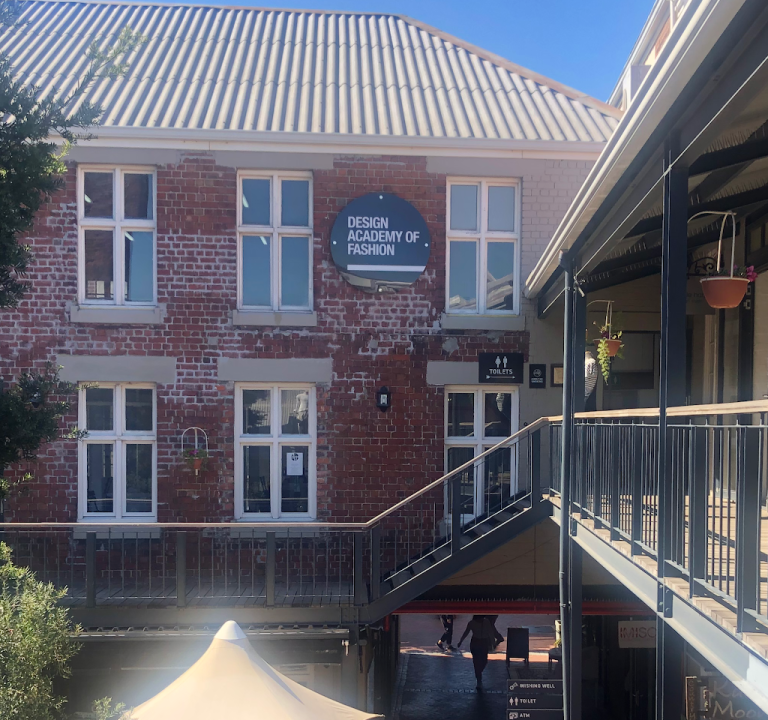
Design Academy of Fashion (Pty) Ltd is a Fashion design school establishment in Cape Town, Western Cape, South Africa
Cape Town
Western Cape
Woodstock, Cape Town
South Africa
Curriculum
The Design Academy of Fashion (DAF) presents a structured pathway that centres on developing each student’s unique potential within the fashion industry. The formal curriculum is anchored by the Bachelor of Fashion Degree, which guides learners from foundational exploration through to a professional culmination. In the early stage, the programme emphasises self-discovery and the fundamentals of fashion, inviting students to understand their own identity and how it informs creative practice. This prepares a solid base for later stages where collaboration, critical thinking, and industry relevance come to the fore.
In the second year, the emphasis shifts to collaboration and external engagement. Students work on projects in partnership with established industry names, providing real-world context for design decisions and problem solving. Notably, collaborations with Fields on menswear and Truworths on tailoring offer hands-on experiences that expose learners to commercial considerations and the realities of the fashion market. The school also notes an international dimension to its practice by highlighting its collaboration with Mohair South Africa, positioning students within broader sector networks beyond traditional classroom boundaries. This year is described as demanding, engaging learners in cohesive teamwork and resilience as cohorts navigate complex briefs and demonstrate growth as emerging professionals.
The final year centres on identity and impact. Learners are guided to develop a brand and a cohesive collection, integrating personal creative voice with industry value. The culmination focuses on translating individual vision into tangible outcomes that communicate relevance and potential within the fashion landscape. Across the three-year trajectory, the curriculum is described as designed to push development, encouraging students to articulate distinct viewpoints while gaining professional readiness.
DAF highlights a learning approach that prioritises small classes and meaningful lecturer–student interactions. Reduced class sizes enable personalised attention, enabling instructors to tailor guidance to each learner’s trajectory. The curriculum framework supports ongoing dialogue and active participation, fostering critical thinking and creative exploration. A distinctive feature of the programme is its emphasis on development that extends beyond design skills to include life skills and holistic well-being. A dedicated Life Skills Coaching course offers broader competencies necessary for professional contexts, while a Wellness Department provides resources to support both physical and mental health. Group development programmes and supportive structures further aim to ensure academic, personal and professional success for all students.
In addition to the degree programme, the academy offers a suite of Fashion Short Courses that complement the main curriculum. These short courses cover Pattern Making and Garment Construction, Fashion Design and Illustration, Adobe Digital Fashion Design, and Fashion Styling. Such offerings provide bite-sized, practically oriented learning opportunities for those seeking targeted skills, industry-relevant competencies, or a flexible pathway into fashion practice. The availability of short courses reflects DAF’s commitment to broadening access to fashion education and enabling continual skill enhancement for students and professionals alike.
Students at DAF may access information about the Bachelor of Fashion Degree through the programme prospectus and related admissions resources. While precise details on entry requirements, durations, or fees are not reproduced here, the materials emphasise a coherent, development-focused pathway designed to nurture individual voice within a collaborative, industry-connected learning environment. The inclusion of industry partnerships, mentorship-style guidance, and dedicated wellness and life skills support distinguishes DAF’s curriculum as one that seeks to embed employability and personal growth alongside creative achievement.
- Programmes/levels: Bachelor of Fashion Degree; Fashion Short Courses (Pattern Making & Garment Construction; Fashion Design & Illustration; Adobe Digital Fashion Design; Fashion Styling).
- Areas of study: fundamentals of fashion, design development, brand creation, collaboration with industry partners, menswear and tailoring contexts, and garment construction and illustration.
- Curriculum approach: development-focused, with small classes, high lecturer engagement, and project-based learning linked to industry briefs.
- Short courses/professional training: listed short courses available for practical skills enhancement.
- Online or blended options: not specified in provided materials.
- Student support and resources: Life Skills Coaching, Wellness Department, and Group Development Programmes.
- Distinctive resources: industry collaborations (Fields, Truworths, Mohair South Africa) and a curriculum designed to link personal identity with professional value.
Further information about course structure, admissions, and fee structures is available via the academy’s online resources and downloadable prospectus. The overall Curriculum at DAF is presented as a coherent blend of personal development, professional readiness, and industry-aligned practice, with a clear emphasis on enabling graduates to define and realise their unique contribution to the world of fashion.
For those seeking to explore designated resources or course specifics, prospective learners and interested readers can visit the Design Academy of Fashion website to access the Bachelor Prospectus, entry requirements, and current short courses listings.
Faculties and Branches
Design Academy of Fashion (DAF) operates as a specialised institution within Cape Town, Western Cape, South Africa, delivering a structured educational pathway centred on fashion. While the organisation does not publicly delineate multiple faculties in the conventional sense, its programmes are organised to support distinct areas of development within fashion education. The core provision is the Bachelor of Fashion Degree, complemented by a range of short courses designed to broaden practical skills and industry awareness. This arrangement enables the academy to guide students from foundational concepts through to professional practice, aligned with industry expectations.
The institution emphasises a cohesive student experience that integrates learning with real-world exposure. The curriculum is designed to develop each learner’s unique point of view, supported by small class sizes and a favourable lecturer-to-student ratio. This structure fosters personalised attention and meaningful mentorship, which are presented as fundamental elements of the DAF approach to education. The emphasis on individual development sits alongside collaborative, industry-aligned activities that situate learning within the fashion sector’s current practices and expectations.
Within the student services framework, several teams and departments operate to support wellbeing, development, and achievement. A dedicated Wellness Department exists to promote physical and mental well-being, while a Life Skills Coaching course is offered to equip students with broader competencies beyond technical fashion skills. Group development programmes and related support structures are also described as part of the student experience, reinforcing the institution’s commitment to thriving academically, personally, and professionally.
DAF emphasises strong connections with the fashion industry as part of its educational model. Throughout the programme progression, learners engage with industry partners on project-based work, enabling practical exposure to real-world contexts. Notable industry interactions include collaborations with Fields on Menswear and Truworths on Tailoring, illustrating how the academy integrates external partnerships into its design and production process. Furthermore, the academy is highlighted as one of only a small number of fashion schools globally to collaborate with Mohair South Africa, underscoring a commitment to diverse textile and material perspectives within the curriculum.
Campus location details are presented in general terms rather than as a network of separate faculties or campuses. The physical footprint of the institution is situational within Cape Town, with opportunities described for prospective students to visit the campus, attend open days, and participate in on-site experiences. Prospective learners can access programme information, entry requirements, and application processes through the DAF website, including the Bachelor of Fashion Degree brochure, fee structures, and admission materials.
For prospective students and partners seeking depth on how the design and fashion studies are structured, the website provides direct links to programme specifics, short courses, and industry-facing resources. While explicit departmental titles are not enumerated beyond the broader programme streams, the combination of degree offerings, fashion short courses, and supported student services collectively constitutes the institution’s academic and extracurricular framework. This arrangement situates Design Academy of Fashion as a focused centre for fashion education with a clear pathway from study to professional practice.
- About DAF and its programme philosophy
- Bachelor of Fashion Degree prospectus
- Entry requirements
- Online application
- Fee structure
- Patternmaking & Garment Construction
- Fashion Design & Illustration
- Adobe Digital Fashion Design
- Fashion Styling
Overall, the Faculties and Branches section of Design Academy of Fashion presents a programme portfolio and campus experience designed to nurture individual talent while grounding learning in industry relevance. The organisation’s stated priorities—small classes, targeted support, industry partnerships, and comprehensive well-being and life skills services—collectively describe a structured, practice-oriented environment for fashion education in Cape Town.
Registration Details
Registration for Design Academy of Fashion (Pty) Ltd in Cape Town, Western Cape, South Africa is structured around a clear application pathway designed to acquaint prospective students with the programme offerings and entry requirements. The institution emphasises a personalised approach to admission, aligning with its commitment to small class sizes and individual development. Prospective applicants are invited to engage with the Bachelor of Fashion Degree pathway and related short courses via the online and on-site information channels provided by the academy.
Overview of the application process is provided through dedicated sections on the DAF website. Key steps include consulting the programme information, reviewing entry requirements, and submitting an online application. The “Application Process” page outlines the sequence of actions required to complete the submission, while the “Entry Requirements” page details the criteria by which applications are assessed. These resources offer a structured route from initial information gathering to final registration, ensuring applicants understand what is expected at each stage.
For those ready to begin, the academy provides direct access to the online application through the Apply Now portal. The APPLY NOW link connects prospective students with the online system designed to collect applicant details, supporting documentation, and programme selections. This streamlined, digital approach supports a straightforward registration experience and aligns with the institution’s emphasis on accessible, industry-relevant education.
In addition to the online application, prospective students may encounter supplementary materials such as the Programme Prospectus. The Bachelor Prospectus is available in a dedicated section and can assist applicants in understanding the scope, structure, and aims of the Bachelor of Fashion Degree. Access to the prospectus complements the application by offering detailed programme insights to inform registration decisions.
Where to apply and whom to contact for further guidance are identified through the academy’s linked pages. The main application portal is accessible via the Apply Now link, while general information and campus engagement opportunities—such as Open Days and campus visits—are highlighted through the Open Day and Connect pages. These channels provide opportunities to engage with staff, current students, and industry partners, supporting informed registration decisions.
Eligibility and entry requirements are available on the dedicated “Entry Requirements” page, which outlines the standards used to assess applicants. While specific criteria are not restated here, the page should be consulted to confirm any programme-specific prerequisites and selection expectations prior to submitting an application.
Documents typically required for registration are not itemised in this overview. Applicants are advised to consult the official entry requirements and application process pages for precise information on documentation, deadlines, and submission methods. The design of the process focuses on clarity and accessibility, with digital submission options designed to streamline registration and reduce administrative friction.
Contact and support channels are provided through the academy’s online contact points. For those seeking direct engagement, options to visit the campus, attend open days, or connect with the admissions team are accessible via the site’s navigation. While telephone numbers and email addresses are not listed here, the website offers visible links to the relevant contact pages and online forms to request information or assistance.
In summary, registration at Design Academy of Fashion (Pty) Ltd is anchored by a structured online application pathway, supported by dedicated information pages on entry requirements and the admissions process. Prospective students are encouraged to consult the Bachelor’s prospectus for detailed programme insights and to utilise the Apply Now portal to initiate registration. Links to the application, prospectus, and admissions information are available on the official site: Design Academy of Fashion.
Sorry, no records were found. Please adjust your search criteria and try again.
Sorry, unable to load the Maps API.
Education and Educational Resources in Cape Town, Western Cape
Cape Town, a dynamic centre of learning in the Western Cape, offers a broad spectrum of educational opportunities for learners of all ages. The city is home to a range of institutions that support academic development, vocational training, and lifelong learning. Across urban and suburban areas, families can find accessible options that align with individual interests, goals, and budgets.
In terms of learning environments, the area hosts schools spanning primary, secondary, and post-secondary levels. Many schools provide a structured pathway from early schooling to matriculation, with programmes emphasising core literacy and numeracy alongside specialised subjects. For learners seeking broader preparation, secondary schools frequently offer career guidance and access to study support, as well as enrichment activities in the arts, sciences, and humanities.
Post-secondary options are varied and widely accessible. Universities and higher education colleges in the region typically offer a mix of undergraduate and postgraduate programmes across disciplines such as sciences, engineering, humanities, business, and health sciences. For those pursuing practical or technical routes, further education and training bodies provide diploma and certificate courses, often with industry connections to facilitate practical placements and real-world learning.
Learning support and student services are commonly available to assist learners at different stages of their education. These services may include tutoring programmes, academic advising, language support for non-native speakers, disability and accessibility services, mental health and well-being resources, and financial guidance. Many institutions also provide dedicated support for mature students, part-time learners, and international students, helping to navigate admissions, funding, and time management.
Facilities and resources commonly found in Cape Town contribute to a well-rounded educational experience. Well-equipped libraries, computer laboratories, specialised science and engineering laboratories, and theatres or performance spaces frequently feature on campuses. Sport and fitness facilities, including gymnasia, swimming pools, and outdoor fields, support a variety of physical education and team activities. Student accommodation is available in some areas, offering options from campus residences to privately managed housing, with considerations for safety, budgeting, and proximity to teaching venues.
Typical pathways begin with an informed choice of programme aligned to career aspirations. Registration or admissions processes generally involve submitting an application, providing academic transcripts, and meeting essential entry criteria. Some programmes may require diagnostic assessments, auditions, or interviews, particularly for limited-entry courses or professional programmes. Once enrolled, learners can expect access to timetables that balance lectures, seminars, laboratory work, and self-directed study. Progress is often assessed through coursework, examinations, and project work, with opportunities for feedback and adjustment throughout the programme.
Prospective learners and families are advised to explore official education portals and local institutions for up-to-date information on course offerings, admission timelines, and funding supports. Guidance can also be sought through school career offices and university or college student services units, which typically provide general advice on programme selection, prerequisites, and progression routes. Community and public libraries may offer study spaces, lending services, and workshops on study skills and digital literacy, contributing to a culture of continuous learning.
For those planning education within this area, a broad spectrum of pathways remains readily accessible. Whether pursuing foundational schooling, advanced university study, vocational training, or continuing education, Cape Town presents a resilient framework for personal and academic development, supported by a network of resources across facilities, services, and community partnerships. Learners and families are encouraged to research options, compare programmes, and map a flexible plan that reflects changing interests and future opportunities.
Additional information can be found through national and regional education portals, as well as through official institutional websites and local education authorities.