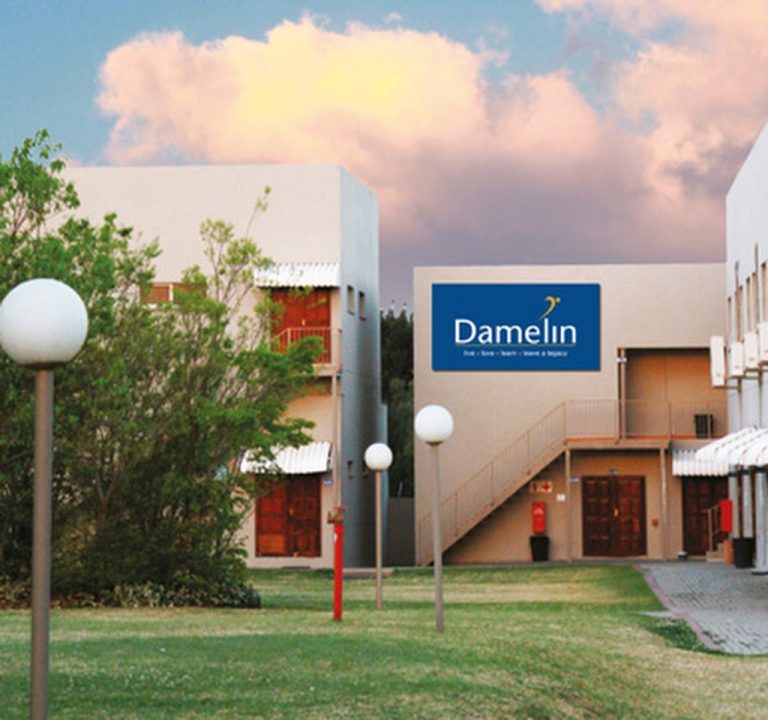
Damelin – Boksburg is a Private colleges establishment in Boksburg, Gauteng, South Africa
Boksburg
Gauteng
1459
South Africa
Curriculum
Situated within Damelin – Boksburg, the curriculum is designed to equip learners with industry-ready knowledge across a broad spectrum of qualifications. The programme mix encompasses traditional higher education offerings and focused vocational routes, aligning with the institution’s long-standing commitment to career-focused education. Students can engage with Higher Certificates, Certificates, Diplomas, Degrees, and a range of Short Learning Programmes, reflecting Damelin’s emphasis on adaptable pathways that recognise diverse entry points and career goals.
Across the faculties, the curriculum emphasises practical application alongside theoretical understanding. The Commerce faculty explores key business disciplines, finance, statistics, and ethical leadership, while the Humanities and Education strands foster critical thinking, communication, and social insight. The Science & Technology streams, alongside Information Technology and related disciplines, are structured to develop technical competence and problem-solving abilities. This integrated approach aims to produce graduates who are capable of contributing effectively in dynamic workplaces and in further study.
Learning is designed to be flexible, with study options that accommodate varying life schedules. The Damelin model supports full-time, part-time, and distance or blended learning formats, enabling students to balance studies with employment or personal commitments. This flexibility is reinforced by access to campus facilities and digital resources, which allow learners to tailor their study journey while benefiting from the academic rigour and support associated with a private higher education provider.
Within the curriculum, emphasis is placed on developing job-ready competencies. Courses are delivered by industry-expert academics who bring practical experience and current industry insights into the classroom. The intention is to blend theoretical foundations with real-world applications, fostering competencies such as problem-solving, teamwork, ethical decision-making, and effective communication. By aligning modules with industry expectations, the programmes anticipate the needs of employers and aim to enhance employability upon graduation.
To support progression, Damelin offers an environment that integrates core learning with additional resources and services. Students have access to a range of support mechanisms, including academic guidance, study skills development, and opportunities for practical exposure. Extracurricular activities and campus life contribute to the development of a well-rounded graduate, capable of navigating professional contexts with confidence. While specific course lists and entry requirements are not stated here, Damelin’s portfolio of qualifications is designed to cater to diverse academic backgrounds and career ambitions.
Distinctive learning resources accompany the curriculum, including digital and face-to-face delivery methods designed to enhance accessibility and engagement. The option to study via blended modes means that learners can continue developing knowledge and competencies outside traditional classroom settings, while still benefiting from the structure and resources of a campus environment. The institution’s emphasis on industry-aligned qualifications is complemented by articulation opportunities between different levels of study, enabling a logical progression for learners as they advance through certificates, diplomas, and degrees.
For prospective students directly researching Damelin – Boksburg, additional information about specific programmes, elective options, and professional training pathways can be explored on the broader Damelin site. Detailed programme descriptions, including existing Short Learning Programmes and elective courses, are available at the official Damelin programme pages: Damelin programmes. Prospective learners may also wish to consider the range of faculties and their respective fields, such as Commerce, Education, Science & Technology, and Humanities, when contemplating their curriculum journey at Damelin – Boksburg and campuses nationwide.
Faculties and Branches
Damelin – Boksburg operates within a broader national framework that groups its offerings into four primary faculties, each hosting a range of programmes designed to deliver career-focused education. The faculties provide a pathway for students to pursue diplomas, degrees, certificates and short learning programmes across diverse fields. The structure supports both face-to-face study on campus and blended or distance learning options, enabling learners to tailor their study journey to individual needs while remaining connected to campus resources and student services.
The Faculty of Commerce focuses on disciplines connected with business, finance, management and related sciences. It encompasses programmes in areas such as business administration, accounting, marketing, information systems and other commerce-aligned curricula. This faculty emphasises practical, industry-linked content designed to cultivate employability and leadership competencies within commercial environments.
The Faculty of Education concentrates on forming pedagogical skills and subject-specific knowledge to prepare learners for roles in educational settings. Programmes within this faculty emphasise educational foundations, curriculum development, assessment practices and leadership within learning environments, supporting students aiming to contribute to schools, training organisations and community education initiatives.
The Faculty of Science & Technology provides pathways aligned with scientific and technological disciplines. It covers programmes that integrate analytical thinking, problem solving and technological literacy, with an emphasis on preparing graduates for roles in sectors where science, technology and data-driven decision making are valued. This faculty supports learners undertaking qualifications that bridge academic study with practical application in industry and public services.
The Faculty of Humanities offers a broad spectrum of study that enhances critical thinking, communication and cultural awareness. Programmes in this faculty are designed to augment professional versatility across sectors such as media, communications, arts, humanities and social sciences, enabling graduates to adapt to a variety of career contexts.
Across these faculties, Damelin delivers programmes at multiple levels, from diplomas and certificates to higher certificates, undergraduate degrees and postgraduate options. The aim is to produce industry-ready graduates equipped with the knowledge and soft skills necessary to succeed in dynamic work environments.
Universities and private higher education institutions in South Africa commonly operate a network of campuses that contribute to a cohesive national offering. Damelin currently runs six campuses nationwide, a configuration that enables learners to access state-of-the-art facilities and services across key urban centres. Examples of these campuses include the Braamfontein campus in Johannesburg, the Randburg campus, the Menlyn campus in Pretoria, the Durban campus, the Overport campus, and the Cape Town campus. Each campus functions as a hub for teaching, learning support, student services and enrichment activities, while sharing the overarching Damelin curricula and quality assurance standards.
Prospective students considering Damelin – Boksburg can expect alignment with the institution’s broad structure: a recognised set of faculties offering relevant programmes, complemented by campus-based facilities and support services designed to enhance the student experience. While the Boksburg campus itself is not detailed in the current overview, its integration within Damelin’s national network suggests access to elective options, study support and resource provision similar to those described for other campuses. For more information on campus locations and programme availability, interested readers are encouraged to consult the Damelin campuses page at the official website: Damelin Campuses.
Registration Details
Dam elin – Boksburg, located in Boksburg, Gauteng, South Africa, forms part of a nationwide network of campuses offering career-focused higher and further education. Prospective students are advised to begin the registration journey through the institution’s central online pathways as outlined on the main Damelin site.
Overview of the application process is presented in general terms on the Damelin platform. Interested applicants can initiate their registration by accessing the campus-wide registration resource, which directs potential students to the relevant mid-year intake application path. A visible pathway for mid-year registration is available via the “Register for Mid-Year” link, providing access to the online application flow.
Where to apply: the primary application channel is available through the Damelin application gateway linked from the site. For convenience, prospective applicants may use the direct mid-year registration link visible on the site: Register for Mid-Year. The Damelin network also offers information about programmes and campuses through the main site, including the Boksburg campus page and the general campuses hub.
Notes on eligibility and documentation are kept deliberately general, in line with the content provided. The available materials emphasise the existence of a range of qualifications across higher education and further education, rather than prescribing specific entry requirements, deadlines, or forms for this particular page. Where a campus-specific requirement is published, it is advisable to consult the Damelin site’s programmes and campus sections for those details.
Applicants seeking clarity on programme options and entry routes may explore related pages on the Damelin site, such as the faculty pages and programme listings, to understand how Damelin structures its offerings and what general prerequisites may apply to different tiers of study. While precise documentation requirements are not enumerated here, typical registrations on such platforms are accompanied by standard identification and qualification records as advised by the relevant campus during the official application process.
Contact and support channels are available through the Damelin network for prospective students seeking assistance with registration. The main Damelin site aggregates campus-specific contact information and regional details, with further information accessible via the Campuses section. For reference, the Boksburg campus, along with other Damelin campuses, is featured within the nationwide campus listing, which can be accessed through the main site hub.
In summary, the Registration Details for Damelin – Boksburg direct attention to the central Damelin application pathway, emphasising the mid-year registration route as a practical entry point. Prospective students are encouraged to use the provided links to navigate to the appropriate registration page, review available programmes, and locate campus-specific information if further guidance is required.
Further information on Damelin programmes and campus availability can be explored at the Damelin homepage: Damelin, and the nationwide campus directory: Campuses. For programme details, the site also directs readers to relevant faculties and study areas, including Commerce, Education, Science & Technology, Humanities, and related qualifications.
Sorry, no records were found. Please adjust your search criteria and try again.
Sorry, unable to load the Maps API.
Education and Resources in Boksburg, Gauteng
Located in the East Rand of Gauteng, Boksburg offers a range of educational opportunities suited to different learner needs and career ambitions. The area hosts a mix of mainstream schools, further education campuses, private training centres, and access to higher education institutions in neighbouring centres. The landscape is characterised by a focus on accessibility, practical skills development, and pathways that connect school study with vocational, technical, or academic routes.
In terms of schools, Boksburg provides primary and secondary education across public and independent settings. Learners commonly progress through a school curriculum aligned with national and provincial standards, preparing for matriculation or further studies. Many schools emphasise core subjects alongside enrichment options such as information technology, arts, and physical education, creating a balanced foundation for future choices.
Further education and training are supported by local campuses and private training organisations that offer a variety of programmes. Typical options include National Qualifications Framework (NQF) aligned diplomas and certificates, apprenticeships, and specialisations in trades, business administration, hospitality, and creative industries. Flexible delivery models, including part-time study and block sessions, cater to learners who may be balancing work or family commitments.
Higher education access in and around Boksburg is enhanced by proximity to universities and university campuses in the broader Gauteng region. Prospective students often encounter a range of faculties such as sciences, humanities, engineering, and health sciences at nearby institutions, with admission processes that generally involve demonstrating academic eligibility, completing required documentation, and meeting any programme-specific prerequisites. Support services commonly focus on academic guidance, career planning, and assistance with learning strategies.
Learning support services are a notable feature in many local institutions. These may include tutoring programmes, study skill workshops, disability support, and language assistance where needed. Libraries are central to study life, offering access to print and digital resources, quiet study spaces, and researchers’ assistance. Digital literacy resources, computer labs, and data access facilities frequently complement traditional classrooms, supporting independent study and collaboration on projects.
Facility provisions commonly extend beyond classrooms to support a well-rounded student experience. Sports facilities such as basketball and netball courts, rugby and soccer fields, and gym spaces are often available, encouraging physical activity and team participation. Laboratories for sciences and technology courses provide practical environments for experiments and product development work. Accommodation options may be available on or near campuses for students relocating to the area, with housing decisions typically guided by institutional housing offices or advisors.
Typical learning pathways emphasise gradual progression and recognition of prior learning. Admissions processes in many institutions involve completing an application form, submitting academic records, and meeting programme-specific criteria. Some providers offer intake cycles across semesters or terms, enabling opportunities for transfers, bridging courses, or catch-up modules. Careers guidance resources, including information on study pathways and potential employment outcomes, are often accessible to help learners map a realistic trajectory from initial study to professional opportunities.
For families exploring education in Boksburg, local pages and official institution websites commonly provide up-to-date information on programmes, campus facilities, application windows, and student support services. While specifics may vary between providers, the available ecosystem generally supports a coherent journey from foundational schooling through to further education, tertiary study, and vocational training, with an emphasis on practical outcomes and community engagement. More information can be found through regional education portals and individual institution sites that cover Boksburg and surrounding areas.
- Supportive libraries with study spaces and digital resources
- Science and technology laboratories for hands-on learning
- Sports facilities and extracurricular activity opportunities