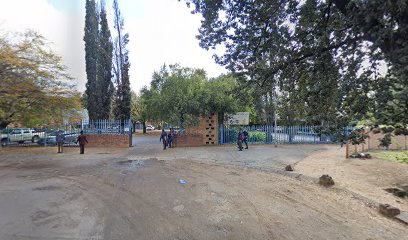
CTE Training Academy is a Education establishment in Sasolburg, Free State, South Africa
Sasolburg
Free State
1947
South Africa
Curriculum
CTE Training Academy in Sasolburg presents a diverse curriculum organised into practical skills strands that align with local industry needs. The offerings span Engineering Skills, Building Skills, Agricultural Skills, Computer Skills, and Business and Personal Skills, with additional areas that reflect occupational requirements such as Sewing and Security. Across these categories, the curriculum emphasises hands-on training, practical competency, and the development of workplace-ready capabilities suitable for entry into several trades and support roles within the South African economy.
Within Engineering Skills, learners engage with core trades and technical competencies designed to support immediate employment or further study. Practical modules touch on areas such as pumps and globe fitting, basic motor mechanics and motor repair, basic electrical appliances and cabling maintenance, welding and torch cutting, basic air conditioner systems maintenance, and alarm systems. These modules prioritise the real-world application of skills, enabling students to perform reliable, on-site maintenance and repairs in varied settings.
Building Skills form another central pillar of the curriculum, covering bricklaying, carpentry (finishing and roofing), painting, plastering, plumbing, tiling, and related finishing trades. The teaching approach appears to combine foundational theory with concrete, technique-driven practice to build confidence in craftmanship and to prepare learners for progression to more advanced tasks in construction-related environments.
Agricultural Skills compose a substantial portion of the programme mix, offering training in animal production (covering cattle, sheep, poultry and pigs), plant production focused on cash crops and vegetables, hydroponics, landscaping and garden design, and mechanical training such as tractor and implement operation. Forestry-related training (chainsaw and bush cutter) is also present, reflecting a broad approach to agricultural and rural livelihoods. This strand emphasises practical practices and operational know-how essential for farming, agribusiness, and related occupations.
Additional practical and professional skills are addressed through Computer Skills and Business Skills modules. Computer Skills prepare learners for contemporary workplace IT competencies, while Business Skills aim to equip individuals with foundational enterprise and entrepreneurial capabilities relevant to small businesses and vocational contexts. The inclusion of Sewing and Security indicates a broader suite of vocational options, supporting both personal development and employability across multiple sectors.
The academy’s curriculum is complemented by services that support skills development and strategic employment outcomes. External Skills Development Facilitation (SDF) is offered to identify skill gaps and to tailor programmes towards goal achievement, illustrating an approach that recognises the need for customised learning pathways. Related services, such as Certificate authentication and assistance with BBBEE and EE consulting, reflect a holistic view of professional development that extends beyond course delivery to recognise compliance, accreditation, and organisational transformation as part of career advancement.
Short courses and professional training form an integral part of the curriculum strategy. The breadth of the offering supports rapid upskilling and targeted attainment of practical competencies that can lead to immediate employability or progression into more structured training. The presence of registration options and quick access to programme information suggests an emphasis on accessibility and timely engagement for prospective learners and employers alike.
In terms of delivery and access, the site highlights a straightforward route to registering and enrolling, with contact points for further guidance. While online or blended learning formats are not explicitly stated on the pages reviewed, the emphasis remains on practical, hands-on instruction within the institute’s facilities. Learners may access information and guidance through the academy’s contact channels to clarify delivery formats, scheduling, and progression options.
Distinctive learning resources arise from the combination of the varied skill strands and the emphasis on applied learning. By integrating trades across Engineering, Building, and Agriculture with digital and business competencies, the curriculum positions graduates to meet local industry demands. The approach underlines practical problem-solving, operational proficiency, and readiness for the workplace, underpinned by guidance on external facilitation and alignment with broader development and compliance objectives.
Overall, the Curriculum at CTE Training Academy emphasises practical, trade-aligned training across multiple vocational domains, supported by facilitation services designed to optimise learner outcomes and employer relevance. This structure aims to produce work-ready graduates capable of contributing effectively in mining, hospitality, property, IT, engineering, teaching, finance, health and related sectors within South Africa.
Faculties and Branches
CTE Training Academy operates from its Sasolburg premises, located at 13 Harry Smith Street in the HTS Technical School Building. The facility serves as the organisation’s primary address for admissions, course information and all student services related to its programmes. Students and prospective learners can reach the academy through the listed office number and emails, with standard office hours observed from Monday to Thursday, 08:00–16:00, and Friday, 08:00–13:00.
Across its curriculum, the academy structures its offerings into clearly defined skill areas or “faculties” that group related training tracks and qualifications. These groupings reflect practical, industry-aligned pathways designed to equip learners with targeted competencies for employment or further study. The main sectors represented within the provided course listings include:
- Engineering Skills – A diverse set of practical technical disciplines focused on systems and machinery maintenance. Examples include Pumps & Globe Fitting, Basic Motor Mechanics: Motor Repair, Basic Motor Exhaust Repairs, Welding & Torch Cutting, Basic Electrical Appliances, Basic Air Conditioner Systems: Maintenance, Basic Electrical Cables: Maintenance, and Alarm Systems. This faculty emphasises hands-on workshop expertise and problem-solving in technical environments.
- Building Skills – A cohort of trades-related subjects aimed at construction and finishing trades. Topics include Bricklaying, Carpentry (Finishing/Roofing), Painting, Plastering, Plumbing, Tiling, Fencing, Brick/Block Making, Glass Fitting, and Road Repair Training. The focus is on practical craftsmanship, safety, and adherence to standard building practices.
- Agricultural Skills – Training centred on agricultural production and related technologies. Courses cover Animal Production (Cattle, Sheep, Poultry & Pigs), Plant Production (Cash Crops, Vegetable Cultivation, Landscaping and Garden), Hydroponics, Mechanical Training (Tractor & Implement Operator), and Forestry (Chainsaw & Bush Cutter). The faculty mirrors contemporary farming practices and farm machinery operation to support agricultural employment pathways.
- Other – A catch-all faculty that captures supplementary and demand-driven skills. Included under this umbrella are Computer Skills, Business Skills, Sewing, and Security. This grouping recognises non-trade but essential capabilities that complement technical education and support a well-rounded employability profile.
In relation to programmes and student services, the academy presents its courses in a way that aligns with practical outcomes and workforce needs. Programmes are described publicly as combinations of the above faculties or skill areas, offering learners a route from foundational training through to more specialised competencies. Information on registration and application processes is accessible via the site’s dedicated sections, including online registration and contact details, which enable prospective students to initiate their engagement with the academy. The Sasolburg campus thus acts as the central hub for enrolment, guidance on course selection, and related student services.
Additionally, the organisation maintains a presence through its broader site structure, including pages for “Courses” and “Services”, which outline specific offerings such as External Skills Development Facilitation (SDF), Employment Equity (EE) consulting, B-BBEE advisory services, and supplier/enterprise development programmes. While these services extend beyond conventional curriculum delivery, they reflect the academy’s holistic approach to skills development, enterprise growth, and community upliftment. For learners seeking pathways that combine technical training with enterprise or compliance insights, the Sasolburg campus provides the foundational access point and ongoing support.
Contact details and office hours are reiterated on the site’s contact pages, ensuring that information about the campus location, telephone line, and email channels remains readily available to current and prospective learners. The overall structure emphasises a practical, rails-to-rail progression from learning within the faculties to engaging in employment or further training opportunities.
Registration Details
Registration for CTE Training Academy in Sasolburg, Free State, South Africa is presented as a straightforward process designed to minimise waiting times and complexity. The academy promotes a quick online pathway that enables prospective students to initiate their enrolment with ease and security.
Application/registration process overview:
- Potential students start with the online registration, which is described as quick and easy. The initial step involves submitting basic information through the dedicated registration page.
- Once the online form is completed, a CTE consultant will contact the applicant to complete the registration. The stated response target is within 72 hours, allowing the applicant to progress promptly to the next stage.
- Following the initial contact, a consultant assists in finalising the registration, ensuring that the required details are correct and that the chosen programme aligns with the applicant’s goals.
Where to apply (online):
Direct contact and support channels (for queries, verification of documents, or to submit additional information):
- General enquiries: [email protected]
- Applications and registration coordination: [email protected]
- Document verification and related matters: [email protected]
- Telephone contact: 016 976 0760 ext. 212
Additional information available on the Contact page indicates office hours and physical location, which may assist applicants in arranging visits or calls if preferred:
- Address: 13 Harry Smith Street, Sasolburg, HTS Technical School Building, 1948
- Office hours: Monday to Thursday, 08:00–16:00; Fridays 08:00–13:00
- Office number: (016) 976 0760 ext. 212
Documents typically required, eligibility criteria, or specific deadlines and fees are not explicitly stated on the site. In keeping with the available information, prospective applicants are advised to use the online registration pathway and to contact the academy directly for personalised guidance regarding eligibility checks, required documentation, and any programme-specific prerequisites. The site presents a broad programme offering across engineering, building, agricultural, and computer/Business skills, suggesting that entry requirements may vary by course; inquiries should be directed to the academy’s registrations team for definitive guidance.
Additional support channels include the site’s inquiry form and the main contact page, which reinforce the accessibility of assistance during the registration journey. Applicants are encouraged to reach out through the provided email addresses or telephone line for timely help and clarification.
Sorry, no records were found. Please adjust your search criteria and try again.
Sorry, unable to load the Maps API.
Education and Educational Resources in Sasolburg
Sasolburg, positioned in the Free State, offers a varied landscape of educational options that cater to learners at different stages of their lives. The town sits within a broader regional network that supports primary schooling, secondary schooling, further education, and practical training. For families and individuals exploring local opportunities, the emphasis tends to be on accessible programmes, supportive learning environments, and a clear progression pathway from school to further study or the workplace.
In terms of schooling, Sasolburg typically hosts a range of primary and high schools that provide curricula aligned with national and provincial standards. Learners can expect a mix of subjects across core disciplines such as languages, mathematics, sciences, social sciences, and arts. The local schools commonly feature activities that promote holistic development, including sports, arts, and community service, alongside academic study. Support for learners may include remedial programmes, language assistance, and guidance services aimed at helping students navigate exam preparation and subject selection.
Beyond compulsory schooling, the area commonly includes technical and vocational education facilities that offer practical, career-focused courses. These institutions often provide programmes in fields such as engineering technology, information technology, business studies, and hospitality, designed to equip learners with foundational skills and recognised certifications. Training centres in Sasolburg may emphasise hands-on learning, work-ready competencies, and short courses that respond to local employment needs. Such options are typically suitable for those seeking a pathway into trades, apprenticeships, or further study.
Further education and training in the region may include local campuses or outreach partnerships that form part of a larger network across the Free State. These establishments generally offer diploma and certificate programmes, sometimes extending into diploma-level studies in specialised areas. Students may have the opportunity to combine theoretical instruction with practical labs and project work, supporting a stronger understanding of concepts and their real-world applications. Pathways are usually structured to enable progression to higher levels of study or direct entry into relevant industries upon completion of a programme.
Learning support and student services are commonly found across Sasolburg’s educational facilities. Guidance counsellors, career advisers, and academic tutors are typically available to assist with subject choice, examination preparation, and transition planning. Support may also extend to accessibility services, language assistance, and resources for learners with additional needs. In addition, libraries and media centres frequently serve as quiet study spaces and information hubs, offering access to textbooks, reference materials, periodicals, and digital resources.
Facilities and resources generally mirror national standards for learning environments. Libraries are equipped with study areas, computer terminals, and spaces conducive to independent study or group work. Laboratories for science and technology courses tend to be well‑furnished for practical demonstrations, experiments, and project work. Sports and recreation facilities, such as fields, courts, and gymnasia, are commonly available to support physical education and extracurricular activities. Some institutions may offer student accommodation options or partnership housing nearby, which can benefit learners relocating from other towns or provinces.
Admission and registration processes typically follow a straightforward framework. Prospective learners are commonly advised to verify eligibility, prepare required documentation, and meet any application timelines set by the institution or the relevant education authority. In many cases, admissions involve an application form, prior academic records, and, where applicable, placement assessments or interview steps. Once admitted, students usually receive information about tuition, fees, scheduling, and essential support services. Institutions often emphasise clear progression routes, enabling learners to plan successive steps—from certificates to diplomas, or from advanced diplomas to degree study—where available within the wider higher education continuum.
Overall, Sasolburg presents a practical and accessible education ecosystem for families and learners. The combination of primary and secondary schooling, technical and further education options, supportive services, and well‑equipped facilities supports a broad spectrum of educational ambitions. By exploring available programmes, speaking with guidance staff, and visiting local campuses or centres, learners can identify suitable pathways that align with interests, strengths, and long‑term goals.