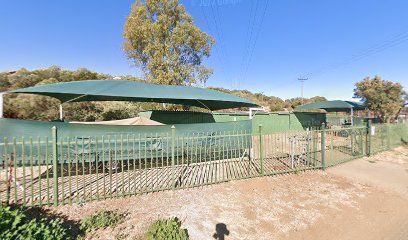
CTC COLLEGE is a Educational institutions establishment in Bloemfontein, Free State, South Africa
Bloemfontein
Free State
9300
South Africa
Curriculum
CTC College in Bloemfontein presents a flexible and technically focused curriculum designed to equip learners for real-world participation in the economy. The institution emphasizes programmes and levels that bridge foundational knowledge with practical application, aligning offerings with National Qualifications Framework (NQF) standards and SAQA guidance. A key feature across the college’s educational pathways is the commitment to accessible, high-quality training that supports progression within energy, construction management, engineering and related fields.
Education and training programmes are delivered through a combination of contact and online learning platforms. This blended approach enables learners to engage with study materials in a manner that suits diverse circumstances, whether through in-person sessions, virtual interactions, or a mix of both. Such flexibility is complemented by a structured assessment system that is SAQA-compliant, ensuring legitimacy and fairness in qualifications earned through the college’s programmes.
CTC College operates a comprehensive framework for recognising prior learning (RPL), allowing individuals to obtain formal acknowledgement for skills and knowledge gained through training or work experience. This helps capable learners to accelerate their progress and access appropriate credentials without unnecessary repetition of learning. The RPL pathway is integrated within the overall curriculum design, reinforcing the college’s aim to create opportunities for people from varied backgrounds to participate meaningfully in their chosen sectors.
In line with its mission to promote practical capability, the college emphasises applied learning across its schools, including the School of Energy, Construction Management and Engineering (SECME). The curriculum in these areas is geared towards developing the hands-on competencies that industry requires, ensuring graduates and trainees emerge job-ready and capable of contributing effectively to projects and organisational objectives.
Support for learners is a notable aspect of the curriculum environment. The learner facilitator ratio is maintained at a level that supports personalised guidance, while job placement outcomes are highlighted as a strength of the institution. The college also emphasises ongoing learner support services and career guidance as part of the educational journey, recognising that informed, strategic planning enhances both personal development and employability.
Distinctive resources within the curriculum offer include access to online learning tools and a pathway to the college’s prospectus, which outlines the scope of study and progression routes. The prospectus and related guidance materials aid prospective students in understanding what each programme entails, how it integrates with industry needs, and how it can lead to recognised qualifications on the NQF. The college’s stated commitment to continuous growth, integrity, and professional development underpins the curriculum design, supporting a learning culture that extends beyond technical proficiency to responsible and ethical professional practice.
From a broader perspective, the curriculum is framed by the college’s overarching objectives: to build an opportunity-rich environment where learners gain qualifications that meet sector demands and contribute to wider societal growth. The inclusion of online education, career guidance, and accessible information aligns with this objective, ensuring potential students can assess fit, plan their studies, and begin their career advancement journey with confidence.
While exact course lists, durations, or entry requirements are not provided in this overview, the curriculum is described as adaptable and aligned with recognised standards. The institution invites prospective learners to consult its prospectus for detailed information and to explore the broader range of educational pathways available, including certificates, diplomas and related professional training options that reflect current industry practices and market needs.
In summary, the curriculum at CTC College emphasises flexible, SAQA-aligned programmes supported by RPL, blended delivery, and strong learner support. It is designed to prepare individuals for skilled work in energy, construction management, and engineering sectors, while offering resources that facilitate career guidance, progression, and real-world application of knowledge.
- Blended learning with contact and online delivery
- SAQA-compliant assessment and moderation
- Recognition of Prior Learning (RPL)
- Group support through a 20:1 learner facilitator ratio
- Career guidance and access to the prospectus for detailed programme information
Faculties and Branches
CTC College presents a structured portfolio of faculties, schools and specialised centres designed to support diverse learner needs and career pathways. The organisation emphasises flexible training and skills development, with programmes offered through both contact and online delivery, underpinned by SAQA-aligned assessment and moderation. This framework ensures that qualifications meet national standards while remaining accessible to students from varied backgrounds.
Within the college, the primary academic divisions are articulated as distinct schools, each focused on specific sectors and competencies. The School of Energy, Construction Management and Engineering (SECME) concentrates on practical, industry-ready knowledge for those pursuing construction management and engineering-related careers. The School exists alongside complementary disciplines that broaden opportunities for learners in related technical and professional streams. Across these schools, programmes are designed to develop practical capabilities, critical thinking and problem-solving skills aligned with workforce demands.
Further specialised units include the School of Agriculture, Environmental Health and Safety Management (SAEHSM), which prepares students for roles in agriculture, environmental health and safety, and related governance contexts. The School of Real Estate, Property Development, Project Management, Architecture and Media (SRPPAM) addresses education and training in real estate, development, project coordination, architectural understanding and media applications. The School of Public Management, Leadership and Governance (SMLG) focuses on public service pathways, covering public policy, leadership, human resources and governance ethics. Together, these schools offer a broad spectrum of study options and career trajectories, with each unit emphasising applied learning and industry relevance.
Across the institutional structure, relationships to programme delivery are reinforced through key services and opportunities. Learner Facilitation is conducted within a framework that supports a ratio of 20:1 for learner facilitators, enabling attentive guidance and feedback. Assessment and Moderation services are SAQA-compliant to guarantee the legitimacy and fairness of qualifications. Recognition of Prior Learning (RPL) evaluations provide pathways for formal acknowledgment of existing skills gained through prior work or training, allowing flexible progression through the curriculum.
In addition to the core academic divisions, the college maintains a strong emphasis on career guidance and industry engagement. The institution promotes ongoing career advancement through a dedicated guidance platform, enabling personalised recommendations, resources and expert advice. Engagement with professional communities is facilitated through social media channels and a dynamic YouTube channel that disseminates career updates, industry insights and career development content. These services are designed to help learners translate academic study into employability and growth within their chosen sectors.
Facilities and access to education are supported by a distributed campus and contact network. The Head Office is located at 10 Van Blerk Avenue, Groenvlei, Bloemfontein, with a KZN Office in Unit 210 Umhlanga Ridge, Durban. This geographical spread supports onsite support, admissions and administrative services for students, while online learning platforms extend access beyond traditional campuses. The combination of online and in-person provision, together with a clear division into schools and centres, enables the college to serve a wide range of learners across South Africa.
Prospective students and stakeholders can view programme materials and prospectuses for broader context, and may contact the institution for further information on admissions, accreditation and career guidance. The structure described above aligns with the college’s mission to create “a world of opportunities” by offering high-quality, flexible education that supports participation in the economy.
- Head Office: 10 Van Blerk Avenue, Groenvlei, Bloemfontein, 9321
- KZN Office: Unit 210 Umhlanga Ridge, Durban, KwaZulu-Natal, 4319
Registration Details
CTC College in Bloemfontein, Free State, South Africa, presents its educational offerings under the banner of flexible training and skills development. While the site does not publish a step‑by‑step application checklist or explicit deadlines, the institution encourages prospective students to engage with the available resources and reach out for guidance on next steps.
Application and registration are positioned as a straightforward process supported by accessible information. Interested applicants are advised to consult the prospectus for an overview of the programmes on offer and to utilise the career guidance resources to inform decisions about suitable study options. The prospectus is available to view online here: Our Prospectus.
Where to apply or obtain further information is indicated directly through the college’s contact channels. Applicants should use the central contact options to initiate inquiries, request clarification about programmes, and receive personalised guidance on the admissions pathway. The primary contact details for the Head Office are listed as follows: 10 Van Blerk Avenue, Groenvlei, Bloemfontein, 9321, South Africa. Telephone: +27 81 573 9251. Email: [email protected]. A KZN office is also listed for regional inquiries: Unit 210 Umhlanga Ridge, Durban, KwaZulu-Natal, 4319.
For ongoing updates and guidance, the college invites prospective students to engage with its career guidance resources and to explore related information via the site, including the Careers Update page: Careers Update. This area emphasizes personalised recommendations and resources designed to assist in making informed educational and career choices.
In addition, a general View of Our Schools and various programme areas are accessible online, including references to the School of Energy, Construction Management and Engineering (SECME) and related schools. While detailed admission requirements are not explicitly enumerated on the page, the site indicates SAQA‑compliant assessment and accreditation status, which may inform the eligibility framework for certain qualifications.
- Contact the Head Office: 10 Van Blerk Avenue, Groenvlei, Bloemfontein, 9321, South Africa. Tel: +27 81 573 9251. Email: [email protected].
- Visit the prospectus for programme overviews: Our Prospectus.
- Explore career guidance resources: Careers Update.
Summary: Registration at CTC College is positioned as an inform‑and‑inquire process, supported by accessible documents and guidance channels. Prospective students are encouraged to consult the prospectus, utilise the career guidance tools, and contact the college directly to obtain clarification on eligibility, required documents, and the exact steps to commence enrolment.
Further information, including any potential forms or deadlines, is best obtained by contacting the college’s head office or visiting the site’s resources, ensuring suitable programme alignment and the appropriate registration route.
Sorry, no records were found. Please adjust your search criteria and try again.
Sorry, unable to load the Maps API.
Education and Educational Resources in Bloemfontein
Bloemfontein, situated in the Free State of South Africa, offers a diverse landscape of educational opportunities for learners of all ages. The city hosts a range of institutions that support academic achievement, practical training and personal development, with resources designed to assist families in navigating the education pathway from early schooling through to higher education and beyond.
Within the schooling sector, learners typically encounter a mix of public and private primary and secondary schools. These institutions commonly provide foundational curricula aligned with national standards, preparation for national examinations, and a focus on holistic development. Depending on the school, there may be additional programmes emphasising language learning, science and mathematics, arts, sport and community engagement. In many cases, schools also offer after-school activities, transport arrangements and access to guidance on subject choices and career planning.
Higher education and post-school options in Bloemfontein comprise universities, campuses of larger national universities, and specialised training centres. These venues deliver a broad spectrum of programmes across faculties such as natural and social sciences, engineering, business, humanities and health sciences. In addition to degree courses, many institutions provide diplomas, certificates and bridging programmes intended to support progression for learners transitioning from school to higher education or to the world of work. Vocational and technical training is commonly emphasised through dedicated centres that focus on practical skills, apprenticeships and certified trainings.
Learning support and student services are a recognised component of the educational landscape. Libraries and information centres in Bloemfontein typically offer lending services, research guidance and study spaces, often equipped with computer laboratories and high-speed internet access. Campuses frequently provide academic tutoring, writing support, language assistance for non-native English speakers, and disability services to enable access to learning for a wide range of abilities. Counselling, career advice and personal development programmes may also be available to help learners explore options, make informed decisions and manage the transition between stages of education.
Facilities and resources commonly found across Bloemfontein’s educational venues include purpose-built laboratories for science and engineering, computer suites, and dedicated spaces for arts, media and design. Sports and fitness facilities, including courts, halls and outdoor playing fields, are frequently available to support intramural and competitive activities. Accommodation for students, where offered, ranges from on-campus residence halls to approved shared housing, with information and support services to assist with applications and tenancy matters. The city’s educational environment is generally designed to encourage collaboration, research engagement and community involvement.
Typical routes into education in Bloemfontein follow established pathways. For school learners, registration usually occurs through the relevant school or district authority, with progression determined by assessment results and subject choices. Prospective university and college students often engage in a structured admissions process that may involve submission of academic records, entrance assessments or auditions, and adherence to application timelines. For international learners, additional steps such as visa considerations and language proficiency requirements may apply. Throughout these routes, prospective learners are advised to seek guidance from schools, tertiary institutions and dedicated support services to understand prerequisites, funding options, and deadlines.
Overall, Bloemfontein presents a comprehensive and practical array of educational resources aimed at enabling learners and families to explore opportunities, access essential support, and pursue tailored learning experiences that align with individual goals and interests.
- Public and private schools offering primary and secondary education with supportive programmes.
- Universities and college campuses delivering undergraduate and postgraduate studies, diplomas and certificates.
- Specialised training centres providing vocational and technical qualifications.
- Libraries, computer labs, laboratories, and dedicated study spaces for academic work.
- Student services including tutoring, counselling, language support, and disability services.
- Accommodation options and sports facilities to support campus life.