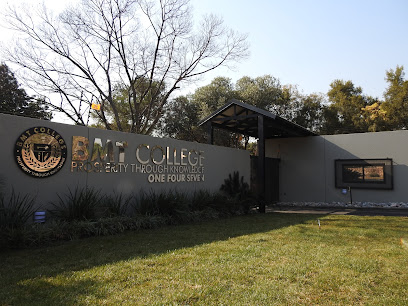
BMT College is a Colleges establishment in Chartwell, Gauteng, South Africa
Chartwell
Gauteng
2191
South Africa
Curriculum
BMT College in Chartwell, Gauteng delivers flexible, fully online qualifications designed to fit the needs of busy professionals. The curriculum centres on practical, career-ready study within an accredited framework, with qualifications registered and recognised by national bodies. Programmes are structured to combine accessible online delivery with robust academic support, ensuring students can progress without disrupting their professional commitments.
The college offers three primary qualification levels, all available through an online pathway: Higher Certificates, Diplomas, and Advanced Diplomas. Higher Certificates provide an entry route into business-related study, Diplomas offer more comprehensive coverage of core business and human resources concepts, and Advanced Diplomas provide a specialised, one-year NQF level 7 qualification for focused, professional development. Details of specific Advanced Diploma options include Business Management and Human Resources Management, each linked to relevant SAQA IDs. For prospective students, the emphasis remains on relevance to the contemporary business environment and on achieving outcomes that support career progression.
Areas of study are anchored in business and human resource education, with curricula designed to equip learners with practical skills and professional competencies. The online delivery model supports learning that aligns with workplace realities, emphasising applied knowledge, project work, and research components that connect theory to real-world situations. The curriculum is structured to foster critical thinking, problem-solving, and decision-making in workplace contexts, while maintaining alignment with South African qualifications standards through CHE and SAQA accreditation.
Curricular delivery relies on a Virtual Campus that mirrors a full campus experience, including ongoing lecturer access and peer interaction. The learning environment is designed to prevent isolation, ensuring that students receive timely feedback and guidance. A notable aspect of the programme design is the inclusion of a research component within the Advanced Diploma streams, providing learners with opportunities to pursue industry-relevant inquiry and analysis as part of their qualification.
Short courses and professional training form a valued component of the offering. All qualifications include bonus access to selected short courses, enriching the curriculum with bite-sized, career-enhancing learning opportunities. These short courses serve as introductory or supplementary modules that can bolster understanding and employability without extending the overall programme duration.
Online and blended learning options are central to BMT College’s approach. The institution advertises flexible study arrangements that enable learners to start and progress “anytime” and to study wherever they are, with no examinations required—only assignments. This structure is complemented by 24/7 Virtual Campus access, ensuring that essential resources, coursework, and lecturer support are available around the clock. The learning model emphasises self-paced progression while maintaining a clear assignment schedule aligned with intake cohorts.
Support services play a pivotal role in the curriculum experience. The college highlights a high level of personal attention, with an average student-to-lecturer ratio of 80:1, facilitating easier access to lecturers and more immediate assistance. Dedicated lecturer support and student services are integral to the curriculum, as is access to prescribed e-textbooks and online study guides. This combination of resources aims to support completion rates and overall outcomes, reflecting the institution’s emphasis on throughput and graduate success.
Distinctive learning resources include online study guides, e-textbooks provided as part of the programme, and an integrated research component within relevant qualifications. The platform-based delivery ensures that students can engage with materials, submit assignments online, and access comprehensive academic resources without geographical constraints. As additional value, the option to order printed study guides exists, along with the possibility of accessing financial and funding resources to support uninterrupted study, underscoring a holistic approach to both learning and student welfare.
Overall, the curriculum at BMT College is characterised by its flexible, online-first design, accredited status, and a commitment to practical, career-ready education. Prospective learners can explore the available qualifications and related resources on the college’s website, including detailed information about Advanced Diplomas, Diplomas, and Higher Certificates, as well as the associated fees and funding options.
Faculties and Branches
BMT College operates as an accredited, private higher education institution delivering fully online programmes. Rather than a traditional campus structure, the college presents two main areas of academic focus aligned with its specialised provision in business and human resource education. These areas function as the two central faculties guiding curriculum development and assessment: the Faculty of Business Management and the Faculty of Human Resources Management. Each faculty concentrates on practice‑based qualifications designed for working professionals seeking flexible study options.
Within these faculties, BMT College offers a range of nationally recognised qualifications at different levels. The portfolio comprises Advanced Diplomas (NQF level 7), Diplomas, and Higher Certificates. These qualifications are designed to be career‑relevant and feature a practical emphasis, with delivery conducted entirely online. Entry requirements vary by programme, but the institution emphasises accessible pathways for busy learners who require study that fits around work commitments.
The learning environment is centred on a Virtual Campus, described by the college as a world‑class online study platform. This Virtual Campus ensures that students benefit from continuous access to learning resources, lecturer support, and peer interaction, so the sense of campus life is maintained despite the absence of physical classrooms. The online delivery model supports a high degree of flexibility, enabling study from any location and at any time.
Programme administration and student services are structured to support target outcomes for employed professionals. The college highlights its focus on practical skills and career readiness, with accreditation and recognition underpinning qualification value. The study experience is complemented by dedicated lecturer support and structured assignment schedules, designed to align with the requirements of each programme intake.
In terms of the physical footprint, BMT College does not advertise multiple on‑site campuses or branches. Instead, it positions its core facilities around the Virtual Campus and digital resources. This approach is described as offering accessible and affordable study options, with flexible payment plans and external funding avenues available to help learners finance their qualifications.
Student services emphasise personal support and straightforward administration, including guidance on funding options such as organisational sponsorship and private financing. The college also notes collaboration with external financing and funding brokers to assist prospective students in assessing and securing suitable financial arrangements, thereby reducing barriers to entry for potential applicants.
For prospective students seeking information about academic programmes and progression, the college provides detailed course notes and official documentation online, including prospectuses and admission requirements. While there are no explicit references to additional regional campuses or centres, the online delivery model ensures nationwide access across Gauteng and beyond, aligning with BMT College’s mission of empowering professionals through flexible, accredited education.
Further information about faculties, programmes and student support can be found via the university’s official site: BMT College.
Registration Details
Registration at BMT College, located in Chartwell, Gauteng, South Africa, is presented as an online process designed to fit the needs of busy professionals. The institution emphasises flexibility, allowing prospective students to begin studies at any time through its Virtual Campus, with a focus on practical, assignment-based learning rather than examinations. The information available indicates that admissions are handled via an online workflow, with clear steps to initiate registration and confirm eligibility.
The primary entry point for prospective learners is the online registration system, which invites applicants to register for the upcoming intake and to access essential documents. Notably, the site highlights that registrations close on 27 February 2026, and it includes a prominent call-to-action to register now. The online registration pages provide direct access to the registration portal and related resources, facilitating a streamlined start to the enrolment process.
Where to apply and how to proceed:
- Register Now – the main entry point for online registration, with ongoing prompts to commence the process and complete required steps.
- Download Registration Forms – access to forms that may support the submission process, subject to the institution’s current requirements.
- Download Prospectus – access to the college prospectus for detailed programme information, entry expectations, and academic policies.
- View admission requirements – guidance on eligibility criteria used during processing of registrations.
- View Study Fees – information about fees, funding options, and payment plans that support the registration decision.
Eligibility and entry requirements are described in connection with the admission requirements link. The information presented indicates that eligibility is assessed during the processing of the online registration, and readers are encouraged to consult the admission requirements page for specific criteria. The site does not appear to publish a separate, static admissions checklist in this section, and it emphasises a process-based assessment rather than a single set of immutable prerequisites.
Documents typically required are not exhaustively listed in this section, but the presence of a dedicated prospectus and registration forms suggests that standard registration documentation (as outlined in the prospectus) would be requested during the application process. Potential applicants should review the prospectus and the registration forms for the precise documentation needs, and utilise the online registration portal to manage submissions and tracking.
Support and contact channels are provided for prospective students through the online platform and a WhatsApp line. The prospectus download page notes the availability of student advisers via WhatsApp, enabling direct guidance during the registration journey. This channel is intended to assist applicants with questions about eligibility, the process, and study options.
Additional considerations highlighted within the registration framework include a note that online registration assessments eligibility during processing, and a reminder that study plans, policies, and fees are inherited from the prospectus, which should be consulted to ensure alignment with personal study goals and funding arrangements. The overall emphasis remains on a flexible, fully online experience with accessible administrative support throughout the registration and study period.
Sorry, no records were found. Please adjust your search criteria and try again.
Sorry, unable to load the Maps API.
Education and Resources in Chartwell, Gauteng
Chartwell, a well‑established residential area in Gauteng, offers a diverse range of educational options and supporting services that cater to learners across multiple stages. The local landscape commonly includes primary and secondary schools, further education colleges, and access to university campuses in nearby urban centres, providing pathways for both general schooling and specialised studies.
Within the schooling sector, residents typically encounter a mix of public and independent institutions. Schools in the wider area emphasise core academic foundations alongside a broad offering of extracurricular activities. Many grade levels are supported by dedicated teams that focus on holistic development, including language acquisition, mathematics and science literacy, arts, and physical education. Contemporary curricula often integrate technology to enhance learning, while assessment practices aim to recognise progression and inform targeted support.
For post‑school opportunities, vocational and technical training facilities are commonly available. Local colleges and training centres tend to provide programmes spanning practical trades, business studies, information technology, and healthcare support. These establishments frequently offer short courses, certificates, diplomas, and entry‑level qualifications designed to respond to labour market needs and to bridge transitions from secondary education to employment or further study.
Higher education access is typically anchored by nearby universities or campus configurations within reasonable commuting distance. Prospective students can expect a range of undergraduate degrees, postgraduate options, and professional programmes in disciplines such as engineering, sciences, humanities, and commerce. Admissions processes generally require completion of prior schooling credentials, with selection criteria varying by institution and programme. Guidance on applications is often available through student services or careers offices at constituent institutions, alongside general information provided through local education authorities and websites.
Learning support and student services play a notable role in Chartwell and its environs. In many institutions, learners can find services designed to assist academic achievement and personal well‑being, including tutoring, study skill development, language support, counselling, and learner adjustment programmes. Educational centres frequently offer admissions guidance, bursary information, and accessibility resources to accommodate diverse needs and backgrounds.
Facilities commonly found in the area include well‑stocked libraries with quiet study zones, computer labs, science and vocational laboratories, and dedicated workshop spaces. Sports complexes, gymnasia, and outdoor fields support physical education and competitive teams, while drama studios and music rooms encourage creative pursuits. Student accommodation tends to appear near tertiary institutions or within commuter hubs, with options varying from on‑campus housing to private rentals that suit different budgets and family circumstances.
Typical pathways for learners in Chartwell begin with completing foundational schooling and progressing to senior certificates or equivalent qualifications. From there, pathways may include enrolment in a recognised college or technical institute, an application to a public or private university, or entry into supported apprenticeships and internships. Guidance materials are often available through schools and community education providers, outlining required documentation, registration windows, and anticipated timelines in broad terms.
- Types of institutions: primary and secondary schools, independent schools, further education colleges, vocational and technical training centres, and nearby universities.
- Typical programmes: general curricula, specialised streams, IT and business studies, engineering, sciences, humanities, and professional qualifications.
- Support and services: tutoring, language and study skills support, counselling, accessibility services, and careers guidance.
- Facilities: libraries, laboratories, computer rooms, sports and recreation facilities, arts and performance spaces, and student accommodation options.
- Pathways: school completion, college or technical training, university entry, and vocational/apprenticeship routes with guidance from institution portals and local education authorities.
Overall, Chartwell serves as a practical hub for education in Gauteng, balancing available resources with accessible opportunities designed to support learners and families through each stage of their educational journey.