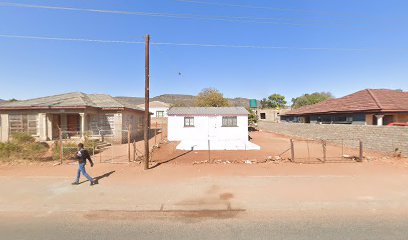
BLC Academy Campus is a College of agriculture establishment in Dzanani, Limpopo, South Africa
Dzanani
Limpopo
0955
South Africa
Curriculum
BLC Academy Campus in Dzanani, Limpopo presents a practical, industry-aligned curriculum designed to equip learners with the skills required across agriculture, food processing and clothing manufacturing. The programmes are structured to address value-chain needs, emphasising hands-on learning, workplace applicability and entrepreneurial capability within South Africa’s skills development framework.
Across its offerings, the campus highlights a blend of qualifications, skills programmes and short training initiatives. The curriculum is delivered through multiple formats to accommodate different learning preferences and work arrangements, including hybrid training that combines classroom theory with practical workplace experience, as well as traditional classroom learning and onsite practical sessions. This approach ensures learners gain both the theoretical understanding and the real-world competencies demanded by employers.
Learning pathways span several specialised areas:
- Clothing Manufacturing: An academy and factory-based focus, featuring classroom theory, practical production training, and retail skills within an integrated operational environment. The programme emphasises fabricating clothing with attention to industry standards and interactive development of design, production and retail competencies.
- Food Processing: Training that covers baking, confectionery and the preparation of specialised health foods. Practical sites, such as anchor bakeries and partnered outlets, provide hands-on experience in product preparation and quality control. The division also covers meat processing techniques, including primal cuts and deboning where relevant to the curriculum.
- Agriculture: Comprehensive value-chain support, from pre-production planning and funding to post-harvest handling and marketing. The curriculum integrates extension services, mechanisation, risk management and market access strategies to prepare learners for agro-industrial roles or entrepreneurship in rural contexts.
Short courses and professional training form another pillar of the curriculum. These offerings include specific skills programmes and accredited qualifications aligned with recognised bodies. The learning pathway is supplemented by industry partnerships and practical site learning to reinforce competencies in real-world settings. Where applicable, courses are described as Nationally recognised qualifications across multiple industries, with emphasis placed on applicable trade and occupational standards rather than generic instruction.
Distinctive resources and learning environments include:
- In-house practical sites and factories, such as the clothing workspaces and agriculture facilities, enabling learners to observe and participate in authentic production processes.
- Anchor sites for industry-linked training, for example bakery operations and agro-processing facilities, that connect learners with real businesses and community partners.
- Structured learning pathways that incorporate mentorship and coaching components, aligning with the campus’s broader emphasis on development and sustainability in learner outcomes.
Professional development and support services accompany the curriculum to assist learners and organisations in achieving goals. Training delivery incorporates hybrid formats and on-site practical learning, ensuring flexible access to skills development. The curriculum is complemented by advisory and support services relevant to workplace learning, enabling participants to progress toward further studies or immediate employment opportunities.
Blended options and online components are framed as future developments within the provider’s broader strategy. While current emphasis rests on hybrid and onsite learning, the plan emphasises online interventions to extend access and enable ongoing engagement with learning resources beyond the physical campus.
For prospective learners and partners exploring the Dzanani campus, the curriculum is designed to be adaptive, industry-informed and outcome-focused. It seeks to deliver practical competencies that translate into improved employability, the capability to contribute to local value chains, and the potential to establish or grow small businesses within agriculture, food production and clothing sectors. Details on specific programmes, entry requirements and duration are provided through official programme information and the campus’s communications channels, with guidance offered by staff and programme coordinators.
Further information about programmes and how they connect to regional development can be found through the main BLC Academy platforms and regional contact points. Interested readers can consult the main site for overview pages and related services at https://www.blc.education/.
Faculties and Branches
BLC Academy Campus in Dzanani, Limpopo operates as part of a broader South African skills development network centred on Agriculture, Food Processing, and Clothing Manufacturing. The organisation presents its programmes through multiple faculties or service areas, each aimed at building practical expertise and industry readiness. While the campus itself emphasises hands-on learning, the overall model integrates classroom instruction, onsite experiential training, and project-based activities across its specialist divisions.
Within the framework of its training development activities, BLC identifies key focus streams that function as faculties or training divisions. These include:
- Agriculture — encompassing comprehensive value chain support services that cover pre-production, production, postharvest handling, and marketing. Students engage with crops, extension services, mechanisation, food safety, and related business development aspects. Practical learning frequently occurs at dedicated sites such as the BLC Practical Site, anchored at Anchor Farm, which provides a full value chain experience from planning to harvest and distribution.
- Food Processing — detailing programmes that span baking, confectionery, and specialised health foods. The division also oversees meat processing training and related skills in primal cuts and deboning, with practical sites including the anchor bakery in Biaba (Makhado Municipality) that serves the local community and collaborates with nearby retailers. A separate specialised foods initiative includes production of kimchi and various forms of sauerkraut, positioned for higher-end markets and online platforms.
- Clothing — described as a Clothing Academy and Factory operation, merging theoretical instruction with practical production, retail skills, and ongoing research and development. The facility is located within an industrial park setting, enabling integrated factory operations alongside classroom teaching.
These faculties are designed to align with nationally recognised qualifications and QCTO programmes, including Training and Development Practitioner, Sewing Machine Maintenance and Repair Technician Assistant, Pattern Grader, Sewing Machine Operator and Mechanic Operator, OHS Training, and Waste Management. The programmes are delivered through a mix of hybrid training, classroom learning, and onsite practical sessions, with ongoing emphasis on flexibility to meet industry needs.
In addition to the core training streams, BLC offers consulting services that support Skills Development Planning, WSP and ATR submissions, BBBEE and Employment Equity consulting, business incubation, and mentorship. This consulting layer complements the faculties by helping learners and organisations navigate regulatory requirements, funding pathways, and market access.
Branch locations and practical sites reinforce the Centre’s regional reach. The Limpopo Office is based in Dzanani, while a dedicated bakery and related facilities operate in Biaba, Makhado. The National footprint is complemented by a Gauteng presence and distributed training activities, underscoring the organisation’s commitment to accessible skills development across South Africa. Details about specific campuses and contact points are available via the main website, which also hosts direct links to programme information and enrolling options.
Together, these faculties and branches support a cohesive student experience that blends theoretical learning, practical application, and industry engagement. Prospective learners and partner organisations can explore the breadth of programmes and services through the official site: BLC Academy.
Registration Details
Registration for BLC Academy Campus in Dzanani, Limpopo, South Africa is described from an external observer’s perspective as a process anchored in BLC Academy’s broader mandate to provide accredited training and skills development. The campus forms part of a network that emphasises practical learning across agriculture, food processing, and clothing manufacturing, with a focus on accessible, employee-friendly training pathways. Prospective learners are encouraged to explore the organisation’s offerings and initiate engagement through the official channels provided on the website.
The registration or application process is presented as an overview rather than a sequence of specific, time-bound steps. Interested individuals are advised to begin by identifying suitable programmes through the organisation’s service sections, which highlight QCTO-accredited pathways and related qualifications. Information on how to apply is connected to the general contact and inquiry forms rather than standalone online application portals. This aligns with the provider’s model of initial guidance followed by tailored next steps after initial consultation.
Where to apply: the primary route to begin engagement is through the BLC Academy’s contact resources. The main contact hub offers opportunities to Get Started and to Learn More About the organisation, with direct links to the general enquiry mechanisms. Prospective learners should use the official contact page to initiate communication, request further details, and obtain guidance on available programmes relevant to the Limpopo region, including the Dzanani campus. The website provides linked pathways to learn more about programmes and to reach out for assistance.
Eligibility and entry requirements are described in general terms on the site, reflecting the range of programmes offered across several sectors. Specific entry criteria for individual courses are not itemised within the general overview. Therefore, inquiries through the official contact channels are recommended to secure precise requirements for the chosen programme, whether it concerns clothing, agriculture, or food processing disciplines. The emphasis appears to be on access to accredited qualifications and flexible learning options, including classroom and onsite practical components, which may influence entry considerations.
Documents typically required for registration are not enumerated within the public sections accessed from the Dzanani campus page. Given the breadth of programmes and the emphasis on tailored guidance, prospective learners should expect to receive a programme-specific checklist after initial consultation via the official contact point. The site indicates that the academy offers a mix of classroom learning, onsite practicals, and hybrid arrangements, which may affect the documentation required, such as proof of prior learning, identification, or language proficiency, depending on the chosen pathway.
Contact and support channels are clearly stated on the site through the organisation’s central contact routes. For the Dzanani campus and broader BLC Academy network, the primary mechanism for enquiry is the official contact page, which provides access to the form-based enquiry system and links to further information. The main physical office for Limpopo is listed as 894 Toni Ramabulana Street, Dzanani, with additional campus and bakery facilities in the region. Website-referenced contact options also include links to the general “Get Started” and “Learn More” pages, enabling prospective learners to initiate dialogue with programme coordinators and admissions staff. All communications should be directed via the official website links to ensure accuracy and compliance with current registration practices.
- Apply/Enquire: Contact – via the official inquiry form and Get Started options.
- Programme information: Our Services | About BLC
- Regional location: Limpopo – BLC Academy, 894 Toni Ramabulana Street, Dzanani, 0955
Sorry, no records were found. Please adjust your search criteria and try again.
Sorry, unable to load the Maps API.
Education and Educational Resources in Dzanani, Limpopo
Dzanani, a locality in Limpopo Province, sits within a diverse educational landscape that supports learners from primary school-age through to higher levels of study. The area commonly features a mix of public primary and secondary schools, as well as neighbourhood learning centres that provide additional daytime and after-school opportunities. In many cases, schools emphasise inclusive education, striving to accommodate learners with varied needs and backgrounds through classroom support, specialised resources, and referral pathways to relevant services.
Within the region, learners can encounter a variety of educational pathways. Public schools typically offer foundational programmes aligned with national curricula, including foundational literacy and numeracy, subject-specialist studies in sciences, languages, mathematics, social sciences, and the arts. Secondary schools often extend programmes into senior phases, with options that enable learners to prepare for South African National Senior Certificate (commonly referred to as the matric) or equivalent qualifications, subject to local administration and available subjects. Vocational and work-based learning elements may be introduced through partnerships with local providers, offering practical skills in areas such as agriculture, tourism, or engineering technologies where feasible.
In addition to schools, the Dzanani area may host further education and training (FET) centres, rural campuses, and community training facilities. These spaces typically focus on shorter, skills-based programmes designed to enhance employability and practical expertise. Courses often cover occupational areas such as business administration, information technology, hospitality, and construction trades, alongside health and social care modules where staffing and resources allow. Some learners engage with distance or blended learning options through regional providers, enabling continued study while balancing family and work commitments.
Higher education opportunities, while concentrated in larger urban centres in Limpopo or neighbouring provinces, are often accessible to residents through distance learning, study hubs, or arrangements with nearby universities and colleges. Prospective students may explore foundation or bridging programmes, which support preparation for higher education entry and enhance academic literacy and numeracy. When available, guidance services assist learners in navigating admission requirements, selection of suitable study streams, and the progression from school to higher education or the workforce.
Learning support and student services form a key component of education in the area. Schools and centres commonly offer counselling on academic planning, mental health, and career possibilities. Additional support may include language development for learners for whom English or Afrikaans is not the first language, as well as disability services and assistive technologies. Safe, supportive learning environments are often reinforced through partnerships with community organisations, ensuring access to nutrition programmes, mentorship opportunities, and extra-curricular activities that promote well-being and resilience.
Facilities and resources typically found in Dzanani include libraries or resource rooms within schools or community centres, where learners can access study materials, reference books, and digital resources when available. Science laboratories, computer labs, and practical workshops may be available at larger schools or partner campuses, enabling hands-on experimentation and technical skills development. Sporting facilities—such as playing fields, courts, and gym spaces—support physical education and team-based activities, contributing to holistic development. Some accommodation options may exist for learners who travel from outlying areas or who attend distant provision, with appropriate safety and governance measures in place.
Typical pathways for prospective students resemble a sequence of preparation, application, and enrolment. Initial steps involve meeting grade-level expectations, gathering essential documents, and selecting suitable programmes aligned with local opportunities. Registration or admission processes are commonly guided by the relevant school or centre, with orientation sessions and an overview of available support services. Success in transitions often depends on ongoing academic monitoring, timely access to resources, and engagement with guidance personnel who can outline progression routes toward further study or entry into the workforce.
Where possible, families are encouraged to explore available community notices and official educational portals for updates on programmes, open days, and registration windows. Local libraries, schools, and training centres frequently publish calendars of events that illuminate opportunities in both formal schooling and skills development. The overall landscape in Dzanani supports learners through a blend of classroom-based study, practical training, and pathways into higher education and employment, underpinned by networks that connect families with supportive services and relevant resources.