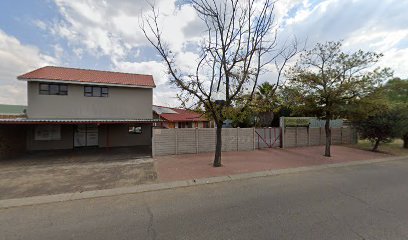
Bet-El Leadership Academy is a Education establishment in Secunda, Mpumalanga, South Africa
Secunda
Mpumalanga
2302
South Africa
Sorry, no records were found. Please adjust your search criteria and try again.
Sorry, unable to load the Maps API.
Education and Resources in Secunda, Mpumalanga
Secunda, a town in Mpumalanga, sits within a regional education ecosystem that supports learners at multiple stages of development. The area typically offers a range of institutions and programmes designed to equip residents with essential skills for further study, employment, and community participation. The local landscape commonly includes schools, colleges specialising in further education and training, and access to higher education pathways nearby, all connected by a network of libraries, learning centres and support services.
Within schools, learners often encounter a spectrum of options. Primary and secondary schools commonly provide curricula aligned with national and provincial requirements, including matriculation routes and alternative qualifications such as vocational programmes. Emphasis is placed on literacy and numeracy, subject specialisation, and the development of critical thinking. Where available, schools may also offer language support, guidance counselling, and pastoral care to assist learners navigating transitions between phases of education and into post-school destinations.
Further education and training institutions in and around Secunda typically deliver diplomas, certificates and micro-credentials across diverse fields. These colleges frequently offer practical, job-focused courses that align with local industry needs, including engineering technology, information technology, business studies, health care, and hospitality. Apprenticeships and learnerships are commonly promoted through these centres, often in collaboration with sector education and training authorities and local employers, enabling hands-on experience alongside formal study.
Higher education accessibility may extend to institutions with satellite campuses or regional study centres within a reasonable commuting distance. Students pursuing undergraduate degrees or professional qualifications may find entry routes that recognise prior learning and offer flexible study options, such as part-time study or blended formats. Prospective learners typically begin with a review of admission requirements, programme prerequisites, and available funding or bursary support through provincial and national schemes, before proceeding through application and registration processes.
Learning support and student services form a notable aspect of the educational landscape. In addition to school guidance counsellors and college student services, libraries and media centres provide access to study resources, journals, online databases and quiet study spaces. Language development, tutoring programmes, and assistive technologies are commonly found to help learners achieve their targets. For adults seeking to upskill or change career directions, community learning centres and continuing education offerings frequently provide flexible scheduling and short courses designed to fit work commitments.
Facilities and resources typically enhance the learning environment. Schools and colleges commonly feature science and computer laboratories, workshop spaces, and dedicated classrooms that facilitate practical and collaborative learning. Sports facilities, recreation grounds and fitness amenities are often open to students, supporting physical education and well-being. Accommodation options near larger campuses or student housing communities may be available for those relocating to pursue study, while transport links—such as municipal routes and regional highways—assist daily commuting.
Typical pathways through the Secunda education network begin with enrolment at a school or an entry point into a college programme. After completing secondary schooling, learners may transition to further education through diploma or certificate programmes, or explore apprenticeships and industry-aligned training. For those aiming at higher education, progression paths exist to bachelor’s degrees or professional qualifications via nearby universities or regional study centres. Throughout these transitions, prospective students are encouraged to consult admissions timelines, required documentation, and available guidance services to determine the most suitable route. Websites of provincial education authorities and national higher education bodies provide ongoing guidance on curricula, funding options and recognised qualifications.
Overall, the education and resources landscape in Secunda supports a practical and adaptable approach to learning. The combination of school provision, vocational training, access to libraries and study supports, and connections to wider higher education pathways helps learners and families in planning attainable, futures-oriented routes within Mpumalanga and beyond. For more information, consult regional education portals and national bodies that outline current programmes, admissions guidelines and support opportunities.
- Further information: provincial Department of Education and national higher education resources (examples include official portals and guidance pages).
- Learning support and accessibility resources are commonly offered through schools, colleges and community spaces.
- General guidance on admissions and registration is available via official education websites and prospective student portals.