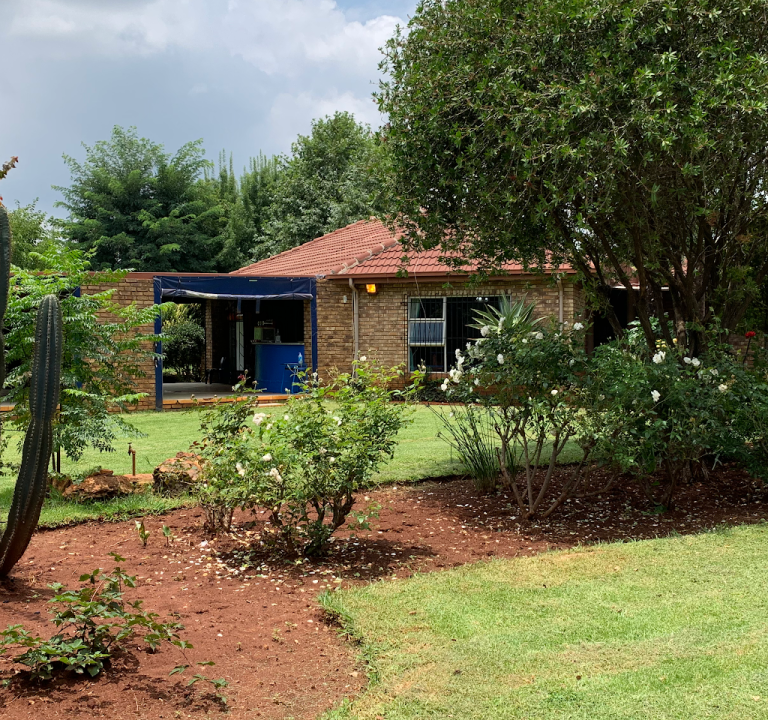
Benoni Learning Centre is a Education centers establishment in Benoni, Gauteng, South Africa
Benoni
Gauteng
Norton's Home Estates, Benoni
South Africa
Curriculum
Benoni Learning Centre in Benoni, Gauteng, emphasises a personalised and lifelong approach to education. The centre’s philosophy rests on the belief that learning is an ongoing adventure, inviting learners to engage with knowledge openly and to explore with curiosity. The curriculum is designed to support individual progress and to help students develop both academic skills and responsible citizenship within a caring environment.
The centre indicates a commitment to flexible pathways for learners, recognising that students learn in different ways and at different paces. A key feature highlighted is the capacity for learners to engage with the curriculum at a pace that suits their needs, complemented by supportive guidance to help them achieve meaningful outcomes. This approach is informed by a broader focus on matching educational strategies to the strengths and preferences of each learner, aiming to foster confidence and sustained engagement with learning.
A distinguishing element of the described curriculum is its use of a computer-based framework. According to the information provided, the curriculum is computer-based and requires learners to have access to a laptop. This emphasis on digital resources suggests an integrated use of technology to support instruction, assessment, and practice across subjects and levels. The inclusion of computer-based components aligns with contemporary trends in education and supports the delivery of structured materials that learners can navigate with guided supervision.
Assessment and progress monitoring are addressed through targeted tools referenced on the site. One such tool, WiseEye, is described as a method for scientifically measuring reading ability and monitoring progress over time. The use of reading assessments is positioned as part of a strategy to move learners from foundational reading development to higher levels of proficiency, thereby supporting literacy as a cornerstone of broader academic achievement.
In addition to the core curriculum, the centre highlights the ability to explore alternative credential pathways. The GED® credential is noted as recognised by SAQA as comparable to the South African National Senior Certificate (NSC-Grade 12) and is described as internationally recognised as a high school leaver’s credential. While the site does not list specific courses or subject modules, the reference to GED® underscores a potential framework for learners seeking an alternative to the traditional NSC route, with information provided about testing opportunities and the credential’s recognition across education systems abroad. This consideration suggests a flexible orientation within the centre’s programme options, subject to suitability and student needs.
The curriculum is supported by guidance on curriculum selection. The site communicates a readiness to advise on choosing an appropriate curriculum for a child, indicating an advisory role in helping families navigate educational options. Although concrete course lists, durations, fees, or entry requirements are not provided, the emphasis remains on aligning instructional approaches with learner needs and goals, while offering professional guidance to families navigating curriculum decisions.
Short courses and professional training are not elaborated in detail on the site, but the centre’s emphasis on personalised learning pathways implies the possibility of supplementary programmes or targeted support within the computer-based framework. Learners who require additional academic support or enrichment may benefit from one-on-one tutoring and closely monitored progress tracks, elements referenced in the broader discussion of individualised learning approaches.
Extracurricular and student support services are touched upon indirectly through the focus on reading progress, personal pace, and a Christian environment that aims to nurture responsible citizenship and social awareness. The centre’s mission and vision highlight encouragement, correction, and guidance as part of the educational journey, reinforcing a supportive atmosphere designed to sustain learner motivation beyond formal instruction alone.
Practical details accompany the curriculum description: a registration fee and a separate curriculum fee are listed, with the stated requirement that learners bring a laptop for the computer-based programme. While exact course listings, durations, and accreditation details are not specified, the information provided presents a coherent picture of a technology-enabled, learner-centred curriculum framed by guidance and assessment tools to support progression and literacy development.
Overall, the curriculum at Benoni Learning Centre combines digital delivery with personalised support, literacy-focused assessment, and flexible credential considerations, all situated within a commitment to fostering curious, responsible learners prepared for further study and lifelong learning.
- Computer-based curriculum with required learner laptop
- Reading assessment through WiseEye to monitor progress
- Potential pathways including GED® as a recognised credential option
Faculties and Branches
Benoni Learning Centre operates from a single dedicated centre located at 1-144 Queensberry Road, Norton’s Home Estate, Benoni, Gauteng. This central hub serves as the focal point for its educational programmes, student support services, and administrative operations. The centre’s address and hours indicate a streamlined local presence designed to provide accessible learning opportunities within the community.
In terms of organisational structure, the centre does not publicly enumerate separate faculties or departments by name. Instead, a coherent framework is evident through its emphasis on curriculum choice, assessment, and ongoing support. The instructional approach is rooted in customised pathways, with a focus on lifelong learning and flexibility to accommodate diverse learner needs. A key feature highlighted is the use of technology-enabled learning, with the curriculum described as computer-based, suggesting an integrated digital learning environment across programmes.
Programme provisions include guidance on curriculum selection for home education, reflecting a holistic advisory role. The centre offers assistance in choosing appropriate curricula to suit individual learners, indicating a level of specialist support often associated with educational planning and pastoral guidance. This advisory function complements formal programme delivery and aligns with the centre’s mission to nurture responsible citizenship within a caring educational setting.
Assessment and progress-monitoring appear to be formalised through specific tools such as Wise Eye, a system that measures reading ability and tracks progress. The inclusion of such a mechanism demonstrates an emphasis on data-informed instruction, enabling tailored interventions and recognition of reading development from emerging readers to more advanced learners. This aligns with the centre’s commitment to fostering measurable academic growth within its programmes.
The centre also presents a clear stance on accreditation and credential recognition in relation to its offerings. The material references the GED® credential as a recognised pathway that is comparable to the South African NSC (Grade 12) in certain contexts, along with international recognition. While the exact scope of programmes and partnerships is not exhaustively detailed on the site, the inclusion of GED-related information signals a component of the centre’s offering that extends beyond UK-style schooling to include recognised alternative qualifications for eligible learners.
Student services and accessibility are addressed through practical information such as admissions, tuition structure, and terms. The admissions materials note that forms can be downloaded and completed for enrolment, and there is a clear pricing framework for 2026, including a registration fee and curriculum fee. The emphasis on a computer-based curriculum suggests that students will require appropriate devices, with the 2026 pricing indicating a bundled approach to resources and tuition. The combination of administrative efficiency and student-centred programming points to a well-organised service model designed to support learners throughout their engagement with the centre.
Overall, Benoni Learning Centre presents a compact yet functionally cohesive structure centred on a single campus with a structured, technology-enabled curriculum, specialist assessment tools, and advisory services. While no multiple faculties are listed, the centre’s programmes are described in terms of curriculum selection, progress monitoring, credential pathways, and practical admissions support, all coordinated from its Benoni location to serve learners in the Gauteng region.
Registration Details
Benoni Learning Centre in Benoni, Gauteng, South Africa welcomes prospective pupils and outlines a straightforward admissions pathway. The centre emphasises a computer-based curriculum and a personalised learning approach, with admission steps framed to support families through a clear enrolment process.
Application/Registration process overview
The admissions process is presented through downloadable forms that should be completed, signed, and submitted. Prospective applicants are advised to download the required documents, fill them in, and return them for review. The process is designed to be self-contained, leveraging electronic submission for efficiency. Once the forms are completed, they are typically sent to the designated contact email for consideration.
Where to apply
Completed forms should be mailed or sent to the provided contact address. The site notes that the relevant communication channel for submission is via email to the designated address for Benoni Learning Centre, facilitating a smooth application flow.
Eligibility/entry requirements
The site communicates the centre’s commitment to tailored learning experiences and a readiness to support pupils through a guided curriculum. No specific age ranges or entry prerequisites are listed in the available materials. The emphasis remains on alignment with the centre’s computer-based curriculum and the capacity to engage in a personalised learning environment. Where more precise eligibility details are required, applicants are encouraged to consult the forms and guidance provided in the admission documents.
Documents typically required
Documents requested are the admission forms mentioned above. The materials imply the standard practice of completing and signing the application forms before submission. There is no explicit list of additional documents in the provided content.
Fees and financial information
For 2026, the centre outlines a registration fee of R2,000, which includes all stationery and books. The curriculum is described as computer-based, with a curriculum fee of R2,500. It is noted that a laptop is required for students. These figures provide a clear picture of upfront costs and ongoing curriculum expenses, subject to any updates published by the centre.
Contact and support channels
For general inquiries and support, the centre lists a contact phone number and email address. The phone number provided is 082 333 3832. The email address given for correspondence is [email protected]. Additional contact details are available through the main site’s “Contact Us” section, which reiterates the address and hours of operation.
Location and hours
Benoni Learning Centre is located at 1-144 Queensberry Rd, Norton’s Home Estate, Benoni, 1509. The school operates from Monday to Thursday, 08:00–13:00, with weekends closed. This information helps applicants plan visits and communicate preferred contact times during the admissions process.
Overall, the Registration Details outline a practical path to enrolment, with downloadable forms, stated fees, and contact channels designed to aid families in arranging admission to Benoni Learning Centre.
Sorry, no records were found. Please adjust your search criteria and try again.
Sorry, unable to load the Maps API.
Education and Educational Resources in Benoni, Gauteng
Benoni, located in Gauteng, provides a diverse array of educational opportunities that cater to learners at different stages of development. The area hosts a spectrum of institutions, ranging from independent and public schools to further education and training centres, as well as higher education facilities within reasonable reach for many residents. The landscape emphasises accessible pathways and supportive services designed to assist families in navigating the journey from early learning to post‑secondary study and vocational preparation.
Primary and secondary education in Benoni typically encompasses a mix of government and private options. Schools may offer regular curricula aligned with national standards, alongside enrichment programmes that promote literacy, numeracy, science, arts, and physical education. Many institutions provide elective subjects and language studies to reflect local and national priorities, including Afrikaans and isiZulu, as well as English. In addition to core subjects, learners may encounter programmes focused on programming, information technology, or practical sciences that build foundational skills for further study or work.
Further education and training in the area is supported by colleges and dedicated training centres that cover a range of vocational and academic tracks. These institutions commonly deliver certificate and diploma courses in sectors such as information technology, business administration, hospitality, engineering-related trades, and health studies. Flexible delivery models—including day, evening, and weekend classes—accommodate mature students, working families, and those seeking career change. Some centres also offer short courses and modular programmes that allow learners to acquire specific competencies without committing to lengthy courses.
Higher education institutions within a reachable radius offer routes to bachelor’s degrees, diplomas, and professional qualifications. Prospective students generally engage with admissions processes that assess prior schooling, certificates, or recognised prior learning. Guidance and information services are typically available to help applicants understand programme requirements, application timelines, and recognition of prior learning. Universities and allied campuses often provide a range of faculties, including the arts, sciences, engineering, education, and health sciences, along with opportunities for research, internships, and industry partnerships.
Support services across Benoni’s educational network emphasise student well‑being, academic development, and career readiness. Learning support may include tutoring, study skills workshops, and literacy initiatives designed to assist learners encountering barriers to progression. Schools and colleges often offer counselling for personal development and guidance on subject choices, career planning, and financial aid information. Academic support services may extend to assessment accommodations and resources for learners with special educational needs, ensuring inclusive access to learning opportunities.
Facility provisions broaden the appeal of education within the area. Libraries and media laboratories commonly accompany schools and tertiary campuses, providing access to reference materials, computer workstations, online databases, and study spaces. Laboratories for science and technology subjects support practical learning, while dedicated art, music, and design studios enrich creative exploration. Sports facilities—ranging from gymnasia to outdoor fields and courts—encourage physical activity and teamwork, complementing academic studies. Student accommodation is available in some instances, particularly near college and university campuses, offering residencies that support international and out‑of‑town learners as well as local students pursuing higher education.
Typical pathways in Benoni begin with primary schooling, followed by secondary education culminating in a school leaving certificate or equivalent qualification. Post‑school options commonly include enrolling in a college for vocational or occupational training, applying to a university or higher education institution for degree studies, or pursuing applied programmes that blend theory with practical training. Admissions processes generally require submission of academic records, identification documents, and, where relevant, evidence of language proficiency or prior learning. Many learners navigate these pathways with information and guidance provided by schools, training providers, and tertiary institutions, aiming to align choices with interests, capabilities, and long‑term aspirations.
Overall, Benoni offers a supportive educational ecosystem that accommodates diverse learning needs and ambitions. From foundational schooling to specialised training and higher education, the resources available in the area enable learners and families to explore varied routes, access essential facilities, and embark on educational journeys that can lead to meaningful qualifications and practical career outcomes.
Key considerations for families and learners
- Explore a range of schooling options to find fit in terms of curriculum, environment, and support services.
- Investigate vocational and diploma courses as viable routes to skilled employment and further study.
- Access guidance on admissions, financial aid, and recognition of prior learning to plan pathways effectively.
- Take advantage of libraries, laboratories, and sport facilities as integral components of the learning experience.
- Consider accommodation needs when selecting institutions that are located at a distance from home.