Back 2 Basics Adventure Campsite is a Campground establishment in Grabouw, Western Cape, South Africa
Grabouw
Western Cape
7160
South Africa
Curriculum
Back 2 Basics Adventure Campsite in Grabouw, Western Cape, offers a diverse slate of educational experiences embedded in outdoor settings. The site emphasises Educational Value as its niche, aligning camps and events with learning-focused objectives that extend beyond mere recreation. The two campsite options—the Main Camp and the Bush Camp—provide different scales of programme delivery, enabling groups to tailor learning experiences to their size, aims and resources.
Programme levels and learning pathways are shaped by the need to foster teamwork, leadership and practical problem-solving. Activities are designed to develop initiative, communication and collaboration, with a clear focus on group dynamics, planning and execution. Regular activities and adventure programmes can be customised to match the specific aims of a camp, ensuring that sessions remain relevant whether addressing school learning outcomes, church groups, corporate teams or youth organisations. The emphasis on leadership and team-building camps supports progression from introductory collaborative tasks to more complex projects that require coordination, delegation and collective decision-making.
Areas of study span a broad outdoor curriculum, blending physical challenges with environmental literacy and practical skills. Outdoor adventure activities form a core part of the learning experience, including rope courses, raft-building, knot-tying, orienteering and map-reading, as well as more experiential offerings such as night hikes, sleepouts and forest education. These elements cultivate resilience, risk assessment and situational awareness while reinforcing practical competencies in planning, resource management and safe execution of group tasks.
The curriculum also integrates more specialised, activity-based options that groups may arrange in advance. Special arrangement activities cover climbing and archery, teambuilding drumming, kloofing and other facilitated experiences that require specific equipment or expertise. When paired with the site’s hall facilities and natural surroundings, these activities enable a blended learning approach that combines hands-on participation with guided reflection and goal-setting, benefiting participants across ages and sectors.
Short courses and professional-style experiences are framed around the core value of educational impact. While detailed course lists, durations or fees are not specified for individual modules, the available offerings are positioned as adaptable programmes designed to meet the objectives of diverse groups. This adaptability supports a curriculum approach that is both responsive and outcome-oriented, emphasising outcomes such as leadership development, team cohesion and practical mastery of outdoor skills.
Pastoral and student-support elements appear through the inclusive design of camps. By providing exclusive access to a single site per booking, Back 2 Basics ensures dedicated facilities and consistent management of the learning environment, which can contribute to a sense of safety and structure essential to effective learning in outdoor settings. The two-site configuration also allows educators to choose environments that best suit the group’s learning style—whether a more intimate Bush Camp or a larger Main Camp with expansive spaces for large-group activities and lectures in the on-site hall.
Distinctive learning resources emerge from the campsite’s integrated infrastructure. A fully equipped kitchen, multiple ablution facilities, and a substantial hall provide versatile spaces for demonstrations, demonstrations, and interactive sessions. The presence of a dam, surrounding forests and nearby biospheres informs an immersive outdoor learning atmosphere, enabling field-based explorations and contextual understanding of ecology, conservation and environmental stewardship within the Kogelberg and Hottentots Holland Biospheres region.
The curriculum approach prioritises experiential learning, reflective practice and collaborative achievement. Facilitated activities are designed to help participants define objectives, monitor progress and evaluate outcomes, with a focus on transferable skills such as teamwork, problem-solving, effective communication and leadership under varied circumstances. The programme structure supports both short- and multi-day formats, enabling schools, churches and organisations to plan experiences that align with their overarching educational or developmental goals.
Additional opportunities centre on well-being, outdoor fitness and personal development through adventure-focused programmes. Whether through initiative challenges, night-time explorations or forest-based education, learners engage with the environment as a living classroom. The blend of adventure, education and teamwork fosters holistic development while ensuring participants gain practical competencies that endure beyond the camp setting. For those seeking to embed learning within an outdoor context, Back 2 Basics offers a flexible, resource-rich platform supported by dedicated staff and purpose-built facilities.
Website visitors and prospective groups can explore available activities and arrange tailored programmes through the site’s enquiry and booking channels. With two campsites catering to different group sizes and a range of outdoor and educational experiences, Back 2 Basics presents a credible option for institutions and organisations seeking curriculum-aligned, experiential learning in a South African outdoor environment.
Faculties and Branches
Back 2 Basics Adventure Campsite operates as a dual-site provision in Grabouw, Western Cape, offering a coherent family of camping experiences with an educational emphasis. While not framed as a traditional educational faculty, the organisation presents two distinct camp “sites” that function as the primary branches of its operations: the Main Camp and the Bush Camp. Each site hosts a tailored set of facilities and activities designed to support group programmes, leadership development, and collaborative undertakings.
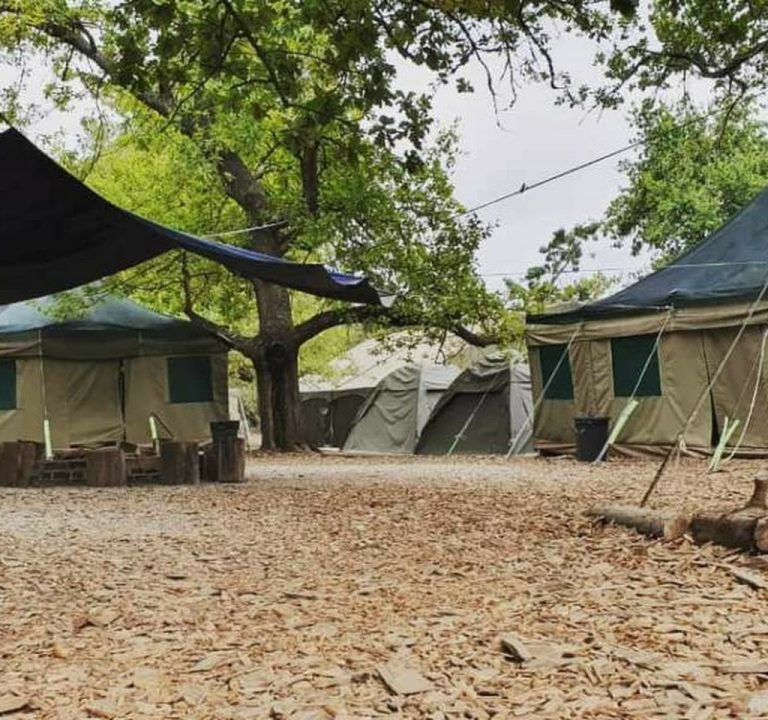
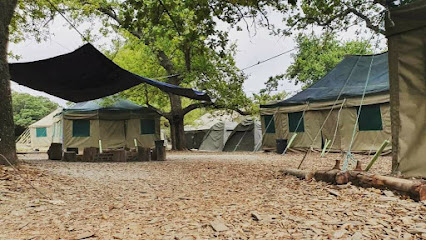
The Main Camp is the larger facility, capable of accommodating up to 250 people with sleeping arrangements that include army tents, bunk beds, and additional dome tents for larger groups. It features a substantial hall capable of seating over 200 people, making it well suited for conferences, seminars, and large gatherings. A fully equipped kitchen supports catering options, while two separate ablution blocks and outdoor facilities provide practical services for longer programmes. This site therefore serves as the central hub for larger school camps, corporate gatherings, and multi-day events that require robust infrastructure and adaptable indoor space.
The Bush Camp operates as a smaller, more intimate venue, with capacity for up to 160 people across army and dome tents. It emphasises a more “in the wild” atmosphere and includes a dedicated hall tent for gatherings. Its setting—near a dam with mountain views—offers a different experiential backdrop, making it ideal for smaller groups, leadership sessions, or events seeking an enhanced sense of immersion. The camp’s kitchen facilities and ablutions support self-catering or externally organised catering, while the more compact footprint enables a focused, hands-on approach to programme delivery.
Across both sites, the organisation highlights a core educational orientation by presenting a broad menu of activities designed to foster teamwork, communication, problem-solving, and leadership. Regular programmes span school camps, church camps, and educational camps, complemented by leadership and team-building camps that align with learning objectives rather than entertainment alone. Additional outdoor activities—such as maps reading, rope courses, raft building, archery, and drumming—are offered under flexible arrangements to suit the aims of each group. Special arrangement activities further extend the range of experiences when specific equipment or expertise is required.
In practice, the two-site structure enables a range of instructional and developmental experiences under one organisational umbrella. The Main Camp provides scale and capacity for larger cohorts and formal presentations, while the Bush Camp offers a more intimate setting conducive to smaller teams, targeted leadership initiatives, and immersive outdoor learning. The arrangement supports programmes that focus on educational value while still accommodating weddings, family events, and customised single-day activities, all within a coherent framework managed through the central office and enquiry pathways.
Potential participants can engage through the dedicated enquiry forms for each site, access information about menus and accommodation options, and view the different facilities that each camp offers. For more information on site-specific options and booking arrangements, reference is made to the Main Camp and Bush Camp pages, which outline capacity, accommodation, hall facilities, and catering considerations. The two-site model thus stands as the practical realisation of Back 2 Basics’ educational-value niche within a versatile camping environment.
- Main Camp – larger site with capacity for up to 250 people, full kitchen, substantial hall, and multiple sleeping arrangements. Main Camp details
- Bush Camp – smaller site for up to 160 people, intimate ambience, dedicated hall tent, and flexible catering options. Bush Camp details
Registration Details
Back 2 Basics Adventure Campsite in Grabouw, Western Cape, operates with two dedicated sites: the Main Camp and the Bush Camp. The organisation emphasises exclusive access to each campsite for every booking, ensuring personalised care and control over facilities and activities. Registration and booking follow a straightforward process designed to inform organisers early and secure preferred dates, subject to deposit and documentation requirements.
The primary registration pathway is through the Enquire Now facility on the website. This form is used to initiate a booking enquiry for either the Main Camp or the Bush Camp, with the eventual aim of generating an estimated quote and moving toward final confirmation. The Enquire Now pages for each site provide the specific enquiry forms and direct access to the corporate information needed to plan a camp, event, or group gathering.
Alternatively, organisations may initiate formal authorisation by using the direct booking enquiry sections linked from the site’s site pages. The Main Camp and Bush Camp pages each include an enquiry link that launches the relevant quote and booking process. These pathways are designed to capture details such as group size, preferred dates, and any special requirements, and to connect the requester with the Back 2 Basics office for quote finalisation and booking confirmation. Final quotes and bookings are issued by the Back 2 Basics office, and dates are secured once a deposit and signed booking form are received.
For those seeking ongoing collaboration or potential referral opportunities, a Booking Agent registration option exists. This pathway enables individuals to earn commissions by referring campers, subject to terms and conditions and the use of a dedicated online booking form to attribute bookings to the agent’s referral code. The Booking Agent process requires agreement to the Terms of Service and Privacy Policy, which are accessible via the site’s linked documents.
Several practical considerations govern the registration process. The site operates on a first-come, first-served basis, with dates reserved only once a deposit and a completed booking form are received. Where larger groups are involved, it is sometimes possible to book both campsites together, in which case the office should be contacted directly through the site’s contact mechanisms for bespoke arrangements. The organisation provides a clear pathway from initial enquiry to final confirmation, emphasising transparency and timely communication throughout.
Key elements of the registration workflow include the online Enquire Now forms, the ability to request a formal quotation or “Request a Quote” through individual site pages, and the eventual confirmation by the Back 2 Basics office. The process is designed to be user-friendly while ensuring all essential information is captured to facilitate accurate planning and site preparation.
How to apply
- Visit the Main Camp or Bush Camp pages and use the Enquire Now or Request a Quote links to begin a booking enquiry.
- Provide detailed information in the online enquiry to generate an estimated quotation.
- Await final quotation and booking confirmation from the Back 2 Basics office.
- Submit the signed booking form and deposit to secure the date, noting that only bookings logged via the online form qualify for the process.
Important documents and formal approvals are handled via the online forms and the Back 2 Basics office. Access to the Terms of Service and Privacy Policy is available through the linked pages on the site, which govern the booking and referral processes.
For general inquiries and site visits, the Contact Us section of the website provides the primary channels to connect with the office team, who can assist with questions about availability, camp facilities, and tailored programme options.
Links to relevant sections:
Enquire Now,
Main Camp Enquiry,
Bush Camp Enquiry,
Terms of Service,
Privacy Policy,
Contact Us
Sorry, no records were found. Please adjust your search criteria and try again.
Sorry, unable to load the Maps API.
Education and Resources in Grabouw, Western Cape
Grabouw, nestled in the Western Cape, offers a range of educational options and resources that serve families and learners at different life stages. The town and its surrounding areas host a mix of schools, post‑school training facilities, and community programmes designed to support academic achievement, vocational skills, and lifelong learning. The local educational landscape typically features institutions that cater to primary and secondary schooling, as well as opportunities for further education and adult education within a practical distance of residents’ homes.
Primary and secondary schooling forms the backbone of education in Grabouw. Local government authorities and school districts oversee admissions and registration processes that align with national curriculum standards. Families commonly find a choice of public and, in some cases, independent or church‑affiliated schools within or near the town. These schools often provide core subjects alongside additional programmes such as arts, physical education, and basic information technology, with an emphasis on preparing learners for higher education or the workforce.
For those seeking post‑secondary studies, the surrounding region offers a variety of options. Community colleges and vocational training centres can provide certificates and diplomas aligned with local economic needs, including programmes in trades, hospitality, business administration, and information technology. These institutions typically emphasise practical skills, hands‑on practice, and industry partnerships, delivering learning through workshops, laboratories, and supervised placements where available.
Beyond formal qualifications, Grabouw hosts adult education and community learning facilities that establish pathways for lifelong learning. These programmes often focus on literacy, numeracy, basic digital skills, language development, and personal enrichment. They can be particularly useful for learners returning to study, seeking upskilling, or exploring new interests without committing to full‑time study.
Learning support and student services are important features in the area. Learners commonly have access to guidance on study planning, registration procedures, and progression routes to further education or employment. Support may extend to tutoring, study skills workshops, and pastoral services that address wellbeing and motivation. In many contexts, schools and centres collaborate with families to create supportive learning environments and to help learners navigate transitions between educational stages.
Facilities and resources commonly found in Grabouw include libraries with a range of textbooks, reference works, and quiet study spaces. Science laboratories and computer laboratories are often available at larger schools and colleges to support practical experiments and IT learning. Sports facilities, including fields, courts, and gym spaces, provide opportunities for physical education and recreational activities. Where accommodation is needed for students who travel from surrounding areas, some institutions offer residential or homestay options, subject to availability and eligibility. Community centres may also host workshops, evening classes, and cultural programmes that enrich the educational ecosystem.
Typical pathways usually involve a high‑level sequence: completing compulsory schooling, choosing a post‑school option (further education college, vocational training, or senior schooling with a focus on university entry), and applying through the relevant administration or institution portal. Registration often requires standard documentation, identification, and, where applicable, proof of prior qualifications. Among options, learners may pursue certificates or diplomas that present clear routes to intermediate or advanced training, apprenticeships, or entry into related job sectors. Guidance services and information sessions are commonly available to help families and learners compare options and plan for the next steps.
- Types of programmes commonly available: core academic subjects, vocational and technical diplomas, certificates in trades, IT and business studies, language and literacy courses, and adult education.
- Facilities typically encountered: libraries, science and computer laboratories, sports facilities, study spaces, and accommodation where relevant.
- Support services often accessible: academic guidance, career information, tutoring, and wellbeing support.
Overall, Grabouw and the surrounding Western Cape communities provide a practical, community‑focused educational environment. The network of schools, colleges, and learning centres supports a broad spectrum of ambitions, from completing schooling to acquiring employable skills and pursuing higher education. Website portals and local information hubs often offer up‑to‑date guidance on admissions timelines, open days, and available programmes, helping families chart a clear course through the region’s educational opportunities.