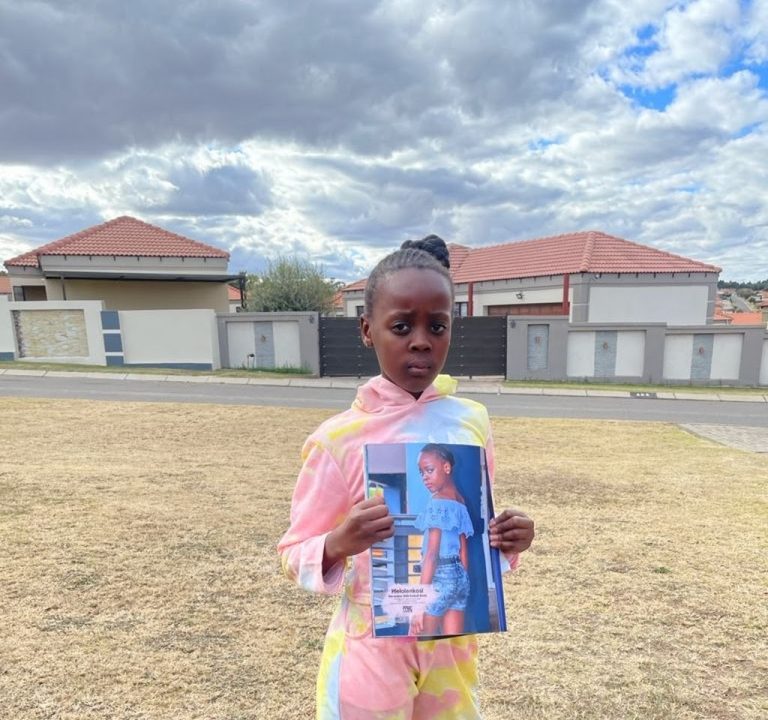
b-U Models SA (Bela-Bela branch) is a Modeling school establishment in Bela-Bela, Limpopo, South Africa
Bela-Bela
Limpopo
0480
South Africa
Curriculum
The Bela-Bela branch of b-U Models SA emphasises a practical, industry-connected approach to modelling education and professional development. The curriculum focus centres on preparing learners for real-world modelling work while aligning with the company’s broader commitment to safety, integrity and reliable client relationships. Rather than presenting a fixed catalogue of courses, the programme emphasises ongoing training and opportunities that arise through professional engagement with clients and projects.
Areas of study are framed around core modelling competencies and professional practices. Learners engage with industry standards, on-set etiquette, portfolio development, and the practicalities of pursuing modelling opportunities. The emphasis is on applying learning directly to the work environment, supported by guidance and information provided through the agency’s network. The aim is to build confidence and portfolio-ready presentation while ensuring understanding of industry expectations and responsibilities.
What sets the curriculum apart is its real-time alignment with opportunities managed by the agency. Training and development are complemented by ongoing information and assistance related to available opportunities. This approach integrates professional development with practical job preparation, fostering a learning pathway that evolves with the modelling landscape.
The programme also covers essential business and administrative aspects relevant to models, including accurate invoicing practices and the management of client relationships. This prepares learners to navigate commercial arrangements safely and ethically, with support from the agency in ensuring that expected rates and conditions are honoured. The curriculum therefore couples technical modelling skills with business literacy suitable for independent work or agency representation.
Where relevant, the Bela-Bela branch offers short courses or targeted professional training that complement broader modelling education. These short-form elements are designed to enhance employability and provide bite-sized, practical learning aligned with current industry needs. Details of individual short courses are provided through the agency’s communications and opportunities as they arise.
Support and resources form an integral part of the curriculum. Learners benefit from the agency’s representation, which includes assistance with job opportunities, administration, and guidance on negotiating terms. This support structure helps learners translate training into real-world work while maintaining emphasis on safety and trusted client engagement.
In summary, the curriculum at the Bela-Bela branch combines practical modelling training with continuous professional development, informed by direct engagement with opportunities and a strong focus on safe, ethical practice. It is designed to build industry-ready learners who can progress within a supportive network while navigating the demands of the modelling profession.
For more information, prospective learners can explore the main website sections related to training and representation, which detail the agency’s approach to development, opportunities, and professional guidance: b-U Models South Africa – Model Representation Agency.
Faculties and Branches
The Bela-Bela branch of b-U Models SA operates as the local gateway to the organisation’s broader operations across South Africa. While formal faculties or departments are not explicitly detailed on the source site, the Bela-Bela office functions as a regional hub that coordinates representation, training and administrative support for models within its area of operation, situated in Bela-Bela, Limpopo.
As described in the source material, all models trained by b-U Models South Africa are automatically represented by the agency upon mutual agreement. The Bela-Bela branch therefore sits at the intersection of training, representation and career management, ensuring that models are connected with suitable opportunities while receiving ongoing guidance and assistance. This structure emphasises a comprehensive, end-to-end service model rather than a traditional academic faculty framework.
The branch’s relationship to programmes and services is characterised by the following elements:
- Representation: The Bela-Bela office helps secure modelling opportunities, safeguarding arrangements, and fair remuneration according to agreed rates and conditions.
- Training and development: Additional training and information are provided to assist models in pursuing appropriate opportunities and navigating the industry safely.
- Administration and support: Administrative duties related to bookings, invoicing and payments are managed to ensure smooth processes for clients and models alike.
Although no separate faculties or departments are named within the available material, the Bela-Bela branch operates as a cohesive unit within the wider agency framework. The focus is on practical career advancement, professional representation, and responsible practice in an industry where safeguarding models is paramount. For prospective models and collaborators, the Bela-Bela hub acts as a local point of contact for access to the agency’s representation network and related student-services style support, aligned with the agency’s stated commitments to safety and reliable client partnerships.
In terms of campus-like structure, the Bela-Bela branch can be viewed as a centre implementing the agency’s core model-representation services, rather than hosting academic programmes. It functions in concert with other regional offices and the central organisation to deliver consistent standards of practice, opportunities, and administrative oversight across South Africa. More information about the broader network and links to the main site can be found at the agency’s web presence.
Registration Details
Registration and representation with b-U Models SA (Bela-Bela branch) appears to be structured around mutual agreement between the agency and models. The available material indicates that models trained by b-U Models South Africa are automatically represented by the agency once mutual consent is established. This implies a partnership arrangement rather than a traditional, routine application process.
The representation arrangement encompasses several core elements. It covers seeking suitable modelling opportunities, providing additional training and information related to those opportunities, and handling the administrative aspects associated with bookings. The agency emphasises safeguarding its models by working exclusively with trusted and reliable clients to ensure safer work opportunities. In addition, there is an administrative commitment to invoicing clients according to agreed rates and terms, and following up on invoiced and outstanding payments. This suggests a service model that aligns compensation with completed bookings and transparent financial practices.
Within the published information, the representation is described as commission-based. This means that models are not charged for the representation services upfront; the agency’s commission is incurred only when a client books and the payment process is completed. This detail highlights a performance-based aspect to the relationship between model and agency.
Because the content does not provide a step-by-step application or registration form, the description remains general about how new models may initiate or formalise representation. The wording stresses that automatic representation upon mutual agreement applies specifically to models trained by b-U Models South Africa. As such, prospective models or those seeking to engage with the Bela-Bela branch should refer to the broader b-U Models South Africa presence for guidance on how to proceed and for any formalities that may accompany the mutual agreement process.
Where to apply or obtain further information is indicated through available links to related pages. Interested individuals or practitioners are advised to consult the Model Representation Agency page for context and to explore the parent site for contact and additional details. Access to the agency’s content can be found at the main site and the dedicated representation page, which provide the most relevant pointers for navigating the registration and representation framework.
Potential applicants or collaborators are encouraged to review the following resources for more information and guidance:
Contact or support channels for direct inquiries are not listed with explicit phone numbers or email addresses on the available content. Prospective models or partners should refer to the main site or the representation page for the most current contact options and guidance on how to proceed with registration or mutual agreement discussions.
Sorry, no records were found. Please adjust your search criteria and try again.
Sorry, unable to load the Maps API.
Education and Learning Resources in Bela-Bela, Limpopo
Within Bela-Bela, a town situated in Limpopo, learners and families can access a diverse range of educational pathways that support academic achievement, vocational skills, and lifelong learning. The local landscape typically features a mix of government-run schools, independent institutions, technical and vocational training centres, and higher education affiliates that form part of a broader regional network.
Primary and secondary schooling is commonly provided through government schools offering curricula aligned with national standards. These institutions often provide core subjects such as languages, mathematics, science, social studies, and life skills, with additional programmes to support learners across varied abilities. In many cases, schools collaborate with district offices and provincial Education Departments to deliver curricula upgrades, learner support programmes, and assessment practices that reflect local needs and resources.
For secondary learners seeking alternatives to traditional schooling, there are technical and vocational pathways that emphasise practical, industry-relevant skills. Vocational training centres and learnership programmes are typically available to help bridge the transition from school to employment, often incorporating workplace exposure and hands-on training in trades, hospitality, information technology, and business administration. These options are designed to accommodate different levels of academic attainment and can serve as both a stepping stone to further study and a route to direct work experience.
Higher education and tertiary learning opportunities in the Bela-Bela region may be linked to nearby towns and provincial facilities. Access to universities, universities of technology, and science or education faculties is commonly supported through partnerships, articulation agreements, and outreach programmes that enable learners to pursue undergraduate or professional qualifications. In addition, distance learning and online study options may supplement on-site offerings, broadening access for residents who prefer flexible study patterns or who live at a distance from campus locations.
Beyond formal institutions, a range of training centres and community programmes contribute to the educational ecosystem. These providers frequently offer short courses, certification programmes, and continuing professional development for adults, as well as enrichment activities for school-age learners. Such offerings can include information technology, languages, numeracy and literacy support, creative arts, and preparation for exams or professional accreditation. Community libraries and learning hubs often serve as civic anchors, supporting independent study through access to materials, study spaces, and quiet zones for reading and research.
Learning support and student services play a key role in many Bela-Bela institutions. Typical supports include guidance on study skills, literacy and language assistance, and mentoring programmes. Schools and centres may also provide counselling services, wellbeing resources, and assistance with financial literacy or bursary information. Transport solutions and safe commuting routes are commonly considered within the broader learning environment, helping learners and families navigate daily routines.
Facilities commonly found in the area support a well-rounded learning experience. Modern libraries and computer laboratories offer access to digital resources, research databases, and guided learning programmes. Sports facilities, performing arts spaces, and science laboratories enable practical, hands-on learning and community engagement. Some institutions provide accommodation options for students, which can facilitate study while integrating with local life and employment opportunities. Access to reliable internet connectivity and study spaces is frequently highlighted as essential for continuing education and research.
Typical pathways for admission or registration usually begin with basic information gathering from local schools, training centres, or provincial education portals. Prospective students may be advised on required documentation, application windows, and placement assessments. Depending on the programme, entry requirements can range from completion of a certain grade level to the demonstration of foundational competencies or successful completion of prerequisite courses. The emphasis remains on clear guidance, equitable access, and transparent processes to realise opportunities across the Bela-Bela educational landscape.