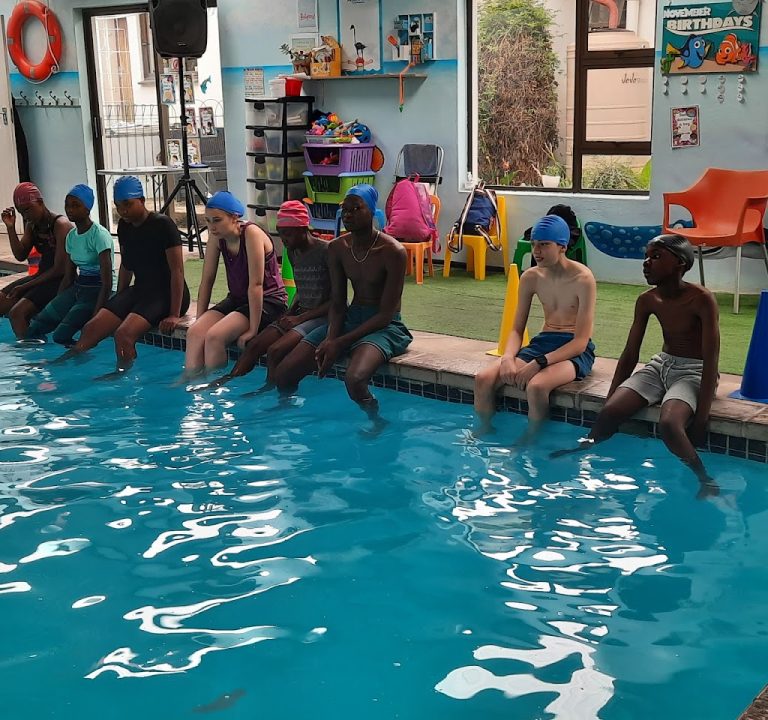
Aqua Antics Swim School is a Swimming instructors establishment in Secunda, Mpumalanga, South Africa
Secunda
Mpumalanga
2302
South Africa
Curriculum
Aqua Antics Swim School in Secunda, Mpumalanga, structures its curriculum to support learners across a range of water-based needs, from infants to adults. The programme is organised around clearly defined class formats that emphasise gradual skill development, safety, and enjoyment in the water. At the core of the offering is a progression from confidence-building activities to more technical stroke development, with attentive supervision and progressive challenges as learners advance.
The school presents several core programme strands. Parent and Baby Classes (30-minute sessions) provide an early, child-led introduction to aquatic environments, focusing on bonding as well as foundational water familiarisation. Learn to Swim sessions (60-minute lessons) are designed to teach swimming through a structured, enjoyable progression, helping participants build basic aquatic skills, buoyancy control, and independent movement in the water. For those seeking refinement of technique, Stroke Correction classes (30-minute lessons) cover the four strokes and introduce more advanced skills such as diving and tumble turns, with emphasis on safety and efficiency in the water. Adult Lessons (45-minute classes) cater to adults who may have a fear of water, wish to learn to swim, or require stroke correction, offering a supportive pathway to improved confidence and competence in the pool.
In addition to stroke-focused practice, a dedicated Aqua Antics Water Fitness component offers classes designed to improve overall fitness in a safe aquatic setting. These sessions are led by an accredited instructor, providing an option for participants to gain health and fitness benefits while staying within the water environment. The inclusion of a water fitness programme reflects a broader commitment to well-being and lifelong engagement with aquatic activity.
Distinctive resources cited by the school include instruction by an accredited SA Water Fitness Association (SAWFA) instructor for the water fitness classes, highlighting a recognised standard of professional guidance within the aquatic fitness offering. The curriculum emphasises practical skills and safety, aligned with progressive class formats and opportunities to book sessions via the school's contact forms. While detailed course lists, durations beyond those listed above, and entry requirements are not enumerated publicly, the available programme descriptions indicate a holistic approach to水 education that covers early water familiarity, technical swimming skills, stroke refinement, and fitness opportunities.
Support and enrichment elements appear through supplementary information such as blog articles and general tips related to swimming gear and instructional approaches. Although the primary focus remains on in-water instruction, these resources contribute to a broader learner experience by offering practical guidance and ongoing communications about best practices in swimming education.
Potential learners and families are invited to engage with the school through the website’s contact features, including forms linked from programme pages. The structure of the curriculum suggests a learner-centred pathway with a clear emphasis on safety, progressive skill acquisition, and enjoyment in aquatic activities, rather than a one-size-fits-all timetable. The approach appears to balance foundational exposure for beginners with opportunities to refine technique for those who progress to more advanced levels, supported by professional coaching and accessible fitness-oriented options where appropriate.
- Parent and Baby Classes (30 minutes) – child-led introduction to water
- Learn to Swim (60 minutes) – progressive, structured skill development
- Stroke Correction (30 minutes) – four strokes plus diving and tumble turns
- Adult Lessons (45 minutes) – for fear reduction, swimming ability, or stroke refinement
- Aqua Antics Water Fitness – fitness in a safe aquatic environment, led by SAWFA-accredited instructor
Overall, the curriculum at Aqua Antics is characterised by its tiered offerings, emphasis on safety and progression, and integration of fitness-oriented options, all presented within a local South African context. Learners can anticipate a practical, supportive framework designed to cultivate aquatic competence across age groups and goals, with additional value provided by resources and professional guidance available through the school’s online presence.
Faculties and Branches
Aqua Antics Swim School operates from a single primary facility in Secunda, Mpumalanga, offering a structured portfolio of swimming-related programmes and services. The site presents a clear progression of activities designed to support learners of various ages and abilities, from early parent‑and‑baby engagement through to adult instruction and fitness-focused sessions.
The programme framework is organised into distinct classes and services, including:
- Parent and Baby Classes designed to provide a safe, child-led introduction to the water and to foster early parent–child bonding.
- Learn to Swim courses, featuring fun, progressive and structured lessons aimed at developing core swimming skills.
- Stroke Correction sessions that focus on refining four strokes and introducing advanced water skills such as diving and tumble turns.
- Adult Lessons, which accommodate learners who are fearful of water, new to swimming, or seeking stroke correction.
- Aqua Antics Water Fitness Classes, led by an accredited instructor, offering a fitness‑oriented programme in a safe swimming environment.
The facility highlights an active teaching team, including Theresa Gray, who delivers the water fitness classes under the auspices of the South African Water Fitness Association (SAWFA). This indicates a level of professional accreditation supporting the fitness‑oriented offerings within the overall curriculum.
While the site does not specify multiple campuses or branches beyond the Secunda location, the arrangement appears to be centrally managed from the single address provided, with programme information accessible through the main site. Information about bookings and enrolment is available via the site’s contact form, and prospective learners or guardians can pursue updates through the linked pages and blog resources.
In terms of student services and programme connections, the offerings are clearly aligned to assist learners at various stages—starting with early developmental work for infants, moving through primary swimming instruction, stroke refinement, and inclusive adult and fitness classes. The relationship between the different faculties and services is conveyed through a unified programme structure rather than through separate on‑site departments, suggesting an integrated approach at the Secunda facility.
Further information and access to the latest news, reminders, and booking options can be obtained via the website, including the contact form and the privacy policy. Potential visitors are encouraged to review the site for updates related to class availability and new offerings.
Website: Aqua Antics Swim School
Registration Details
Aqua Antics Swim School, located in Secunda, Mpumalanga, South Africa, provides a range of swimming programmes designed to accommodate different ages and abilities. For prospective participants, the registration process is presented in a straightforward, user-friendly manner through the school’s website. The primary channel for initiating registration is the online contact form available on the Aqua Antics site, which serves as the initial point of contact for enquiries and booking requests.
Overview of the application/registration process
Potential swimmers and parents are encouraged to begin Registration by accessing the online form linked on the school’s homepage. The site presents a clear path to begin the process with prompts such as “Let’s Begin your water adventure” and “Let’s reserve your spot,” each directing users to the same contact mechanism. The emphasis is on scheduling introductory sessions, securing a place, and arranging ongoing lessons in a structured manner. The process is designed to be flexible, accommodating a variety of programmes—from Parent and Baby Classes to Learn to Swim, Stroke Correction, Adult Lessons, and Aqua Antics Water Fitness Classes.
Where to apply
- Online contact form: https://aquaantics.co.za/#contact-form
- Application/reservation prompts appear alongside each programme offering, guiding prospective participants to the contact form to initiate registration.
Eligibility and entry requirements
The website presents a range of programmes intended for different age groups and abilities, including child-led Parent and Baby Classes, Learn to Swim, Stroke Correction, and Adult Lessons. While exact age ranges or skill prerequisites are not itemised in the available content, the breadth of programmes suggests suitability across a broad spectrum of swimmers. In the absence of stated formal deadlines or prerequisites, the information indicates a welcoming approach that encourages prospective participants to reach out via the online form to discuss eligibility for specific classes.
Documents typically required
No specific document list is provided within the accessible content. As is common with many swim-school registrations, prospective participants should expect to discuss requirements during the initial online inquiry or contact form submission. The website’s emphasis is on connecting through the online form to discuss registration and scheduling rather than on presenting a formal packet of documents at the outset.
Contact and support channels
Registration and general enquiries are handled through the school’s online contact form. The site locations and the form link indicate a streamlined process for submitting requests and receiving information. For those seeking to learn more about programme options or to arrange trial sessions, the online contact form is the recommended route. The school’s physical address is listed as 14 Jack Hindon Street, Secunda, South Africa, providing an additional point of reference for visitors who may wish to arrange in-person discussions or visits in line with the availability and safety practices of Aqua Antics.
Additional context
The Aqua Antics site also highlights a variety of programmes, including 30-minute, 45-minute, and 60-minute classes, with specific offerings such as Training for babies, learning to swim, stroke correction, and adult lessons. Each programme is paired with a call-to-action link prompting users to book or reserve via the contact form. For prospective participants, the overall impression is that registration is accessible, guided by the online form, and supported by a responsive approach to scheduling and programme choice.
Sorry, no records were found. Please adjust your search criteria and try again.
Sorry, unable to load the Maps API.
Education and Resources in Secunda, Mpumalanga
Secunda, situated in Mpumalanga, South Africa, offers a range of educational options and learning resources that cater to diverse needs and interests. The town sits within a broader regional framework that supports primary and secondary schooling, further education, vocational training, and access to higher learning institutions. Families and learners commonly navigate a mix of local schools, nearby colleges, and connections to larger universities in the province and beyond.
Within the realm of schooling, Secunda typically presents a spectrum of primary and secondary institutions, with curricula aligned to national standards and regional assessment programmes. Parents and learners frequently consider factors such as school culture, language of instruction, and the availability of learning support when selecting a school. Extended day options, after-school activities, and programmes addressing mathematics, science, and literacy are common features that help learners build a solid foundation for further study or vocational training.
Higher education and training opportunities in the wider area encompass both further education colleges and vocational training centres, alongside access to universities in the region. Many learners pursue diplomas, certificates, and professional qualifications that align with local industries, including technical and service sectors. Where detailed information is required, learners are advised to consult official admissions guidance and prospective study materials issued by relevant institutions and national education authorities. General information about study pathways, eligibility, and recognised qualifications is typically available through official portals and education department resources.
In addition to formal academic pathways, Secunda and its surroundings offer a range of training centres and programmes designed to develop practical skills. Vocational courses, apprenticeships, and short courses in areas such as engineering, information technology, business administration, hospitality, and health sciences are commonly accessible through local providers. These offerings are often tailored to workforce demand and may include delivery modes that blend face-to-face learning with practical workshops and simulated environments.
Learning support and student services form an important part of the educational landscape. Many institutions provide academic tutoring, language support, study skills development, and guidance on study planning. Accessibility services, counselling, and career information are elements that assist learners in making informed choices about their education and future employment. Where available, libraries, study centres, and resource rooms offer quiet study spaces, reference materials, and access to digital databases to support research and independent study.
Facilities and resources commonly found in Secunda and the surrounding area include well-equipped libraries, science and computer laboratories, and dedicated workshop spaces for practical learning. Sport and recreation facilities frequently support physical education, club activities, and team sports, contributing to a holistic approach to student well-being. Student accommodation is more typically linked to larger higher education campuses or nearby towns, with housing options that enable learners to focus on studies while accessing campus services and community life.
Typical pathways for prospective learners involve gathering information about programmes, checking entry requirements, and confirming registration or application deadlines with the relevant institution. Where deadlines and criteria are set, prospective students should refer to official admissions guidance, degree or diploma mappings, and required supporting documents. Financial planning, including information on scholarships, bursaries, and fee structures, is often mediated through national and regional education resources, and counsel is available at many institutions to assist with budgeting and funding options.
Overall, Secunda presents a practical and varied educational environment, where learners can pursue a combination of traditional academic routes and hands-on training. By engaging with local schools, colleges, and training centres, along with regional universities and learning providers, learners and families can identify suitable programmes, gain relevant skills, and progress along coherent educational pathways. For broader guidance and official information, references to national and provincial education portals offer authoritative updates on programmes, admissions, and qualifications.
- Explore local schools for primary and secondary education and inquire about learning support services.
- Consult nearby colleges and vocational training centres for diplomas, certificates, and apprenticeships.
- Investigate higher education options at universities and specialised institutes in the region.
- Utilise libraries and study facilities to support independent learning and research.
- Review official admission and funding information through government education portals.
Further information and guidance can be found through national and provincial education websites and their linked resources.