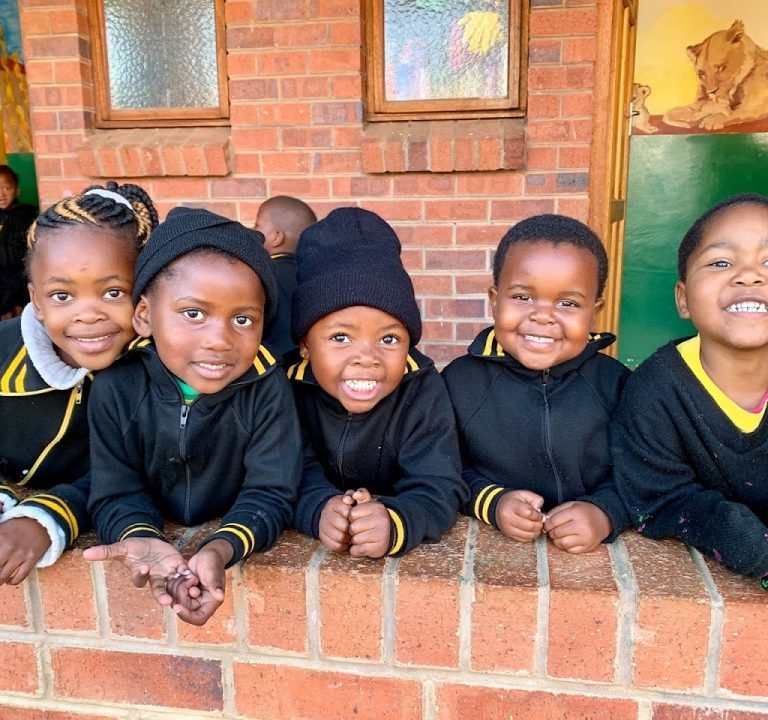
Angels’ Care Centre is a Non-profit organizations establishment in Howick, KwaZulu-Natal, South Africa
Howick
KwaZulu-Natal
3290
South Africa
Curriculum
Angels’ Care Centre in Howick adopts a holistic approach to education, spanning early childhood development and structured after‑school provision to support the full spectrum of a child’s growth. The curriculum is designed to foster intellectual curiosity, emotional resilience and social responsibility in children from indigent backgrounds, with a strong emphasis on safe, nurturing and stabilising environments that facilitate learning.
The core educational offer operates at two linked levels. First, the Early Childhood Development (ECD) Centre provides foundational education for 150 children aged 3 to 6, with two Grade R classes, two Grade RR classes and two Grade RRR classes. This phase prioritises interactive play, structured learning activities and individualised attention to help young learners establish essential literacy, numeracy and social skills. The curriculum recognises the formative nature of early childhood, emphasising language development, cognitive growth, physical development and emotional well‑being. Nutrition is integrated into the daily routine, ensuring a well‑balanced diet that supports concentration and general health, while spiritual and emotional support complements academic activities to nurture the whole child.
Second, the After School Programme extends learning beyond the classroom through a blend of academic support, life skills development and recreational activities. The programme offers nutritious meals, targeted assistance with schoolwork and study habits, and access to resources that bridge school and home life. Life skills talks form a core element, equipping children with practical knowledge for personal development and responsible citizenship. Additionally, structured sports activities, including a soccer and netball league with coaching and support, contribute to teamwork, discipline and physical well‑being. Collaboration with Hilton College introduces learners to diverse perspectives and opportunities for broader engagement.
In terms of curriculum approach, the centre emphasises a safe, nurturing environment where learning is deliberately sequenced to build confidence and resilience. Interactive learning, consistent observation and ongoing assessment underlie daily practice, with attention to tracking growth in height, weight and overall health for the ECD group. The aim is to deliver quality academic programmes alongside spiritual and emotional support, recognising that well‑being underpins successful educational outcomes.
Beyond classroom‑based learning, Angels’ Care emphasises a multi‑agency support framework. The centre operates a Health & Crisis Centre that brings together health care, social services and crisis support for victims of gender‑based violence and other forms of abuse. The team includes a full‑time social worker, a social auxiliary worker, a registered nurse, community caregivers and a part‑time forensic nurse. This integrated service model supports learners and their families by addressing medical needs, psychosocial support and safeguarding concerns, thereby creating a more secure foundation for educational engagement.
Distinctive learning resources and practices cited by the centre include monthly health checks and developmental assessments for children attending educational programmes, ensuring early identification of growth or health issues that may impact learning. The project also emphasises structured routines and predictable environments—important factors for young learners experiencing adversity. The presence of a dedicated preschool leadership team and teachers focused on Grade RR and Grade RRR underscores a commitment to continuity and quality across the early years, while a bridging class and after‑school offerings extend continuity into the older early years and adolescence.
In summary, the curriculum at Angels’ Care Centre prioritises high‑quality early education, ongoing academic support and life skills within a compassionate, community‑centred framework. Its distinctive features include a robust ECD programme for 3–6 year‑olds, an integrated after‑school regimen with meals, health and psychosocial support services, and strategic partnerships that broaden learners’ developmental opportunities. Through these elements, the centre seeks to empower children to achieve their potential, contribute positively to their communities and pursue further education with confidence.
Faculties and Branches
Angels’ Care Centre in Howick, KwaZulu-Natal, operates as a holistic children's care and development hub rather than a traditional university campus. Its structure aligns with core centres of activity that support the wellbeing, education and safety of children from indigent households in the greater Howick area. The organisation groups its work into clearly defined faculties or dual-purpose centres that together enable a comprehensive programme of support.
Education is a central pillar, operationalised through Early Childhood Education and related programmes. The centre runs an Early Childhood Development (ECD) Centre for 150 children aged 3 to 6, including multiple Grade R classes and bridging provision. This education strand emphasises interactive play, structured learning, individualised attention and nutrition, with the aim of laying secure foundations for lifelong learning and personal development. The education focus is complemented by an After School Programme that provides academic support, life skills talks and safe, supervised activities, including sport, as part of a broader holistic education approach. The partnership with external organisations, such as Hilton College, broadens the educational experiences available to the children and supports continued development beyond the centre’s own facilities.
- Early Childhood Education (ECD) – 150 children; Grade R, RR and RRR classes; foundational learning and nourishment.
- After School Programme – academic support for school-age learners; life skills talks; recreation and sports coaching.
Another major area is Health & Crisis Care, which functions as a dedicated centre within the Angels’ Care site. This division offers care and assistance for survivors of gender-based violence, abuse and neglect, with a focus on medical, psychosocial and practical support. A multi-disciplinary team operates here, including a full-time social worker, social auxiliary worker, registered nurse, community caregivers and a part-time forensic nurse. The Health & Crisis Centre conducts monthly health monitoring for attendees and coordinates vaccinations, clinical assessments and referrals as required. The facility also provides for emergency housing and crisis intervention services on a short-term basis when needed.
Nutrition and Food Security form a parallel, essential strand of the organisation’s activity. A weekly feeding programme serves hundreds of children, with daily meals for a significant number of school children and youth participants, complemented by Saturday sessions offering sandwiches, fruit and yoghurt. This nutrition programme supports overall health, growth monitoring and the ability to participate fully in educational and community activities.
In addition to these core faculties, the organisation maintains a Community Outreach function and a dedicated Crisis Centre that sits on the same site. These components coordinate educational talks, health education, advocacy and direct support for families, with an emphasis on safeguarding and empowering children within the local community. The Crisis Centre operates from the main Angels’ Care Campus at 38 Morling Street, Howick, providing access to services under one roof to reduce barriers and improve outcomes for young survivors and their families.
The structure of the centre reflects a mission to deliver integrated services rather than isolated programmes. By combining education, health, crisis response, nutrition and outreach under one organisational umbrella, Angels’ Care Centre supports the holistic development and protection of children, while fostering partnerships with local and international stakeholders to sustain and extend its impact.
For more information about the programmes and services, interested readers may explore the What We Do section on the centre’s website, or consult the Contact page for location details and opportunities to engage with the centre’s activities.
Registration Details
Angels’ Care Centre, located at 38 Morling Street, Howick, KwaZulu-Natal, provides a range of programmes focused on the holistic development of children in the local community. The centre runs an Early Childhood Development Centre (ECD) for children aged 3 to 6, including two Grade R classes, two Grade RR classes, and two Grade RRR classes, as well as an After School Programme. In addition, a Bridging Class supports a smaller group of learners. Prospective families seeking a place for their child can look to register for access to these services through the centre’s overarching education and support programmes.
Registration and enrolment information is not itemised as a formal, deadline-driven process on the public website. Interested parties are advised to make direct contact to obtain current guidance on enrolment, eligibility and availability. The centre emphasises its commitment to high-quality education and nurturing care, with an emphasis on nutrition, health and safeguarding as part of the programmes offered.
Overview of the registration pathway (as described through the centre’s public content):
- Identify suitable programme(s) for the child, primarily Early Childhood Education services for ages 3–6, plus after-school and supplementary support opportunities as available.
- Initiate contact to inquire about enrolment and current capacity via the centre’s official channels.
- Receive guidance on next steps, eligibility considerations, and how to proceed with registration and enrolment.
Where to apply or seek enrolment information: information and guidance can be accessed through the centre’s online presence and contact points. Relevant pages include general information about what the centre does and ways to connect with the team. For direct inquiries, the “Contact Us” page provides a route to begin the registration conversation and to obtain current information on programmes, timings and any available spaces. The following links offer convenient access to these resources:
Eligibility and entry considerations are described in general terms through the centre’s programme descriptions. The Early Childhood Education offering serves children aged 3 to 6 and aims to provide a safe, nurturing environment supporting growth across educational and wellbeing dimensions. Specific eligibility criteria, space availability, and any required documentation are not itemised on the public-facing pages and are typically clarified during the enrolment conversation with centre staff.
Documents typically required for registration are not listed on the website. Parents or guardians are advised to obtain an enrolment checklist or guidance during the initial contact through the centre’s Contact Us page or by visiting the site for further information.
For additional context about the centre’s operations and support services, visitors may explore the related pages detailing health, nutrition, and crisis care provisions, which underpin the holistic approach to education and care. These connections help illustrate the broader framework within which registration occurs.
In summary, prospective families should use the centre’s official channels to begin the registration discussion. Details on current availability, eligibility specifics, and required documentation are best obtained through a direct enquiry via the centre’s website.
Sorry, no records were found. Please adjust your search criteria and try again.
Sorry, unable to load the Maps API.
Education and Educational Resources in Howick, KwaZulu-Natal
Howick sits within a region rich in educational provision, offering a varied landscape that serves families and learners at different stages. The area typically features a mix of public and independent schooling options, alongside further education colleges, vocational training centres, and opportunities associated with nearby universities in KwaZulu-Natal. This combination supports a broad spectrum of learning paths and ambitions.
Primary and secondary schooling is commonly accessible through local government schools and independent institutions. Across these offerings, learners can encounter a range of curricula and assessment profiles, from foundational subjects to specialised streams. In addition to core academic subjects, many schools provide programmes that emphasise languages, sciences, mathematics, arts, physical education, and information and communications technology (ICT). This breadth helps students prepare for further study or entry to the workforce, depending on their interests and career directions.
Further education and training is represented by colleges and training centres in and around Howick. These institutions often deliver a mix of diplomas, certificates, and short courses designed to equip learners with practical skills aligned to local industry needs. Vocational programmes frequently emphasise hands-on learning in workshops, laboratories, and simulated work environments, complementing theoretical instruction. Apprenticeships and work-based learning are commonly available through partnerships with employers, enabling students to gain valuable experience while studying.
For university-level study, regional access typically includes collaboration with universities in KwaZulu-Natal. These options commonly offer undergraduate degrees, postgraduate studies, and professional qualifications across disciplines such as sciences, humanities, engineering, business, and health. Students may find articulation routes that connect college programmes with degrees, supporting progression for those who begin with alternative entry routes or who pursue non-traditional study pathways.
Learning support and student services are a recurring feature across institutions in the area. Support can include tutoring, study skills sessions, access to counsellors, and guidance on career pathways and higher education transitions. Additional resources often cover language assistance, financial guidance, and information on scholarships and bursaries where available. For families, these services help map out suitable options and develop plans that reflect individual strengths and aspirations.
Facilities and resources commonly found across the Howick education network contribute to a well-rounded experience. Libraries provide study spaces, reference materials, and digital resources to support independent learning. Laboratories and specialised classrooms enable practical exploration in science, technology, engineering, and maths (STEM) as well as arts and humanities subjects. Sports grounds, gymnasia, and athletic facilities encourage physical development and teamwork. Some institutions offer accommodation or access to student housing in nearby towns, subject to space and eligibility, aiding those who live outside daily commuting distance.
Typical pathways for learners involve exploring entry requirements through school registration, college admissions processes, and university applications. Guidance generally covers selecting programmes aligned with interests and future goals, meeting relevant academic prerequisites, and understanding intake cycles. While exact entry criteria can vary by provider, many institutions emphasise readiness for study, preparatory courses, and recognised qualification frameworks. Prospective learners are advised to review official information from local schools, colleges, and tertiary providers to identify suitable programmes and articulation opportunities.
- Primary and secondary schooling options with diverse curricula
- Colleges offering diplomas, certificates, and short courses
- Vocational training and apprenticeships linked to local industries
- University study pathways and articulation routes
- Learning support services, counselling, and career guidance
- Libraries, laboratories, and ICT-enabled learning spaces
- Sports, arts facilities, and student accommodation where available
Overall, Howick provides a supportive environment for learners and families seeking educational advancement. By exploring a mix of formal schooling, technical training, and higher education opportunities, residents can pursue inclusive routes that reflect personal goals and community needs.