Amokoro Training (Pty) Ltd is a Training centres establishment in Welkom, Free State, South Africa
Welkom
Free State
9459
South Africa
Curriculum
Amokoro Training (Pty) Ltd presents a sector‑focused curriculum organised across several core domains, reflecting its emphasis on practical safety, technical competence and life skills designed to support workers and organisations in the South African context. The training portfolio is categorised into Mine Training, Technical Training, Portable Skills and Life Skills, with a dedicated pathway for qualifications such as the National Certificate in Construction Health and Safety. The programme areas align with the company’s mission of “Building skills for the nation” and are showcased through a mix of modular courses and structured learning tracks.
Within Mine Training, the curriculum concentrates on Health and Safety and compliance, offering courses that range from Accident/Incident Investigation to Hazard Identification and Risk Assessment, Fire Fighting and First Aid at various levels. This content is framed to equip participants with practical tools for identifying hazards, planning responses and ensuring workplace safety. The breadth of topics also includes leadership and responsibility aspects, such as Health and Safety Representatives and Fire Marshal/Warden roles, underscoring the intent to develop competent personnel capable of maintaining safe work environments and ensuring regulatory adherence. The list of courses appears designed to be approachable for a diverse workforce, with explicit workshops and level-based programmes that can be accessed through individual course pages for detail.
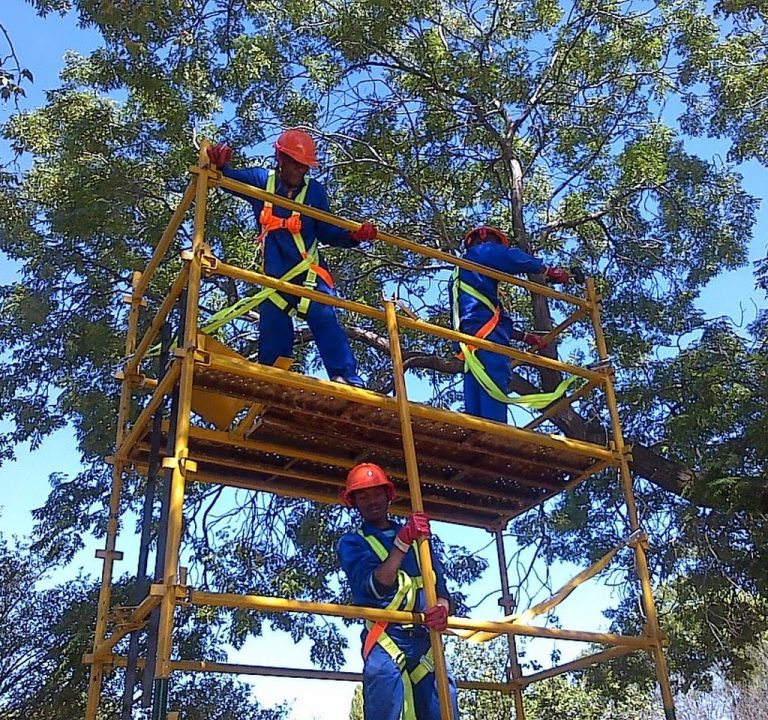
In Technical Training, the curriculum emphasises hands‑on capability in high‑risk or technically demanding settings. The offering includes Scaffold Inspector training, Confined Space Entry with simulated practicals, and related modules such as Working in Confined Spaces, Confined Space Entry Permit Issue, Working at Heights and Fall Protection, as well as Basic Rigging and Slinging. Additional practical modules cover Use and Maintain Hand Tools and Power Hand Tools, and Trenching and Excavation. This suite of courses reflects a pragmatic approach to essential technical competencies, focusing on safe execution of tasks, equipment handling and procedural compliance in environments where hazards must be actively managed. The structure implies a progression from introductory to more specialised topics, with a clear emphasis on applied risk control.
Portable Skills are aimed at foundational, artisan‑level capabilities that support diversification of employment opportunities. The curriculum features practical trades such as Basic Bricklaying and Basic Motor Mechanic, offering entry points for learners seeking tangible, workplace‑ready skills. These modules emphasise practical workmanship, enabling participants to gain confidence through hands‑on practice and the real‑world application of techniques. The portable skills stream complements the broader safety and technical training, contributing to a well‑rounded skill set that enhances employability across construction, maintenance and related sectors.
Life Skills provisions address essential everyday competencies, with modules such as Basic Computer Skills designed to build digital literacy and improve employability in diverse professional settings. This strand recognises the value of core life competencies in supporting learners’ progression and enabling smoother engagement with formal or informal training pathways. The integration of Life Skills into the curriculum signals a holistic approach to learner development beyond technical and safety proficiencies.
Regarding formal qualifications, Amokoro Training includes the National Certificate: Construction Health and Safety, representing a recognised framework that can provide a structured, outcomes‑based pathway for professionals seeking formal accreditation in construction health and safety. The inclusion of such a qualification indicates alignment with industry standards and offers a route for learners to achieve a verifiable credential that supports career progression and compliance obligations within the construction sector.
Curriculum delivery is presented through individual course pages, suggesting a modular approach where learners can access specific topics as required. While the site does not explicitly detail delivery formats, online or blended options are not stated, and information on entry requirements or exact fee structures is not provided within the accessible content. The presence of multimedia resources, such as a Company Profile video, implies the utilisation of digital materials to support learning and provide learners with contextual understanding of Amokoro Training’s capabilities and approach.
Distinctive learning resources highlighted on the site include a dedicated collection of specialised safety and technical courses that address both the procedural and practical dimensions of work in potentially hazardous environments. The breadth of courses under Mine Training and Technical Training indicates a deliberate emphasis on immediate applicability in the workplace, underpinned by practical demonstrations and scenario‑based learning where appropriate. The organisation’s broader commitment to developing skills for the nation is reinforced by its stated aim and the availability of a National Certificate pathway, positioning its curriculum as both relevant to current industry needs and aligned with recognised qualifications.
Faculties and Branches
Amokoro Training (Pty) Ltd operates from Welkom, in the Free State of South Africa, and offers a structured portfolio of training across several disciplines. The organisation presents its programmes through clearly delineated faculties and specialist areas, each focusing on practical skills and compliance with industry requirements. While the website does not enumerate individual campus locations, the breadth of offerings indicates a multi‑faceted approach to skills development situated within a single organisational framework.
The Mine Training faculty concentrates on health, safety and compliance within mining contexts. Courses cover accident and incident investigation, construction regulations workshops, first aid at various levels, fire safety, evacuation planning, hazard identification and risk assessment, and safety representations. This faculty also includes content aimed at applying health and safety principles to real work areas and verifying compliance with safety, health and environmental standards. These programmes are designed to support workers and organisations in meeting regulatory expectations and maintaining safe work environments. See the Mine Training section on the site for individual courses and details: Health and safety/compliance training and related subsections such as accident‑incident investigation and first aid courses.
The Technical Training faculty emphasises core technical competencies and worksite readiness. It features courses such as scaffold inspection, confined space entry (including a two‑day programme with simulated practical entry), working in confined spaces, permit issues for confined space entry, working at heights and fall protection, basic rigging and slinging, and safe handling of hand tools and power hand tools, along with trenching and excavation. These offerings are tailored to equip personnel with practical skills for technologically demanding environments. More information is accessible under the Technical Training section of the site.
The Portable Skills category highlights practical, entry‑level trades and hands‑on capability. Notable examples include basic bricklaying and basic motor mechanics, reflecting an emphasis on foundational trade skills that support employability and workplace productivity. Details of these courses are available via the Portable Skills pages.
Additionally, the Life Skills stream offers foundational computer skills, recognising the importance of digital literacy across all sectors. This aligns with a broad objective of improving employability and everyday workplace effectiveness through practical ICT knowledge. See the Life Skills section for course specifics at Life Skills.
Alongside these faculties, Amokoro Training presents a range of qualifications, including the National Certificate: Construction Health and Safety, which underlines the organisation’s commitment to recognised national standards and structured progression within the construction and safety sectors. Further details on qualifications are available via the site’s Qualifications page.
In summary, the organisation appears as a cohesive provider of diversified training streams—mining safety, technical trades, practical crafts, and general life/ICT skills—assembled to support learners and employers through targeted programmes and recognised qualifications. The structure emphasises applied learning and regulatory compliance, with courses linked to broader student services and workforce development aims through the main website.
Registration Details
Registration for Amokoro Training (Pty) Ltd courses in Welkom, Free State, South Africa is organised through the organisation’s online course pages. An interested learner or candidate can begin by navigating to the course listings on the Amokoro Training website and selecting a course of interest to view its details.
Overview of the registration process follows the course-by-course structure. Each course page provides the specific information related to that programme, including its title, scope and learning outcomes. Prospective applicants are encouraged to click on the relevant course to view the full description and any registration or application steps that are presented there. The site structure indicates categories such as Health and Safety/Compliance Training, Technical Training, Portable Skills, Life Skills and Qualifications, with individual courses accessible via linked pages.
Where to apply: the registration pathway is linked directly from the course pages. For example, several health and safety courses are listed under the Health and Safety/Compliance Training category, including Accident/Incident Investigation and various First Aid modules, with each item linking to its own detail page. Similar access exists for Technical Training, Portable Skills and other training streams. Applicants should use the “Apply” or equivalent action available on the respective course page to initiate the registration process, or to obtain the exact application instructions provided for that course.
Important note for applicants: the content presented on the course pages is the primary source of registration information. If a course page states any particular steps, timelines, or requirements, those instructions should be followed precisely. Where the site presents general descriptions of the training, the registration process remains clearly tied to the specific course page being viewed. Users should ensure they are examining the correct course page to access the appropriate application pathway.
As the provider operates across several training streams—Mine Training, Technical Training, Portable Skills, and Life Skills—the registration experience may vary by course. Prospective learners are advised to review the individual course page thoroughly to understand what is required to initiate registration, whether that involves completing an online form, submitting documentation through the site, or following a dedicated application sequence described on the page.
Potential applicants may wish to explore representative pages for context, such as Accident/Incident Investigation or First Aid Level 1, to see how course pages structure registration information and links. Access to these pages can be gained through the main site navigation and the listed course links.
For general orientation, applicants may also view the company’s Media section, including the Company Profile video, to gain a sense of the organisation and its training ethos as presented on amokoro.com. While the primary registration information is published on the individual course pages, the website as a whole serves as the central portal for course discoveries and the commencement of the registration process.
Website links to course pages are provided throughout the site to facilitate direct access to registration information. Prospective learners are encouraged to use these links to initiate their registration journey and to follow the exact steps outlined on each course page.
Sorry, no records were found. Please adjust your search criteria and try again.
Sorry, unable to load the Maps API.
Education and Educational Resources in Welkom
Welkom, located in the Free State of South Africa, presents a diverse landscape of educational opportunities tailored to learners of varying ages and ambitions. The area hosts a range of institutions designed to support academic achievement, vocational training, and lifelong learning, set within a community that values accessibility and practical skills alongside traditional studies.
Secondary and primary education in Welkom encompasses state and independent schools that offer curricula aligned with national standards. Facilities often include well-equipped classrooms, science laboratories, computer suites, and sport facilities that complement academic programmes. Many schools place emphasis on language development, numeracy, and social skills, with supporting services aimed at ensuring inclusive access to education for all students.
Colleges and technical training centres constitute a notable part of the local educational ecosystem. These institutions typically provide a mix of diploma, certificate, and short-course programmes that focus on employable disciplines such as engineering technology, information technology, business studies, hospitality, and health-related fields. Programme structures are generally designed to accommodate full-time attendance while also offering part-time or modular options to suit working learners and those balancing family commitments.
Remarkable attention is given to practical training facilities. Laboratories, workshops, and specialised classrooms enable hands-on learning across science, engineering, and technology disciplines. Professional laboratories often mirror industry standards, supporting coursework in areas such as chemical analysis, electronic systems, and computer-aided design. In addition, access to computer laboratories and high-speed connectivity facilitates independent study and project work.
Higher education in Welkom includes options that align with both broad and specialised intellectual pursuits. Local universities and campuses situated within or near the town provide pathways into undergraduate, honours, and postgraduate study. These institutions commonly offer named programmes in arts, sciences, business, and health sciences, with emphasis on research facilities, libraries, and student support services designed to foster academic success and personal development.
Learning support and student services play a central role in the Welkom educational environment. Guidance counselling, academic advising, and career services commonly assist learners with course selection, progression planning, and transitions to further study or the workforce. Accessibility services, tutoring programmes, and study skills workshops are often available to help students maximise their potential and overcome barriers to achievement.
Residences and accommodation are features of several higher education and training facilities, providing on-campus living options or purpose-built housing nearby. These arrangements may include study-friendly environments, common rooms for social interaction, and amenities that promote safety and well-being. Off-campus housing and student residences typically offer proximity to campuses, public transport links, and local amenities such as libraries and recreational facilities.
Transport connectivity and community facilities further support learning in Welkom. Public transport routes and road networks facilitate travel between schools, colleges, and tertiary institutions, while local libraries, community centres, and cultural venues extend opportunities for independent study, research, and personal enrichment. Community partnerships often enhance learning through outreach programmes, internships, and work placements that connect learners with local employers and organisations.
Typical pathways for learners in Welkom begin with foundational schooling, followed by options for further study in the form of college diplomas, certificates, or university programmes. Admission and registration processes vary by institution but commonly involve meeting minimum academic requirements, submitting application materials through official portals, and observing relevant deadlines. Prospective students are advised to engage with guidance services, explore available courses, and plan ahead to align educational goals with career aspirations.
Further information about education in Welkom can be found via official education portals and individual institution websites. Prospective learners and families are encouraged to review course lists, facilities, and support services to make informed choices that best fit personal objectives and local opportunities.