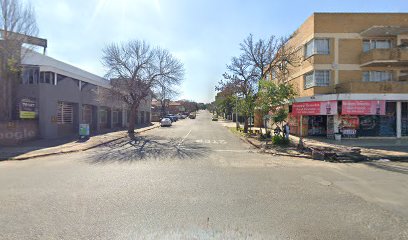
Alberton Training Institute of Technology is a Institute of technology establishment in Alberton, Gauteng, South Africa
Alberton
Gauteng
Alberton
South Africa
Sorry, no records were found. Please adjust your search criteria and try again.
Sorry, unable to load the Maps API.
Education and Resources in Alberton, Gauteng
Alberton, situated within the broader Gauteng province of South Africa, offers a diverse landscape of educational opportunities for learners at different stages. The area features a mix of primary and secondary schools, post‑school training centres, and access to higher education institutions within reach of the community. Families typically encounter a broad spectrum of pathways, from school‑based curricula to technical and vocational training, supported by a network of libraries, community programmes, and study resources.
Within Alberton itself and in nearby townships and suburbs, learners commonly find primary and secondary schools that follow national or provincial curricula. These schools often provide a blend of core subjects such as languages, mathematics, sciences, social studies, and the arts, along with sport and cultural activities. Many institutions also offer additional academic support, mentorship programmes, and after‑school activities designed to reinforce learning outcomes and encourage attendance. Guidance on subject choices and progression is commonly available through school guidance counsellors and learning support staff.
For those pursuing vocational and technical routes, technical and vocational education and training (TVET) pathways are accessible in and around Gauteng. Training centres and colleges commonly offer programmes in areas such as engineering studies, information and communication technology, business and commerce, hospitality and tourism, and construction trades. These programmes typically emphasise practical skills, work‑integrated learning, and time‑bound qualifications that align with local industry needs and career development opportunities.
Higher education in the region includes universities and degree‑level offerings accessible to residents through admissions processes that may involve national or institutional requirements. Students may explore bachelor degrees, diplomas, and postgraduate study across faculties such as humanities, sciences, engineering, business, and health sciences, subject to the chosen institution’s prerequisites. Campuses often provide flexible learning options, including full‑time and part‑time study, and pathways that allow progression from diplomas to bachelor’s degrees where applicable.
Learning support and student services play a crucial role in the Alberton educational ecosystem. Libraries and learning resource centres are commonly available to borrow books, access study spaces, and use research materials. Tutor and peer‑assisted study programmes frequently help learners strengthen literacy and numeracy skills, while language support services may assist learners for whom English is an additional language. Counselling, health and wellbeing resources, and academic advising are often available to help students manage academic demands, adapt to campus life, and plan their course trajectories.
Facilities and resources typically accompanying educational sites in the area include science laboratories, computer labs, and dedicated spaces for arts and physical education. Sport and recreation facilities, gymnasia, and playing fields commonly support school and college activities, contributing to holistic development. Student accommodation is sometimes available near campus locations or through partner housing schemes, enabling accessibility for those who relocate for study.
Typical pathways into higher education or employmentoften begin with careful subject selection and meeting registration or admission requirements. Prospective learners are advised to review entry criteria, application timelines, and available support services well in advance. Open days and information sessions frequently provide insights into programmes, campus life, and progression routes, helping families and learners make informed decisions about the next steps in education and training.
Key features to look for
- Diverse school options offering core subjects, sports, and arts
- Technical and vocational training centres with practical disciplines
- Access to higher education institutions and articulation pathways
- Comprehensive learning support, libraries, and tutoring services
- Research facilities, labs, and information technology resources
- Student wellbeing services and guidance on admissions and progression
- Accommodation options and campus life considerations
Overall, Alberton and its surrounds present a well‑rounded array of educational resources that support learners from early schooling through to further study and career development, with a focus on accessibility, supported progression, and practical preparation for the world beyond the classroom.